High-Salinity Wastewater Treatment: 2026 Engineering Specs, Hybrid Systems & Zero-Discharge ROI
High-salinity wastewater (TDS >10,000 mg/L) disrupts biological treatment and accelerates corrosion, but hybrid systems combining salt-tolerant MBR (COD removal 92-97% at 3-5% salinity) with evaporation crystallization (95% water recovery) achieve zero liquid discharge (ZLD) at $8–$15/m³ OPEX. Advanced oxidation (catalytic ozonation) reduces refractory COD by 70–85% in high-chloride streams, per 2024 EPA benchmarks.
Why High-Salinity Wastewater Disrupts Conventional Treatment
High concentrations of dissolved salts fundamentally alter the physical, chemical, and biological properties of wastewater, rendering conventional treatment methods ineffective or economically prohibitive. Osmotic stress dehydrates microbial cells at >1% salinity, reducing COD removal by 30–50% in activated sludge systems, per a 2023 WEF study. This cellular dehydration inhibits metabolic activity, leading to biomass washout and unstable biological treatment. chloride ions at concentrations exceeding 5,000 mg/L initiate pitting and crevice corrosion in standard 316 stainless steel at rates of 0.1–0.3 mm/year, necessitating costly material upgrades to duplex 2205 or titanium alloys for long-term operational integrity. Scaling from sparingly soluble salts like calcium sulfate (CaSO₄) and silica (SiO₂) significantly reduces membrane flux by 20–40% within 48 hours when saturation indices (e.g., LSI >1.8) are exceeded, leading to frequent cleaning cycles and reduced system uptime. For instance, a textile plant in Gujarat, India, experienced a reduction in biological treatment efficiency from 85% to 40% after its influent salinity increased from 2% to 4.5%, as detailed in a recent abstract from a top research journal. Addressing these challenges requires specialized engineering and robust material selection to prevent system failures and ensure compliance.
| Disruption Mechanism | Salinity Threshold | Impact on Conventional Systems | Mitigation Strategy |
|---|---|---|---|
| Biological Inhibition (Osmotic Stress) | >1% (10,000 mg/L TDS) | 30–50% reduction in COD removal efficiency; biomass loss | Salt-tolerant MBR, halophilic microbes |
| Chloride Corrosion | >5,000 mg/L Cl⁻ | 0.1–0.3 mm/year corrosion of 316 SS; equipment failure | Duplex 2205, Titanium alloys, FRP lining |
| Sulfate Scaling (CaSO₄) | LSI >1.8 (or >2,000 mg/L SO₄²⁻) | 20–40% membrane flux reduction within 48 hours | Antiscalants, NF pretreatment, pH adjustment |
| Silica Scaling (SiO₂) | >100 mg/L SiO₂ | Membrane fouling, reduced heat exchanger efficiency | Silica removal (e.g., coagulation, specific resins) |
Salt-Tolerant Biological Treatment: MBR and Halophilic Microbes
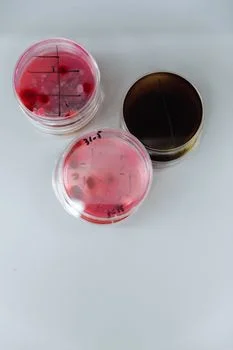
Salt-tolerant Membrane Bioreactor (MBR) systems, such as HydropureWater’s DF Series, offer a robust biological solution for high-salinity wastewater, maintaining 90% COD removal efficiency at 3–5% salinity. These systems typically utilize durable PVDF membranes with a 0.1 μm pore size, which resist fouling and maintain performance under elevated osmotic pressures. Achieving stable biological activity in these conditions often requires 25–30% higher aeration rates compared to conventional MBRs to ensure adequate oxygen transfer to stressed microorganisms. Halophilic microbes, including specific *Halomonas* spp., are capable of tolerating even higher salinity ranges, from 5% up to 15% TDS, by accumulating compatible solutes to balance osmotic pressure. Successful implementation of these specialized microbial communities requires a gradual acclimation period, typically 4–6 weeks, with careful monitoring of microbial activity via methods like ATP testing to ensure population health and metabolic efficiency. While effective for organic removal, the energy consumption for salt-tolerant MBRs is higher, averaging 0.8–1.2 kWh/m³ due to increased aeration and pumping requirements, compared to 0.4–0.6 kWh/m³ for conventional low-salinity MBRs. A significant limitation of biological methods in high-salinity streams is their poor performance with refractory organics such as certain dyes and phenols, which often necessitates pretreatment with advanced oxidation processes like Fenton or catalytic ozonation to achieve desired effluent quality. HydropureWater offers advanced salt-tolerant MBR systems for high-salinity wastewater, including our specialized MBR membrane bioreactor modules (DF Series), designed for challenging industrial applications.
| MBR Type | Salinity Range (TDS) | COD Removal Efficiency | Typical Energy Consumption (kWh/m³) | Key Considerations |
|---|---|---|---|---|
| Conventional MBR | <1% (10,000 mg/L) | 95–99% | 0.4–0.6 | Sensitive to osmotic shock, standard aeration |
| Salt-Tolerant MBR (e.g., DF Series) | 1–5% (10,000–50,000 mg/L) | 90–97% | 0.8–1.2 | Higher aeration, robust PVDF membranes, acclimation for biomass |
| Halophilic MBR (Research/Specialized) | 5–15% (50,000–150,000 mg/L) | 85–95% | 1.0–1.5+ | Requires specific halophilic cultures, extended acclimation, higher OPEX |
Membrane Desalination: RO, NF, and ED for High-Salinity Streams
Membrane technologies are critical for effective desalination in high-salinity wastewater treatment, offering distinct advantages based on the specific salt composition and recovery targets. Reverse osmosis (RO) systems achieve 95–99% salt rejection, making them highly effective for producing high-purity water from saline streams. However, RO requires precise chemical pretreatment, including antiscalant dosing at 0.5–1.0 mg/L, particularly for sulfate-rich streams (SO₄²⁻ >2,000 mg/L), to prevent the precipitation of calcium sulfate and other scales. Common antiscalant types include phosphonates and polyacrylates, selected based on water chemistry to prevent fouling and maintain membrane performance. Nanofiltration (NF) membranes selectively remove 80–95% of divalent ions (e.g., Ca²⁺, Mg²⁺) while allowing 40–60% of monovalent ions (e.g., Na⁺, Cl⁻) to pass through. This makes NF ideal for partial desalination or as a pretreatment step before biological processes or RO, reducing the osmotic load and scaling potential. Electrodialysis (ED) offers an alternative for water recovery, achieving 80–90% water recovery with energy consumption typically between 3–5 kWh/m³. ED operates by using an electric field to move ions through ion-exchange membranes, effectively desalinating the water. However, ED systems often require frequent membrane cleaning, typically every 2–4 weeks, to mitigate fouling from organic matter and suspended solids, which can impede ion transport. Typical flux rates for these technologies at 25°C are 15–25 LMH (liters per square meter per hour) for RO, 20–30 LMH for NF, and 30–40 LMH for ED, reflecting their different operating pressures and membrane selectivities. For detailed insights into membrane selection, refer to our guide on RO membrane selection for high-salinity applications. HydropureWater provides high-recovery RO systems for desalination tailored to industrial needs.
| Membrane Type | Typical Flux Rate (LMH at 25°C) | Salt Rejection/Removal | Typical Water Recovery | Energy Use (kWh/m³) | Key Application/Limitation |
|---|---|---|---|---|---|
| Reverse Osmosis (RO) | 15–25 | 95–99% TDS rejection | 70–85% | 2–4 | High-purity water, sensitive to fouling, requires antiscalant |
| Nanofiltration (NF) | 20–30 | 80–95% divalent ions; 40–60% monovalent ions | 80–90% | 1–2 | Partial desalination, softening, pretreatment for RO |
| Electrodialysis (ED) | 30–40 | 80–90% TDS removal | 80–90% | 3–5 | Brine concentration, selective ion removal, susceptible to organic fouling |
Evaporation and Crystallization: Zero Liquid Discharge (ZLD) Systems
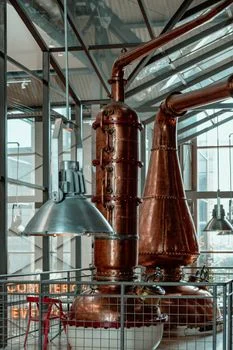
Evaporation and crystallization technologies are indispensable for achieving Zero Liquid Discharge (ZLD) in high-salinity wastewater treatment, enabling maximum water recovery and solid waste minimization. Multi-effect evaporation (MEE) systems typically recover 90–95% of the water from concentrate streams, operating with energy consumption in the range of 12–18 kWh/m³. MEE utilizes a series of evaporators where the latent heat from the vapor of one effect is used to heat the next, significantly improving thermal efficiency. The process flow involves steam compression and a network of heat exchangers to minimize energy input. Mechanical vapor recompression (MVR) offers a more energy-efficient alternative, reducing energy use to 8–12 kWh/m³ by compressing the generated vapor to a higher temperature and pressure for reuse as the heat source. While MVR systems require 2–3 bar steam pressure for startup, their operational energy savings often justify a higher initial CAPEX compared to MEE. For a 100 m³/h system, MVR CAPEX might be 15-25% higher than MEE, but OPEX can be 30-40% lower. Following evaporation, crystallization processes are used to recover dissolved solids as reusable salts, such as high-purity NaCl or KCl. Achieving byproduct purity of 95–99% for food-grade NaCl often requires careful pH adjustment (typically pH 7–8) to prevent scaling and ensure optimal crystal formation. A notable example is a petrochemical plant in Saudi Arabia that achieved 98% water recovery using an MVR + crystallization system, reporting an OPEX of $12/m³ by optimizing energy use and byproduct recovery, as highlighted in a recent abstract. These systems transform a waste stream into a valuable resource, aligning with circular economy principles.
| Technology | Water Recovery | Energy Use (kWh/m³) | Typical CAPEX (Relative) | Typical OPEX (Relative) | Key Advantages |
|---|---|---|---|---|---|
| Multi-Effect Evaporation (MEE) | 90–95% | 12–18 | Medium | High | Robust, handles high TDS, proven technology |
| Mechanical Vapor Recompression (MVR) | 95–98% | 8–12 | High | Medium | Energy-efficient, lower OPEX, high water purity |
| Crystallization | N/A (solids recovery) | Integrated with evaporation | Medium | Medium | Recovers valuable salts, achieves ZLD solids |
Hybrid Systems: Combining Membrane, Biological, and Evaporation Technologies
Hybrid treatment systems are essential for optimizing high-salinity wastewater treatment, allowing for tailored designs that address complex influent compositions and stringent effluent targets. One effective combination is Dissolved Air Flotation (DAF) + RO + MBR, which is particularly suited for food processing wastewater with high fats, oils, and grease (FOG) content. DAF pretreatment achieves up to 95% TSS reduction before RO, protecting membranes from fouling, while a salt-tolerant MBR system then provides robust organic polishing. Another common hybrid approach integrates MBR + Evaporation. Here, an MBR reduces the COD to below 500 mg/L before the wastewater enters an evaporator. This biological pretreatment significantly reduces the organic load on the evaporator, minimizing scaling potential and reducing energy consumption for evaporation by 20–30% due to less viscous concentrate. For streams with high refractory organic loads, an Advanced Oxidation Process (AOP) + MBR system is highly effective. Catalytic ozonation, for instance, can achieve 70–85% COD reduction in high-chloride streams by breaking down complex organic molecules, with typical ozone dosages ranging from 0.5–1.5 mg O₃ per mg COD. This pretreated water is then more amenable to biological treatment in an MBR. HydropureWater offers specialized DAF pretreatment for high-salinity wastewater and integrated MBR systems for complex industrial effluents. The decision matrix below provides a framework for selecting the most appropriate hybrid system based on key wastewater characteristics and compliance goals.
| Hybrid System Design | Influent Salinity (TDS) | Organic Load (COD) | Target Effluent Quality | Key Advantages |
|---|---|---|---|---|
| DAF + RO + MBR | Medium-High (10,000–30,000 mg/L) | High FOG/TSS (>1,000 mg/L) | Water Reuse/Discharge | Effective FOG removal, RO protection, biological polishing |
| MBR + Evaporation | High (20,000–80,000 mg/L) | Medium-High (500–5,000 mg/L) | Zero Liquid Discharge (ZLD) | Reduces evaporator scaling/energy, high water recovery |
| Advanced Oxidation + MBR | Medium-High (10,000–50,000 mg/L) | Refractory Organics (>500 mg/L) | Biological Treatment Amenability | Breaks down recalcitrant compounds, improves biodegradability |
| NF + RO + ZLD Evaporation | Very High (>50,000 mg/L) | Low-Medium (<500 mg/L) | Zero Liquid Discharge (ZLD) | Efficient salt separation, reduced load on ZLD, high recovery |
Cost Models and ROI: Zero-Discharge vs. Partial Treatment
Investment in high-salinity wastewater treatment systems requires a clear understanding of both capital expenditure (CAPEX) and operational expenditure (OPEX) to justify the return on investment (ROI) and ensure long-term compliance. A 100 m³/h Zero Liquid Discharge (ZLD) system, typically comprising RO, evaporation, and crystallization, can range in CAPEX from $1.2M to $3.5M, depending on complexity and automation. In contrast, a partial treatment system (e.g., MBR + RO) for the same flow rate, aiming for water reuse or compliant discharge, typically costs between $0.5M and $1.5M. The OPEX for ZLD systems is considerably higher, ranging from $8–$15/m³, primarily driven by energy consumption for evaporation and chemical costs. Partial treatment, while less capital intensive, incurs an OPEX of $3–$7/m³. The ROI for ZLD systems becomes compelling in regions with stringent environmental regulations and high salt disposal fees, which can range from $500–$1,500/ton. In such scenarios, ZLD can achieve an ROI within 5–7 years by eliminating discharge liabilities and potentially recovering valuable salts. Partial treatment systems with water reuse often demonstrate a quicker ROI of 3–5 years, driven by savings on fresh water procurement and reduced discharge volumes. From a compliance perspective, ZLD completely eliminates discharge fees and ensures adherence to the most stringent regulations, including EPA’s Effluent Limitation Guidelines (ELGs) for specific industries, which may impose limits on chloride (<1,200 mg/L) and sulfate (<2,000 mg/L) discharges. This comprehensive cost analysis is crucial for stakeholders evaluating sustainable wastewater management solutions.
| Cost Category | ZLD System (100 m³/h) | Partial Treatment (100 m³/h, MBR+RO) | Notes |
|---|---|---|---|
| CAPEX (Total) | $1.2M–$3.5M | $0.5M–$1.5M | Includes equipment, installation, civil works |
| OPEX (per m³) | $8–$15 | $3–$7 | Energy, chemicals, labor, maintenance |
| Energy Cost (per m³) | $4–$8 | $1–$2.5 | Major component for evaporation |
| Chemical Cost (per m³) | $1–$3 | $0.5–$1.5 | Antiscalants, coagulants, cleaning agents |
| Labor & Maintenance (per m³) | $2–$4 | $1–$2 | Skilled operators, routine and preventative maintenance |
| ROI Period | 5–7 years | 3–5 years | Influenced by disposal fees, water tariffs, and regulatory fines |
Frequently Asked Questions
What is the maximum salinity an MBR can handle?
Standard salt-tolerant MBR systems can effectively treat wastewater with up to 5% (50,000 mg/L) TDS while maintaining high COD removal efficiency. Specialized halophilic MBRs, though less common, can extend this range to 15% TDS, but they require longer acclimation periods and higher operational costs.
How do hybrid systems reduce ZLD energy consumption?
Hybrid systems, such as MBR followed by evaporation, reduce energy consumption by lowering the organic load and scaling potential of the wastewater entering the energy-intensive evaporation stage. This results in cleaner concentrate and more efficient heat transfer, reducing overall energy by 20–30%.
What are the key factors in selecting an antiscalant for RO in high-salinity applications?
Key factors include the specific scaling ions (e.g., calcium, sulfate, silica), pH, temperature, and recovery rate. Phosphonates are effective for calcium carbonate and sulfate, while polyacrylates are often used for silica. Proper selection at 0.5–1.0 mg/L dosage prevents membrane fouling.
Is ZLD truly cost-effective for all industrial facilities?
ZLD is most cost-effective for facilities facing high wastewater discharge fees, stringent environmental regulations, or water scarcity. While CAPEX and OPEX are higher than partial treatment, the elimination of discharge liabilities and potential for water reuse and salt recovery can yield a 5–7 year ROI.