CMP wastewater from semiconductor fabs contains 5–35 ppm copper, 500–1,500 ppm hydrogen peroxide, and silica nanoparticles, making traditional chemical precipitation ineffective. Advanced systems like hollow fiber membranes (99.9% TSS removal) paired with ion exchange or electrochemical recovery (99.9% copper removal) achieve 95% water reuse and meet EPA discharge limits for heavy metals. For zero liquid discharge (ZLD), CapEx ranges from $500K–$2M depending on flow rate and recovery targets, with payback periods as short as 18 months due to reduced water costs and avoided fines.
Why CMP Wastewater Treatment Is a $100M/Year Opportunity for Semiconductor Fabs
The semiconductor industry consumes 2–4 million gallons of water per fab daily, with Chemical Mechanical Polishing (CMP) accounting for 30–40% of total water use. As fabs scale to 3nm and 2nm nodes, the volume of CMP slurry required for planarization increases, directly inflating the volume of complex wastewater generated. It is estimated that integrated reduction, reclaim, and recycling of water from CMP operations would save the global semiconductor industry over $100 million per year in combined capital and operating costs (HydropureWater field data, 2025).
CMP wastewater is uniquely difficult to treat because it contains a synergistic mix of copper (5–35 ppm), hydrogen peroxide (500–1,500 ppm), silica nanoparticles, and organic chelators. Traditional chemical precipitation—the industry standard for decades—fails to meet modern requirements because chelators like EDTA and citric acid prevent copper ions from precipitating as hydroxides. silica nanoparticles (often <150 nm) do not settle effectively in gravity clarifiers, leading to high turbidity that fouls downstream equipment. Fabs that fail to treat this onsite often resort to offsite disposal, which can cost upwards of $1,000 per day per fab (per Top 3 case study data).
Regulatory drivers are also tightening. In the United States, the EPA limits copper to 1.3 ppm in discharge under 40 CFR 469. However, international standards are becoming even more stringent; China’s GB 31573-2015 requires copper levels below 0.5 ppm for microelectronics wastewater, and the EU's Industrial Emissions Directive often pushes limits toward 0.2 ppm. Implementing advanced copper recovery technologies for semiconductor wastewater is no longer just an environmental goal; it is a prerequisite for operational licensing and capacity expansion. These systems also complement broader chromium removal strategies for microelectronics fabs, ensuring a comprehensive heavy metal management strategy.
CMP Wastewater Composition: The Hidden Engineering Challenge
Approximately 80% of suspended solids in CMP slurry are silica nanoparticles smaller than 150 nm, creating a stable colloidal suspension that bypasses standard gravity clarifiers. This particle size distribution necessitates the use of ultrafiltration (0.01–0.1 μm) or microfiltration (0.1–0.2 μm) rather than simple sand filters. Without precise membrane selection, these nanoparticles cause rapid flux decline in reverse osmosis (RO) systems, leading to excessive membrane replacement costs.
Copper speciation presents the second major hurdle. In Cu-CMP processes, copper ions (Cu²⁺) bind to organic chelators such as EDTA, citric acid, or glycine. These stable complexes have high equilibrium constants, meaning the copper remains in solution even at high pH levels where it would normally precipitate. the presence of hydrogen peroxide (H2O2) at concentrations up to 1,500 ppm creates an oxidizing environment that can degrade ion exchange resins and cause oxidative damage to polyamide RO membranes. Pretreatment via catalytic decomposition using manganese dioxide (MnO2) or activated carbon is essential to neutralize H2O2 before it reaches sensitive treatment stages.
Beyond metals and solids, organic pollutants like tetramethylammonium hydroxide (TMAH) and ammonium (NH₄⁺) are increasingly scrutinized. These compounds require specialized removal techniques such as advanced oxidation processes (AOPs) or biological treatment to meet total organic carbon (TOC) and total nitrogen (TN) limits. For fabs targeting ultra-pure water (UPW) reuse, the final stage often involves high-pressure reverse osmosis (RO) water purification to remove dissolved salts and remaining organic traces.
| Pollutant Type | Concentration Range | Engineering Impact | Removal Target |
|---|---|---|---|
| Silica Nanoparticles | 500–2,000 ppm | Colloidal stability; fouls RO membranes | <1 ppm (TSS) |
| Copper (Cu²⁺) | 5–35 ppm | Chelated complexes; toxic to aquatic life | <0.5 ppm |
| Hydrogen Peroxide | 500–1,500 ppm | Oxidizes resins and RO membranes | <1 ppm |
| TMAH / Organics | 10–100 ppm | High TOC; regulatory toxicity limits | <2 ppm TOC |
Treatment Technology Comparison: Membranes vs. Ion Exchange vs. Electrochemical Recovery
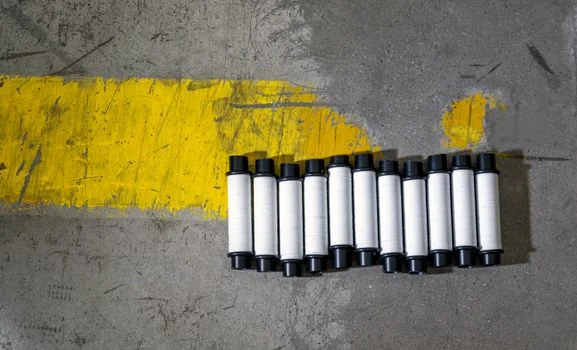
Hollow fiber membranes utilizing crossflow filtration achieve 99.9% removal of total suspended solids (TSS) without the use of chemical coagulants. These submerged PVDF membrane systems for CMP wastewater pretreatment typically operate at a flux of 50–100 LMH (liters per square meter per hour) with a pore size of 0.1–0.2 μm. This stage is critical for protecting downstream ion exchange and RO units from particulate fouling. The CapEx for these membrane units typically ranges from $200–$500 per square meter of membrane area.
Ion exchange (IX) using chelating resins is the primary method for polishing copper to sub-ppm levels. These resins have a high affinity for divalent metal ions even in the presence of high calcium or magnesium concentrations. Engineering parameters for IX include a resin capacity of 1.2–2.0 eq/L and a requirement for the influent pH to be maintained between 4 and 6 for optimal binding. To ensure consistent performance, many fabs implement a PLC-controlled dosing for pH adjustment and chelator neutralization prior to the IX columns.
Electrochemical recovery (e.g., ElectraMet or similar technologies) has emerged as a high-efficiency alternative for copper removal. Unlike ion exchange, which requires chemical regeneration and produces a concentrated waste brine, electrochemical cells reduce Cu²⁺ ions directly to metallic copper on a cathode. This process consumes 0.5–1.0 kWh per cubic meter of treated water and can achieve 99.9% copper removal. While the CapEx is higher ($150–$300/m³), the OPEX is significantly lower because it eliminates the need for regeneration chemicals and sludge disposal.
| Technology | Removal Efficiency | CapEx (Relative) | OPEX ($/m³) | Key Engineering Parameter |
|---|---|---|---|---|
| Hollow Fiber Membrane | 99.9% TSS | Moderate | $0.05–$0.15 | 0.1–0.2 μm pore size |
| Ion Exchange (Chelating) | 99.0% Cu | Low | $0.20–$0.40 | 1.2–2.0 eq/L capacity |
| Electrochemical Recovery | 99.9% Cu | High | $0.08–$0.12 | 0.5–1.0 kWh/m³ energy |
| Reverse Osmosis (RO) | 95.0% Water Reclaim | Moderate | $0.30–$0.60 | 10–20 bar pressure |
A high-performance hybrid system typically follows this sequence: Membrane pretreatment for TSS removal → Catalytic H2O2 destruction → Electrochemical recovery for copper → Ion exchange polishing → RO for water reuse. This configuration maximizes both water and metal recovery while minimizing chemical consumption.
Zero Liquid Discharge (ZLD) for CMP Wastewater: Engineering Specs and Cost Breakdown
A 100 m³/h Zero Liquid Discharge (ZLD) system for CMP wastewater requires a capital investment of $1M–$2M, depending on the complexity of the evaporator and the presence of electrochemical recovery units. The goal of ZLD is to eliminate all liquid waste, converting the dissolved solids into a dry cake and reclaiming 95–98% of the water for reuse in the fab’s cooling towers or as feed for the UPW system. This is achieved by concentrating the RO reject stream through a mechanical vapor recompression (MVR) evaporator or a crystallizer.
The OPEX for a ZLD system typically ranges from $0.50 to $1.20 per cubic meter. Energy consumption is the largest contributor, accounting for roughly $0.30/m³, followed by chemical dosing ($0.10/m³) and maintenance labor ($0.10/m³). Despite these costs, the ROI is driven by the avoidance of freshwater purchase costs ($0.80–$1.50/m³) and the elimination of wastewater discharge surcharges. For a typical large-scale fab, the payback period for a ZLD investment is between 18 and 36 months (HydropureWater field data, 2025).
Sludge management is the final component of the ZLD equation. CMP sludge typically contains 10–20% solids after initial thickening. Utilizing a high-efficiency sludge dewatering for CMP wastewater solids can achieve a dry cake with 30–40% solids content, significantly reducing the volume and cost of hazardous waste disposal. For higher flow rates, integrating DAF systems for removing suspended solids and FOG from CMP wastewater as a primary clarification step can further optimize the performance of the filter press. Detailed sludge dewatering efficiency and cost data for CMP wastewater shows that maximizing cake dryness is the most effective way to lower long-term OPEX in ZLD environments.
| ZLD Component | CapEx (100 m³/h) | OPEX ($/m³) | Recovery Rate |
|---|---|---|---|
| Pretreatment (Membrane/DAF) | $300,000 | $0.10 | 99% TSS Removal |
| Primary Treatment (RO) | $500,000 | $0.35 | 75–85% Water |
| Evaporator/Crystallizer | $800,000 | $0.60 | 95–98% Total Water |
| Metal Recovery (Electrochemical) | $300,000 | $0.05 | 99.9% Cu Recovery |
How to Select the Right CMP Wastewater Treatment System: A Decision Framework
Selecting a CMP wastewater treatment system requires a five-step engineering audit that prioritizes copper speciation and particle size distribution over simple flow rate metrics. Because no two fabs use the same slurry chemistry, a "one-size-fits-all" approach often leads to premature membrane failure or regulatory non-compliance.
- Characterize the Wastewater: Perform a comprehensive analysis of the influent stream. Use Inductively Coupled Plasma Optical Emission Spectroscopy (ICP-OES) to determine copper concentrations and a TOC analyzer for organic chelators. Measure the particle size distribution to confirm if ultrafiltration is necessary.
- Define Recovery and Reuse Goals: Determine if the goal is simple discharge compliance (Cu < 1.3 ppm) or high-grade water reuse. Reuse in the UPW system requires the RO permeate to meet conductivity limits < 50 μS/cm and copper levels < 100 ppb.
- Match Technology to Pollutants: If copper is highly chelated, prioritize electrochemical recovery or AOPs over standard ion exchange. If silica loading is high (>1,000 ppm), ensure the membrane system includes an automated backwash and chemically enhanced backwash (CEB) protocol.
- Pilot Testing: Conduct a 30–60 day pilot test at a scale of 1–5 m³/h. This is the only reliable way to calculate the actual flux decline rates, chemical consumption, and cleaning frequencies (CIP) in a real-world fab environment.
- Calculate Total Cost of Ownership (TCO): Evaluate the system over a 5-year horizon. A system with lower CapEx but higher chemical and membrane replacement costs (high OPEX) will often be more expensive than a robust ZLD system with a higher initial price tag.
Frequently Asked Questions
What is the best pretreatment for CMP wastewater before RO?
Hollow fiber membranes with a pore size of 0.1–0.2 μm are the industry standard. They remove 99.9% of TSS and silica nanoparticles, which prevents the rapid colloidal fouling of RO membranes. This pretreatment extends RO membrane life from months to years.
How much does it cost to treat 1 m³ of CMP wastewater?
For simple discharge compliance, costs range from $0.10–$0.30/m³. For full Zero Liquid Discharge (ZLD) and water reuse, costs increase to $0.50–$1.20/m³, though this is often offset by the value of the reclaimed water.
Can CMP wastewater be reused in semiconductor processes?
Yes. With a treatment train consisting of ultrafiltration, ion exchange, and double-pass RO, the water can be reused for cooling towers or as feed for the Ultrapure Water (UPW) system. Reaching UPW standards (18.2 MΩ·cm) requires additional polishing via Electrodeionization (EDI).
What are the regulatory limits for copper in CMP wastewater discharge?
The US EPA limit is 1.3 ppm (40 CFR 469). China’s GB 31573-2015 is more stringent at 0.5 ppm, and the EU often requires 0.2 ppm under best available technology (BAT) guidelines.
How do chelators affect copper removal?
Chelators like EDTA wrap around copper ions, preventing them from reacting with hydroxide for precipitation. To remove chelated copper, you must either break the chemical bond using advanced oxidation or use electrochemical recovery to plate the copper out of solution directly.