Separate the Wastewater Streams Before Choosing Equipment
A data center wastewater plant should be designed around distinct discharge streams, not around a single blended effluent. Sanitary sewage requires biological treatment; cooling-tower blowdown requires source control, filtration and, where justified, membrane recovery; equipment washdown and first-flush runoff need separate assessment because their contamination levels and destinations may differ. This separation follows the decision logic in the data-center cooling blowdown treatment guide.
Cooling-tower blowdown is a concentrated, scale-prone stream rather than ordinary cooling water. Genesis Water Tech reports that its TDS is commonly 4–8 times the makeup-water TDS, typically ranging from 1,200–6,000 mg/L depending on cycles of concentration and source-water quality. Suspended solids in blowdown are commonly 10–50 mg/L, according to Genesis Water Tech, and can include corrosion products, biofilm fragments and airborne particulates. The same source identifies concentrated calcium, magnesium, silica and alkalinity, together with biocides, corrosion inhibitors, scale inhibitors and dispersants, as treatment concerns. These concentrations are generic industry observations, not Zaria site measurements.
Create the source inventory before selecting equipment:
- Separate sanitary sewage, cooling-tower blowdown, process wastewater, equipment washdown, stormwater and first-flush runoff.
- Measure flow, operating hours, proposed destination and current treatment requirements for every stream.
- Record makeup-water quality, cooling-tower cycles of concentration, evaporation rate, blowdown calculation and the complete chemical program.
- Identify whether process wastewater contains cooling chemicals, oil, cleaning agents or other substances that could foul membranes or contaminate a reuse stream.
| Stream | Principal contaminants or risks | Design implication |
|---|---|---|
| Sanitary sewage | Biodegradable organics, nutrients and pathogens | Route to equalization and biological treatment; keep separate from membrane feed where practical. |
| Cooling-tower blowdown | TDS, hardness, alkalinity, silica, corrosion products, biofilm and treatment chemicals | Control the cooling program, filter and condition the stream before reuse. |
| Process wastewater | Product-dependent contaminants and chemical residues | Characterize each process; do not include in cooling reuse without compatibility evidence. |
| Equipment washdown | Suspended solids, oil, detergents and cleaning residues | Provide local collection or appropriate pretreatment before its selected destination. |
| Stormwater and first flush | Variable solids, oils, metals and site contaminants | Segregate and manage according to the confirmed receiving route. |
Build a Zaria Site and Regulatory Basis of Design
Zaria’s design basis must begin with measured water chemistry and confirmed receiving routes because the supplied research does not establish numerical effluent limits, freshwater tariffs or site-water quality for the city. The 2020 Zaria study by Integrity Mega Research Publishers correlated geophysical and geotechnical parameters for foundation investigations at Ahmadu Bello University Phase II; it did not provide industrial wastewater criteria. The 2020 Odagbo study from the same publisher addressed unconsolidated zones at a Kogi coal-mining site and likewise offers no Zaria discharge standard. Neither should be used to fill the regulatory gap.
Commission a source-water and blowdown sampling programme covering TDS or conductivity, hardness, alkalinity, silica, calcium, magnesium, chloride, suspended solids, temperature, pH, turbidity, oil and grease where relevant, plus residual biocides and corrosion inhibitors. Use a consistent sampling period across operating conditions, including different cooling loads and chemical programmes. These results are needed to calculate scaling potential, assess membrane compatibility and determine whether the recovered water can return safely to the cooling system.
Document the cooling-system water balance rather than estimating equipment size from a generic “per rack” rate. Record peak and average circulation, number of towers, cycles of concentration, evaporation and blowdown calculations, potable-water demand, sewer-connection status, drainage routes and available footprint. Confirm which authorities and institutions control discharge in the project location, including relevant Nigerian and Kaduna State bodies, and obtain written permit prerequisites, effluent parameters, monitoring duties and hazardous-waste handling conditions.
Assess site constraints through local evidence: climate, power reliability, available footprint, backup-power arrangements, spare-parts access, operator capability, local water availability and safe chemical storage. The supplied Zaria studies concern subsurface conditions, not industrial effluent limits. Set measurable project objectives for freshwater reduction, reuse percentage, discharge volume, availability, footprint and life-cycle cost. Zero liquid discharge should be evaluated against those objectives, not adopted automatically.
A complete data-center wastewater treatment framework provides a useful structure for separating water balance, process selection, residual management and operational objectives, but its local requirements must be replaced with verified Zaria inputs.
Choose the Correct Unit Process for Each Objective
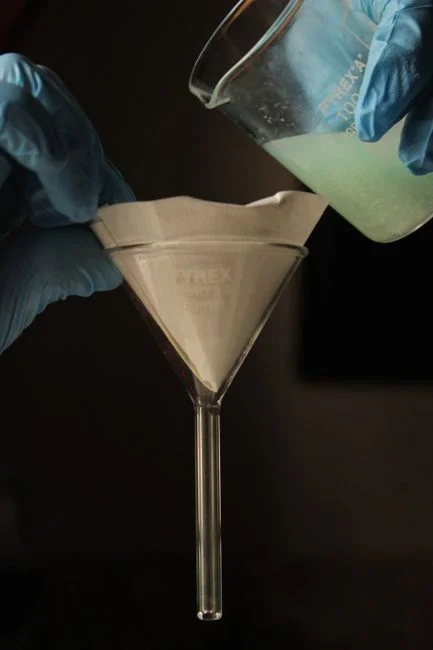
Unit-process selection should follow the required water quality, the contaminants controlling the constraint and the final destination. UF addresses particulates and biological material but not dissolved salts; NF selectively removes hardness and sulfate; RO provides high dissolved-solids rejection for cooling makeup reuse. Genesis Water Tech identifies 10–25 micron self-cleaning spiral filtration and reports 10–50 mg/L suspended solids as typical blowdown. Side-stream filtration can therefore reduce the solids and biological loading entering a recovery train.
UF is appropriate when the principal objectives are suspended-solids control, biological removal or RO pretreatment. HydropureWater’s 0.03 micron hollow-fiber UF system is available from 2,000–40,000 L/h, with PVDF membranes, stated turbidity tolerance up to 300 ppm, automatic backwash and air scour. These are supplier specifications, not a guarantee for an unidentified Zaria feed.
NF occupies the middle ground where partial hardness and sulfate removal can support higher cooling cycles of concentration without full demineralization. The supplied Genesis Water Tech benchmark gives 75–150 psi operating pressure, 70–85% recovery and permeate at 30–50% of feed TDS. RO is the stronger choice for high-quality cooling-tower makeup reuse. The same source states 95–99% dissolved-solids removal, 10–50 mg/L permeate TDS, 150–400 psi operating pressure and 50–85% blowdown-RO recovery.
Recovery cannot be selected independently of scaling chemistry. Silica, calcium carbonate, calcium sulfate and other sparingly soluble salts can constrain membrane operation, so antiscalant dosing, pH conditioning and appropriate pretreatment belong in the design basis. IDE Tech reports that conventional brackish-water RO commonly plateaus at 75–80% recovery before scaling becomes unmanageable. That benchmark is not a substitute for a site-specific projection using the measured Zaria water analysis.
Reserve MVC, brine concentration or full ZLD for situations where water scarcity, discharge restrictions and life-cycle economics justify the additional energy and capital. The decision table below is qualitative except for the sourced process benchmarks.
| Process | Primary objective | Limitation to resolve | Sourced benchmark |
|---|---|---|---|
| Side-stream or spiral filtration | Suspended solids, corrosion products and biological loading | Disposal route for removed solids | 10–25 micron filtration; typical blowdown suspended solids 10–50 mg/L (Genesis Water Tech) |
| UF | Particulate and biological barrier; RO pretreatment | Dissolved salts remain | 2,000–40,000 L/h; 0.03 micron PVDF (HydropureWater specification) |
| NF | Partial hardness and sulfate removal | Chloride and other salts remain | 75–150 psi; 70–85% recovery; permeate at 30–50% of feed TDS (Genesis Water Tech benchmark) |
| RO | High-quality cooling makeup | Scaling and concentrate management | 95–99% dissolved-solids removal; 10–50 mg/L permeate TDS; 150–400 psi; 50–85% recovery (Genesis Water Tech benchmark) |
| MVC or ZLD | Additional recovery and concentrated residual management | Energy demand, capital cost and solid-waste route | MVC: 95–98% recovery and distillate below 10 mg/L TDS (Genesis Water Tech) |
The industrial RO blowdown-recovery system is a relevant equipment reference for a reuse train, but selection should be based on the guaranteed duty at the actual feed chemistry rather than a generic recovery percentage.
Design a Treatment Train That Can Be Operated Reliably
Reliability depends on the interfaces between equalization, pretreatment, membranes, chemical control and storage. Sanitary sewage should have its own equalization and biological-treatment route; the supplied local research does not establish a Zaria wastewater design standard, so no unrelated site data can substitute for the applicable effluent requirement. Cooling-blowdown reuse should be a separate train, preventing sanitary or washdown contamination from determining membrane feed quality.
A practical cooling-reuse sequence is:
- Segregate the blowdown and remove uncontrolled process contamination.
- Equalize the selected stream to stabilize flow and chemistry.
- Screen or filter it, then apply the required chemical control.
- Use UF where the feed requires a particulate and biological barrier or RO pretreatment.
- Use RO where permeate quality is required for direct or blended cooling makeup.
- Store permeate, monitor it, and blend or return it under a controlled program.
Install antiscalant dosing, pH correction, and measurements for permeate flow, concentrate flow, conductivity, operating pressure, differential pressure and permeate quality. The multimedia filtration equipment reference can be used to frame pretreatment duties, while the automatic chemical-dosing reference illustrates the controls needed for consistent conditioning. Neither removes the need to size the system from verified water analyses.
RO concentrate requires its own decision tree. It may receive further recovery, controlled disposal or another permitted destination only after assessment of residual salt, scaling compounds, treatment chemicals and biocide burden. Do not dilute a concentrate merely to meet an assumed limit.
Where conservation and disposal constraints justify additional concentration, MVC is one option. Genesis Water Tech reports 95–98% recovery from concentrate, distillate below 10 mg/L TDS and energy use of 15–25 kWh per 1,000 US gallons of distillate. These are process benchmarks, not a Zaria energy estimate.
| Train element | Design function | Required operating evidence |
|---|---|---|
| Equalization | Stabilize flow, temperature and contaminant loading | Logged levels, mixing performance and operating range |
| Filtration and UF | Remove suspended solids and biological material before RO | Particle trend, differential pressure, backwash and cleaning records |
| Chemical conditioning | Control scaling and maintain feed compatibility | Residual measurements, chemical inventory and dosing calibration |
| RO | Produce cooling makeup and a concentrated residual | Permeate flow and quality, recovery, pressure and salt balance |
| Permeate handling | Provide reliable storage, blending and return | Tank levels, quality interlocks and contamination controls |
| Concentrate management | Recover water or route residual to a permitted destination | Residual chemistry, destination approval and operating responsibility |
Provide bypasses, isolation valves, flush routes, cleaning access and redundancy for critical equipment. Partial membrane or dosing failure should not force an uncontrolled discharge or impair cooling operations. The operator must be able to recognize off-normal chemistry, isolate the train and execute the approved response.
Compare Reuse, Discharge and ZLD Economics
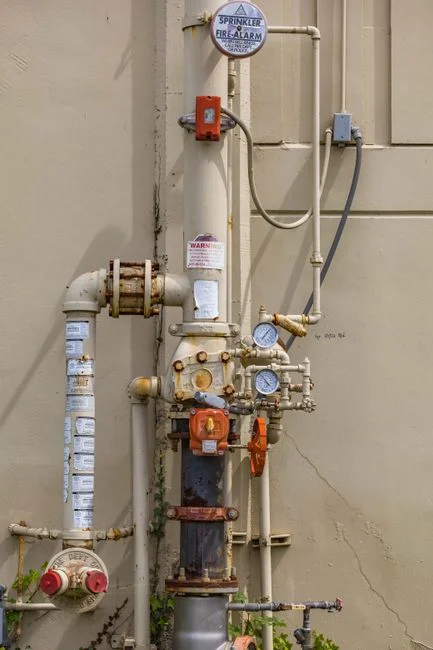
Cooling-tower makeup reuse is normally the first economic case to test because recovered water can replace freshwater while reducing discharge volume. Genesis Water Tech identifies cooling makeup reuse as the main data-center application and reports 60–85% recovery for this approach. The actual value depends on compatible water chemistry, reliable cooling performance and a controlled return point.
Discharge treatment is appropriate where reuse is not feasible and the project can obtain the applicable permit parameters. Genesis Water Tech notes municipal constraints on TDS, phosphorus and biocide residuals, but the supplied research gives no Zaria numerical limit. Scope treatment around verified requirements rather than a generalized desalination objective.
ZLD should include membrane concentration, thermal evaporation and crystallization in the comparison. The supplied benchmark reports 95–99% overall recovery, capital cost of $3–8 million and operating cost of $5–15 per thousand gallons treated. These values apply to the benchmark’s ZLD scope and must not be presented as a Zaria quotation.
The supplied 50,000 GPD blowdown-RO benchmark is $250,000–500,000 installed and $1.50–3.00 per thousand gallons treated, including energy, chemicals, membrane replacement and maintenance. Treat it only as a preliminary global reference. Currency conversion, freight, taxes, local construction, import duties, financing and site-specific pretreatment are not established by the research.
Build the Zaria financial case using actual freshwater cost, discharge fees, electricity, antiscalant, membrane replacement, cleaning, labour, backup power and residual-disposal cost. Test sensitivity to blowdown flow, cycles of concentration, permeate value, water price, disposal cost, energy price and recovery. A regional blowdown treatment and recovery approach illustrates the comparison sequence, but its local economics must be replaced with Zaria inputs.
| Option | Commercial basis | Cost inputs required for Zaria | Key commercial risk |
|---|---|---|---|
| Makeup reuse | Value recovered water and reduce freshwater purchases | Actual water price, recovery, electrical load, pretreatment and membrane lifecycle | Permeate or blend chemistry incompatible with cooling operation |
| Discharge compliance | Avoided disposal cost and compliance treatment | Permit requirements, discharge route, fees, pretreatment and residual handling | Unknown or changing receiving-route constraints |
| Partial or full ZLD | Maximise recovery and minimise liquid discharge | Energy tariff, residual disposal, thermal equipment and operator capability | High energy demand without sufficient economic or environmental justification |
Issue a Supplier and Equipment-Selection Checklist
A supplier should guarantee performance at the actual Zaria feed analysis, not at a generic feed condition. Require guaranteed permeate flow, feed and concentrate flow, recovery, permeate TDS, system availability and operating pressure. Define the recovery calculation, test period, feed-water temperature, scaling indices, chemical programme, operating hours and measurement points in the guarantee.
Request membrane materials, element life, cleaning frequency, replacement pricing, antiscalant compatibility, controls, alarms, PLC or SCADA integration, local-service capability and spare-parts lead time. Require the supplier to identify all exclusions, including feed pumps, tanks, pretreatment, chemical storage, dosing skids, membranes, valves, controls, installation, commissioning, operator training and waste-disposal provisions.
Use HydropureWater’s 2,000–40,000 L/h UF range and 0.03 micron PVDF configuration as a technical reference point, then verify the project-specific hydraulic and turbidity duty. The membrane and filter-element specification reference should be used to compare materials, interfaces and replacement planning, not as evidence of site performance. The treatment-parts and valve reference supports a completeness check for valves, media and serviceability.
| Vendor submission | Required detail | Acceptance check |
|---|---|---|
| Process guarantee | Flow, recovery, permeate TDS, availability and operating pressure | Tested at representative Zaria feed chemistry and temperature |
| Membrane schedule | Material, area, element count, life, cleaning and replacement price | Compatible with measured scaling and fouling risk |
| Chemical interface | Antiscalant, pH control, biocide and corrosion-inhibitor compatibility | No uncontrolled conflict with the existing cooling programme |
| Controls and alarms | PLC or SCADA, sensor ranges, data points, fail-safe states and remote access | Interlocks, traceability and operator access confirmed |
| Scope boundary | Every tank, pump, skid, installation item and residual route | Excluded items are priced rather than left implicit |
| Service and spares | Local capability, response arrangements, stock and lead times | Supports the project’s availability and maintenance assumptions |
Do not compare systems on nameplate flow alone. A lower-priced membrane train may fail the guaranteed duty after antiscalant demand, cleaning, power consumption, concentrate handling and operator labour are included. Check that every commercial claim has a defined test method and acceptance tolerance.
Frequently Asked Questions
What treatment train is most suitable for cooling-tower blowdown reuse in a Zaria data center?
A segregate-treat-reuse train is the logical starting point: equalization, filtration or UF, chemical conditioning, RO where permeate quality is required, permeate storage, and controlled blending or return to cooling makeup. UF alone may be enough where the objective is only particulate and biological control. Actual selection requires the measured Zaria source-water and blowdown chemistry, cooling chemistry, intended reuse target and confirmed residual route.
How much does a blowdown recovery system cost, and which cost figures are relevant to Zaria?
No Zaria quotation is supported by the supplied research. The only relevant global reference is the Genesis Water Tech benchmark of $250,000–500,000 installed for a 50,000 GPD blowdown-RO system, with $1.50–3.00 per thousand gallons treated. Ask suppliers for an itemized local quotation covering equipment, civil works, installation, membranes, pretreatment, chemicals, commissioning, backup power, maintenance and residual disposal, together with the actual Zaria water, electricity and disposal inputs needed to complete the comparison.
Should the project specify UF alone, UF plus RO, or a full ZLD system?
Specify UF alone only when verified project objectives require solids and biological control without dissolved-solids reduction. Use UF plus RO when recovered water must meet a defined cooling-makeup quality or discharge constraint. Consider MVC or ZLD only after the permit route, water value, energy cost and residual-handling options are known. A full ZLD selection without verified local economics would commit the project to unnecessary capital and operating complexity.
What information should be included in an RFQ sent to wastewater-treatment suppliers?
Include measured source-water and blowdown analyses, flow and operating-hour data, cooling cycles of concentration, the chemical programme, required permeate flow and quality, proposed recovery, permitted residual route, available footprint, power quality, control-system requirements, operator capability and acceptance-test method. Also request membrane and spare-parts pricing, cleaning assumptions, scope exclusions, commissioning obligations, local service support and delivery lead time. A detailed site-specific RFQ and treatment-options guide can help structure the submission, but the technical guarantee must remain tied to Zaria data.
What permit and site information must be confirmed before selecting a discharge route?
Obtain written confirmation of the responsible Nigerian and Kaduna State authorities, the receiving sewer or drainage route, permit prerequisites, applicable effluent parameters, monitoring duties and hazardous-waste handling requirements. The supplied research does not establish numerical Zaria discharge limits, so do not select a treatment target or disposal destination from generic examples. Before procurement, also confirm local water availability, freshwater and discharge costs, power reliability, backup-power provision, chemical-storage conditions, footprint and the route for any RO concentrate or salt residue.