The Brasília water pinch: why the Cerrado drives the design
Brasília sits on the Cerrado plateau at roughly 1,172 m elevation, with a mean annual temperature of 20–22 °C, a dry winter from May to September, and a wet summer that concentrates more than 80% of annual rainfall between October and April. That seasonal pattern is the design driver: evaporative cooling demand on a data center campus peaks in the same months the Paranoá basin that supplies most of the Distrito Federal is most stressed. The basin's tributary catchments have come under repeated critical-state classifications from ADASA in recent dry seasons, and CAESB has responded with industrial allocation caps analogous to the COPASA restrictions Minas Gerais operators now plan around.
For a 20–80 MW campus running an adiabatic/economizer hybrid loop at PUE 1.3–1.5, plan makeup of 200–800 m³/day; the Open Engineering reference of approximately 2 million L/day for a 100 MW facility sets the upper benchmark (S1). The Cerrado's lower wet-bulb temperatures compared with coastal Brazil let a well-designed adiabatic loop push cycles of concentration (COC) to 6–8 with side-stream RO, but the basin math still forces a reuse-first posture. Only 51% of data center operators track water use globally per the 2021 Uptime Institute survey — and Brasília regulators are tightening mandatory periodic reporting so local early movers gain ESG audit standing while competitors are still building the spreadsheet. Discharge-only is no longer a defensible 2026 strategy in the DF; on-site reuse is the design baseline, and the rest of this article is built around that premise.
Two effluent streams, one discharge point
A data center campus in Brasília produces two distinct effluent streams that converge at the discharge point but require separate treatment trains. Stream 1 is cooling tower blowdown — the bleed cycle that holds COC at 4–6 to prevent scale. At 4–6 COC, expect 1,500–2,500 mg/L TDS, 400–800 mg/L CaCO₃ total hardness, 5–50 mg/L free chlorine or bromine residual, and 5–30 mg/L TSS, with ranges shifting on scale-inhibitor chemistry and ambient dust load. Stream 2 is domestic sanitary wastewater from staff, cafeteria, and restrooms, typically 50–100 L/person/day at a hyperscale campus, characterized by BOD 150–300 mg/L, TSS 150–250 mg/L, and NH₃-N 20–40 mg/L.
Blowdown volume is governed by the relationship Blowdown = Makeup / (COC − 1); at 4–6 COC the bleed runs 0.3–0.8% of makeup volume (S5). For a 40 MW campus with PUE 1.4 and an adiabatic/economizer hybrid cooling loop, that translates to roughly 60–240 m³/day of blowdown on top of 50–80 m³/day of sanitary flow. Both streams normally discharge to the CAESB sewer under CONAMA 430 unless on-site reuse is designed in; the permit path differs by stream because biocide and scale-inhibitor residuals trigger toxicity caps that sanitary BOD and TSS do not.
| Parameter | Cooling tower blowdown (4–6 COC) | Domestic sanitary | CONAMA 430/2011 sewer cap |
|---|---|---|---|
| Flow (m³/day, 40 MW reference) | 60–240 | 50–80 | — |
| TDS (mg/L) | 1,500–2,500 | 300–600 | Not nationally capped; ADASA basin-specific |
| Total hardness as CaCO₃ (mg/L) | 400–800 | 100–200 | — |
| BOD (mg/L) | < 20 | 150–300 | ≤ 120 (sewer discharge) |
| TSS (mg/L) | 5–30 | 150–250 | Per receiving-water class |
| Free chlorine / bromine (mg/L) | 5–50 | — | ≤ 0.5 at point of discharge |
| NH₃-N (mg/L) | — | 20–40 | ≤ 20 (CONAMA 430) |
| Oils & greases (mg/L) | 2–10 | 10–30 | ≤ 50 |
| Biocides (isothiazolinone, mg/L) | 1–15 | — | Toxicity-capped per ADASA |
CONAMA 430/2011 and the ADASA overlay for the DF
CONAMA Resolution 430/2011 sets the national effluent floor: pH 5–9 for discharge to receiving waters, BOD typically ≤ 120 mg/L for sewer discharge unless the local operator imposes tighter values, oils and greases ≤ 50 mg/L, and TSS limits set per receiving-water class. The resolution also carries explicit toxicity caps for biocides, which matters more for cooling blowdown than for sanitary flow. ADASA's Paranoá basin decrees layer load-based limits for TDS, chlorides, and sulfates on top, especially in drought-sensitive sub-basins that include the DF, and the 2024 reservoir-quality resolution tightened the per-volume pollutant loads a data center can send toward the Lago Paranoá watershed.
For cooling blowdown, the standard permit approach is a hold-and-decay tank sized at 24–48 h of blowdown volume, paired with sodium bisulfite dosing to drop free chlorine residual to ≤ 0.5 mg/L before discharge — a single-stage dechlorination unit. Isothiazolinone destruct requires a longer holding time or activated carbon polishing, and the permit reviewer will look for both. The cleanest path around CONAMA 430's effluent caps is on-site reuse: when blowdown is polished to cooling-makeup quality, the regulatory target becomes the reuse specification (typically MBR/RO-grade), not the discharge limit, and the discharge conversation becomes a wet-weather overflow conversation rather than a baseline operating point. The same logic is documented for Minas Gerais in the Belo Horizonte data center treatment guide; the Brasília analog uses ADASA + CAESB in place of COPAM + COPASA.
Five-step treatment train for cooling tower blowdown
The 2026 treatment train for a Brasília cooling-blowdown stream is five unit operations, designed to hit either CONAMA 430 discharge or cooling-makeup reuse without changing the upstream sequence.
- Equalization and neutralization. A 24–48 h equalization basin smooths TDS swings and absorbs slug discharges from cycle dumps; dose sulfuric acid or CO₂ to trim pH into the 7.0–8.0 window before the next unit operation. Basin volume scales with makeup × 0.3–0.8% × 24–48 h, which on a 40 MW campus is 60–240 m³ of live storage.
- DAF for oil, TSS, and partially-bound metal removal. Specify a dissolved air flotation system with micro-bubble saturation in the 4–300 m³/h envelope; DAF goes upstream of softening and RO to keep oils, silica scale, and metal hydroxides off the membranes. Hydraulic residence time of 20–30 minutes is typical; float solids are skimmed to sludge handling.
- Hardness reduction. Lime-soda softening or weak-acid cation exchange drops calcium and magnesium to < 50 mg/L as CaCO₃, with the resulting sludge dewatered on a plate-and-frame filter press to 25–35% dry solids for off-site haul. Lime dose runs 200–400 mg/L as CaO for typical DF hardness.
- Side-stream RO. An industrial RO polishing system treats a slipstream at 75–95% recovery, cutting net TDS bleed from the campus and returning permeate to the cooling loop; pretreatment is multi-media plus 5 µm cartridge, and permeate TDS of 10–50 mg/L is suitable for direct cooling-tower makeup (S5).
- Disinfection. A chlorine dioxide generator in the 50–20,000 g/h envelope maintains 0.1–0.3 mg/L residual on the reuse line. On the discharge line, sodium bisulfite dechlorination drops free chlorine to ≤ 0.5 mg/L, with isothiazolinone destruct handled by extended hold-and-decay (48–72 h) or activated carbon.
Where basin TDS is acute and discharge is constrained, the same train upgrades to ZLD by adding a brine concentrator (MVC at 15–25 kWh/kgal distillate) and a forced-circulation crystallizer — but in the DF this is the exception, not the default. For comparison, the Córdoba data center treatment guide applies the same logic to an even more arid setting.
| Step | Unit operation | Design parameter | Typical value |
|---|---|---|---|
| 1 | Equalization + neutralization | HRT | 24–48 h |
| 2 | DAF | Flow envelope | 4–300 m³/h |
| 3 | Softening (lime-soda or WAC) | Effluent hardness | < 50 mg/L as CaCO₃ |
| 4 | Side-stream RO | Recovery | 75–95% |
| 4 | Side-stream RO | Permeate TDS | 10–50 mg/L |
| 5 | ClO₂ | Generation envelope | 50–20,000 g/h |
| 5 | ClO₂ | Reuse residual | 0.1–0.3 mg/L |
Sanitary wastewater: WSZ package or full MBR
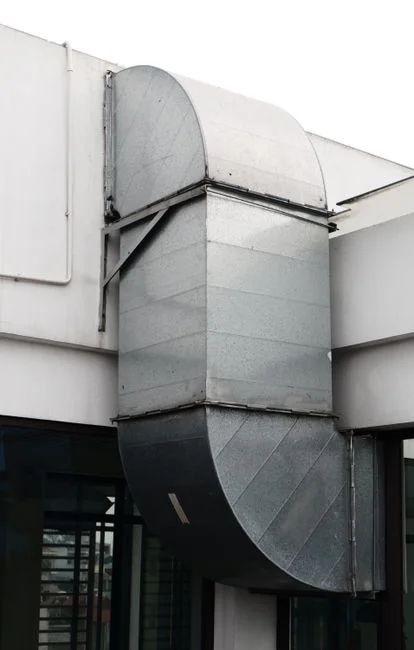
Below roughly 80 m³/d of sanitary flow with no reuse intent, a WSZ underground packaged sewage treatment plant in the 1–80 m³/h envelope handles the load fully buried, with no on-site operator and a single annual sludge pump-out. For a 40–80 MW hyperscale site that wants to reuse treated sewage for cooling-tower makeup, irrigation, or toilet flush, specify an MBR membrane bioreactor system with submerged PVDF at < 1 µm pore size — roughly 60% smaller footprint than conventional activated sludge, with effluent BOD < 5 mg/L and TSS < 1 mg/L that meets reuse targets without tertiary polishing. The replaceable flat-sheet elements in the DF-series membrane module lineup cover 10–2,000 m³/day campus WWTPs and clean in place with standard CIP chemistry. The design logic mirrors the AWS hyperscale reference: treated effluent is the feedstock, not the disposal problem, and the same approach is documented for East Africa in the Dar es Salaam data center treatment guide.
Brasília differentiator: reclaimed CAESB effluent as cooling makeup
Polishing treated effluent from the Brasília Sewage Treatment Plants (the Sul and Norte WWTPs that serve the DF) through MBR + RO + ClO₂ cuts potable draw by 60–80% — material when ADASA declares scarcity and CAESB imposes industrial allocation caps. The polishing chain is rotary bar screening through a GX series mechanical bar screen, a multi-media filter for turbidity and iron, the MBR for organics, an industrial RO pass for TDS cut, and a chemical dosing system feeding ClO₂ for residual control — sequencing identical to the cooling-blowdown train, but with the MBR taking the feed instead of equalization. The gating item is the concession/permit path with CAESB for third-party reuse of treated sewage; raise it in the front-end engineering phase so the timeline matches the water-rights calendar, not the equipment delivery calendar. For hyperscale operators, this pathway converts a discharge permit conversation into a reuse partnership and is the single biggest lever for ADASA-declared scarcity periods.
Three tiers tied to cycles of concentration
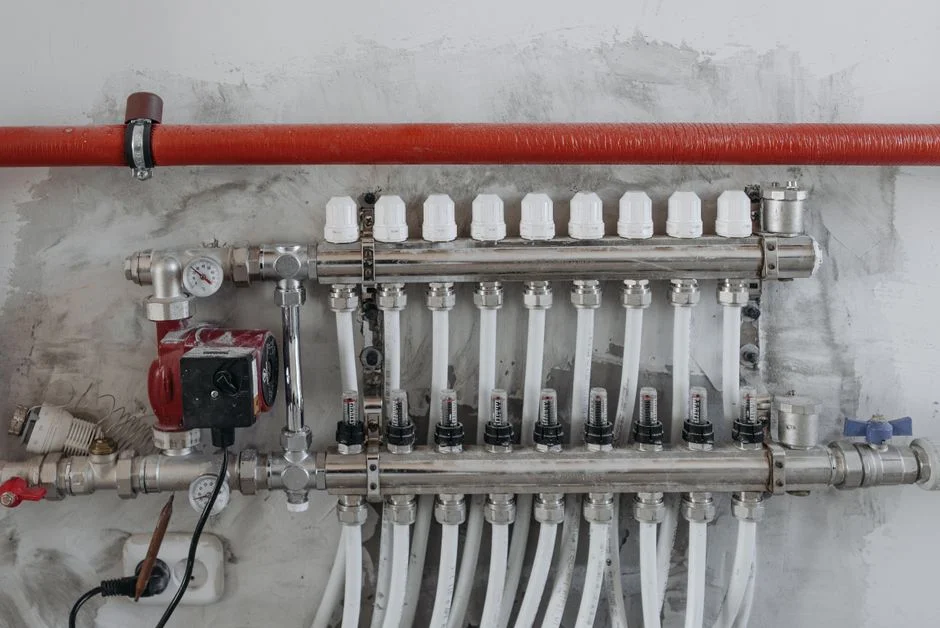
Three tiers, each tied to COC and reuse targets rather than a fixed process flow, let a procurement manager pick a scope by campus size and water-stewardship ambition instead of forcing a one-size-fits-all tender.
| Tier | Campus size | Sanitary | Cooling blowdown | Target COC | Reclaimed effluent makeup |
|---|---|---|---|---|---|
| Tier 1 — colocation | < 5 MW | WSZ package, sewer discharge | DAF only if TSS > 20 mg/L; no RO, no softening | 4–5 | No |
| Tier 2 — mid-size | 5–30 MW | WSZ or MBR | DAF + softener + side-stream RO, ClO₂ on reuse loop | 6–8 | Possible |
| Tier 3 — hyperscale | 30+ MW | Full MBR | Full pretreatment-RO train, optional ZLD above 1,500 mg/L basin TDS | 7–10 | Yes (CAESB concession) |
The JY integrated water purification system and the high-efficiency sedimentation tank (lamella clarifier) fit Tier 2 and Tier 3 polishing loops; both cut chemical consumption by up to 30% versus conventional trains and reduce footprint in the mechanical room. Push COC to 7–10 with side-stream RO in Tier 2 and Tier 3 — every additional cycle reduces blowdown volume by the relationship Blowdown = Makeup / (COC − 1), so the savings are nonlinear once the softener and RO are online.
ROI and the CAESB tariff breakpoint
The CAPEX payback on RO water reuse falls below 3 years when municipal potable tariffs exceed roughly R$15/m³ — a threshold CAESB has now crossed for industrial allocations in the DF. A 50,000 GPD RO system on blowdown installs for $250,000–500,000 with OPEX of $1.50–3.00/kgal including energy, chemicals, membrane replacement, and maintenance (S5). MVC and ZLD step in only where basin TDS exceeds 1,500 mg/L or discharge is prohibited: ZLD CAPEX runs $3–8 M, OPEX $5–15/kgal at 95–99% overall recovery (S5) — comparable economics to other hyperscale arid sites. Beyond direct savings, discharge fees in water-stressed regions of $5–15 per thousand gallons (S5) add a second economic line to the reuse case. The 60–80% potable-draw reduction from the reclaimed CAESB effluent path compounds the savings when ADASA scarcity is declared, because the industrial allocation cap stops being binding once on-site reuse is the baseline.
| Configuration | CAPEX (USD) | OPEX (USD/kgal) | Overall recovery | Payback trigger |
|---|---|---|---|---|
| 50,000 GPD RO on blowdown | $250,000–500,000 | $1.50–3.00 | 75–95% | CAESB tariff > R$15/m³ |
| MVC brine concentrator | $1–3 M (10–30k GPD) | 15–25 kWh/kgal distillate | 95–98% of concentrate | Basin TDS > 1,500 mg/L |
| Full ZLD (RO + MVC + crystallizer) | $3–8 M | $5–15 | 95–99% | Discharge prohibited |
| Discharge fee offset (water-stressed regions) | — | $5–15 per kgal avoided | — | Always |
Frequently Asked Questions
What cycles of concentration should a Brasília data center target on its cooling loop?
Without side-stream RO, target 4–6 COC to keep blowdown TDS manageable for discharge under CONAMA 430 and the ADASA Paranoá basin overlay; with side-stream RO and lime-soda softening, push to 7–10 COC and recover more than 75% of blowdown as reuse water (HydropureWater field data, 2026).
Can treated effluent from the Brasília Sul or Norte WWTPs really be reused as cooling-tower makeup?
Yes — a CAESB concession allows treated effluent from the Sul or Norte WWTPs to be polished through MBR + RO + ClO₂ and reused as cooling makeup, cutting potable draw by 60–80% during ADASA-declared scarcity periods and side-stepping the CONAMA 430 discharge cap; the permit path must be raised in front-end engineering to align with the water-rights calendar.
What is the standard permit path for cooling-tower blowdown discharge in the DF?
CONAMA Resolution 430/2011 sets the national floor (pH 5–9, BOD ≤ 120 mg/L for sewer, O&G ≤ 50 mg/L), and ADASA layers tighter TDS, chloride, and sulfate limits in drought-sensitive Paranoá sub-basins; the standard permit approach is a 24–48 h hold-and-decay tank plus sodium bisulfite to drop free chlorine to ≤ 0.5 mg/L at the point of discharge.
When does a Brasília hyperscale campus need to consider zero liquid discharge?
ZLD becomes defensible only when basin TDS exceeds 1,500 mg/L or discharge is effectively prohibited, which in the DF means an active ADASA scarcity declaration combined with a CAESB allocation cap severe enough to make reuse the only operating mode; at that point, add MVC and a forced-circulation crystallizer to the standard five-step train and budget $3–8 M CAPEX with $5–15/kgal OPEX (HydropureWater field data, 2026).