
Why Belo Horizonte Is a Specific Water-Stress Case for Data Center Operators
Belo Horizonte sits in a tropical highland climate (Köppen Aw) with mean annual temperatures near 22 °C and dry-winter rainfall patterns that have triggered repeated drought decrees from the Estado de Minas Gerais since 2014. The São Francisco and das Velhas basins that supply the metropolitan region have come under successive critical-state classifications from the Agência Nacional de Águas, and COPASA has imposed industrial allocation caps during the worst years — directly relevant to a 20–80 MW campus drawing 200–800 m³/day of makeup. A 2021 Environmental Research Letters study found that the data center industry directly or indirectly draws water from 90% of U.S. watersheds; the equivalent Brazilian risk picture concentrates on these two basins. A 2021 Uptime Institute survey reported that only 51% of data center operators track their water use at all — Minas Gerais' stricter reporting norms make local early movers look better to ESG auditors. The rest of this article treats the two effluent streams that follow from that water draw: cooling tower blowdown and domestic sanitary wastewater.
The Two Wastewater Streams a BH Data Center Actually Generates
A data center campus in Belo Horizonte produces two distinct effluent streams that converge at the discharge point but require separate treatment trains. Stream 1 is cooling tower blowdown — the bleed cycle that holds cycles of concentration (COC) at 4–6 to prevent scale. At 4–6 COC, expect 1,500–2,500 mg/L TDS, 400–800 mg/L CaCO₃ total hardness, 5–50 mg/L free chlorine or bromine residual, and 5–30 mg/L TSS, with ranges shifting on scale-inhibitor chemistry and ambient dust load. Stream 2 is domestic sanitary wastewater from staff, cafeteria, and restrooms, typically 50–100 L/person/day at a hyperscale campus. For a 40 MW campus with PUE 1.4 and an adiabatic/economizer hybrid cooling loop, blowdown commonly runs 0.3–0.8% of makeup volume — sized by the relationship Blowdown = Makeup / (COC − 1). Per ASCE's 2024 coverage of data center water systems, both streams normally discharge to the local sewer under COPAM/CERH-MG 01/2008 unless on-site reuse is designed in.
| Parameter | Cooling Tower Blowdown (4–6 COC) | Domestic Sanitary |
|---|---|---|
| Flow basis | 0.3–0.8% of cooling makeup | 50–100 L/person/day |
| TDS | 1,500–2,500 mg/L | 300–600 mg/L |
| Total hardness (as CaCO₃) | 400–800 mg/L | 100–200 mg/L |
| TSS | 5–30 mg/L | 150–300 mg/L |
| BOD₅ | < 10 mg/L | 200–400 mg/L |
| Free Cl₂ / Br residual | 5–50 mg/L | negligible |
| Phosphonate scale inhibitor | 2–10 mg/L | n/a |
| pH | 7.0–8.5 | 6.5–7.5 |
Brazilian Discharge Limits You Must Design To: CONAMA 430 and COPAM/CERH-MG 01/2008
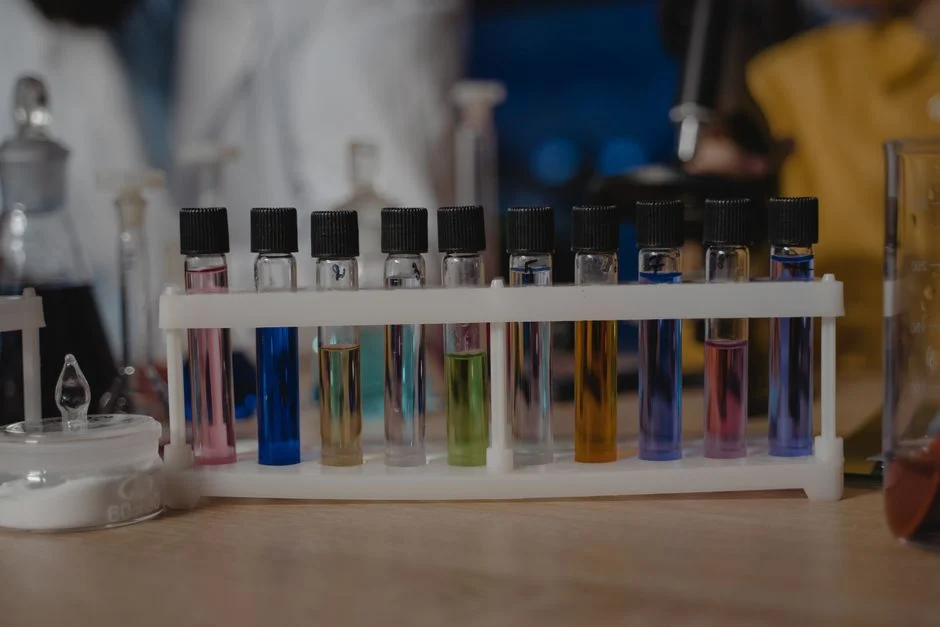
CONAMA Resolution 430/2011 sets the national effluent framework: pH 5–9 for discharge to receiving waters, BOD typically ≤ 120 mg/L for sewer discharge unless the local operator imposes tighter values, oils and greases ≤ 50 mg/L, and TSS limits set per receiving-water class. COPAM/CERH-MG Joint Resolution 01/2008 (Deliberação Normativa Conjunta) layers Minas Gerais–specific load-based limits on top, and for drought-sensitive sub-basins the resolution restricts TDS, chlorides, and sulfates more aggressively than the national floor. For cooling blowdown, biocides (isothiazolinones, free chlorine/bromine) and phosphonate scale inhibitors can trigger specific toxicity limits — the standard permit approach is a hold-and-decay tank sized at 24–48 hours of blowdown volume, often paired with sodium bisulfite for chlorine destruct before discharge. The cleanest path around CONAMA 430's effluent caps is on-site reuse: when blowdown is polished to cooling-makeup quality, the regulatory target becomes the reuse specification (typically MBR/RO-grade), not the discharge limit.
| Parameter | CONAMA 430/2011 (national) | COPAM/CERH-MG 01/2008 (MG-specific) | Design target for BH cooling blowdown |
|---|---|---|---|
| pH | 5–9 | 6.0–9.0 | 7.0–8.0 (post-neutralization) |
| TDS | not nationally capped; per receiving water | ≤ 2,000 mg/L in drought-sensitive sub-basins | ≤ 2,000 mg/L at discharge |
| BOD | ≤ 120 mg/L (sewer) | ≤ 60 mg/L (load-based) | ≤ 30 mg/L post-MBR if reused |
| Oils & greases | ≤ 50 mg/L | ≤ 30 mg/L | ≤ 10 mg/L post-DAF |
| Free chlorine residual | ≤ 1.0 mg/L | ≤ 0.5 mg/L at point of discharge | 0.1–0.3 mg/L (dechlor before discharge) |
| Total phosphorus | per receiving water | load-based cap | ≤ 1.0 mg/L post-softening |
Cooling Blowdown Treatment Process Train for Belo Horizonte Conditions
Step 1 — Equalization and neutralization: a 24–48 h equalization basin smooths TDS swings and absorbs slug discharges from cycle dumps; dose sulfuric acid or CO₂ to trim pH into the 7.0–8.0 window before the next unit operation. Step 2 — DAF for oil, TSS, and partially-bound metal removal: specify a dissolved air flotation system with micro-bubble saturation in the 4–300 m³/h envelope; DAF goes upstream of softening and RO to keep oils, silica scale, and metal hydroxides off the membranes. Step 3 — Hardness reduction: lime-soda softening or weak-acid cation exchange drops calcium and magnesium to < 50 mg/L as CaCO₃, with the resulting sludge dewatered on a plate-and-frame filter press to 25–35% dry solids for off-site haul. Step 4 — Side-stream RO: an industrial RO polishing system treats a slipstream at 75–95% recovery, cutting net TDS bleed from the campus and returning permeate to the cooling loop; pretreatment is multi-media plus 5 µm cartridge. Step 5 — Disinfection: a chlorine dioxide generator in the 50–20,000 g/h envelope maintains 0.1–0.3 mg/L residual on the reuse line. Where Minas Gerais water-stress is acute, the same train upgrades to ZLD by adding a brine concentrator and forced-circulation crystallizer — the hybrid design logic for hyperscale sites is laid out in this high-salinity wastewater and ZLD design reference.
Domestic Wastewater: Packaged Plant vs. MBR for a 40–80 MW Campus

For a campus below ~80 m³/d of sanitary flow with no reuse intent, a WSZ underground packaged sewage treatment plant in the 1–80 m³/h envelope handles the load fully buried, with no on-site operator and a single annual sludge pump-out. For a 40–80 MW hyperscale site that wants to reuse treated sewage for cooling-tower makeup, irrigation, or toilet flush, specify an MBR membrane bioreactor system with submerged PVDF at < 1 µm pore size — roughly 60% smaller footprint than conventional activated sludge, with effluent BOD < 5 mg/L and TSS < 1 mg/L that meets reuse targets without tertiary polishing. The replaceable flat-sheet elements in the DF-series membrane module lineup cover 10–2,000 m³/day campus WWTPs and clean in place with standard CIP chemistry. The design logic mirrors the Google Douglas County, GA approach cited in the 2024 ASCE piece — treated effluent is the feedstock, not the disposal problem.
Reclaimed-Municipal-Effluent Makeup: The Belo Horizonte Differentiator
The Belo Horizonte differentiator is reusing treated effluent from COPASA's Arrudas or Onça WWTPs as cooling makeup, polishing it through MBR + RO + ClO₂ before it enters the loop. The resilience benefit is concrete: cut potable draw by 60–80% — material when Minas Gerais is under a drought decree and COPASA imposes industrial allocation caps. The polishing chain is rotary bar screening through a GX series mechanical bar screen, a multi-media filter for turbidity and iron, the MBR for organics, an industrial RO pass for TDS cut, and a chemical dosing system feeding ClO₂ for residual control. The gating item is the concession/permit path with COPASA for third-party reuse of treated sewage — raise it in the front-end engineering phase so the timeline matches the water-rights calendar. Operators considering this route should also review the AWS hyperscale data center wastewater treatment case study for an analogous design pattern.
Equipment Selection Framework: Matching the Treatment Train to Campus Size
Three tiers, each tied to cycles of concentration and reuse targets rather than a fixed process flow. Tier 1 (colocation, < 5 MW): a WSZ packaged sanitary plant with blowdown discharged to sewer under COPAM; no RO, no softening, DAF only if oils or TSS exceed 20 mg/L. Tier 2 (mid-size, 5–30 MW): WSZ or MBR sanitary plus DAF + softener + side-stream RO on blowdown, ClO₂ on the reuse loop — push COC to 6–8 to cut blowdown volume. Tier 3 (hyperscale, 30+ MW): full MBR sanitary, full pretreatment-RO train on blowdown, optional ZLD when TDS in the basin exceeds 1,500 mg/L, and reclaimed-municipal-effluent makeup enabled through a COPASA concession. The CAPEX payback on RO water reuse falls below 3 years when municipal potable tariffs exceed roughly R$ 15/m³ — a threshold COPASA crossed in Belo Horizonte in 2024. The JY integrated water purification system and high-efficiency sedimentation tank fit Tier 2 and Tier 3 polishing loops. For comparison, the Digital Realty 2026 wastewater treatment process train follows a similar tiered logic at the colocation scale.
| Decision criterion | Tier 1 (< 5 MW) | Tier 2 (5–30 MW) | Tier 3 (30+ MW) |
|---|---|---|---|
| Target cycles of concentration | 3–4 | 5–7 | 7–10 (with side-stream RO) |
| Sanitary plant | WSZ packaged | WSZ or MBR | Full MBR with reuse |
| Blowdown treatment | Discharge to sewer | DAF + softener + side-stream RO | DAF + softener + RO, optional ZLD |
| Makeup source | Potable only | Potable + partial reuse | Reclaimed municipal effluent + RO blend |
| CAPEX payback on RO | n/a | 4–6 years | < 3 years at R$ 15/m³ tariff |
| COPASA permit complexity | Standard discharge | Discharge + reuse | Reclaimed-effluent concession |
Frequently Asked Questions
What are the cooling tower blowdown discharge limits in Belo Horizonte?
Under COPAM/CERH-MG 01/2008, cooling blowdown discharged to sewer in Minas Gerais drought-sensitive sub-basins is typically capped at TDS ≤ 2,000 mg/L, pH 6.0–9.0, free chlorine residual ≤ 0.5 mg/L, and oils & greases ≤ 30 mg/L — tighter than the national CONAMA 430/2011 floor.
Can a data center in Belo Horizonte reuse treated municipal sewage as cooling makeup?
Yes — a COPASA concession allows treated effluent from the Arrudas or Onça WWTPs to be polished through MBR + RO + ClO₂ and reused as cooling makeup, cutting potable draw by 60–80% during Minas Gerais drought decrees and side-stepping the CONAMA 430 discharge cap.
What cycles of concentration should a Belo Horizonte cooling tower target?
Without side-stream RO, target 4–6 COC to hold TDS below the 2,000 mg/L COPAM cap; with side-stream RO and lime-soda softening, push to 7–10 COC and recover > 75% of blowdown as reuse water.
Do Brazilian data centers have to report water use to regulators?
Minas Gerais state reporting norms are stricter than the global norm, where only 51% of operators track water use per the 2021 Uptime Institute survey; local operators face mandatory periodic reporting that improves ESG audit standing.