Why Córdoba, Argentina Is a Distinct Case for Data Center Water Design
Córdoba sits inland at roughly 400–500 m elevation with a drier Pampean climate; the summer design wet-bulb is approximately 22–24°C, several degrees cooler than Buenos Aires (24–26°C per the 2026 Buenos Aires data center water guide) and slightly below Phoenix at 22–25°C. Lower wet-bulb means less tower evaporation per MW, so the design driver is not the wet-bulb envelope — it is freshwater competition and the discharge permit. The Suquía and Los Molinos basins are seasonally water-stressed, and a 20–50 MW campus pulling 1,200–3,000 m³/day out of the local network will trigger the same scrutiny Buenos Aires operators now face under ACUMAR. Two regulators sit on top of the same discharge: the provincial Secretaría de Recursos Hídricos de la Provincia de Córdoba (the Resolución provincial framework governing industrial effluents to provincial receiving waters) and the municipal sewer operator — typically Aguas Cordobesas for the urban fringe or the local planta depuradora for a parque industrial site. A defensible 2026 RFQ must cite both by name and resolution number; a Buenos Aires transplant will not survive a site inspection.
The Three Effluent Streams a Córdoba Data Center Must Treat
Treating only domestic sewage is the most common spec error in early-stage Córdoba projects; a 10–50 MW campus generates three streams that rarely share a single unit operation. The table below shows the envelope an EPC consultant can lift into an RFQ scoring sheet.
| Stream | Source | Key parameters | Typical flow (20 MW campus) | Target train |
|---|---|---|---|---|
| 1 — Domestic sewage | Sanitary, kitchen, restroom | BOD₅, TSS, NH₃-N, fecal coliform | 4–6 m³/day base, peak 12–18 m³/day | Packaged WSZ or MBR |
| 2 — Cooling-tower blowdown | Recirculating loop purge at 4–6 CoC | TDS 1,200–6,000 mg/L, hardness, silica, residual biocide, TSS 10–50 mg/L | 240–300 m³/day (20–25% of makeup) | Side-stream filter → DAF → softener → ClO₂ → RO |
| 3 — Generator stormwater / equipment washdown | Diesel pad, transformer yard, vehicle wash | Oil & grease, TSS, trace fuel | Event-driven, 5–20 m³/event | Oil/water separator + TSS polish |
Only at the final RO blend tank and the municipal discharge manhole do the three streams converge. Treating them in three parallel unit operations — and only blending the polishers at the end — is what keeps the civil footprint and the OPEX defensible against the provincial auditor's spreadsheet.
Applicable Rules: A Córdoba Compliance Schedule You Can Drop Into a 2026 RFQ
Four instruments govern a Córdoba data center discharge package, and an auditor-facing schedule should name each one. The provincial Secretaría de Recursos Hídricos framework sets the receiving-water baseline over the municipal sewer contract (Aguas Cordobesas or the local planta depuradora). The conservative default a Córdoba hyperscale auditor will accept is the national envelope used in Buenos Aires: Resolución ADA 389/98 for industrial effluents to sanitary sewer, supplemented by Decreto 2009/09 outside ACUMAR-style districts. Occupational handling of on-site generated ClO₂ falls under Resolución SRT 295/03.
| Instrument | Authority | Parameter | Limit |
|---|---|---|---|
| Resolución provincial framework | Secretaría de Recursos Hídricos de Córdoba | Receiving-water quality, pH, temperature | Site-specific, contract-anchored |
| Municipal sewer contract (Aguas Cordobesas / local) | Municipal operator | TSS / BOD₅ / free chlorine / O&G / pH | TSS ≤30 mg/L; BOD₅ ≤30 mg/L; free Cl₂ <0.5 mg/L; O&G ≤10 mg/L; pH 6.5–10 |
| Resolución ADA 389/98 (national default) | Autoridad del Agua / national envelope | Industrial effluent to sanitary sewer | TSS ≤30 mg/L; BOD₅ ≤30 mg/L; COD ≤125 mg/L; O&G ≤10 mg/L; free Cl₂ <0.5 mg/L; pH 6.5–10 |
| Decreto 2009/09 (provincial backstop) | Provincial backstop outside core ACUMAR districts | Industrial effluent envelope | Comparable limits, jurisdictional variant |
| Resolución SRT 295/03 | Superintendencia de Riesgos del Trabajo | Occupational ClO₂ exposure | Chemical-handling thresholds on site |
The ASCE 2024 framework explicitly calls for civil engineers to design for domestic plus cooling effluents plus reclaimed-water reuse — the same dual-effluent logic the Secretaría de Recursos Hídricos now applies during site inspections (ASCE 2024, via EPA-aligned climate-driven design). A 2026 RFQ compliance schedule should reference all four instruments by name and resolution number so each line is defensible on inspection day.
The Cooling-Tower Blowdown Train in P&ID Order
The blowdown train runs in the order it should appear on a P&ID. Each step has a defensible influent/effluent target that can be pinned to a vendor datasheet.
- Side-stream filtration on the recirculating loop. Treats 1–5% of circulation flow at 10–25 micron, CAPEX $50,000–$200,000 for typical data center flow rates (per S2). Drops TSS in the blowdown to a level downstream RO can accept without excessive CIP.
- DAF pre-treatment. A dissolved air flotation system in the DAF-50 class strips oil/grease and colloidal carryover that the side-stream filter cannot reach.
- Softener (WAC or ion exchange). A KJ-WT twin-tank industrial softener sized at 12–15 m³/h pushes hardness to <50 mg/L as CaCO₃ and SiO₂ below 20 mg/L — the threshold an industrial RO can take without rapid scaling.
- ClO₂ on-site generation. An on-site chlorine dioxide generator in the 200–500 g/h range oxidizes isothiazolone and glutaraldehyde residuals, dropping free chlorine to <0.5 mg/L before the RO polish and meeting the ADA 389/98 ceiling while avoiding the trihalomethane formation risk associated with sodium hypochlorite at high TDS.
- Multi-media + activated carbon polish, then industrial RO. A multi-media filter as RO pretreatment feeds an industrial RO at 75–95% recovery, returning permeate to the cooling tower as makeup. A RO and UF membrane replacement program should be a named line in the RFQ.
| Step | Unit operation | Influent (mg/L or note) | Effluent target | CAPEX envelope |
|---|---|---|---|---|
| 1 | Side-stream filter (10–25 µm) | TSS 10–50 in blowdown | TSS ≤10 mg/L to RO | $50,000–$200,000 (per S2) |
| 2 | DAF (DAF-50) | Oil/grease, colloidal TSS | O&G ≤10 mg/L; TSS reduction | By sizing |
| 3 | Softener (KJ-WT 12–15 m³/h) | Hardness, SiO₂ | <50 mg/L as CaCO₃; SiO₂ <20 mg/L | By sizing |
| 4 | ClO₂ generator (200–500 g/h) | Biocide residuals | Free Cl₂ <0.5 mg/L | By sizing |
| 5 | Multi-media + AC + RO | RO feed from Step 4 | Permeate TDS 10–50 mg/L at 75–95% recovery | 50,000 GPD RO: $250,000–$500,000 installed (per S2) |
Domestic Stream: WSZ vs MBR for a Córdoba Campus
The equipment choice hinges on reuse intent, and the decision rule is the same one used for Buenos Aires: choose a packaged WSZ (1–80 m³/h) when reuse is below 30% and discharge BOD₅ <30 mg/L is acceptable; choose a modular MBR at 10 m³/day when reuse to toilet flushing or cooling-tower makeup is required, or when discharge BOD₅ <20 mg/L is mandated. MBR effluent at sub-1 NTU turbidity and BOD₅ typically <5 mg/L blends cleanly with the RO permeate in the makeup blend tank (per S3). For 80 employees, size the WSZ at 5–10 m³/day (WSZ-5 to WSZ-10) or the MBR at 10 m³/day as a starting module. A modular MBR also lets the operator add train capacity if the campus expands from 20 to 50 MW without replacing the civil footprint — a Córdoba parque industrial site will appreciate the land-use constraint as much as the capex phasing.
Closed-Loop Reuse: How the Google Douglas County Logic Maps to Córdoba
ASCE 2024 documents Google's 1.3 million sq ft Douglas County, GA facility taking utility-treated wastewater and re-treating it for cooling reuse — the same closed-loop logic a Córdoba hyperscale campus can adopt by polishing blowdown with a downstream RO pass. Concretely: clarified, softened, biocide-neutralized blowdown blends with MBR effluent in a makeup tank, is polished by an industrial RO at 75–95% recovery, and returns to the cooling tower as makeup. The remaining RO concentrate at 20–30% TDS is reduced by an MVC (95–98% recovery) if site economics allow, otherwise routed to the municipal sewer under the contract limits. A complementary RO vs NF comparison for industrial reuse explains when nanofiltration at 70–85% recovery replaces the RO for the polishing step. Mandate PLC + Modbus/TCP telemetry and flow totalization as baseline scoring criteria in the RFQ — directly addresses the ASCE 2024 finding (citing Uptime Institute 2021) that only 51% of data center operators globally track water use.
Worked Example: 20 MW IT Load Sizing for a Córdoba Campus
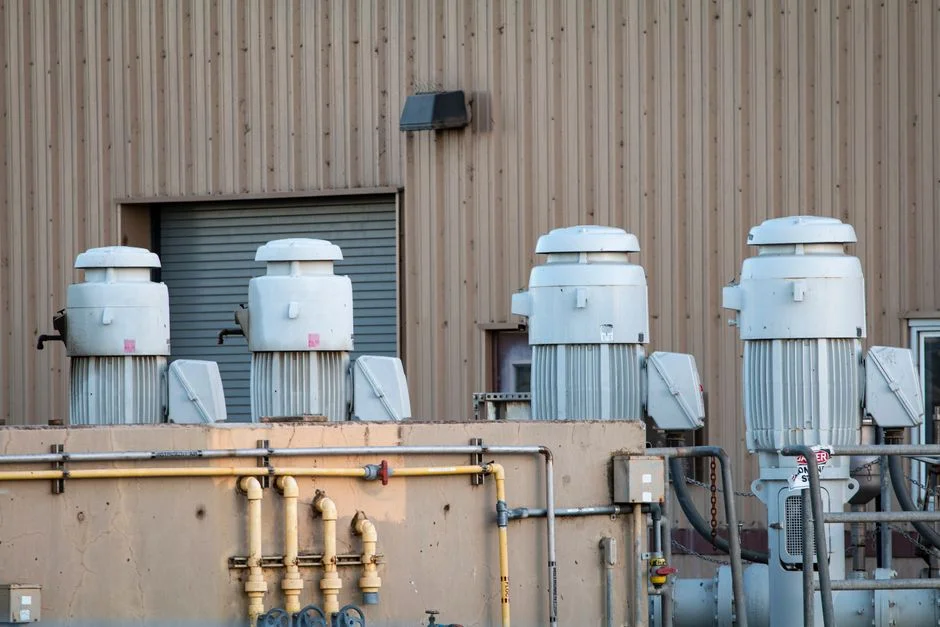
A 20 MW IT load facility with roughly 1,200 m³/day of cooling-tower makeup, operating at 4–6 cycles of concentration and 1% drift, produces 240–300 m³/day of blowdown — about 20–25% of makeup, per the blowdown = makeup / (CoC − 1) relationship used in ASCE 2024 climate-driven design. The sizing table below is what an EPC consultant can lift directly into a 2026 RFQ scoring sheet.
| Stream / unit operation | Design basis | Sized equipment | Effluent target |
|---|---|---|---|
| Domestic sewage (80 employees) | 50–80 L/employee/day × 2.5–3.0× peak factor | WSZ-5 to WSZ-10, or MBR at 10 m³/day starting module | BOD₅ <30 mg/L (WSZ) or <5 mg/L (MBR) |
| Side-stream filter | 1–5% of circulation flow, 10–25 µm | Self-cleaning spiral unit | TSS ≤10 mg/L to RO |
| DAF pre-treatment | DAF-50 class | 50 m³/h class | O&G ≤10 mg/L; TSS reduction |
| Softener | Blowdown 240–300 m³/day | KJ-WT 12–15 m³/h | <50 mg/L as CaCO₃; SiO₂ <20 mg/L |
| ClO₂ generator | Biocide neutralization | 200–500 g/h on-site generation | Free Cl₂ <0.5 mg/L |
| Multi-media + AC + RO | 10–13 m³/h permeate for 75–95% recovery | 50,000 GPD RO class | Permeate TDS 10–50 mg/L returned to tower |
| Generator stormwater | Event-driven 5–20 m³ | Oil/water separator + TSS polish | O&G ≤10 mg/L; TSS ≤30 mg/L |
CAPEX and OPEX: RO, MVC, and ZLD Compared for Córdoba
Procurement readers can lift the cost envelope below directly into the finance model.
| Option | CAPEX envelope | OPEX envelope | Recovery | 2026 Córdoba fit |
|---|---|---|---|---|
| RO blowdown polish (50,000 GPD class) | $250,000–$500,000 installed (per S2) | $1.50–$3.00 per 1,000 gal treated (per S2) | 75–95% | Default RFQ selection |
| RO + MVC concentrate polishing (10,000–30,000 GPD MVC) | $1–3 million (per S2) | 15–25 kWh per 1,000 US gal of distillate (per S2) | 95–98% on concentrate; 85–95% overall | Where discharge fees are punitive or sewer caps exist |
| Full ZLD (RO + MVC + crystallizer) | $3–8 million (per S2) | $5–$15 per 1,000 gal treated (per S2) | 95–99% overall; solid salt-cake disposal <1% of feed | Justified only in micro-sites or where discharge is contractually prohibited |
Discharge-fee avoidance is the OPEX lever. With municipal discharge fees at $5–$15 per 1,000 gallons (per S2) and approximately 250 m³/day of avoided blowdown, OPEX payback on a $400,000 RO is typically 12–24 months — a defensible number to put in front of a hyperscaler CFO. For sites where MVC is not in scope, the RO concentrate can still be routed to the municipal sewer under the contract limits; the avoided freshwater makeup is the primary economic case.
Frequently Asked Questions
Can cooling-tower blowdown actually be reused as cooling-tower makeup in Córdoba?
Yes. Clarified, softened, and biocide-neutralized blowdown can be blended with MBR effluent and polished by an industrial RO at 75–95% recovery, then returned to the cooling tower as makeup — the same closed-loop logic ASCE 2024 documents at the 1.3 million sq ft Google Douglas County, GA data center (per ASCE 2024, citing the Douglas County case study).
What is the smallest credible packaged plant for a 10–20 MW Córdoba campus?
For 50–80 employees, 1,200 m³/day of makeup, and 240–300 m³/day of blowdown, the smallest credible envelope is a WSZ-5 to WSZ-10 (or 10 m³/day MBR module) for the domestic stream, a DAF-50 class for blowdown pre-treatment, a 12–15 m³/h softener, a 200–500 g/h ClO₂ generator, and a 50,000 GPD RO (10–13 m³/h permeate) — the per-stream sizing that maps to a 20 MW IT load (per S2 and S3).
Which authority actually issues the discharge permit in Córdoba?
The provincial Secretaría de Recursos Hídricos de la Provincia de Córdoba sets the receiving-water framework, and the municipal sewer operator (Aguas Cordobesas or the local planta depuradora) sets the sewer-discharge contract. For an auditor-facing RFQ, the conservative default is Resolución ADA 389/98 / Decreto 2009/09 as the national envelope, with SRT 295/03 governing on-site ClO₂ handling (per S3, adapted from Buenos Aires practice).