What determines the right choice for a semiconductor fab?
Neither equipment name nor average flow determines the correct choice for semiconductor fab wastewater in 2026. Select the separation mechanism that matches the dominant physical behavior of each segregated stream after realistic conditioning: flotation for particles that can be made to float, and gravity sedimentation for particles that settle reliably. A fab header can combine CMP slurry, photoresist residues, back-grinding coolant, cleaning chemicals, and metal-bearing rinse water whose flow and chemistry change during production and cleaning cycles, so site-wide averages conceal the controlling separation duty. Before comparing equipment, obtain segmented minimum, average, and peak flow; TSS; particle-size distribution; pH; metals; FOG where relevant; conditioning compatibility; and the applicable reuse or pretreatment specification. Both dissolved air flotation and clarifiers capture suspended solids; neither independently removes dissolved fluoride, metals, or cleaning chemicals. Confirm the facility’s actual requirements through U.S. semiconductor plant wastewater compliance requirements rather than importing generic geographic limits.
How DAF and clarifiers separate different particles
DAF and gravity separation differ in how they isolate solids, so the wastewater’s response to conditioning determines which mechanism is credible. Dissolved air flotation creates microbubbles that attach to particles, lift them to the surface, and leave a skimmable float. Gravity sedimentation depends on particle settling velocity and available separation area; a lamella clarifier adds inclined plates to increase effective separation area.
Conditioning is not a secondary detail. Coagulation and flocculation can enlarge particles, improve bubble contact, and make flotation viable, or create floc that settles more readily. The same chemicals can leave residuals that affect membranes, reuse quality, or downstream pretreatment. A DAF also produces surface float and settled heavy material, so float return and heavy-solids withdrawal must be part of the solids balance.
Clearwater Industries describes 30–50 micron microbubbles in its DAF systems and states that the technology should be paired with proper coagulation and flocculation, according to the commercial source “DAF or Clarifier for Semiconductor Wastewater in 350? 2026” (2026). These are equipment statements, not universal design requirements.
| Separation mechanism | Primary mechanism | Conditioning role | Physical outputs requiring verification |
|---|---|---|---|
| Dissolved air flotation | Microbubbles attach to particles and lift them to the surface | Coagulation and flocculation may improve bubble contact and floatability | Surface float, settled heavy material, and possible float return |
| Gravity sedimentation | Solids settle under gravity using available separation area | Flocculation may improve settling where required | Concentrated settled sludge and accumulated solids inventory |
| Lamella clarification | Gravity settling with inclined plates that increase effective separation area | May produce heavier floc suitable for separation | Concentrated underflow, plate fouling, and withdrawal behavior |
Where chemical dosing is part of the trial, evaluate a PLC-controlled chemical dosing system with the separator rather than treating dosing as an accessory added after selection.
Side-by-side equipment comparison
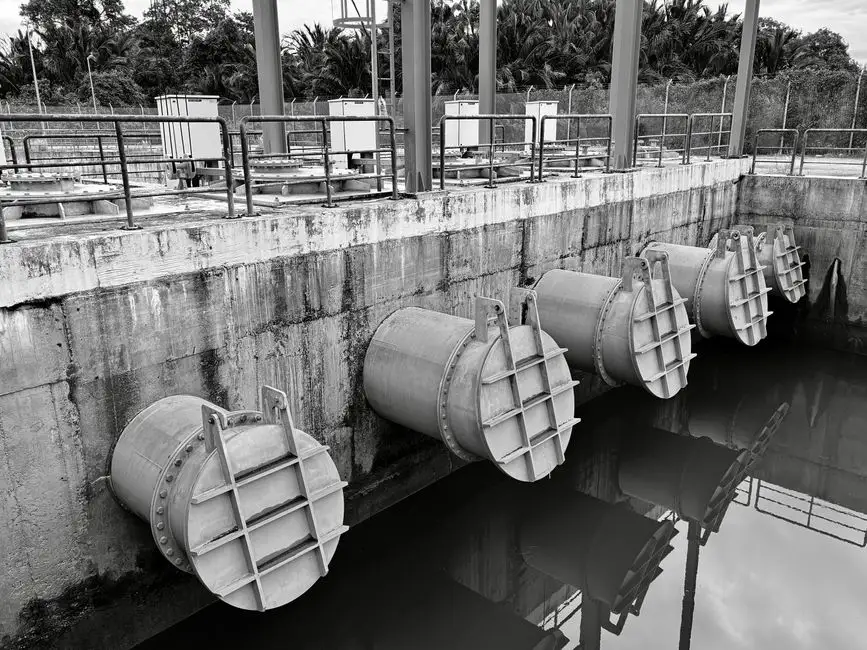
DAF is the stronger candidate for floatable fine solids, colloids, oily material, or conditioned particles near neutral buoyancy; a clarifier is the stronger candidate when particles demonstrate reliable settling and simpler operation or existing civil capacity has greater value. Generic TSS-removal claims do not settle the choice because they describe different feeds, configurations, and measurement conditions.
| Evaluation item | Dissolved air flotation | Lamella or gravity clarifier |
|---|---|---|
| Best-fit solids | Fine, colloidal, oily, emulsified, or conditioned particles shown to float | Particles with reliable settling characteristics |
| Process elements | Recycle, air saturation, conditioning, flotation, skimming, and instrumentation | Usually fewer process steps, but plate maintenance, sludge withdrawal, and access remain necessary |
| Separated solids | Surface float plus settled heavy material | Concentrated settled sludge |
| Downstream effect | Must control residuals, carryover, and float return before filtration or reuse | Must control carryover, plate fouling, and sludge inventory |
| Supplier screening reference | HydropureWater catalog: 4–300 m³/h across 13 standard models | HydropureWater catalog: 20–40 m/h surface loading |
DAF Corporation reports TSS removal of 92%–98% for the FC Maximizer, 85%–90% for the RC UniMax, and sludge consistency reaching 2%–4% in the reported configuration, according to “DAF or Clarifier for Semiconductor Wastewater in 350? 2026” (2026). The same source lists flow ranges of 10–11,000 gpm for the FC Maximizer and 10–1,000 gpm for the RC UniMax. These are model-specific screening references, not semiconductor-fab guarantees. By comparison, the industrial dissolved air flotation system catalog envelope is preliminary screening only; a high-efficiency lamella clarifier must likewise be normalized against the actual flow and solids envelope.
A stream-by-stream selection framework
The defensible decision starts by classifying each stream by separation behavior, not by naming the dominant plant equipment. Fine and colloidal solids, oily or emulsified material, chemically precipitated metal floc, and reliably settleable solids can require different primary treatment.
- Fine, colloidal, oily, near-neutral-buoyancy material: make DAF the primary candidate, then confirm floatability after site-specific conditioning.
- Reliably settleable material with stable flow and available footprint: consider a lamella or gravity clarifier, especially where operating simplicity or existing civil infrastructure has measurable value.
- Mixed material with floatable and sinking fractions: consider DAF followed by lamella or gravity clarification, but prove the downstream step’s duty in the pilot.
This framework keeps suspended-solids capture separate from dissolved-contaminant removal. Chemical precipitation may convert dissolved metals into particulate floc before separation, but a separator does not perform that precipitation and cannot be represented as a complete compliance solution. The proposed location and treatment-train position must therefore be identified before equipment is selected.
| Observed stream behavior | Primary candidate | Required verification |
|---|---|---|
| Fine, colloidal, oily, or conditioned particles with flotation potential | DAF | Conditioning dose, float recovery, carryover, and solids route |
| Reliably settleable solids with steady hydraulics | Lamella or gravity clarifier | Settling rate, peak area, sludge withdrawal, and plate condition |
| Both floatable and sinking fractions | DAF-primary with clarification polishing | Mass balance across float, underflow, carryover, and accumulated inventory |
| Dissolved contaminants remain above the required outlet quality | Neither separator alone is sufficient | Compatibility with precipitation, membranes, or other specified treatment |
If filtration will follow, test the clarified output with the actual proposed multi-media filtration and membrane-protection unit rather than inferring compatibility from TSS alone.
Run a comparable pilot before issuing the RFQ
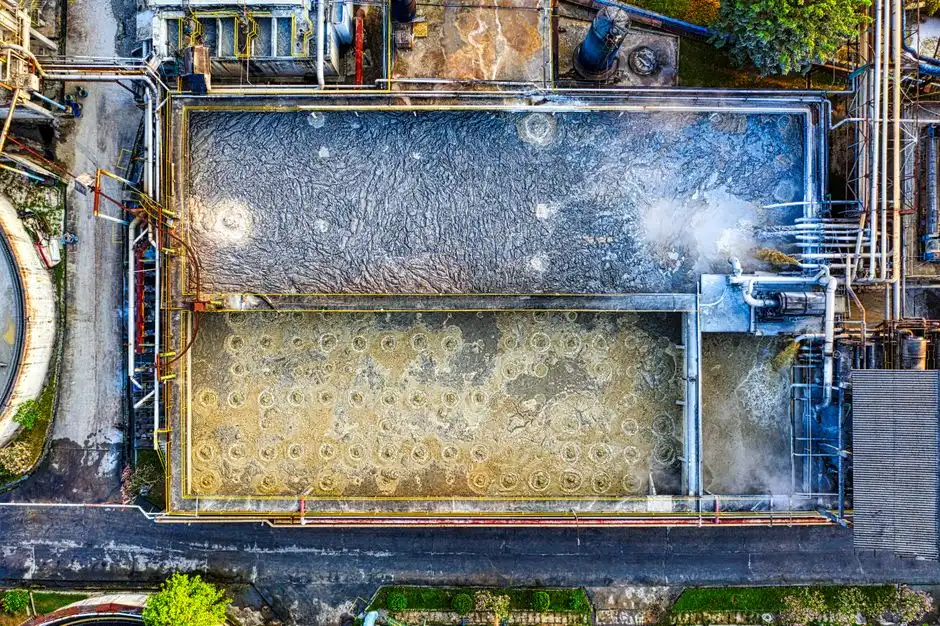
A matched pilot determines whether flotation or settling works on the factory’s actual wastewater; a grab-sample TSS result cannot establish plant performance. Both units should receive the same feed condition, representative flow range, conditioning state, and measurement points.
- Measure TSS and particle-size distribution before and after separation, together with pH and residual conditioning chemicals.
- Record conditioning chemistry, dose, mixing, pH response, residual chemicals, and floc stability. This separates chemistry failure from separator limitation.
- Measure float or sludge solids concentration, recovery, skimmer stability, withdrawal behavior, accumulated inventory, and dewatering observations.
- Run representative production and cleaning cycles and confirm that the proposed system remains within the tested wastewater envelope.
- Pass the clarified water through the actual next reuse or pretreatment step and monitor membrane flux, residual chemistry, reuse quality, and fouling or carryover.
| Pilot stage | Required measurements | Decision unlocked |
|---|---|---|
| Feed characterization | Segmented flow, TSS, particle-size distribution, pH, metals, and relevant FOG | Identify the controlling stream and separation mechanism |
| Conditioning trial | Chemical identity, dose, mixing, pH response, residuals, and floc stability | Determine whether chemistry enables flotation or settling |
| Matched separator trial | Same feed, flow, sample points, TSS, and particle carryover | Compare DAF and clarifier on like-for-like conditions |
| Solids handling | Float or sludge concentration, recovery, withdrawal, inventory, and dewatering | Confirm captured solids leave the unit and can be managed |
| Downstream verification | Membrane flux, residual chemistry, reuse quality, and pretreatment impact | Confirm fit with the complete treatment train |
Evaluate the solids route in parallel with separator selection. A plate-and-frame filter press may be needed if the recovered float or sludge cannot be handled by the existing route.
Build the treatment train around the selected separator
The required outlet specification—not the separator’s catalog TSS claim—sets the solids target and exposes downstream fouling risk. A DAF-based train normally follows equalization, conditioning, flotation, solids removal, and downstream clarification or filtration, with every stage sized from the factory’s actual flow and loading envelope. A clarifier-led train still requires equalization, appropriate conditioning where needed, reliable solids withdrawal, and downstream protection.
The multi-media filter described here removes suspended solids, turbidity, and colloidal matter and provides SDI values suitable for RO membrane protection. The associated industrial reverse-osmosis system for semiconductor applications is specified with permeate recovery up to 95%, according to the 2026 HydropureWater product information. The separator prepares that feed; it does not itself remove dissolved contaminants.
For colloidal or suspended-solids pretreatment, the associated ultrafiltration system has a stated capacity of 2,000–40,000 L/h and uses 0.03 micron PVDF membranes, according to the 2026 product information. Those values are screening references only, not a recommendation without water-quality and flow matching. Solids handling must be evaluated concurrently: the associated plate-and-frame filter press covers 1–500 m² filtration areas and offers manual, hydraulic, or automatic PLC operation in the 2026 product information.
The selected separator should therefore be approved only with its conditioning equipment, controls, solids route, downstream filtration or membrane duty, and governing reuse or discharge specification.
Procurement criteria that prevent a technically incomplete bid
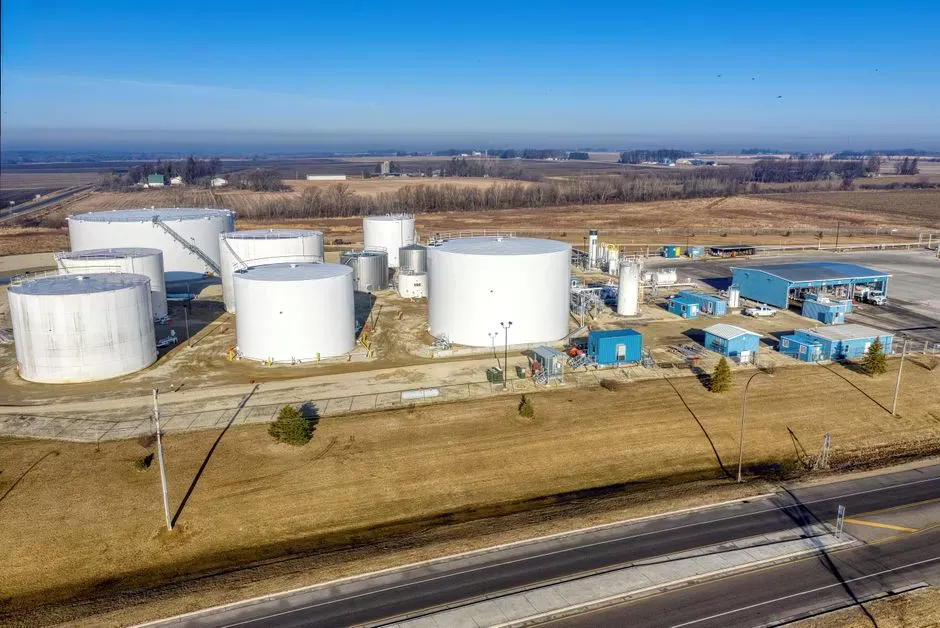
A technically comparable bid must identify the wastewater, conditioning chemistry, flow, solids loading, separation objective, test method, and sample point behind every performance claim. A proposal is not technically compliant until it covers the factory’s actual flow, solids loading, chemistry, and production variability.
Require itemized quotations separating the separator, coagulation and flocculation equipment, tanks, pumps, air-saturation system, instrumentation, controls, installation, and sludge handling. Chemical-consumption and utility estimates are also required so bids can be compared on lifecycle inputs rather than equipment price alone. If the bid includes a dissolved air flotation package or a lamella clarification package, identify the proposed model and its exact treatment-train boundaries.
Make the governing permit, reuse specification, and pretreatment duty mandatory proposal deliverables. Generic export-region or federal-limit statements do not replace confirmation against the actual U.S. facility’s requirements. This approach follows the procurement discipline described in DAF versus clarifier selection for chemical wastewater: require defined test conditions, not performance transferred from unrelated wastewater.
| RFQ requirement | Evidence to require | Reason for rejection |
|---|---|---|
| Wastewater basis | Stream, production variability, flow envelope, TSS, particle distribution, and chemistry | Proposal cannot be normalized or technically checked |
| Separation objective | Target outlet, measurement method, sample point, and next treatment step | Nominal TSS claims answer the wrong question |
| Conditioning | Chemical compatibility, dose basis, mixing, residuals, and control strategy | Potential flotation or flocculation failure is hidden |
| Model and capacity | Proposed model, operating envelope, and treatment-train location | Catalog range is being presented as project sizing |
| Solids route | Float or sludge balance, withdrawal, storage, and dewatering interface | Captured solids may accumulate or remain unmanageable |
| Utilities and controls | Power, air, water, chemical consumption, controls, and operator requirements | Lifecycle comparison and operating plan are incomplete |
| Compliance basis | Applicable permit, pretreatment requirement, reuse specification, and supporting evidence | Separator is misrepresented as a complete compliance solution |
Frequently Asked Questions
Should a semiconductor fab choose DAF or a clarifier for wastewater?
Choose DAF as the primary candidate when fine, colloidal, oily, or conditioned solids can be made floatable. Choose a lamella or gravity clarifier when particles settle reliably, flow is stable, and simpler operation or available civil infrastructure outweighs flotation controls. Confirm that ranking through matched pilot trials on actual production and cleaning wastewater.
How should DAF or a clarifier be sized for semiconductor wastewater?
Size from segmented minimum, average, and peak flow; TSS; particle-size distribution; pH; metals; relevant FOG; conditioning compatibility; and downstream reuse or pretreatment requirements. The 4–300 m³/h HydropureWater DAF catalog envelope is only a preliminary screen, not a plant design. The selected model must remain within the wastewater and hydraulic envelope demonstrated during representative testing.
What should a supplier include so bids can be compared fairly?
Require each supplier to state the wastewater basis, conditioning concept, pilot evidence, proposed model, treatment-train boundaries, utility requirements, control strategy, and solids route. Ask for the test method and sample point behind every TSS-removal claim, plus a solids balance covering captured, discharged, and accumulated material. These checks make the technical basis auditable rather than relying on a generic product sheet.
How should procurement compare DAF and clarifier cost?
Do not use a universal equipment price. Request model-specific capital quotations plus chemical-consumption and utility estimates, then compare lifecycle inputs. Capital boundaries should include the separator, dosing and flocculation equipment, tanks, pumps, air saturation, instrumentation, controls, installation, and sludge handling. Include the downstream filtration, membrane, and dewatering consequences of the solids selected in the pilot.
Does either technology satisfy the fab’s discharge or reuse requirements?
No. The facility’s governing permit, pretreatment requirements, and reuse specification control; neither DAF nor a clarifier independently removes dissolved contaminants. Verify those requirements for the actual U.S. facility and test the clarified water through the specified next process step. The approach for plant acquisition and wastewater compliance illustrates why a location-specific review must be tied to the applicable requirement set rather than imported from another jurisdiction.