Separate Existing Site Obligations from SMIC’s Proposed Changes
When SMIC acquires a plant in Hungary, the buyer must determine which wastewater obligations are already attached to the site and whether SMIC’s proposed processes, expansion or reuse plan changes them. The review should trace wastewater from source to lawful destination using the existing environmental permit, sewer agreement, source-specific flow and chemistry, receiving-system capacity, and evidence that the treatment train can handle relevant contaminants. The acquisition should proceed only when that compliance pathway is documented.
Unresolved permit amendments, analytical work, treatment upgrades, residual-disposal arrangements or infrastructure commitments may need to be closing conditions, purchase-price adjustments or retained liabilities. The buyer should begin with the permits, sewer arrangements and wastewater infrastructure attached to the Hungarian site, then test whether SMIC’s proposed semiconductor processes, expansion, flow increase or reuse plan remains within those conditions. The approach follows the plant-acquisition wastewater due-diligence workflow, while the related instrument-plant acquisition review provides a parallel acquisition question.
Create two registers. The first should list obligations already attached to the site, including permit conditions, monitoring duties, sewer restrictions, residual-disposal obligations and infrastructure commitments. The second should identify proposed changes or new operating scenarios, such as additional flow, different chemicals, expanded production, new reuse requirements, changed discharge points or treatment configurations. A seller’s historical permit is not evidence that post-acquisition operation will be permitted under the same conditions.
Request the complete permit register, permit amendments, monitoring records, non-compliance history, sewer agreement and infrastructure commitments held by the seller. Treat environmental permitting, sewage acceptance, treatment capacity and residual disposal as separate approval pathways. The supplied research does not establish that one regulator, permit or agreement satisfies all four, so each must be documented independently. The buyer should also identify whether SMIC’s proposed change is a modification requiring Hungarian environmental authorization, a condition requiring sewer-operator acceptance, or both. Any unresolved interpretation should be referred to Hungarian environmental counsel and confirmed with the competent authority or sewer operator before closing.
Trace Wastewater from Source to Lawful Destination
A source-to-destination mass balance must connect each wastewater stream to a permitted or otherwise lawful final destination, with no unaccounted dilution, bypass or uncharacterized discharge. This chain should cover source characterization, applicable discharge or pretreatment conditions, treatment, receiving infrastructure and the final destination, as described in HydropureWater’s acquisition guidance. The same source-to-destination chain provides the minimum transaction evidence set: the permit register, wastewater mass balance, sewer agreement, receiving-capacity confirmation and treatment-performance evidence must establish the pathway.
Separate wastewater by production source, process step, batch or continuous operation, and normal versus upset conditions. For each stream, request flow, chemistry, chemical inventory, sampling history and variability data. Use source-specific flow and operating variability as sizing inputs rather than one plant average. A blended total can conceal a small stream with difficult chemistry, a batch discharge that changes receiving-system loading, or a production line that expands after closing.
Document the origin of every stream, the unit operations that treat it, whether it is reused or discharged, the permit or sewer agreement that governs it, and the owner of the receiving infrastructure. The document should also identify monitoring points, operational records and the responsible party for each control. Reuse must be shown as an operating pathway with a defined destination and applicable treatment requirements, not merely as an intended reduction in external discharge.
Include industrial sludge and other treatment residuals in the pathway. Treatment performance is not complete without a documented residual-disposal route, including the party responsible for collection, transport and final disposition. A permitted discharge of treated liquid does not, by itself, establish that the resulting solids can lawfully be managed.
| Chain element | Minimum transaction evidence | Decision test |
|---|---|---|
| Wastewater source | Source map, process and chemical inventory, flow and operating scenarios | Every relevant stream is identified and bounded. |
| Characterization | Source-specific and composite analytical results, methods and data gaps | Results represent normal and upset conditions. |
| Treatment | Process description, performance records and site-specific demonstration | Performance covers the proposed flow, chemistry and reuse duty. |
| Receiving system | Sewer agreement or direct-discharge authorization and written capacity confirmation | Acceptance conditions and available capacity are evidenced. |
| Residuals | Sludge and waste characterization, handling agreement and disposal route | Residuals have a documented lawful destination. |
| Final destination | Authorization, monitoring and reporting chain | No gap remains between treatment and lawful disposal. |
Obtain the Hungarian Permit and Sewer Conditions
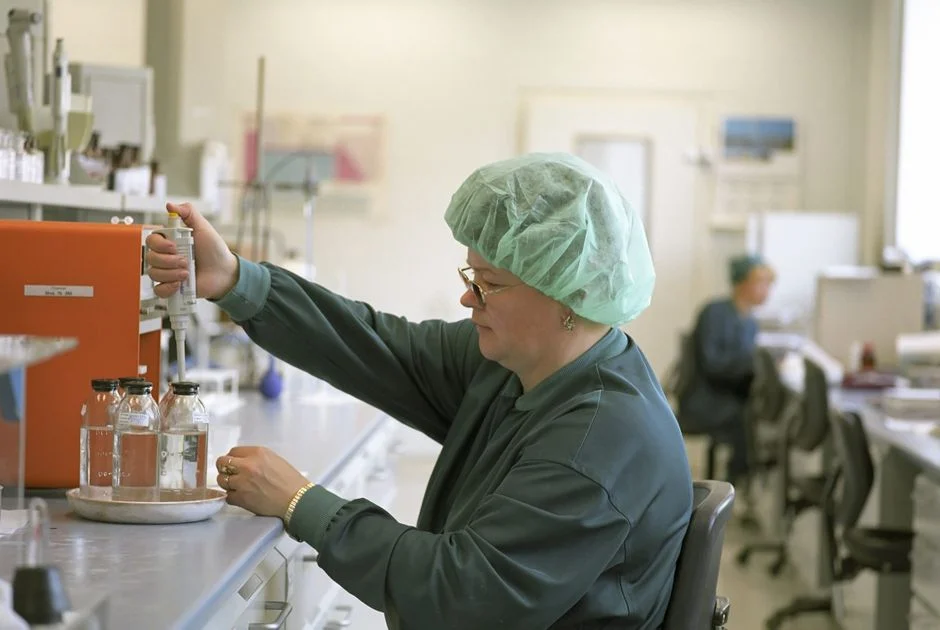
An available permit does not prove that the acquired site has lawful sewer access or unused receiving capacity. For direct discharge, obtain the site’s current Hungarian environmental authorization and confirm whether the contemplated process, flow, discharge point and reuse arrangements remain within its conditions. For sewer discharge, obtain the utility’s local discharge and pretreatment rules, permitted flow, prohibited materials, monitoring requirements, surcharge mechanism and available treatment capacity. These documents define the operating envelope that the transaction team must test against the post-acquisition plan.
Request written confirmation of receiving capacity from the relevant authority or sewer operator rather than assuming that the plant’s historical flow remains available. The confirmation should identify the receiving facility or system, the applicable acceptance conditions, any monitoring and reporting requirements, and the infrastructure or contractual commitments assumed by the seller. Historical discharge is evidence of past operation, not proof of future headroom.
Do not insert specific Hungarian concentration limits, surcharge rates or permit thresholds without the applicable permit and current rules. The supplied research provides no such figures. The legally applicable values must come from the site authorization, current Hungarian environmental requirements and the sewer operator’s rules. If those documents are missing or inconsistent, the discrepancy becomes a diligence issue rather than a gap to fill with generic benchmarks.
The 2014 Saturn Partners report describes Hungary-based Szennyvízújrahasznosító Kft. signing a franchise agreement with Applied CleanTech for a sewage-recycling system, with the first system then due for installation in Hungary in October. That report indicates that non-centralized treatment arrangements had been introduced in Hungary; it does not establish that any such arrangement is lawful or suitable for SMIC’s acquired site. The site permit, sewer agreement and receiving infrastructure still govern. The table below separates documents that establish legal or operational conditions from records that may only provide context.
| Document or confirmation | Issue it must resolve | Diligence treatment |
|---|---|---|
| Current environmental authorization and amendments | Lawful discharge, monitoring, operating and residual conditions | Do not assume the seller’s permit covers proposed changes. |
| Sewer pretreatment agreement and current utility rules | Acceptable flow and chemistry, monitoring, surcharges and prohibited materials | Obtain the current rules, not only the historical agreement. |
| Written receiving-capacity confirmation | Whether the receiving system can accept the proposed discharge | Escalate if only an informal or historical statement is available. |
| Monitoring and compliance records | Whether actual operations match the permitted conditions | Reconcile deviations, corrective actions and authority correspondence. |
| Residual-handling and disposal records | Lawful management of sludge and other treatment residuals | Verify the route and responsibility for future operation. |
Characterize Semiconductor Wastewater and Analytical Blind Spots
Semiconductor wastewater characterization must address the contaminants associated with the acquired operation and SMIC’s proposed processes, not only the parameters that appeared in historical monitoring reports. The minimum analytical scope should address PFAS, metals, fluorides, solvents, suspended solids and other parameters relevant to the seller’s chemical inventory, production sources and reuse plans.
HydropureWater’s article cites Cornell University studies from 2021 and 2023 indicating that more than 90% of semiconductor-wastewater PFAS compounds could be missed by conventional analyses such as Method 1633. Treat the more than 90% finding as a risk signal for analytical planning, not proof that every acquired plant has that result. The technical implication is specific: conventional analytical coverage may be insufficient to define the treatment duty, so SMIC should require a defensible PFAS analytical method, documented detection limits and a clear explanation of any analytes not covered.
Request both source and composite samples, with the sampling plan reflecting production source, process step, batch or continuous operation, and normal versus upset conditions. Source samples identify the treatment need behind a blended result; composite samples test the combined load presented to the treatment or receiving system. For batch operations, document the batch source, discharge frequency and maximum contributing flow rather than relying only on an average discharge rate.
For every result, record the sampling point, date, operating condition, analytical method, detection limit, data gap and relevant mass and volume basis. These records allow the buyer to test receiving-system requirements against defensible results and to distinguish a true absence of a contaminant from an analytical blind spot. The DAF and clarifier comparison for semiconductor wastewater provides a relevant process-screening reference, while the semiconductor ultrapure-water piping specification review highlights why water-quality and surface-related requirements should not be conflated with wastewater discharge criteria.
PFAS, fluorides, metals and solvents should not be treated as interchangeable removal problems. Each requires a defined treatment function, a receiving criterion and, where relevant, a residual-management assessment. Where SMIC intends reuse, the analytical plan should also verify whether the proposed water quality is fit for the intended use and whether the waste stream needs a different treatment objective than a discharge stream.
Match the Treatment Train to Flow, Chemistry and Reuse
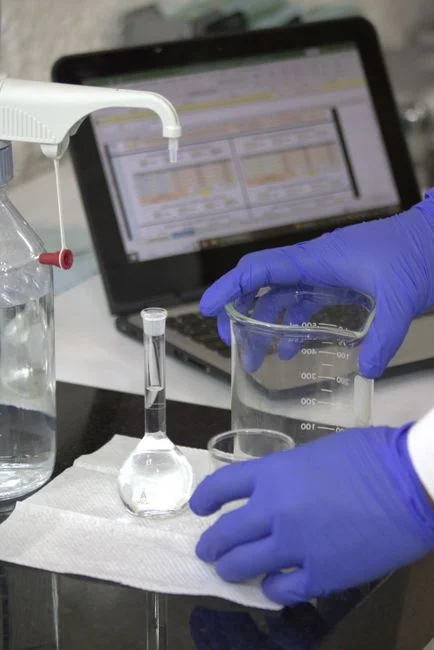
The existing treatment train must be assessed against source-specific flow, chemistry, operating variability, reuse targets, footprint, sludge handling and the contaminants identified during characterization. A treatment system sized from the plant average may pass historical flow checks while failing during a high-contribution batch, upset condition or post-acquisition production change. The comparison below summarizes the role and published selection basis for relevant equipment; it does not establish compliance or replace site-specific design.
| Treatment option | Role in the treatment train | Published selection reference | Diligence condition |
|---|---|---|---|
| DAF | Preliminary separation where the duty involves high suspended solids, oil and grease, or colloidal material before downstream biological or polishing treatment | HydropureWater’s DAF range is 4–300 m³/h across 13 standard models | Confirm applicability against source-specific flow, chemistry, variability and downstream treatment. |
| MBR | Combined biological treatment and membrane separation where reuse or polishing is justified | HydropureWater’s MBR range is 10–2,000 m³/day | Verify the reuse target, chemistry, footprint and sludge-handling requirements. |
| Plate-and-frame dewatering | Separation of industrial sludge requiring dewatering | HydropureWater’s published filtration-area range is 1–500 m² | Base selection on sludge characteristics, generation rate and downstream disposal capacity. |
| Automatic chemical dosing | pH adjustment, coagulation or flocculation where the characterized wastewater requires it | No general range is used in the supplied research | Define the chemistry and treatment objective before selecting the dosing duty. |
Use a DAF system for industrial wastewater pretreatment only when its separation duty is justified by the stream characterization and it forms part of a complete treatment train. The comparison of DAF and clarifiers for semiconductor wastewater is useful for screening; it does not select equipment by itself. The technical basis is the preliminary removal need, hydraulic variation, chemical demand and compatibility with downstream biological or polishing processes.
Consider an integrated MBR wastewater treatment system where biological treatment, membrane separation and reuse or polishing are justified. The comparison of MBR and conventional activated sludge can support engineering review, but it cannot establish a legal route or a Hungarian limit. For industrial sludge, assess plate-and-frame dewatering where the acquired or proposed process generates a residue that requires separation; the lamella clarifier retrofit and upgrade guide provides additional clarification-process context.
Automatic chemical dosing should follow characterization and the treatment objective because pH adjustment, coagulation and flocculation duties depend on the actual streams. Require suppliers to demonstrate performance against the site’s characterization, applicable site conditions, flow scenarios, reuse target and performance requirements rather than accepting generic capacity claims. A bid should state its design basis, test protocol, acceptance criteria, residual-disposal interface and treatment-capacity boundary.
Turn Unresolved Wastewater Risks into Transaction Decisions
The transaction should proceed only when the buyer can trace the wastewater compliance pathway from source to lawful destination and the required records and performance evidence are complete. Where that proof is missing, the issue must be converted into a specific contractual or operational deliverable. The decision framework below prevents technical uncertainty from remaining only as a discussion item among legal, EHS, engineering and commercial teams.
| Unresolved condition | Transaction response | Required deliverable |
|---|---|---|
| Permit amendment or new authorization may be required | Closing condition | Applicable authorization or written confirmation from the competent authority, with compliance obligations assigned. |
| Wastewater chemistry or PFAS coverage is uncertain | Closing condition, with price adjustment for defined remediation | Approved sampling plan, results with methods and detection limits, and an agreed treatment implication. |
| Sewer acceptance or receiving capacity is unconfirmed | Closing condition | Current sewer terms and written capacity confirmation from the relevant operator. |
| Existing treatment cannot demonstrate the post-acquisition duty | Closing condition or price adjustment | Site-specific performance demonstration, approved design basis and implementation plan. |
| Industrial sludge or other residuals lack a lawful route | Closing condition | Residual characterization, handling agreement, disposal authorization or documented recipient capacity. |
| Seller cannot substantiate history, chemical inventory or compliance | Retain liability or hold back value | Defined indemnity, escrow or retained liability tied to the unsupported risk. |
Condition the transaction on specific permit amendments, analytical work, treatment upgrades, residual-disposal arrangements or infrastructure commitments when those items remain open. Hold or price residual risk when the seller cannot substantiate wastewater history, chemical inventory, permit compliance or authority expectations. This is preferable to allowing a vague environmental representation to carry an unbounded engineering liability.
Do not apply a wastewater price or treatment-cost benchmark from another country. The supplied research provides no Hungarian price, so the buyer should request a site-specific quotation based on actual flow, chemistry, reuse targets and performance duty. Assign named owners and documentary deliverables to the seller, SMIC, Hungarian environmental counsel, the local wastewater process engineer, the plant EHS manager and the relevant authority or sewer operator. The same structure is used in the acquisition wastewater risk-decision review.
Frequently Asked Questions
What Hungarian environmental documents should the seller provide before closing?
The seller should provide the current environmental authorization, every amendment, the complete permit register, monitoring and non-compliance records, sewer agreement, residual-handling arrangements and infrastructure commitments. The buyer should then obtain current rules and written confirmation from the competent authority or sewer operator, because historical documents alone do not establish post-acquisition capacity or acceptance.
What information is needed to obtain a site-specific wastewater treatment quotation?
The request should include source-specific flow, chemistry, chemical inventory, operating variability, reuse targets, applicable site conditions, residual-generation rate and required performance. Ask bidders to identify the design basis, acceptance tests, capacity limits and treatment sequence. Without that package, a generic capacity claim cannot be compared reliably or priced against the acquired site’s duty.
How should SMIC select DAF, MBR and sludge-dewatering equipment?
Select treatment functions from the characterization: DAF for justified preliminary separation, MBR where biological treatment, membrane separation and reuse or polishing are required, and plate-and-frame dewatering where industrial sludge requires separation. The chemical-dosing selection guide supports the broader principle that equipment duties should follow defined process conditions rather than generic capacity.
What should happen if the seller cannot prove wastewater compliance history?
Do not treat the historical permit as proof of compliant operation. Require the missing monitoring records, deviation assessments, authority correspondence and corrective actions, then hold or price the residual risk through a defined indemnity, escrow or retained liability. If analytical results remain unavailable, make completion of the agreed characterization a closing condition.
Does an existing sewer agreement guarantee space for SMIC’s expanded wastewater flow?
No. The agreement must be checked against the current rules, permitted flow, prohibited materials, monitoring requirements and surcharge mechanism. Obtain written receiving-capacity confirmation for the proposed operating scenario; if capacity is uncommitted, the transaction should require an infrastructure agreement or another closing deliverable.