TFT-LCD wastewater treatment CAPEX breakdown for 2026 spans $0.5M for SBR-only plants to $15M for full hybrid ZLD trains, with OPEX of $0.50–$1.20/m³. TMAH, DMSO, and copper drive the premium. Here is the stage-by-stage engineering and cost logic.
TFT-LCD Wastewater Treatment CAPEX Breakdown: The 2026 Baseline
A TFT-LCD plant facing reuse mandates needs a DAF–A/O-MBR–RO train with electrowinning: TMAH at 50–300 mg/L inhibits nitrifiers, DMSO above 500 mg/L defeats conventional sludge, and copper fouls RO. CAPEX runs $0.5M–$15M by scale, OPEX $0.50–$1.20/m³, and hybrid ZLD pays back in 3–5 years on water and copper credits.
Why TFT-LCD Wastewater Design Fails on TMAH, DMSO and Copper
TFT-LCD wastewater treatment design fails when TMAH at 50–300 mg/L inhibits nitrification and DMSO above 500 mg/L holds conventional sludge COD removal under 60%. Copper from etching fouls RO membranes, and without staged pretreatment recovery often falls from about 95% to below 70% within three months.
TMAH toxicity drives nitrogen permit risk in biological trains, a failure mode often flagged in panel-fab case notes such as those discussed by LG Water Solutions. According to Wikipedia's chemical profile, TMAH serves as a basic solvent in developing acidic photoresists in photolithography, and there is evidence that poisoning and even death can occur through skin contact with low-concentration solutions. That combination of worker hazard and biological inhibition is why fab rinse streams get segregated early.
Most plants we size for panel fabs keep TMAH load visible early, because once nitrifiers collapse, recovery takes weeks. DMSO above 500 mg/L needs an anoxic or anaerobic step before aerobic polishing. Wikipedia notes DMSO is used to strip photoresist in TFT-LCD flat-panel displays, and that wastewater bacteria transform DMSO under anoxic conditions into dimethyl sulfide — the chemistry behind that anoxic-first design rule. Conventional activated sludge alone rarely clears that COD fraction, consistent with EPA 2024 COD-removal limits cited for such influents.
Copper and nickel ions from etching deposit on RO membranes and cut flux fast. Electrowinning on the concentrate stream recovers copper and lowers that fouling pressure. A Taiwanese TFT-LCD plant paid about $2.1 million in fines over 18 months after TMAH overwhelmed its sequencing batch reactor (SBR), showing why non-tailored biology fails on this matrix. Plants comparing broader industrial wastewater treatment trains still need TFT-specific TMAH and DMSO controls.
How Should Initial TFT-LCD Plant Design Set the Train?
Initial TFT-LCD plant design should set a hybrid DAF–A/O-MBR–RO train with electrowinning on the RO reject when reuse or zero liquid discharge (ZLD) targets apply. Start with measured TMAH, DMSO, copper, COD, TSS, and FOG, then size hydraulic retention for the biological stage before locking membrane area.
Pretreatment uses a DAF system for 4–300 m³/h. That stage removes about 90% of TSS and 70% of fats, oils, and grease (FOG), cutting fouling load on biology and membranes. Biological treatment then uses an anoxic/oxic (A/O) membrane bioreactor with 0.1 μm PVDF membranes. The integrated MBR system targets effluent COD below 50 mg/L and TSS below 10 mg/L under EPA-aligned discharge framing.
Hydraulic retention time (HRT) of 12–24 h and solids retention time (SRT) of 20–30 days give microbes time to acclimate to TMAH and DMSO. Tertiary treatment uses an Industrial RO system aimed at about 95% water recovery with permeate TDS below 50 mg/L. Antiscalant dosing and scheduled cleans manage dissolved-metal fouling. Electrowinning recovers copper at about 99.8% from the reject, and residual sludge is dewatered on a plate-and-frame filter press to about 95% solids for disposal or further handling. Where local rules tighten industrial waste discharge limits, the same staged train still starts from these unit operations.
TFT-LCD Wastewater RO Membrane Fouling Control
RO membrane fouling control on TFT-LCD wastewater is a feed-quality discipline, not a membrane selection exercise. Keep RO feed near COD ≤50 mg/L and TSS ≤10 mg/L out of the MBR, hold copper in the 0.1–5 mg/L band under antiscalant cover, and schedule clean-in-place intervals from measured flux decline. Electrowinning on the reject then stops recirculating metal into the reuse loop; plants relying on antiscalant alone usually see flux loss first.
Stage-by-Stage Specifications for TFT-LCD Wastewater
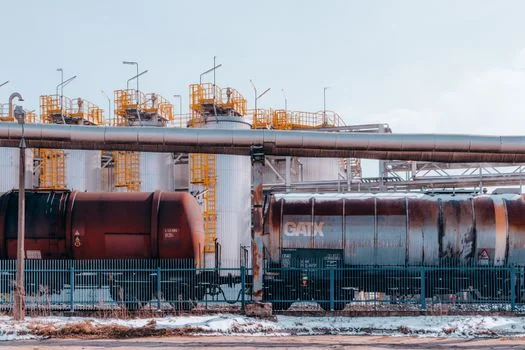
Accurate sizing for TFT-LCD wastewater plants depends on stage-by-stage influent and effluent targets. The table below lists typical loads, equipment, and removal ranges used when engineers forecast hybrid ZLD performance.
| Stage | Influent Targets (Typical) | Effluent Targets (Typical) | Equipment | Removal Efficiency (Typical) | Notes |
|---|---|---|---|---|---|
| Pretreatment (DAF) | COD: 600–1,000 mg/L TSS: 50–200 mg/L FOG: 50–150 mg/L |
COD: ≤300 mg/L TSS: ≤20 mg/L FOG: ≤10 mg/L |
DAF | TSS: 90% FOG: 70% COD: 20–30% |
Reduces organic load and fouling potential for biological stage. |
| Biological (A/O-MBR) | COD: 300–700 mg/L TSS: ≤20 mg/L TMAH: 50–300 mg/L DMSO: >500 mg/L |
COD: ≤50 mg/L TSS: ≤10 mg/L NH4-N: ≤5 mg/L |
DF series MBR | COD: 92–97% TSS: 95% BOD: >98% |
HRT: 12–24 h, SRT: 20–30 d. Requires robust microbial acclimation for TMAH/DMSO. (EPA COD ≤50 mg/L, TSS ≤30 mg/L; EU COD ≤50 mg/L, TSS ≤30 mg/L) |
| Tertiary (RO) | COD: ≤50 mg/L TSS: ≤10 mg/L TDS: 500–2,000 mg/L Cu: 0.1–5 mg/L |
TDS: <50 mg/L Cu: <0.1 mg/L |
Industrial RO System | TDS: 95–99% Cu: >99% |
Antiscalant critical. Membrane cleaning protocols essential to manage metal fouling. |
| ZLD (Electrowinning/Dewatering) | Cu: 0.1–5 mg/L (in RO reject) | Recovered Cu: >99.8% Sludge Moisture: ≤5% |
Electrowinning Unit Plate-and-frame filter press |
Cu Recovery: 99.8% Sludge Dewatering: 95% solids |
Copper recovery revenue offsets OPEX. Sludge dewatering for disposal/further treatment. |
What CAPEX and OPEX Should TFT-LCD Plants Budget?
This TFT-LCD wastewater treatment CAPEX breakdown scales with capacity and train depth. SBR-only COD reduction near 50 m³/day can start around $500,000, while full DAF–MBR–RO ZLD trains for fabs up to about 2,880 m³/day can reach about $15 million. Operating cost typically sits between $0.50 and $1.20 per cubic meter treated, with energy near 40%, chemicals near 30%, and membrane replacement near 20% of that OPEX mix.
| System Type | Typical CAPEX (50 m³/day) | Typical CAPEX (1,200 m³/day) | Typical OPEX ($/m³) | Estimated Payback Period (Years) |
|---|---|---|---|---|
| SBR-Only | $0.5M | $3M | $0.40–$0.70 | >10 (primarily compliance avoidance) |
| MBR-Only | $1.5M | $7M | $0.60–$1.00 | 5–8 (water recovery potential) |
| DAF-MBR-RO ZLD | $2.5M | $12M | $0.80–$1.20 (pre-copper recovery) | 3–5 (water and metal recovery) |
Note: CAPEX and OPEX are estimates and vary based on specific site conditions, equipment selection, and operational efficiency.
TMAH and DMSO Wastewater Treatment CAPEX Drivers
TMAH and DMSO drive cost through biology, not hardware volume. Sustained TMAH at 50–300 mg/L forces longer HRT (12–24 h), larger bioreactors, and nitrification redundancy, while DMSO above 500 mg/L adds the anoxic stage that SBR-only budgets omit. Both solvent streams also raise monitoring spend, since nitrogen permit risk rides on nitrifier health. Skip that biology and the Taiwan SBR fine example — $2.1 million over 18 months — shows the bill that arrives later.
Hybrid ZLD System Cost for a TFT-LCD Plant
Hybrid ZLD system cost for a TFT-LCD plant lands between the SBR floor and the evaporation-heavy ceiling: $2.5M at 50 m³/day and $12M at 1,200 m³/day on the DAF-MBR-RO route. According to Wikipedia's ZLD overview, pre-concentration stages recover up to 60–80% of the water before any thermal evaporation, which is why membrane-heavy trains undercut evaporation-heavy designs on energy. Copper recovery then trims the $0.80–$1.20/m³ OPEX further.
Buyers comparing a similar capex system on other semiconductor lines should still re-run metal and solvent loads for TFT-LCD etching chemistries. For plant-level cost framing across industries, see also the sibling note on Puebla Wastewater Treatment Plant Costs 2026: CAPEX, OPEX & Tech-Speci.
Case Study: Zero-Discharge ROI for a Taiwanese TFT-LCD Plant
A TFT-LCD manufacturing facility in Taiwan at 1,200 m³/day faced a government mandate for 70–85% wastewater reuse. The plant installed a DAF–MBR–RO ZLD train with electrowinning for copper recovery at a total CAPEX of $8.2 million. After startup, the plant reached about 94% water recovery and saved roughly $1.8 million per year on freshwater purchase. Electrowinning added about $220,000 per year in copper revenue, pulling payback into the same 3–5 year band shown for hybrid ZLD in the cost table above.
TFT-LCD Panel Fab Wastewater Reuse CAPEX in 2026
Panel fab reuse economics hinge on the recovery target set by mandate or water price. At 70–85% mandated reuse, the Taiwan case spent $8.2 million and landed near 94% recovery — above mandate — because MBR polishing plus RO made the marginal increment cheap. Fabs pricing 2026 scopes should treat the DAF-MBR-RO line ($12M at 1,200 m³/day) as the reference point and adjust for local energy and freshwater cost.
Electrowinning Copper in a ZLD Wastewater Train: CAPEX
Electrowinning converts the RO reject stream from a fouling liability into revenue. On TFT-LCD matrices it recovers copper at about 99.8%, adds roughly $220,000 per year in the Taiwan case, and relieves the metal load that would otherwise recycle into the reuse loop. Budgeted as a ZLD wastewater CAPEX line, it is the unit that most reliably shortens payback from the 5–8 year MBR-only band into 3–5 years.
Selection checklist before freezing the P&ID:
- Measure TMAH and DMSO peaks, not only average COD.
- Confirm copper and nickel ranges in etch waste.
- Set reuse or ZLD recovery target as a hard design basis.
- Size DAF for FOG and TSS spikes.
- Lock A/O-MBR HRT at 12–24 h with SRT 20–30 d.
- Specify RO antiscalant and clean-in-place intervals.
- Decide whether electrowinning revenue belongs in the OPEX model.
Who This Is For / Next Step
Process engineers, EPC contractors, and procurement managers sizing panel-fab wastewater reuse or ZLD are the audience for this guide. Teams chasing only municipal COD polishing without TMAH, DMSO, or copper loads should look elsewhere. If you need a train sized to your flow and contaminant map, send the duty data through our request a quote form and we will return a stage-by-stage equipment shortlist.
Frequently Asked Questions
What contaminants force specialized TFT-LCD wastewater treatment?
TMAH at 50–300 mg/L inhibits nitrification and can trigger nitrogen permit failures. DMSO above 500 mg/L needs anoxic or anaerobic degradation because conventional activated sludge often removes less than 60% of that COD fraction. Copper and nickel from etching foul RO membranes and can cut recovery from about 95% toward below 70% within three months if pretreatment is weak. Electrowinning on RO reject recovers copper near 99.8% and lowers that fouling load.
How does a hybrid ZLD train handle TMAH and DMSO?
Hybrid trains use an A/O membrane bioreactor after DAF pretreatment. The anoxic zone starts organic and precursor breakdown, and the oxic zone finishes TMAH and DMSO biodegradation under HRT 12–24 h and SRT 20–30 days. PVDF membranes at 0.1 μm hold biomass and keep effluent COD below 50 mg/L and TSS below 10 mg/L before RO. That sequence is what allows high recovery without sending solvent peaks straight to membranes.
What role does DAF play before MBR and RO?
DAF is the first solids and oil barrier. On TFT-LCD wastewater it typically removes about 90% of TSS and 70% of FOG at 4–300 m³/h on DAF-class units, dropping FOG toward ≤10 mg/L. That cut protects MBR flux and reduces RO fouling later. Skipping DAF when FOG sits at 50–150 mg/L usually shows up as faster membrane cleaning cycles within the first quarter of operation.
How do you prevent copper fouling on RO membranes?
Prevent copper fouling with upstream metal control, antiscalant dosing, and scheduled membrane cleans, not with RO alone. Keep RO feed near COD ≤50 mg/L and TSS ≤10 mg/L, and manage copper in the 0.1–5 mg/L band before the membranes. Electrowinning on the reject recovers copper above 99.8% and stops recirculating metal into the reuse loop. Plants that rely only on antiscalant without reject metal recovery usually see flux decline first.
Can copper recovery shorten ZLD payback?
Yes. On the Taiwan 1,200 m³/day case, $8.2 million CAPEX returned about $1.8 million per year in water savings plus about $220,000 per year from recovered copper. Hybrid DAF–MBR–RO ZLD OPEX before copper credit sits near $0.80–$1.20 per cubic meter, with payback often in 3–5 years when both water and metal credits apply. Copper revenue alone rarely funds CAPEX, but it reliably trims OPEX and shortens payback.
Further Reading
Explore these in-depth articles on related wastewater treatment topics: