Clinic Wastewater Treatment Working Principle: 2025 Engineering Specs, Process Flow & Zero-Risk Compliance Guide
Clinic wastewater treatment systems use a three-stage process—pretreatment (screening/settling), biological oxidation (activated sludge or MBR), and disinfection (chlorine dioxide or ozone)—to remove 95–99% of pathogens, 80–90% of suspended solids, and 70–85% of BOD5. For example, the HydropureWater compact medical wastewater system achieves <10 mg/L COD and <3 mg/L BOD5 in effluent, meeting EPA 40 CFR Part 503 and EU Directive 91/271/EEC standards for medical facilities. Key parameters include hydraulic retention time (HRT: 6–12 hours), sludge age (10–30 days), and disinfection CT values (e.g., 1.0 mg·min/L for chlorine dioxide at 5°C).
Why Clinic Wastewater Treatment Differs from Municipal or Hospital Systems
Small medical facilities, including dental offices, veterinary clinics, and outpatient centers, generate a wastewater profile that is fundamentally different from both domestic sewage and large-scale hospital effluent. While a typical clinic produces only 1–10 m³/day of wastewater—compared to the 100–1,000 m³/day generated by regional hospitals—the concentration of specific hazardous pollutants is significantly higher. According to WHO 2023 data, clinic effluent often contains 10^6–10^8 CFU/mL of fecal coliform, whereas municipal sewage typically ranges between 10^4–10^6 CFU/mL.
The chemical composition of clinic wastewater is also highly specialized. It frequently contains pharmaceuticals (antibiotics, analgesics), radionuclides used in imaging (I-131, P-32), disinfectants such as glutaraldehyde or chlorine, and heavy metals like mercury and silver from dental amalgams. These substances can inhibit the biological processes used in municipal treatment plants, leading to "toxic shock" in local sewer systems if not pre-treated on-site.
Regulatory bodies have recognized these risks by imposing stricter discharge limits on medical facilities. Standards such as EPA 40 CFR Part 503 in the United States, the EU Urban Waste Water Directive 91/271/EEC, and China GB 18466-2005 mandate that medical wastewater meet specific pathogen and chemical thresholds before entering public sewers or natural water bodies. For instance, many jurisdictions require fecal coliform levels to be <100 CFU/100mL for clinics, a tenfold increase in stringency compared to the <1,000 CFU/100mL standard for municipal discharge.
The financial and legal consequences of non-compliance are severe. In 2023, a dental clinic in California was fined $250,000 for repeatedly exceeding mercury discharge limits, a violation that could have been avoided with a specialized compact clinic wastewater treatment system with ozone disinfection. Beyond fines, clinics face the risk of operational shutdowns and environmental remediation costs.
| Parameter | Small Clinic (1-10 m³/d) | General Hospital (>100 m³/d) | Municipal Sewage |
|---|---|---|---|
| Fecal Coliform (CFU/mL) | 10^6 – 10^8 | 10^5 – 10^7 | 10^4 – 10^6 |
| Pharmaceutical Residues | High (Specific) | Moderate (Broad) | Low (Diluted) |
| Radionuclides | I-131, P-32 (High) | Varied (Moderate) | Trace |
| Disinfection Requirement | Mandatory (On-site) | Mandatory (On-site) | Centralized |
Clinic Wastewater Treatment Process Flow: Step-by-Step Engineering Breakdown
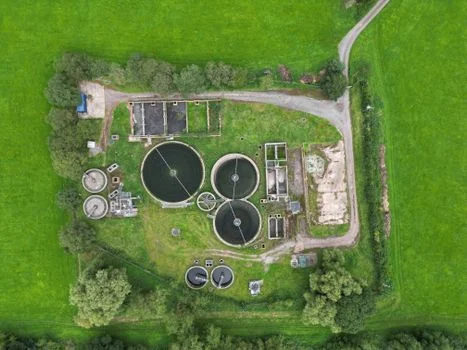
An effective clinic wastewater treatment system follows a rigorous three-stage engineering process designed to handle high-strength, low-volume waste streams. Each stage must be calibrated to specific hydraulic and biological parameters to ensure stable effluent quality.
Stage 1: Pretreatment (Screening & Equalization)
The process begins with physical separation. Mechanical rotary bar screens, such as the HydropureWater GX Series, are employed to remove 80–90% of solids larger than 5mm. This protects downstream pumps and membranes from clogging. Following screening, the wastewater enters an equalization tank. Because clinics have highly variable flow rates (peaking during business hours and dropping to zero at night), the equalization tank must provide a Hydraulic Retention Time (HRT) of 2–4 hours and a buffering capacity of 1.5 times the average daily volume (per EPA 2024 guidelines).
Stage 2: Biological Treatment (Activated Sludge vs. MBR)
This is the core of the removal process for organic matter (BOD/COD). Traditional activated sludge systems operate with an HRT of 6–12 hours and maintained Mixed Liquor Suspended Solids (MLSS) levels of 2,000–4,000 mg/L. However, for clinics with limited space, a MBR system for urban clinics with space constraints is often preferred. MBR technology utilizes 0.1 μm membranes to replace secondary clarifiers, allowing for MLSS concentrations up to 8,000–12,000 mg/L and producing effluent with Total Suspended Solids (TSS) <10 mg/L.
Stage 3: Disinfection (Chlorine Dioxide vs. Ozone)
The final stage ensures the total elimination of pathogens. Using chlorine dioxide disinfection for EPA-compliant medical wastewater is a common choice due to its high efficacy against viruses and cysts. Engineering specs require a CT value (Concentration × Time) of 1.0 mg·min/L at 5°C for 99.9% pathogen kill. Alternatively, ozone disinfection offers a CT of 0.5 mg·min/L; while it requires a 10–20% higher initial CapEx, it eliminates chemical residuals and is highly effective at oxidizing pharmaceutical compounds.
Sludge Management and Emerging Tech
Residual biological sludge is typically dewatered using small-scale plate-and-frame filter presses, achieving 20–30% solids for safe disposal. Newer systems are increasingly incorporating UV-LED disinfection for very small clinics (under 1 m³/day) due to its zero-chemical footprint and low maintenance requirements.
| Treatment Stage | Equipment Type | Key Engineering Parameter | Efficiency Metric |
|---|---|---|---|
| Pretreatment | Rotary Bar Screen | Screen gap: 1–5 mm | 80–90% TSS removal |
| Biological | MBR Module | MLSS: 8,000 mg/L; HRT: 5h | 95% BOD removal |
| Disinfection | ClO2 Generator | CT: 1.0 mg·min/L | 99.99% Pathogen kill |
| Dewatering | Filter Press | Pressure: 0.6–1.0 MPa | 25% Solid content |
Engineering Specs for Clinic Wastewater Treatment: Influent, Effluent, and Process Parameters
Designing a system for a clinic requires precise data on influent characteristics and local discharge limits. Clinic wastewater is "stronger" than domestic sewage, meaning it contains higher concentrations of organic pollutants in less water. Typical influent characteristics for clinics include COD (Chemical Oxygen Demand) of 300–800 mg/L, BOD5 of 150–400 mg/L, and TSS of 100–350 mg/L (per EPA 2024 data).
The effluent must meet stringent benchmarks to be legally discharged. While limits vary by region, the China GB 18466-2005 standard represents one of the world's strictest frameworks, requiring COD <10 mg/L and BOD5 <6 mg/L for direct environmental discharge. In comparison, the EU Urban Waste Water Directive mandates BOD5 <25 mg/L for most sensitive areas. Understanding how regional regulations affect clinic wastewater treatment is essential for selecting the correct filtration and oxidation levels.
To achieve these limits, engineers use specific process parameters. For activated sludge, the Food-to-Microorganism (F/M) ratio should be maintained between 0.05–0.15 kg BOD/kg MLSS·day to prevent sludge bulking. For MBR systems, the design flux is typically set at 15–25 LMH (liters per square meter per hour) to balance throughput with membrane longevity. Disinfection requires an ozone dosage of 2–5 mg/L to ensure complete sterilization of multi-drug resistant bacteria often found in medical settings.
| Parameter (mg/L unless noted) | Typical Clinic Influent | EPA/EU Effluent Limit | China GB 18466-2005 |
|---|---|---|---|
| COD | 300 – 800 | <50 – 125 | <10 |
| BOD5 | 150 – 400 | <20 – 25 | <6 |
| TSS | 100 – 350 | <30 – 35 | <10 |
| Fecal Coliform (CFU/100mL) | 10^6 – 10^8 | <100 | <100 |
| Residual Chlorine | N/A | <0.5 | <0.5 |
MBR vs. Activated Sludge vs. Ozone Disinfection: Which System Fits Your Clinic?
Choosing the right technology depends on a balance of capital expenditure (CapEx), operational footprint, and the strictness of local environmental laws. Small clinics often lack the space for large clarification tanks, making Membrane Bioreactor (MBR) technology the dominant choice for urban facilities. MBR systems provide a 60% smaller footprint than traditional activated sludge because they eliminate the need for a secondary clarifier. While the initial CapEx is higher ($20,000–$50,000), the effluent quality is superior, often suitable for non-potable reuse like toilet flushing.
Activated Sludge remains the most cost-effective option for rural clinics where land is inexpensive. With a CapEx of $5,000–$15,000, it is budget-friendly but requires a 100–200 m² footprint and more frequent manual monitoring of sludge levels. It is generally less effective at removing pharmaceutical micropollutants compared to MBR or advanced oxidation.
For disinfection, understanding how ozone disinfection works for medical wastewater can help facility managers decide between ozone and chlorine-based systems. Ozone is ideal for clinics located near drinking water sources because it leaves no chemical residuals, whereas chlorine dioxide is the "workhorse" for most clinics, offering 99.9% pathogen kill at a lower price point ($8,000–$15,000).
| Technology | CapEx (Est.) | Footprint | Effluent Quality | Best For |
|---|---|---|---|---|
| Activated Sludge | $5k – $15k | Large (100m²+) | Standard | Rural clinics, tight budgets |
| MBR | $20k – $50k | Small (Compact) | Excellent (TSS<10) | Urban clinics, water reuse |
| Ozone | $15k – $30k | Moderate | Sterile (No residue) | Strict environmental zones |
Compliance Checklist: How to Meet EPA, EU, and China Medical Wastewater Standards
Facility managers must navigate a complex web of documentation and testing to remain compliant. Failure to meet these standards can result in immediate fines or the revocation of medical licenses. Use the following checklist to evaluate your current or planned system:
- Fecal Coliform Control: Ensure the system consistently achieves <100 CFU/100mL. This is the primary metric for EPA 40 CFR Part 503 and most EU discharge consents.
- Chemical Limits: Monitor COD and BOD5 levels. For discharges to sensitive urban sewers under Directive 91/271/EEC, BOD5 must remain below 25 mg/L.
- Residual Management: If using chlorine-based disinfection, residual chlorine must be <0.5 mg/L at the point of discharge to prevent toxicity to aquatic life (GB 18466-2005).
- Daily Monitoring Logs: Maintain digital or physical logs of pH, chlorine residual, and total daily flow rate. These are the first items inspectors request during an audit.
- Quarterly Lab Testing: Contract a certified third-party laboratory to test for TSS, COD, BOD5, and specific pathogens every 90 days.
- Sludge Disposal: Ensure all biological sludge is dewatered and disposed of via licensed medical waste contractors, as it may contain infectious agents.
Common compliance pitfalls include failing to calibrate chlorine dosing pumps, which leads to either inadequate disinfection or excessive chemical residuals, and neglecting the maintenance of equalization tank blowers, which causes anaerobic odors and regulatory complaints from neighbors.
Cost Breakdown: CapEx, OPEX, and ROI for Clinic Wastewater Treatment Systems
Investing in a wastewater system is a significant financial decision for small medical practices. CapEx for a 5–10 m³/day system typically ranges from $5,000 for basic activated sludge to $50,000 for a fully automated MBR unit. However, the total cost of ownership (TCO) is heavily influenced by operational expenses (OPEX).
OPEX drivers include energy consumption (typically 0.5–1.5 kWh per cubic meter of treated water), chemical costs for disinfection ($0.10–$0.30/m³), and sludge disposal fees ($0.05–$0.20/m³). An automated system like HydropureWater's can reduce OPEX by optimizing aeration and dosing through integrated PLC controls.
The Return on Investment (ROI) is primarily calculated through risk mitigation. Avoiding a single regulatory violation, which can range from $10,000 to $50,000, can pay for a mid-range system instantly. clinics that implement MBR systems for water reuse can reduce their municipal water bills by up to 30%, while also qualifying for green certifications like LEED, which enhances the facility's market value.
| System Capacity | Estimated CapEx | Annual OPEX | 5-Year TCO |
|---|---|---|---|
| 5 m³/day (AS) | $8,000 | $1,200 | $14,000 |
| 5 m³/day (MBR) | $22,000 | $1,800 | $31,000 |
| 10 m³/day (MBR) | $35,000 | $2,500 | $47,500 |
Frequently Asked Questions
Q: What’s the difference between hospital and clinic wastewater treatment?
A: Clinics produce lower volumes (1–10 m³/day) but often have higher pathogen concentrations (10^6–10^8 CFU/mL) and more specific chemical waste (e.g., dental mercury). Treatment systems for clinics, like HydropureWater's, are smaller, more automated, and designed for intermittent flow compared to massive hospital plants.
Q: Can I discharge clinic wastewater into a septic tank?
A: No. Septic tanks are designed for domestic waste and lack the biological activity or disinfection stages required to remove medical pathogens or pharmaceuticals. Discharging clinic waste into a septic tank violates EPA 40 CFR Part 503 and EU Directive 91/271/EEC, leading to groundwater contamination and heavy fines.
Q: How often should I test clinic wastewater effluent?
A: You should monitor pH, chlorine residual, and flow rate daily. For chemical and biological parameters like COD, BOD5, TSS, and fecal coliform, quarterly lab testing is the standard requirement for most EPA and EU jurisdictions.
Q: What’s the best disinfection method for small clinics?
A: Chlorine dioxide (HydropureWater) is generally the best balance of cost and compliance. It is highly effective at 99.9% pathogen kill and costs significantly less than ozone. However, ozone is the better choice if you have strict "zero-residual" discharge limits.
Q: Do I need a permit to discharge treated clinic wastewater?
A: Yes. In the U.S., you typically need an NPDES permit; in the EU, a discharge consent under Directive 91/271/EEC is required; and in China, facilities must hold a GB 18466-2005 compliance certificate. Always check with your local environmental protection agency before installation.