High strength organic wastewater treatment system design starts with anaerobic COD removal of 90–95% on influent above 1000 mg/L, then MBR polish to COD ≤50 mg/L. Hybrid DAF–anaerobic–MBR CapEx runs $750–$2150/m³/day; methane recovery offsets 30–50% of energy.
Streams entering these systems show BOD often 155–286 mg/L — frequently 500–5000+ mg/L in raw feed — and full hybrid CapEx is also quoted at $500–$2000/m³/day of capacity depending on scope. OPEX is partly offset by methane value and lower sludge mass, which is what separates high-COD design practice from municipal practice.
High Strength Organic Wastewater Treatment System Design: 2026 Specs Overview
Streams with COD ≥1000 mg/L typically need anaerobic removal of 90–95%, then aerobic or MBR polish to COD ≤50 mg/L for discharge or reuse. Methane near 0.35 m³ CH₄/kg COD removed — about 35.8 MJ/m³, or 10 kWh/m³ — can offset plant power. Hybrid DAF–anaerobic–MBR CapEx commonly falls in the $750–$2150/m³/day band under 2026 budgets.
What Defines High-Strength Organic Influent and Discharge Limits?
Industrial organic effluent carrying COD generally above 1000 mg/L and BOD often in the 155–286 mg/L band (frequently 500–5000+ mg/L raw) is treated as high-strength, according to EPA 2024 data for certain industrial streams. That load is typically 2–10 times domestic wastewater, which shows TSS about 36–85 mg/L and BOD about 118–189 mg/L in the U.S. EPA Onsite Wastewater Treatment Design Manual (2002). Common generators include food processing (dairy, meat packing, breweries), pharmaceuticals, pulp and paper, chemicals, and landfill leachate.
Discharge targets drive process selection. U.S. EPA pretreatment programs often set POTW limits near COD ≤250 mg/L for many industrial users. The EU Urban Waste Water Treatment Directive 91/271/EEC Annex I Table 1 sets BOD ≤25 mg/L and COD ≤125 mg/L for secondary-treatment discharges. Directive (EU) 2024/3019 (recast, OJ L 2024/3019, 12.12.2024) keeps BOD5 ≤25 mg/L O2 and COD ≤125 mg/L O2, and it replaces 91/271/EEC as of 1 August 2027 (EUR-Lex). In China, GB 8978-1996 Class I direct discharge still requires COD ≤100 mg/L. Pair those limits with the COD to BOD ratio engineering guide when you size biological stages, and see the COD to BOD ratio explained: engineering guide with treatment companion for related discharge-limit context.
The recast entered into force on 1 January 2025, per the European Commission's urban wastewater page, and it adds obligations beyond the numeric limits. EU countries must remove micropollutants with quaternary treatment financed through extended producer responsibility, and they must make treatment plants energy-neutral and reduce their greenhouse gas emissions by 2045. The same page directs countries to collect and treat wastewater in all urban areas of more than 1,000 inhabitants.
| Parameter | High-Strength Organic Wastewater (Typical Industrial) | Domestic Wastewater (Typical Raw Sewage) | EU Direct Discharge Limit | China Direct Discharge Limit (GB 8978-1996) |
|---|---|---|---|---|
| COD (mg/L) | ≥1000 (often 2000–15,000+) | 250–450 | ≤125 | ≤100 |
| BOD₅ (mg/L) | 155–286 (often 500–5000+) | 118–189 | ≤25 | ≤20 |
| TSS (mg/L) | 155–330 | 36–85 | ≤35 | ≤70 |
| pH | 6.0–9.0 (variable) | 6.5–7.8 | 6.0–9.0 | 6.0–9.0 |
Anaerobic vs Aerobic Treatment: Performance Benchmarks and Energy Recovery
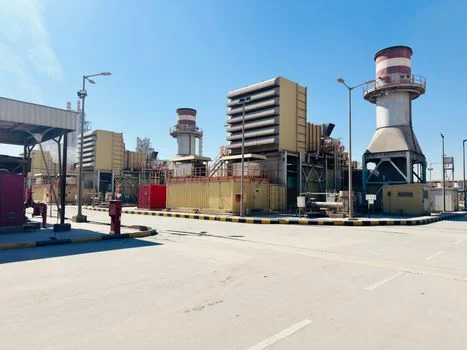
Anaerobic digestion systems remove about 90–95% of COD when influent COD sits between 1000–10,000 mg/L, based on published engineering benchmarks including ASCE-linked case work. Aerobic systems more often deliver 80–85% COD removal for influent ranges of 1000–3000 mg/L. Anaerobic trains produce roughly 0.35 m³ CH₄ per kilogram of COD removed; methane carries about 35.8 MJ/m³, or near 10 kWh/m³, which can offset plant power when gas is cleaned and used on site.
Sludge yields diverge sharply. Anaerobic systems generate about 0.05–0.1 kg TSS per kg COD removed, cutting hauling cost. Aerobic systems produce about 0.4–0.6 kg TSS per kg COD removed, according to EPA 2024 benchmarks. Anaerobic reactors run best at mesophilic 30–37°C and pH 6.5–7.5 — Wikipedia's anaerobic digestion reference gives the mesophilic optimum as about 30–38°C at ambient temperatures of 20–45°C — while aerobic basins operate effectively at 15–30°C and pH 6.5–8.5. Hydraulic retention time (HRT) for anaerobic reactors typically spans 6–48 hours by reactor type and organic loading rate; aerobic systems often need 4–12 hours HRT, which changes footprint and CapEx.
| Parameter | Anaerobic Treatment | Aerobic Treatment |
|---|---|---|
| COD Removal Efficiency | 90–95% (for 1000–10,000 mg/L influent) | 80–85% (for 1000–3000 mg/L influent) |
| Methane Production | 0.35 m³ CH₄/kg COD removed (Net Energy Producer) | None (Net Energy Consumer) |
| Sludge Production | 0.05–0.1 kg TSS/kg COD removed (Low) | 0.4–0.6 kg TSS/kg COD removed (High) |
| Optimal Temperature | 30–37°C (Mesophilic) | 15–30°C |
| Optimal pH | 6.5–7.5 | 6.5–8.5 |
| Hydraulic Retention Time (HRT) | 6–48 hours | 4–12 hours |
| Energy Consumption | Low (potentially net positive due to methane) | High (aeration requirements) |
Hybrid DAF–Anaerobic–MBR Design for Strict Effluent and Reuse
Hybrid trains stack unit processes so each stage protects the next. DAF systems for high-TSS pretreatment commonly remove 92–97% of TSS and cut fats, oils, and grease before biology, which lowers organic shock and membrane fouling risk. Micro-bubbles float solids and FOG for skimming. Where settleable solids dominate after DAF, a High-Efficiency Sedimentation Tank (Lamella Clarifier) can further trim TSS before the anaerobic reactor.
After DAF, anaerobic digestion handles the bulk COD. For influent COD greater than 5000 mg/L, two-phase anaerobic systems that separate acidogenesis and methanogenesis often reach 95–97% COD removal. Biogas from this stage supplies the energy recovery line. Final polishing with an Integrated MBR systems for effluent polishing package typically yields COD ≤50 mg/L and TSS <1 mg/L. Wikipedia's membrane bioreactor entry notes MBR can produce water suitable for reuse in irrigation, with effluent that is clear and pathogen free given the small membrane pores. Pathogen reduction is about log 4–6, supporting reuse targets such as ISO 16075 for agricultural irrigation after any required tertiary steps.
High COD Industrial Wastewater Hybrid Treatment Process Flow
A typical three-stage flow for an 8000 mg/L COD food plant looks like this. Raw wastewater (example COD 8000 mg/L, TSS 500 mg/L) enters DAF; DAF effluent often sits at COD 7000–7500 mg/L and TSS 15–40 mg/L (HydropureWater specs). UASB or EGSB anaerobic reactors then cut COD to about 200–400 mg/L while producing methane. MBR polishing finishes at COD ≤50 mg/L, BOD ≤10 mg/L, TSS <1 mg/L, and turbidity <1 NTU (HydropureWater MBR specs). A Shandong food plant treating 500 m³/day at influent COD 8000 mg/L reported effluent COD 45 mg/L and about 120 m³/day methane after DAF → UASB → MBR. Hybrid trains close the gap from multi-thousand mg/L COD to reuse-grade solids when each stage is sized on peak load.
| Treatment Stage | Typical Influent Parameters | Key Function | Typical Effluent Parameters | Removal Efficiency (Target) |
|---|---|---|---|---|
| Raw Wastewater | COD: 8000 mg/L TSS: 500 mg/L BOD: 3000 mg/L |
— | — | — |
| 1. Dissolved Air Flotation (DAF) | COD: 8000 mg/L TSS: 500 mg/L O&G: 100 mg/L |
TSS, FOG, and particulate COD removal | COD: 7000–7500 mg/L TSS: 15–40 mg/L O&G: <10 mg/L |
TSS: 92–97% O&G: >90% |
| 2. Anaerobic Reactor (e.g., UASB) | COD: 7000–7500 mg/L BOD: 2500–3000 mg/L |
High-rate organic breakdown, methane production | COD: 200–400 mg/L BOD: 100–150 mg/L |
COD: 95–97% BOD: 90–95% |
| 3. Membrane Bioreactor (MBR) | COD: 200–400 mg/L BOD: 100–150 mg/L TSS: 50–100 mg/L |
Biological polishing, solids separation, pathogen removal | COD: ≤50 mg/L BOD: ≤10 mg/L TSS: <1 mg/L Turbidity: <1 NTU |
COD: >80% BOD: >90% TSS: >99% |
| Final Effluent | — | — | COD: ≤50 mg/L BOD: ≤10 mg/L TSS: <1 mg/L |
Meets direct discharge/reuse standards |
CapEx and OPEX Cost Models for 2026 Hybrid Budgets
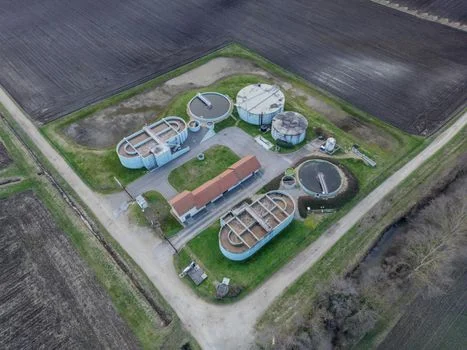
Anaerobic MBR Hybrid Plant CAPEX OPEX: 2026 Bands
Capital budgets for hybrid components in 2026 commonly list DAF at $50–$150/m³/day of capacity, anaerobic reactors at $300–$800/m³/day, and MBR trains at $400–$1200/m³/day (2026 market data, HydropureWater product catalog). Those ranges cover equipment, installation, and initial commissioning. An PLC-controlled chemical dosing for pH and nutrient balance package adds CapEx but stabilizes coagulant and nutrient feed, which protects OPEX.
OPEX spans energy, chemicals, sludge disposal, and membrane replacement. Anaerobic digestion energy use is often 0.1–0.3 kWh/m³ treated and may be offset by biogas. Aerobic aeration typically consumes 0.5–1.2 kWh/m³. Sludge disposal often costs $0.05–$0.20/kg TSS. MBR membrane replacement is commonly estimated at $0.02–$0.05/m³ treated, depending on pretreatment quality.
Methane recovery changes total cost of ownership. At $0.10/kWh electricity, 0.35 m³ CH₄/kg COD removed can offset about 30–50% of plant energy cost when gas is fully used. For a 1000 m³/day plant at 5000 mg/L COD, about 1750 m³/day methane equates to roughly 17,500 kWh/day, or about $1,750/day and over $600,000/year if that energy displaces grid power. Over five years, hybrid DAF–anaerobic–MBR trains often show 20–40% lower TCO than aerobic-only trains because of energy and sludge differences.
| Cost Category | Hybrid DAF-Anaerobic-MBR System (2026 Est.) | Aerobic-Only System (2026 Est.) |
|---|---|---|
| Capital Expenditure (CapEx) per m³/day capacity | ||
| DAF | $50–$150 | $50–$150 (if applicable) |
| Anaerobic Reactor | $300–$800 | — |
| MBR System | $400–$1200 | $400–$1200 (if advanced treatment needed) |
| Aerobic Reactor | — | $200–$600 |
| Total Estimated CapEx | $750–$2150 | $650–$1950 (highly variable) |
| Operational Expenditure (OPEX) per m³ treated | ||
| Energy Consumption | 0.1–0.3 kWh/m³ (net, often offset) | 0.5–1.2 kWh/m³ (net consumer) |
| Chemicals | $0.01–$0.05/m³ | $0.005–$0.02/m³ |
| Sludge Disposal | $0.005–$0.02/m³ (low generation) | $0.02–$0.08/m³ (high generation) |
| Membrane Replacement | $0.02–$0.05/m³ (for MBR) | $0.02–$0.05/m³ (for MBR) |
| Total Estimated OPEX (excluding methane ROI) | $0.035–$0.12/m³ | $0.075–$0.25/m³ |
| Methane Recovery ROI (for hybrid) | Offsets 30–50% of plant energy costs | N/A |
| 5-Year Total Cost of Ownership (TCO) Comparison | 20–40% savings compared to aerobic-only | Higher due to energy & sludge costs |
Decision Framework: Match Influent, Discharge Goal, and Footprint
System selection starts with measured COD, BOD, and TSS, then maps those values to discharge or reuse goals, energy recovery priority, and site footprint. Use peak and average loads, not only design averages, when you size anaerobic HRT and gas handling.
Selection checklist
- Confirm average and peak COD, BOD, TSS, FOG, and temperature.
- Lock the effluent goal: POTW, direct discharge, or reuse class.
- Decide whether methane recovery is a CapEx priority.
- Check footprint, odor control, and cold-weather heat balance.
- Require DAF or clarification when TSS or FOG will foul biology or membranes.
- Balance C:N:P before commissioning; correct with dosing if assays show deficits.
- Model 5-year TCO with sludge haul and membrane replacement, not CapEx alone.
Scenario 1 — COD 2000–5000 mg/L, direct discharge COD ≤100 mg/L: Choose DAF + anaerobic + MBR. The hybrid removes bulk organics and solids, then polishes to COD ≤50 mg/L and TSS <1 mg/L for strict discharge or reuse paths, including many zero-discharge flowsheets after salt management.
Scenario 2 — COD 5000–15,000 mg/L, energy recovery priority: Choose DAF + two-stage anaerobic (UASB + EGSB) + aerobic or MBR polish. Two-stage anaerobic digestion maximizes methane near 0.35 m³/kg COD removed on very high loads. Anaerobic effluent often lands near COD ≤200 mg/L before final polish.
Scenario 3 — BOD 1000–3000 mg/L, small footprint: Choose MBR-only with fine screening. Integrated MBR systems deliver effluent BOD ≤10 mg/L and TSS <1 mg/L in a compact basin, at higher aeration and membrane OPEX and without anaerobic energy credit.
Pitfalls: Undersizing anaerobic reactors for peaks causes washout. Skipping pH control in two-phase trains stalls methanogens. Omitting DAF on high-TSS feeds fouls MBR modules. Ignoring nutrient balance slows both anaerobic and aerobic kinetics.
| Influent Characteristics | Discharge Goal | Energy Recovery Priority | Footprint Constraint | Recommended System Configuration | Expected Effluent Quality |
|---|---|---|---|---|---|
| COD 2000–5000 mg/L TSS 100–300 mg/L |
Direct Discharge (COD ≤100 mg/L) | Moderate | Moderate | DAF + Anaerobic + MBR | COD ≤50 mg/L, TSS <1 mg/L, BOD ≤10 mg/L |
| COD 5000–15,000 mg/L TSS 300–800 mg/L |
POTW Discharge (COD ≤250 mg/L) | High | Flexible | DAF + Two-Stage Anaerobic (UASB + EGSB) | COD ≤200 mg/L, Methane 0.35 m³/kg COD |
| BOD 1000–3000 mg/L TSS <100 mg/L |
Direct Discharge/Reuse (BOD ≤10 mg/L) | Low | Small | MBR-only (with fine screening) | BOD ≤10 mg/L, TSS <1 mg/L, Pathogen Log 4-6 |
| COD 1000–3000 mg/L TSS 50–150 mg/L |
POTW Pretreatment (COD ≤500 mg/L) | Low | Moderate | Anaerobic (UASB) + Aerobic (Activated Sludge) | COD ≤250 mg/L, BOD ≤50 mg/L |
How do industrial RO systems recycle high-TDS water?
Industrial reverse osmosis for high-TDS recycling succeeds only after organics and solids are reduced to membrane-safe levels. MBR or equivalent polish to COD ≤50 mg/L and TSS <1 mg/L is a common feed target before RO on reclaim loops in the United States. Without that pretreatment, biofilm and organic fouling raise specific energy and force early membrane replacement, so RO is a polishing step—not a substitute for high-COD biological treatment.
What limits semiconductor ZLD reclaim scaling?
Semiconductor zero-liquid-discharge reclaim scales until salinity, silica, and residual organics exceed evaporator or crystallizer design limits. Organic-rich tool drains still need DAF–anaerobic–MBR style pretreatment before high-recovery RO and thermal brine steps. Plants that skip organic load control see RO recovery fall and scaling rates rise, which caps campus water reuse even when water-sustainability targets call for near-zero discharge.
Can treated effluent support data center cooling?
High-purity makeup for data center cooling usually needs conductivity and silica far below secondary effluent. Hybrid organic treatment can supply a stable reclaim source for cooling-tower makeup after RO and mineral polishing, provided COD, ammonia, and TSS stay inside the cooling-water specification. Direct use of MBR permeate without desalting is uncommon for closed high-purity loops.
Who this is for: plant engineers, EPC process leads, and procurement teams sizing food, pharma, pulp, or chemical organics trains for direct discharge, POTW, or reuse. Who should look elsewhere: projects whose dominant load is inorganic salts or metals with low biodegradable COD—those need physico-chemical and desalting focus first. Next step: send flow, COD/BOD/TSS peaks, and the discharge permit limit when you request a free quote so equipment duty and CapEx bands can be checked against your site data.
Frequently Asked Questions
What is the COD removal efficiency benchmark for high strength wastewater?
Anaerobic stages benchmark at 90–95% COD removal on 1000–10,000 mg/L influent, and two-phase anaerobic reaches 95–97% on streams above 5000 mg/L. Aerobic systems deliver 80–85% on 1000–3000 mg/L loads, and MBR polishing adds more than 80% on the residual to finish at COD ≤50 mg/L. Design audits should compare achieved versus benchmark removal stage by stage, not on plant-wide averages alone.
What does MBR polishing cost in industrial wastewater zero discharge?
MBR polishing costs $400–$1200 per m³/day of capacity plus roughly $0.02–$0.05/m³ treated in membrane replacement. In zero-discharge trains it sits ahead of RO and evaporation, and its permeate quality — COD ≤50 mg/L and TSS below 1 mg/L — protects those brine steps from organic fouling. Counting avoided RO cleaning and membrane loss, MBR usually earns its place inside the reuse loop.
What are the main advantages of anaerobic digestion on high COD?
Anaerobic digestion delivers about 90–95% COD removal on 1000–10,000 mg/L influent with only 0.05–0.1 kg TSS/kg COD sludge yield. The same stage produces roughly 0.35 m³ CH₄/kg COD removed, which can offset aeration and pumping power when gas is used on site. Those three effects—high COD cut, low sludge, and recoverable energy—explain why anaerobic reactors lead most high-COD organic flowsheets before aerobic or MBR polish.
How does MBR polishing support zero-discharge goals?
MBR polishing supports zero-discharge goals by producing low-solids, low-COD permeate that RO and evaporators can accept. Typical MBR effluent of COD ≤50 mg/L and TSS <1 mg/L reduces fouling on downstream membranes and cuts pathogen load by about log 4–6. That quality lets plants reclaim water for process or irrigation uses and shrinks the volume sent to brine management, which is the usual bottleneck in zero-discharge designs.
What ROI can methane recovery deliver on industrial wastewater?
Methane recovery often offsets 30–50% of treatment-plant energy cost when CH₄ yield is near 0.35 m³/kg COD removed and gas is fully used at about 10 kWh/m³ energy content. On a 1000 m³/day train at 5000 mg/L COD, about 1750 m³/day methane can equal roughly 17,500 kWh/day. At $0.10/kWh that is near $1,750/day, which shortens payback on anaerobic CapEx when electricity prices stay in that band.
When should I choose two-stage over single-stage anaerobic?
Two-stage anaerobic is preferred when influent COD exceeds about 5000 mg/L or when acidification risks methanogen inhibition. Separating acidogenesis and methanogenesis lets each community run at its own pH and loading, often lifting COD removal to 95–97% with more stable gas production. Single-stage UASB or EGSB remains adequate for many 1000–5000 mg/L streams with good alkalinity and FOG control.
Which OPEX items matter most in a hybrid DAF–MBR plant?
Hybrid OPEX is driven by methane credit, DAF chemical dose, sludge haul, and MBR membrane life. Maximizing gas use and keeping DAF TSS removal in the 92–97% band protects membranes and biology. Tracking aeration only where an aerobic stage exists, plus scheduled membrane cleaning, usually keeps total OPEX near $0.035–$0.12/m³ before counting the energy offset from biogas.