Jubail industrial wastewater treatment plant specs start with COD of 800–1,200 mg/L, TSS of 300–800 mg/L, and TDS of 3,000–10,000 mg/L against MEWA 2024 limits of COD ≤150 mg/L and TSS ≤30 mg/L. Hybrid DAF-MBR-RO trains close that gap.
Why Jubail Petrochemical Effluents Need Specialized Trains
Jubail petrochemical effluents need specialized trains because COD of 800–1,200 mg/L, TSS of 300–800 mg/L, and TDS of 3,000–10,000 mg/L overwhelm municipal packages. Coagulation plus DAF handles the solids, MBR the dissolved organics, RO the salinity. MEWA caps discharge at COD ≤150 mg/L and TSS ≤30 mg/L.
A 2024 refinery paid SAR 1.2 million after TSS exceeded the ≤30 mg/L limit with weak pretreatment. Vision 2030 also requires 40% wastewater reuse by 2030, and the Saudi Green Initiative pushes new industrial projects toward high recovery. Fines and reuse mandates move in the same direction: more treatment stages, sized correctly the first time.
The site concentrates the load. Wikipedia describes Jubail as the world's largest industrial city, established in 1975 and covering 1,016 square kilometers, home to the Middle East's largest petrochemical company SABIC. Every drain in that footprint ultimately meets MEWA numbers at the same outfall discipline.
Standard off-the-shelf plants struggle when salinity accelerates membrane fouling and metals poison biology. Most plants we size for Jubail drains start with coagulation plus flotation at the lower chemical-dose end, then confirm soluble COD before locking MBR or oxidation stages. Buyers comparing Gulf sites with other regions can cross-check selection logic in our note on industrial wastewater treatment and the Christchurch equipment checklist at Industrial Wastewater Treatment in Christchurch: 2026 Engineering Guide.
High COD/TSS ratios above 3:1 are common on local petrochemical drains. That ratio forces ferric chloride (FeCl₃) or polyaluminum chloride (PAC) ahead of biology, not optional polishing. Without that step, downstream MBR flux collapses within weeks under Jubail solids and oil carryover. Dissolved contaminants and desalination brine make recovery targets harder than temperate coastal plants expect at the same nominal flow.
| Parameter | Typical Range | Impact on Treatment |
|---|---|---|
| COD (Chemical Oxygen Demand) | 800–1,200 mg/L | Requires advanced biological or oxidative treatment; high load stresses conventional aerobic processes. |
| TSS (Total Suspended Solids) | 300–800 mg/L | Demands effective primary treatment like DAF to prevent downstream equipment damage and clogging. |
| Heavy Metals (Cr, Ni, Zn) | 5–20 mg/L | Necessitates chemical precipitation or ion exchange; toxic to biological systems. |
| TDS (Total Dissolved Solids) | 3,000–10,000 mg/L | Causes severe fouling and scaling in membranes (RO, UF), reducing recovery rates and increasing cleaning frequency. |
| pH | 4–10 | Requires neutralization before most treatment stages to optimize chemical reactions and protect equipment. |
Jubail Industrial Wastewater Treatment Plant Specs: COD, TSS, Metals and pH
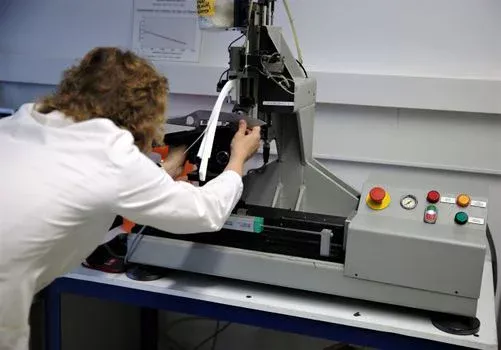
Jubail plant specs begin with measured COD, TSS, metals, TDS, and pH, then map each value to a unit process. Refractory phenols and complex hydrocarbons resist conventional activated sludge, so many trains add advanced oxidation or specialized Membrane Bioreactor (MBR) configurations after solids removal. MEWA's 2024 Industrial Effluent Regulations cap discharge at COD ≤150 mg/L, TSS ≤30 mg/L, heavy metals ≤0.1 mg/L (total), and pH 6–9.
SASO ISO 14001 programs still require documented monitoring plans, not a single factory-acceptance test. Neutralization into the pH 6–9 window must sit upstream of flotation and biology. Raw swings from pH 4–10 break floc structure and stress biomass. Metal concentrations of 5–20 mg/L as Cr, Ni, or Zn need precipitation or ion exchange before the MBR, or respiration rates fall and sludge settles poorly.
When teams review industrial effluent discharge tables written for other countries, they still redesign setpoints for MEWA numbers and Jubail salinity instead of copying foreign permit text. Primary treatment duty is non-optional at 300–800 mg/L TSS. Skipped or undersized flotation is the failure mode behind many MEWA TSS exceedances, so design notes should state coagulant type, dose band, and float-solids handling before civil drawings freeze.
| Parameter | Typical Petrochemical Effluent Range (Jubail) | MEWA 2024 Industrial Effluent Limit | Treatment Implication |
|---|---|---|---|
| COD (mg/L) | 800–1,200 | ≤ 150 | Requires advanced biological (MBR) or AOPs; chemical pre-oxidation may be needed. |
| TSS (mg/L) | 300–800 | ≤ 30 | Mandatory primary treatment (e.g., high-efficiency DAF systems for Jubail’s high-TSS effluents) is essential. |
| Heavy Metals (mg/L) | 5–20 (e.g., Cr, Ni, Zn) | ≤ 0.1 (total) | Chemical precipitation, ion exchange, or specialized adsorption required. |
| pH | 4–10 | 6–9 | Neutralization units are critical for process stability and compliance. |
| TDS (mg/L) | 3,000–10,000 | N/A (discharge limits vary) | Significant challenge for RO; requires robust pretreatment and specialized membranes. |
Hybrid Treatment Systems for Jubail Effluents
Hybrid system selection for Jubail compares Dissolved Air Flotation (DAF), Membrane Bioreactors (MBR), and Reverse Osmosis (RO) on removal, footprint, energy, and cost at stated feed quality. DAF removes 70–90% TSS and 50–70% COD when chemicals are dosed, which makes it the usual primary barrier for 300–800 mg/L solids. DAF alone leaves dissolved organics and metals largely untouched, so biology and membranes still follow. MBR units deliver >95% COD and TSS removal plus strong pathogen reduction for reuse duty.
High salinity forces more frequent MBR clean-in-place than temperate municipal plants expect. RO can reduce TDS below 50 mg/L for demineralized reuse, yet Jubail recovery often falls toward 60% without DAF plus ultrafiltration ahead of the membranes. Field trains that must hit zero-liquid-discharge or >95% reuse therefore stage DAF, then MBR, then RO rather than betting on a single unit process.
Chemical pre-dosing on DAF remains essential when oil and fine solids ride through gravity settlers. Operators who skip jar tests before startup usually burn coagulant budget in the first month and still miss TSS. Keep float-solids routing tied to the sludge press early, or the DAF deck floods during peak COD events.
Practical equipment order starts with high-efficiency DAF systems for Jubail’s high-TSS effluents and continues through MBR systems for Jubail’s high-COD, high-salinity effluents. The line finishes on RO systems for demineralized water production in Jubail. Integrated DAF+MBR+RO lines report >98% overall contaminant removal when each stage matches the comparison table. Energy stacks from about 1–2 kWh/m³ on DAF-only duty to 6–12 kWh/m³ on the full hybrid at local TDS.
| Technology | TSS Removal (%) | COD Removal (%) | Heavy Metals Removal (%) | Footprint | Energy Use (kWh/m³) | CAPEX (Relative) | OPEX (Relative) |
|---|---|---|---|---|---|---|---|
| DAF | 70–90 | 50–70 (with chemicals) | Low (requires chemical dosing) | Medium | 1–2 | Low | Medium |
| MBR | >95 | >95 | Low (requires specific biological adaptation) | Small | 2–4 | High | High |
| RO | N/A (removes dissolved) | N/A (removes dissolved) | >99 (requires pretreatment) | Medium | 3–6 | High | High (incl. membrane replacement) |
| DAF + MBR + RO (Hybrid) | >98 | >98 | >99 (with appropriate pretreatment & RO) | Large | 6–12 | Very High | Very High |
MARAFIQ Veolia IWWTP Jubail Engineering Specs: $500M Breakdown and Buyer Lessons
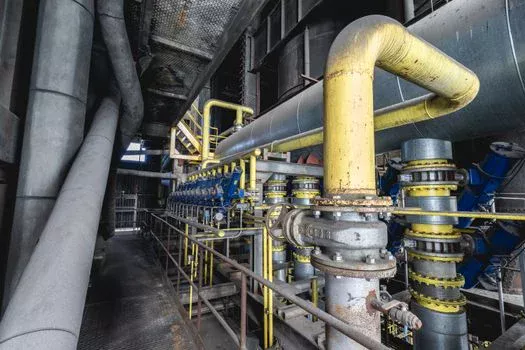
The $500 million MARAFIQ–Veolia–Lamar Arabia IWWTP in Jubail sets a regional capacity benchmark at 8.8 million m³/year. Design intent is about 24,000 m³/day of demineralized water for the AMIRAL Project, with reuse above 95%. Process order is DAF pretreatment, MBR biology, RO polishing, and sludge dewatering on filter presses. Influent TDS up to 8,000 mg/L forced custom RO membranes and intensive cleaning cycles.
Nickel and chromium required dedicated precipitation stages before biology. Lifecycle modeling over 20 years places CAPEX near $350 million and OPEX near $150 million, or roughly $0.95/m³ treated water on 2026 projections. Modular skids reduce expansion risk when flows rise in phases rather than in one civil package. MARAFIQ reported about 15% OPEX reduction in 2025 after real-time monitoring and SCADA tightened chemical dosing and CIP intervals.
Sludge handling is the line item mid-size buyers most often under-specify. Include filter presses for sludge dewatering in Jubail’s IWWTPs in the base bid so cake solids and haul costs are priced, not left as a change order. EU urban directive calendars differ from MEWA rules, yet the staged evidence approach in the EU Urban Wastewater Treatment Directive: Compliance, Deadlines & Tech guide still helps structure audit packs for Vision 2030 reviewers.
CAPEX and OPEX for Jubail Systems: 2026 Cost Models
Capital and operating costs for Jubail trains scale with flow, salinity, metal load, and whether RO demineralization is required for reuse. At 100 m³/h, a DAF-only package typically sits at $1.2–$2.0 million CAPEX with OPEX about $0.50–$0.80/m³. Adding an MBR for biological polishing lifts CAPEX to about $2.5–$4.0 million and OPEX to $0.80–$1.20/m³. A full DAF+MBR+RO hybrid sized for high reuse or zero-discharge duty usually lands at $3.5–$6.0 million CAPEX and $1.00–$1.50/m³ OPEX on the same 100 m³/h basis.
Membrane replacement can add $50,000–$100,000 per year on a 100 m³/h RO block when feed TDS stays in the thousands of mg/L. Freshwater purchase in Jubail often runs SAR 5–8 per m³, so hybrid reuse payback of 3–5 years appears when recovery exceeds 95% and replaces purchased water. Smaller 50 m³/h packages cost less up front but show higher unit OPEX. Larger 200 m³/h trains gain scale on energy and chemicals per cubic meter.
Bid tabs should separate civil works, mechanical equipment, membranes, chemicals, power, and labor. Salinity-driven OPEX is otherwise hidden inside a single lump sum until the second operating year. Controllers who only compare CAPEX ranks routinely underestimate CIP chemicals and cartridge filters on Jubail RO duty. Keep spare-membrane lead times visible in the OPEX narrative, not only in the spare-parts annex.
| System Capacity | Technology | Estimated CAPEX ($USD) | Estimated OPEX ($USD/m³) |
|---|---|---|---|
| 50 m³/h | DAF-only | $600,000 – $1,000,000 | $0.60 – $0.90 |
| DAF + MBR | $1,250,000 – $2,000,000 | $0.90 – $1.30 | |
| DAF + MBR + RO | $1,750,000 – $3,000,000 | $1.10 – $1.60 | |
| 100 m³/h | DAF-only | $1,200,000 – $2,000,000 | $0.50 – $0.80 |
| DAF + MBR | $2,500,000 – $4,000,000 | $0.80 – $1.20 | |
| DAF + MBR + RO | $3,500,000 – $6,000,000 | $1.00 – $1.50 | |
| 200 m³/h | DAF-only | $2,000,000 – $3,500,000 | $0.40 – $0.70 |
| DAF + MBR | $4,000,000 – $6,500,000 | $0.70 – $1.10 | |
| DAF + MBR + RO | $5,500,000 – $9,000,000 | $0.90 – $1.40 |
MEWA 2024 Industrial Effluent Compliance Saudi Arabia: Vision 2030 Zero-Discharge Requirements
MEWA's 2024 Industrial Effluent Regulations remain the discharge floor in Jubail: COD ≤150 mg/L, TSS ≤30 mg/L, heavy metals ≤0.1 mg/L, and pH 6–9. Vision 2030 and the Saudi Green Initiative push new industrial projects toward high reuse, commonly read as ≥95% water recovery rather than once-through discharge to the sea or sewer. Continuous effluent monitoring, independent third-party audits, and reuse certification form the evidence pack regulators expect during inspections. MEWA's own portal publishes the laws and regulations library that governs these limits.
MEWA inspectors also compare the logged industrial waste discharge time of water against the authorized discharge window for each outfall, so SCADA historians should retain those timestamps. Audit findings rarely hinge on a single grab sample; they hinge on the record trail around it. Plants that pass keep monitoring, corrective actions, and discharge logs in one indexed pack.
Hybrid DAF + MBR + RO trains are the usual path when both MEWA numeric limits and zero-discharge recovery targets apply on one site. A Jubail chemical plant cut compliance penalties by more than 80% in 2025 after installing real-time TSS monitoring tied to DAF dose control. Selection work should lock neutralization capacity, metal precipitation, salinity-rated membranes, and sludge outlets before civil design freezes.
Zero Liquid Discharge Jubail Refinery Wastewater Reuse in Practice
Zero liquid discharge for Jubail refinery wastewater reuse means DAF solids removal, MBR organics destruction, RO polishing to demineralized quality, and filter-press cake handling, with recovery above 95%. The concentrate stream goes to evaporation or crystallization on sites with true zero-discharge permits. Refinery drains add phenols and metals that push the biology and precipitation stages harder than mixed-industrial feeds. Cheapest primary clarifiers rarely hold MEWA TSS or Vision 2030 recovery across a full operating year.
Budget for instruments, spare membranes, and operator training in the same gate review as mechanical CAPEX. Otherwise the plant passes factory tests and fails the first summer salinity peak. Keep alarm setpoints aligned to MEWA numeric limits, not only to internal KPI dashboards, because inspectors read the regulation, not the dashboard.
Who This Is For, Checklist, and Next Step
This page is for plant engineers, EPC contractors, and procurement managers sizing petrochemical or mixed-industry reuse plants in Jubail and similar Gulf industrial cities. Teams that only need a small sanitary package with COD below about 500 mg/L and no demineralized reuse should use a simpler municipal-style flowsheet instead. Before you issue an RFQ, walk the checklist below with recent composite samples on the table.
- Design flow in m³/h and peak factor at 20 °C reference conditions
- Influent COD, TSS, TDS, metals, and pH ranges from composite samples
- MEWA discharge limits versus on-site reuse or zero-discharge recovery target
- Primary DAF duty, MBR flux assumptions, and RO recovery at stated TDS
- Sludge dewatering method, cake solids target, and disposal route
- CAPEX and OPEX split for energy, chemicals, and membrane replacement
- Monitoring, SCADA, and third-party audit plan for Vision 2030 evidence
If your flow, pollutant bands, and reuse targets are ready, submit them via our request a project quote form so sizing can be checked against the 2026 Jubail cost models above.
Frequently Asked Questions
What differs between Jubail municipal and industrial wastewater?
Industrial streams in Jubail are far more concentrated than municipal sewage. Typical industrial COD is 800–1,200 mg/L versus about 300–500 mg/L municipal, TSS is 300–800 mg/L versus 100–200 mg/L, and metals often sit at 5–20 mg/L versus <1 mg/L. Those gaps force DAF pretreatment and MBR-class biology before any reuse or RO step. MARAFIQ 2025 characterization data underpins these ranges for local petrochemical drains.
How does high salinity affect RO performance in Jubail?
High TDS of 3,000–10,000 mg/L cuts practical RO recovery toward about 60%, versus 75–85% on lower-salinity feeds. Fouling accelerates, so cleaning cycles often land every 2–4 weeks and membranes must be selected for brine-like feed. Without DAF and UF ahead of RO, recovery and membrane life both fall. Veolia 2025 operating benchmarks for Jubail-type salinity reflect the same pattern.
What CAPEX and OPEX fit a 100 m³/h hybrid line?
For a 100 m³/h hybrid DAF+MBR+RO system in Jubail, CAPEX is about $3.5–$6.0 million and OPEX about $1.00–$1.50 per m³. That OPEX band typically includes roughly $0.40/m³ energy, $0.30/m³ chemicals, and $0.20/m³ labor and maintenance, with membrane replacement as an added annual line. Figures come from 2026 HydropureWater cost models at Jubail salinity.
How can Jubail plants reach zero-discharge compliance?
Zero-discharge compliance in Jubail usually means hybrid DAF + MBR + RO with >95% water reuse aligned to Vision 2030 recovery goals. Practical steps are DAF solids removal, MBR treatment of dissolved organics, RO polishing to demineralized quality, and filter-press sludge dewatering. Monitoring and third-party audits close the regulatory file. MARAFIQ 2026 project specs illustrate this staged sequence at large capacity.
What are MEWA 2024 non-compliance penalties in practice?
MEWA 2024 Industrial Effluent penalties can run from about SAR 50,000 for minor breaches to SAR 2 million for severe or repeated offenses. Persistent violations may trigger mandated shutdowns until controls are restored. A documented 2024 Jubail refinery case already showed a SAR 1.2 million TSS-related fine when pretreatment failed. Written monitoring and rapid corrective action remain cheaper than repeated penalties.