CMP Wastewater Treatment for Semiconductor Fabs: 2026 Specs
CMP wastewater treatment for semiconductor fabs combines DAF, MBR, and RO to remove 99% of TSS and cut COD below 50 mg/L. Feed carries silica at 500–2,000 mg/L, COD of 300–1,500 mg/L, TSS up to 3,000 mg/L, and pH swings of 2–11.
Chemical mechanical polishing wastewater mixes spent slurry, rinse water, and pad-conditioning spikes. Alumina runs 200–800 mg/L alongside the silica, and organic acids such as citric and oxalic acid drive the COD band. Hybrid DAF-RO-MBR trains meet SEMI S23 and EPA 40 CFR Part 469 discharge limits, while ceramic microfiltration (MF) plus RO recovers 85–95% of water for reuse and cuts ultrapure water consumption by 30–50%.
This guide is written for fab process engineers, EPC contractors, and procurement teams evaluating treatment or reuse trains. Every spec below carries its condition, and the four cost models are stated per 100 m³/day of design flow.
Why CMP Wastewater Treatment Fails: 3 Common Compliance Pitfalls
Silica scaling is the first failure mode: RO membranes suffer 20–40% flux decline within 30 days without adequate pretreatment, which cuts water recovery and raises operating cost. CMP wastewater carries 500–2,000 mg/L of silica, and unchecked silica precipitates on membrane surfaces. Facilities chasing high recovery or zero-liquid discharge (ZLD) feel this failure first.
COD spikes from organic acids are the second pitfall. Citric and oxalic acids in CMP slurries push COD above 1,500 mg/L during peak pad-conditioning cycles, far beyond the SEMI S23 discharge limit of under 100 mg/L. Untreated organic loads breach discharge permits and invite fines. Biological treatment or advanced oxidation is required to mineralize these compounds.
TSS carryover from DAF is the third. Without pH control at 6.5–8.5 and surfactant dosing of 0.5–2 mg/L, DAF systems may achieve less than 80% TSS removal, letting fine particles through to foul MBR or MF stages. One 300 mm fab in Taiwan repeatedly missed EPA 40 CFR Part 469 compliance at influent COD of 1,200 mg/L. Retrofitting an electro-coagulation-flotation (ECF) unit ahead of a high-recovery RO system brought effluent COD below 50 mg/L (HydropureWater field data, 2025).
CMP Wastewater Composition: Engineering Parameters for System Design
CMP wastewater presents a variable contaminant profile that dictates the whole train. Key contaminants include silica at 500–2,000 mg/L, alumina at 200–800 mg/L, and organic acids contributing COD of 300–1,500 mg/L. TSS typically runs 500–3,000 mg/L, and pH swings from 2 to 11 with slurry chemistry and fab process mix.
Particle size drives the separation choice. CMP slurry particles fall mostly in the 0.1–10 μm band, with roughly 90% smaller than 5 μm. Capturing them takes microfiltration at 0.1–0.2 μm pore size or well-tuned DAF, as pilot-plant data shows; anything coarser passes fines into downstream membranes. Fabs consume 10–100 L of ultrapure water per wafer, and efficient RO recovers 80–90% of it for reuse. Sludge production runs 0.2–0.5 kg dry solids per cubic meter, varying with the pretreatment route—ECF versus chemical precipitation.
Slurry and pad chemistry shift the numbers. Silica slurries (colloidal silica) yield higher silica loads, while ceria slurries introduce rare earth elements; Wikipedia's process overview notes that CMP "typically uses cerium dioxide as the abrasive" for many dielectric steps. Pad material—polyurethane versus fixed-abrasive—changes particle character further. Map your slurry to coagulant, flocculant, and membrane selections before ordering.
| Parameter | Typical Range (CMP Wastewater) | Impact on Treatment |
|---|---|---|
| Silica (SiO₂) | 500–2,000 mg/L | Causes scaling in RO membranes; requires effective pretreatment. |
| Alumina (Al₂O₃) | 200–800 mg/L | Contributes to TSS; requires coagulation/flocculation. |
| COD (Organic Acids) | 300–1,500 mg/L | High organic load; requires biological or advanced oxidation. |
| TSS | 500–3,000 mg/L | Causes physical fouling; requires DAF, MF, or chemical precipitation. |
| pH | 2–11 | Requires neutralization for biological activity and optimal coagulation. |
| Particle Size | 0.1–10 μm (90% <5 μm) | Challenges conventional filtration; requires MF or DAF. |
Monitoring Cadence and the Operator Log
A permit holds only as long as the records behind it. Log flows, pH, and dosing setpoints every shift, run the full parameter panel on the schedule the permit states, and tie every cleaning event to the trend that triggered it. When silica or COD drifts, the log tells you whether the cause was feed chemistry, dosing, or membrane condition — before the lab confirms it. Auditors in every jurisdiction treat a contemporaneous log as evidence and anything assembled later as story.
DAF RO MBR Hybrid System Semiconductor Compliance: Four Systems Compared
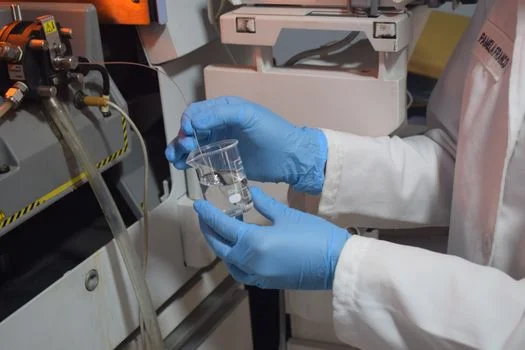
Hybrid CMP wastewater treatment for semiconductor fabs matches technology chains to discharge and reuse targets. The DAF systems for CMP wastewater pretreatment, combined with RO and MBR, achieve 99% TSS removal, reduce COD to below 50 mg/L, and enable 85% water recovery. This configuration suits fabs with 50–200 m³/day flows under strict SEMI S23 compliance, at a CAPEX of $1.2M–$2.5M for a 100 m³/day system (2026 data).
Electro-coagulation-flotation (ECF) followed by an integrated MBR system for CMP wastewater polishing is the alternative, achieving 92–97% COD removal. ECF systems typically produce 0.3–0.5 kg of sludge per cubic meter treated. Best performance requires pH adjustment at 6.5–8.5 and surfactant dosing of 0.5–2 mg/L via an automatic chemical dosing system for CMP wastewater pH adjustment and coagulation. CAPEX for a 100 m³/day ECF + MBR system runs lower, at $800K–$1.8M.
For zero-discharge and high reuse, ceramic microfiltration plus a high-recovery RO system for CMP water reuse is the advanced route. Pilot-plant data demonstrated 99% TSS removal and 90% water recovery, ideal for fabs minimizing fresh ultrapure water consumption. The advanced materials lift CAPEX to $1.5M–$3M per 100 m³/day. For adjacent fine-particle duties, our ceramic membrane water recovery blueprint for dicing wastewater covers silica recovery by ultrafiltration.
Chemical precipitation followed by MBR is the lowest-CAPEX option at $600K–$1.5M per 100 m³/day, but typically achieves only 80–90% COD removal. It scales and fouls more readily, demanding frequent membrane cleaning and raising maintenance cost. The trade-off map is clear: ECF balances performance and moderate CAPEX with more sludge; ceramic MF-RO buys the highest recovery at the highest price; DAF-RO-MBR balances cost and performance for most fabs.
| Hybrid System | Primary Advantages | Key Disadvantages | Typical Removal (TSS/COD) | Water Recovery | CAPEX (100 m³/day, 2026) |
|---|---|---|---|---|---|
| DAF + RO + MBR | High TSS/COD removal, good water recovery, reliable | Moderate CAPEX/OPEX, requires DAF optimization | 99% TSS, <50 mg/L COD | 85% | $1.2M–$2.5M |
| ECF + MBR | Effective COD removal (92–97%), lower CAPEX | Higher sludge production (0.3–0.5 kg/m³), electrode replacement | 95% TSS, <70 mg/L COD | 80% | $800K–$1.8M |
| Ceramic MF + RO | Near zero-discharge, high water recovery (90%), robust | Highest CAPEX, ceramic membrane cost | 99% TSS, <30 mg/L COD | 90–95% | $1.5M–$3M |
| Chemical Precipitation + MBR | Lowest CAPEX, simple pretreatment | Lower COD removal (80–90%), frequent membrane cleaning | 90% TSS, <100 mg/L COD | 75% | $600K–$1.5M |
Commissioning Sequence for a Hybrid Train
Bring the train up stage by stage, and write the sequence into the supply contract. Each gate below protects the stage downstream of it.
- Flush and water-test every tank, pipe, and valve before any slurry water enters.
- Confirm instruments — flow, pH, turbidity — against calibrated references before startup.
- Start DAF first and prove solids removal on real slurry feed before opening the membrane feed valve.
- Ramp the biological stage gradually, watching mixed liquor as load increases.
- Engage RO last, with permeate routed to drain until conductivity and silica hold steady.
- Close with documented operator training on the installed plant and a signed acceptance trial.
Zero Liquid Discharge Semiconductor Wastewater 2026 Specs
Zero-liquid-discharge for CMP streams rests on two numbers: 85–95% water recovery from ceramic MF + RO, and a 30–50% cut in fresh ultrapure water consumption. With fabs drawing 10–100 L of ultrapure water per wafer, the recovery loop measurably shrinks UPW plant load. Recovered water valued at $0.50–$1.50/m³ offsets 20–50% of treatment OPEX, which is the economic engine of every ZLD case.
Reuse permits set the effluent bar. Taiwan EPA reuse rules require COD below 100 mg/L, TSS below 30 mg/L, and silica below 50 mg/L in recovered water—silica being the parameter most ZLD trains miss first. Design the pretreatment to the reuse limit, not the discharge limit, and the loop stays permitted.
CAPEX and OPEX Breakdown: 2026 Cost Models
CAPEX for a 100 m³/day CMP wastewater treatment system ranges from $600K to $3M, dictated by the technology chain. Chemical precipitation systems sit at the bottom; ceramic MF-RO sits at the top on specialized membranes and integration. Figures include equipment, installation, and commissioning, excluding land and buildings.
OPEX runs $0.50–$2.50 per cubic meter treated. Energy spans 0.3–1.2 kWh/m³ with pumping and aeration dominant. Chemicals—coagulants, flocculants, pH adjusters, cleaning agents—run 0.1–0.5 kg/m³, and sludge disposal costs $0.05–$0.20 per kilogram of dry solids depending on local regulation and landfill access.
Component replacement lines deserve their own budget rows. RO membrane replacement costs $15K–$30K annually for a 100 m³/day system, roughly 20% of total OPEX. ECF electrode replacement runs $20K–$50K per year, up to 30% of OPEX. Water recovery offsets pull the other way: recovered ultrapure water at $0.50–$1.50/m³ can offset 20–50% of OPEX. Fab location—Singapore versus Texas, say—moves energy, labor, and sludge lines enough to change the ranking.
| Cost Category | Typical Range (100 m³/day System) | Key Drivers |
|---|---|---|
| CAPEX (Total) | $600K–$3M | Technology choice (chemical precipitation lowest, ceramic MF-RO highest) |
| OPEX (per m³) | $0.50–$2.50/m³ | Energy, chemicals, sludge disposal, membrane/electrode replacement |
| Energy Consumption | 0.3–1.2 kWh/m³ | Pumping, aeration, heating |
| Chemicals (Coagulants, pH adjusters) | 0.1–0.5 kg/m³ | Wastewater composition, treatment method |
| Sludge Disposal | $0.05–$0.20/kg dry solids | Local regulations, landfill costs, sludge volume |
| RO Membrane Replacement | $15K–$30K/year (approx. 20% of OPEX) | Membrane fouling rate, operating conditions |
| ECF Electrode Replacement | $20K–$50K/year (approx. 30% of OPEX) | Electrode material, current density, wastewater conductivity |
| Water Recovery Savings | $0.50–$1.50/m³ (offsets 20–50% of OPEX) | Cost of fresh ultrapure water, system recovery rate |
Where the Money Actually Goes
Read the OPEX table as a set of levers, not a forecast. Energy sits under pumping and aeration, so meter those circuits separately and challenge every setpoint. Chemistry tracks feed variability — equalization that smooths the feed cuts coagulant demand and cleaning frequency together. And the replacement rows are consequences of pretreatment quality: the cleaner the front of the train runs, the longer membranes and electrodes last.
CMP Wastewater COD Removal SEMI S23 Compliance and Global Limits
SEMI S23 sets the reference bar for semiconductor manufacturing facilities: COD under 100 mg/L, TSS under 30 mg/L, pH 6–9, and metals (copper, nickel, zinc) under 1 mg/L. Hybrid trains such as DAF-RO-MBR reach these numbers through staged removal. Multi-stage design is what keeps a fab inside the band during pad-conditioning spikes.
In the United States, EPA 40 CFR Part 469 governs the electrical and electronic components point source category. According to US EPA, E&EC facilities manufacture semiconductors and allied components, and their wastewater comes from processes such as etching, cleaning, degreasing, cutting, and grinding. The part sets COD under 120 mg/L, TSS under 30 mg/L, pH 6–9, and cyanide under 1 mg/L where applicable. For specific contaminants, see our articles on heavy metal wastewater treatment specs for semiconductor fabs and ammonia-nitrogen treatment for semiconductor wastewater.
European fabs work under EU Directive 2010/75/EU, typically COD under 125 mg/L, TSS under 35 mg/L, and metals such as chromium and nickel below 0.5 mg/L. National implementations, as covered in our piece on EU Directive 2010/75/EU compliance for semiconductor wastewater, can tighten further. Taiwan EPA reuse standards add silica below 50 mg/L for recovered water.
Most compliance failures trace to COD spikes during pad conditioning or silica fouling from inadequate pretreatment. Mitigation is procedural: equalization tanks to buffer variability, real-time COD monitoring, and optimized coagulant dosing. The ECF route (92–97% COD removal) and ceramic MF-RO (99% TSS removal) both demonstrate that hybrid systems hold these limits when operated to spec.
| Regulatory Standard | COD Limit | TSS Limit | pH Range | Other Key Limits | Applicability |
|---|---|---|---|---|---|
| SEMI S23 | <100 mg/L | <30 mg/L | 6–9 | Metals (Cu, Ni, Zn) <1 mg/L | Global Semiconductor Fabs |
| EPA 40 CFR Part 469 (U.S.) | <120 mg/L | <30 mg/L | 6–9 | Cyanide <1 mg/L (if applicable) | U.S. Semiconductor Fabs |
| EU Directive 2010/75/EU | <125 mg/L | <35 mg/L | 6–9 | Metals (Cr, Ni) <0.5 mg/L | EU Semiconductor Fabs |
| Taiwan EPA (for reuse) | <100 mg/L | <30 mg/L | 6–9 | Silica <50 mg/L | Taiwan Semiconductor Fabs |
How to Select the Right CMP Treatment System: A 5-Step Decision Framework
System selection for CMP wastewater treatment for semiconductor fabs should follow a fixed sequence, not a catalog search. The five steps below align technical performance with compliance and budget. Skipping characterization or piloting is where most selection errors originate.
- Step 1: Characterize wastewater. Measure average and peak flow, COD, TSS, silica, and pH variability. Benchmark the profile against the composition table above to isolate the binding contaminants.
- Step 2: Define compliance requirements. List municipal limits, national rules such as EPA 40 CFR Part 469, and industry guides like SEMI S23 or EU Directive 2010/75/EU. Map each limit to a treatment stage.
- Step 3: Evaluate water recovery needs. Zero-discharge strategies target 80–95% recovery and push selection toward ceramic MF+RO. Discharge-compliance-only cases can settle for 50–80% recovery and cheaper trains.
- Step 4: Compare CAPEX/OPEX budgets. Use the cost models above to compare total cost of ownership, including energy, chemicals, sludge, and membrane or electrode replacement. Rule out options that fail the TCO screen.
- Step 5: Pilot test the top 2–3 systems. Run 3–6 months of piloting under real fab conditions, monitoring COD, TSS, silica, and pH continuously while logging fouling rates, chemical use, and sludge production.
As a decision tree: COD above 1,000 mg/L with high silica and a zero-discharge mandate points to ceramic MF + RO. COD consistently below 500 mg/L with a tight budget and moderate recovery points to chemical precipitation + MBR. For the biological stage behind either route, our MBR Effluent Quality: Specs, Removal Rates and Selection Guide details membrane selection and expected effluent quality.
Whatever the train, dosing discipline carries the permit: pH and coagulant control run best through a packaged Automatic Chemical Dosing System with logged setpoints. Request a quote with your flow rate and slurry profile for a sized CAPEX/OPEX model.
Troubleshooting Decisions on a Running Train
Diagnose from the trend, not the alarm list. Rising differential pressure across the membranes with steady feed quality points to fouling — restore cleaning discipline before ordering chemicals in bulk. A slow COD creep usually traces to pad-conditioning changes upstream, so check the fab schedule before re-tuning biology. Falling recovery with clean membranes means concentrate limits are being reached; adjust the recovery target before silica decides it for you.
Escalate in a fixed order: verify the instrument, confirm with a lab sample, correct the owning stage, then re-sample. Skipping steps turns maintenance into guesswork and guesswork into permit excursions.
Frequently Asked Questions
Here are concise answers to the questions fab engineering teams ask most about treating CMP wastewater.
What are the primary contaminants in CMP wastewater?
CMP wastewater typically contains silica at 500–2,000 mg/L, alumina at 200–800 mg/L, organic acids driving COD of 300–1,500 mg/L, and TSS of 500–3,000 mg/L, with pH swinging from 2 to 11 (HydropureWater field data, 2025). The mix shifts with slurry chemistry and pad-conditioning schedule. Characterize both average and peak values before selecting a train.
How does silica impact CMP wastewater treatment?
Silica scales RO membranes, causing 20–40% flux decline within 30 days without effective pretreatment. Scaling raises cleaning frequency and shortens membrane life, which is the fastest way to lose recovery in a ZLD train. Coagulation plus microfiltration ahead of RO is the standard control.
What is a hybrid system in CMP wastewater treatment?
A hybrid system chains technologies—DAF, MBR, and RO—to match the contaminant profile of CMP wastewater. DAF takes solids, MBR degrades dissolved organics, and RO polishes ions and fine silica for reuse. The combination optimizes removal efficiency, water recovery, and permit compliance together.
Can CMP wastewater be treated for zero-discharge?
Yes. Ceramic microfiltration followed by reverse osmosis recovers 85–95% of the water for reuse, cutting fresh ultrapure water consumption by 30–50%. Fabs under Taiwan EPA reuse rules run this route against COD below 100 mg/L, TSS below 30 mg/L, and silica below 50 mg/L. Brine and concentrate management remain the closing design task.
What is the typical CAPEX for a 100 m³/day CMP wastewater treatment system?
CAPEX for a 100 m³/day system ranges from $600K to $3M by technology. Chemical precipitation + MBR sits at the bottom at $600K–$1.5M, DAF-RO-MBR runs $1.2M–$2.5M, and ceramic MF-RO reaches $1.5M–$3M. Figures include equipment, installation, and commissioning, excluding land and building works.
How long should a CMP treatment pilot run?
Plan 3–6 months of piloting under real fab conditions. Monitor COD, TSS, silica, and pH continuously, and log membrane fouling rates, chemical consumption, and sludge production. Pilots shorter than a full pad-conditioning cycle usually miss the peak COD behavior that drives permit risk.