Microelectronics Heavy Metal Wastewater Treatment: 2025 Engineering Specs, 99.9% Removal & Cost-Optimized ZLD Systems
Microelectronics wastewater contains heavy metals like copper (avg. 2,000 mg/L), nickel, and chromium, requiring 99.9% removal to meet EPA and China GB discharge limits. Cost-optimized ZLD systems combine hydroxide precipitation (for bulk removal) with ion exchange or electrowinning (for residual polishing), achieving effluent copper levels <0.1 mg/L at OpEx costs of $0.50–$2.00/m³. Advanced technologies like Veolia’s MetClear reduce chemical usage by 30% compared to traditional methods, cutting sludge disposal costs by 25%.
Why Heavy Metal Wastewater Treatment is Critical for Microelectronics Fabs
EPA and China GB 31573-2015 set copper discharge limits at 0.5 mg/L and nickel at 1.0 mg/L; non-compliance fines exceed $50,000 per violation according to 2024 EPA enforcement data. For microelectronics manufacturers, the stakes extend beyond simple compliance. The wastewater generated during wafer fabrication, chemical mechanical planarization (CMP), and electroplating contains high concentrations of copper (averaging 2,000 mg/L), nickel (500–1,500 mg/L), and chromium (VI) (100–300 mg/L). These streams are often complicated by the presence of chelating agents like EDTA, citric acid, and ammonia, which prevent standard precipitation by forming stable, soluble metal complexes. (HydropureWater field data, 2025).
The environmental impact of these metals is severe. Untreated heavy metals bioaccumulate in aquatic ecosystems, with copper toxicity thresholds for fish recorded as low as 0.02 mg/L per EPA 2023 criteria. In a semiconductor context, failure to remove these contaminants results in toxic sludge that is classified as hazardous waste, significantly increasing disposal liabilities. the industry’s shift toward Zero Liquid Discharge (ZLD) is driven by water scarcity and the high cost of raw water procurement in tech hubs like Arizona, Taiwan, and Shenzhen.
A recent case study of a semiconductor fab in Oregon illustrates the economic driver for advanced treatment. The facility faced effluent copper levels of 1.2 mg/L, consistently exceeding its permit. By implementing a high-selectivity chelating ion exchange system for polishing, the fab reduced copper effluent to 0.05 mg/L. This upgrade allowed the facility to avoid approximately $200,000 per year in regulatory fines while enabling an 80% water reuse rate, drastically lowering its environmental footprint and operational risk.
Treatment Technologies for Microelectronics Heavy Metals: Mechanisms and Removal Efficiencies
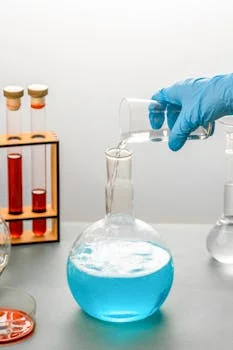
Hydroxide precipitation remains the primary bulk removal method for microelectronics wastewater, achieving 90–95% removal for copper and 85–90% for nickel when pH is optimized between 8.5 and 9.5. This process involves the addition of caustic soda (NaOH) or lime (Ca(OH)₂) to convert soluble metal ions into insoluble metal hydroxides. However, its efficiency is limited by the solubility product constant (Ksp) of the specific metal and the presence of chelators, which can leave residual concentrations above 5 mg/L—far exceeding modern discharge permits.
Sulfide precipitation offers a more robust alternative for chelated streams, achieving 99%+ removal for copper and nickel due to the much lower solubility of metal sulfides compared to hydroxides. This method requires strict pH control (typically between 7 and 9) to prevent the generation of toxic hydrogen sulfide (H₂S) gas. While highly effective, it necessitates advanced safety protocols and specialized gas scrubbing equipment.
For high-purity requirements, ion exchange (IX) using chelating resins is the industry standard for polishing. These resins have a high affinity for divalent metal ions even in the presence of competing calcium or magnesium. Regeneration cycles typically range from 2 to 4 hours, though resins face a 30% capacity loss if organics and TSS are not removed via a DAF system for TSS and FOG removal prior to the IX columns. Electrowinning is another advanced option, particularly for high-concentration copper streams (>500 mg/L), allowing the recovery of 95%+ of the metal as high-purity metallic plates. This process consumes 3–5 kWh/kg of copper recovered and utilizes titanium or lead-alloy anodes.
| Technology | Removal Efficiency | Target Metals | Primary Limitation |
|---|---|---|---|
| Hydroxide Precipitation | 85–95% | Cu, Ni, Cr(III) | High sludge volume; chelation interference |
| Sulfide Precipitation | 99%+ | Cu, Ni, Pb, Zn | H₂S gas risk; requires specialized safety |
| Ion Exchange (IX) | 99.9% | Cu, Ni, Cd | Resin fouling from organics/TSS |
| Electrowinning | 95% recovery | Cu (high conc.) | High energy consumption; not for polishing |
| Reverse Osmosis (RO) | 95–99% | All dissolved metals | Membrane scaling from silica/organics |
Engineering Specs for Microelectronics Heavy Metal Wastewater Systems
Standard engineering designs for microelectronics wastewater treatment require hydraulic retention times (HRT) of 30–60 minutes for precipitation tanks and 10–20 minutes of empty bed contact time (EBCT) for ion exchange polishing stages. Microelectronics influent typically presents a high Total Dissolved Solids (TDS) range of 5,000–20,000 mg/L and a Chemical Oxygen Demand (COD) of 2,000–5,000 mg/L, with an acidic pH often between 2 and 5. These characteristics necessitate corrosion-resistant materials, such as FRP or lined carbon steel, for all primary reactor vessels.
Chemical dosing is a critical engineering parameter. Hydroxide precipitation usually requires 1.5–2.5 kg of NaOH per m³ of wastewater to reach the optimal pH for copper and nickel removal. If sulfide precipitation is used for chelated streams, Na₂S dosing rates range from 0.5–1.0 kg/m³. To facilitate settling, coagulants like polyaluminum chloride (PAC) are added at 5–10 mg/L. Effective solids separation is mandatory to protect downstream membranes; a DAF system for TSS and FOG removal is often integrated to remove 90%+ of total suspended solids before secondary treatment.
Sludge management accounts for a significant portion of the system's footprint and OpEx. Hydroxide precipitation generates a voluminous sludge (20–30% by volume), which must be dewatered to reduce disposal costs. Utilizing a plate and frame filter press for sludge dewatering can achieve a cake solids content of 35–45%, reducing the total waste volume by up to 80%. Disposal costs for this hazardous metal-bearing sludge typically range from $100 to $300 per ton, depending on local regulations and metal concentrations.
| Parameter | Design Value (Precipitation) | Design Value (Ion Exchange) |
|---|---|---|
| Hydraulic Retention Time (HRT) | 30–60 Minutes | 10–20 Minutes (EBCT) |
| Chemical Dosing (NaOH) | 1.5–2.5 kg/m³ | N/A (Regenerants only) |
| Operating pH Range | 8.5–9.5 | 4.0–7.0 (Resin dependent) |
| Sludge Generation Rate | 20–30% (by volume) | <1% (Backwash/Regenerant) |
| Typical Influent TSS | <500 mg/L | <5 mg/L (Requires Pretreatment) |
Cost Breakdown: Heavy Metal Removal vs. Zero Liquid Discharge (ZLD) Systems
The capital expenditure (CapEx) for microelectronics heavy metal removal systems ranges from $200,000 for basic precipitation to over $3 million for integrated ion exchange and electrowinning recovery units. Basic chemical precipitation systems are the most CapEx-efficient but carry high OpEx due to chemical consumption and sludge disposal fees. Conversely, electrowinning systems have a higher initial cost but can provide an ROI through the recovery of high-value copper (market value $8–$10/kg) and the reduction of hazardous waste volume.
Operational expenditure (OpEx) for standard heavy metal removal typically falls between $0.50 and $2.00/m³. This includes chemicals (NaOH at $0.20–$0.50/m³), sludge disposal ($0.10–$0.30/m³), and electricity ($0.05–$0.20/m³). When transitioning to a full ZLD framework, the OpEx increases to $1.50–$3.00/m³ due to the high energy demand of thermal evaporation and crystallization. However, ZLD allows for 95%+ water recovery, which is a major ROI driver in regions with high water costs. An industrial RO system for heavy metal removal serves as the backbone of these ZLD systems, concentrating the brine before final evaporation.
A fab in Taiwan recently demonstrated that switching from traditional hydroxide precipitation to a combined electrowinning and RO system reduced their total OpEx by 40%. The savings were primarily driven by a 70% reduction in sludge disposal costs and the ability to reuse treated effluent in cooling towers, bypassing the need for expensive municipal water intake.
| System Type | CapEx Range | OpEx (per m³) | Water Recovery % |
|---|---|---|---|
| Precipitation + Filtration | $200K – $1.5M | $0.50 – $1.20 | 0–10% |
| IX + Electrowinning | $500K – $3.0M | $0.80 – $2.00 | 10–30% |
| Full ZLD (Evaporative) | $1.2M – $5.0M | $1.50 – $3.00 | 95–98% |
Compliance Standards for Microelectronics Wastewater: EPA, China GB, and EU Limits
Global regulatory frameworks for microelectronics effluent are converging toward a 0.5 mg/L limit for copper, though the EU Industrial Emissions Directive (IED) often mandates stricter thresholds of 0.2 mg/L. In the United States, EPA 40 CFR Part 469 (Semiconductor Subcategory) dictates federal limits, while local NPDES permits in states like California or Oregon often impose even more stringent requirements—sometimes as low as 0.3 mg/L for copper—to protect sensitive watersheds. These limits necessitate a multi-stage approach, combining bulk precipitation with ion exchange polishing.
China’s GB 31573-2015 standard is particularly rigorous for the electronics industry, setting copper at 0.5 mg/L and nickel at 1.0 mg/L, but also including strict caps on fluorine (10 mg/L) and ammonia (15 mg/L). Meeting these targets requires specialized nickel removal technologies and cost analysis to ensure that the complex chemistry of fab wastewater doesn't lead to compliance failures. Similarly, chromium (VI) removal strategies for microelectronics wastewater are essential for fabs utilizing hexavalent chromium in specialized etching processes.
Emerging contaminants are also coming under scrutiny. The EPA’s 2024 draft limits for PFAS in industrial wastewater are specifically targeting microelectronics fabs that use fluorinated surfactants. These regulations may soon require the integration of granular activated carbon (GAC) or specialized high-rejection RO membranes to reduce PFAS levels to below 70 ng/L. Fabs looking to future-proof their facilities are increasingly looking at solar-powered ZLD systems for energy-efficient treatment to offset the carbon footprint of these advanced compliance measures.
| Standard | Copper (Cu) | Nickel (Ni) | Chromium (VI) |
|---|---|---|---|
| EPA 40 CFR Part 469 | 0.5 mg/L | 1.0 mg/L | 0.1 mg/L |
| China GB 31573-2015 | 0.5 mg/L | 1.0 mg/L | 0.2 mg/L |
| EU IED (Best Available Tech) | 0.2 mg/L | 0.5 mg/L | 0.1 mg/L |
| Typical ZLD Requirement | <0.05 mg/L | <0.05 mg/L | <0.01 mg/L |
How to Select the Right Heavy Metal Treatment System for Your Fab
Selecting an optimal heavy metal treatment system requires a multi-variant analysis of influent chelation levels, target effluent concentration, and the desired rate of water reuse. The first step for any facility manager is a comprehensive influent analysis. If the stream contains high levels of EDTA or ammonia, traditional hydroxide precipitation will fail to meet limits below 1.0 mg/L. In these cases, engineers must specify sulfide precipitation or specialized chelating resins that can break the metal-ligand bond.
Compliance targets serve as the secondary filter for technology selection. If the discharge permit is relatively lenient (>1.0 mg/L), a single-stage precipitation and filtration system may suffice. However, if the target is <0.1 mg/L or if the fab is moving toward ZLD, a two-stage process is mandatory: precipitation for bulk removal followed by ion exchange or RO for polishing. For facilities with limited real estate, an MBR system for compact wastewater treatment can reduce the footprint by up to 60% compared to conventional clarifiers, while providing superior solids separation for downstream IX columns. The use of high-flux MBR system for compact wastewater treatment modules ensures that even under high organic loads, the system maintains a 0.1 μm pore size barrier against suspended solids.
Finally, budget constraints often dictate the balance between CapEx and OpEx. While precipitation systems are cheaper to install, their high sludge disposal costs often result in a higher total cost of ownership (TCO) over a 5-year horizon. Procurement teams should prioritize electrowinning for copper-rich streams to turn a waste liability into a secondary revenue stream. By integrating these technologies into a single framework, microelectronics fabs can achieve 99.9% removal efficiencies while maintaining operational profitability.
| If your goal is... | And your influent is... | Then select... |
|---|---|---|
| Regulatory Compliance (<0.5 mg/L) | Non-chelated, low TDS | Hydroxide Precip + Sand Filtration |
| Strict Compliance (<0.1 mg/L) | Chelated, high volume | Sulfide Precip + Ion Exchange |
| Resource Recovery (Cu) | High conc. (>500 mg/L) | Electrowinning + Precipitation |
| Water Reuse/ZLD | High TDS, complex mix | MBR + RO + Evaporation |
| Footprint Optimization | Moderate TDS/COD | Integrated MBR + IX |
Frequently Asked Questions
What is the most cost-effective way to remove copper from microelectronics wastewater?
Electrowinning is the most cost-effective for high-concentration streams, as it recovers copper as metallic plates, reducing disposal costs by 40% and generating revenue ($8–$10/kg). For influent copper >500 mg/L, electrowinning OpEx is $0.30–$0.80/m³ compared to $0.50–$1.50/m³ for ion exchange.
How do chelating agents affect heavy metal removal?
Chelators like EDTA bind to metal ions, keeping them soluble even at high pH levels. This prevents standard hydroxide precipitation. Sulfide precipitation or specialized chelating ion exchange resins are required to treat these streams, typically increasing OpEx by 20–30%.
What are the sludge disposal costs for hydroxide precipitation?
Sludge volume typically represents 20–30% of the influent flow. Disposal costs for hazardous metal sludge range from $100–$300/ton. Using a plate and frame filter press for sludge dewatering can reduce this volume by 70–80%, significantly lowering OpEx.
Can RO membranes remove heavy metals from microelectronics wastewater?
Yes, an industrial RO system for heavy metal removal achieves 95–99% rejection of copper and nickel. However, pretreatment using a DAF system for TSS and FOG removal is critical to prevent membrane scaling and fouling from silica and organic residues.
What are the energy requirements for ZLD systems?
Thermal ZLD systems (evaporation/crystallization) consume 50–100 kWh/m³. To mitigate these costs, many fabs are exploring solar-powered ZLD systems for energy-efficient treatment, which can reduce grid energy reliance by up to 40%.