Why Kentucky Facilities Choose Package Wastewater Treatment Plants
According to the Kentucky Division of Water, over 300 package plants operate statewide, serving populations under 1,000 in areas where municipal sewer extensions are geographically or financially unfeasible. For facilities like the Yorktowne Estates MHP or schools in rural districts, these pre-engineered systems provide a bridge between failing decentralized infrastructure and the high costs of centralized utility connections. While traditional septic systems often struggle with Kentucky’s dense clay soils and karst topography, achieving only 50-70% BOD removal, package plants utilize aerobic processes to reach 85-95% efficiency, ensuring compliance with the national engineering standards for package plants in the USA.
The primary driver for package plant adoption in Kentucky is the significant capital cost gap compared to sewer extensions. Extending a municipal sewer line in Kentucky can cost between $1 million and $5 million per mile depending on terrain, whereas a 20,000 GPD package plant can be installed for $300,000 to $500,000. For a mobile home park manager in Georgetown, KY, facing a failing septic field and potential Division of Water fines, the installation of WSZ series underground package plants for Kentucky mobile home parks and schools offers a deployment timeline of 3 to 6 months, compared to the 18 to 24 months required for municipal expansion. This speed to compliance is critical for maintaining property values and avoiding environmental litigation.
Decision-makers must weigh these advantages against operational realities. Unlike passive septic systems, package plants require active management by certified operators. Operations and maintenance (O&M) costs typically range from $0.50 to $1.50 per 1,000 gallons treated, significantly higher than septic maintenance but necessary to meet Kentucky Pollutant Discharge Elimination System (KPDES) permit limits. These systems are also sensitive to influent variability; for instance, a school in a rural Kentucky county may experience "shock loads" during the day and zero flow at night, necessitating equalization tanks or Sequencing Batch Reactor (SBR) technology to maintain biological stability.
Kentucky Regulatory Requirements for Package Wastewater Treatment Plants
The Kentucky Pollutant Discharge Elimination System (KPDES) governs the operation of all small sewage systems through the Kentucky Division of Water, requiring a permit for any facility discharging into the waters of the Commonwealth. Under Kentucky Revised Statutes 224.70-110, it is illegal to discharge pollutants without a valid permit, and non-compliance can result in penalties ranging from $1,000 to $25,000 per violation per day. Most package plants fall under the General Permit for Small Sewage Treatment Systems, though systems in sensitive watersheds or those using non-standard technology may require an Individual Permit.
Discharge limits are strictly enforced to protect Kentucky’s diverse river basins. Standard secondary treatment limits are 30 mg/L for Biochemical Oxygen Demand (BOD) and 30 mg/L for Total Suspended Solids (TSS). However, for plants located near drinking water intakes or in sensitive areas—such as a school in Perryville, KY, discharging near a protected stream—the Division of Water may impose "stringent" limits of 10 mg/L BOD and 10 mg/L TSS, along with ammonia-nitrogen limits as low as 1.0 mg/L during summer months. To ensure these limits are met, Kentucky requires at least one certified operator (typically Grade 1 or Grade 2) to oversee the facility, with training and certification managed by the Kentucky Water and Wastewater Operators Association.
| Regulatory Parameter | Standard Limit (Secondary) | Sensitive Watershed Limit | Monitoring Frequency |
|---|---|---|---|
| BOD5 (5-Day Demand) | 30 mg/L | 10 mg/L | Monthly/Quarterly |
| TSS (Total Suspended Solids) | 30 mg/L | 10 mg/L | Monthly/Quarterly |
| Ammonia-Nitrogen (NH3-N) | N/A (Variable) | 1.0 - 4.0 mg/L | Monthly |
| Fecal Coliform | 200 col/100 mL | 200 col/100 mL | Monthly |
| pH Range | 6.0 - 9.0 S.U. | 6.0 - 9.0 S.U. | Weekly |
Beyond discharge limits, the design and construction phase requires a formal "Construction Permit" from the Division of Water. Engineers must submit detailed process flow diagrams, hydraulic profile calculations, and evidence that the system can handle peak hourly flows (typically 3x to 4x the average daily flow). Once operational, facilities must submit Discharge Monitoring Reports (DMRs) electronically via the NetDMR system, providing a transparent record of compliance that is audited during annual or biennial inspections by state regulators.
Technical Specifications: Comparing Package Plant Process Types
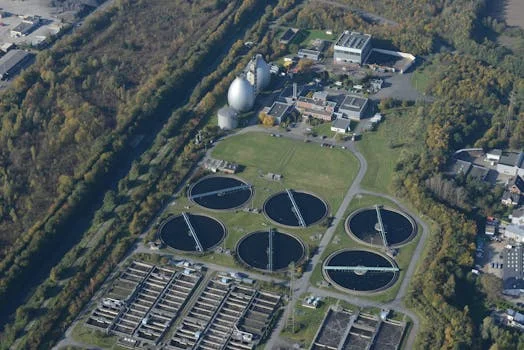
Extended aeration is the most common process type for package plants in Kentucky due to its mechanical simplicity and ability to provide stable treatment for flows between 5,000 and 100,000 GPD. This process utilizes a long hydraulic retention time (typically 18–24 hours) to allow for the complete biological oxidation of organic matter. While reliable, extended aeration systems have a larger footprint (1.5–2.5 sq ft/GPD) and are less efficient at nutrient removal compared to modern alternatives like Membrane Bioreactors (MBR) or Sequencing Batch Reactors (SBR).
For Kentucky facilities with limited space or those facing strict nitrogen and phosphorus limits, MBR systems for high-efficiency treatment in Kentucky’s sensitive watersheds represent the technical gold standard. MBRs combine activated sludge treatment with membrane filtration, eliminating the need for a secondary clarifier. This results in a footprint as small as 0.5 sq ft/GPD and effluent quality that often exceeds 2025 EPA benchmarks, with TSS levels frequently below 1 mg/L. However, MBRs have higher energy requirements (0.8–1.2 kWh/m³) and are more sensitive to Kentucky’s winter temperature drops, which can increase liquor viscosity and impact membrane flux rates.
| Process Type | BOD Removal | Footprint (sq ft/GPD) | Energy Use (kWh/m³) | Best Use Case in Kentucky |
|---|---|---|---|---|
| Extended Aeration | 85–95% | 1.5–2.5 | 0.3–0.5 | Small subdivisions, low O&M budget |
| SBR (Sequencing Batch) | 90–98% | 2.0–3.0 | 0.4–0.6 | Schools with variable daily loads |
| MBR (Membrane Bioreactor) | 95–99% | 0.5–1.0 | 0.8–1.2 | Sensitive watersheds, high-growth areas |
| MBBR (Biofilm Reactor) | 88–96% | 1.0–1.5 | 0.4–0.7 | Retrofitting existing failing plants |
Climate adaptability is a critical technical specification for Kentucky engineers. With temperature fluctuations ranging from 30°F in January to 90°F in July, biological processes must be insulated or designed with sufficient biomass concentration to prevent "upsets" during cold snaps. SBR systems, such as those used in the Verna Hills subdivision, are particularly effective in these environments because the batch process allows for precise control over aeration and settling times, compensating for slower microbial activity in winter. SBRs handle the intermittent flows typical of Kentucky mobile home parks more effectively than continuous-flow systems, which can suffer from "washout" during heavy rain events that infiltrate aging collection lines.
Cost Breakdown: Package Wastewater Treatment Plants in Kentucky
Capital costs for package wastewater treatment plants in Kentucky typically range from $15 to $50 per gallon per day (GPD) for systems sized between 10,000 and 50,000 GPD. For instance, a 20,000 GPD system designed for a 50-unit mobile home park or a medium-sized school will require an initial investment of approximately $300,000 to $500,000. This estimate includes the treatment units, basic civil works (excavation and pad pouring), and initial permitting fees. These figures align closely with cost benchmarks for package plants in neighboring states, though Kentucky’s lower-than-average labor costs ($45/hour) can reduce site-specific installation expenses by roughly 10% compared to the national average.
Operating expenses (OpEx) are the most significant factor in the long-term Return on Investment (ROI) framework. For a standard extended aeration plant in Kentucky, O&M costs hover between $0.50 and $1.50 per 1,000 gallons treated. Electricity is the primary driver, accounting for 30% of OpEx, followed by sludge hauling and lab testing. In Kentucky, where electricity averages $0.11/kWh, an energy-efficient SBR or MBBR system can save a facility manager $3,000 to $7,000 annually in power costs compared to older, inefficient aeration blowers.
| Expense Category | Cost Range (20,000 GPD System) | Percentage of Total Project |
|---|---|---|
| Equipment & Fabrication | $200,000 – $350,000 | 60% |
| Installation & Civil Works | $60,000 – $120,000 | 20% |
| Engineering & KPDES Permitting | $25,000 – $50,000 | 10% |
| Annual O&M (Labor, Power, Sludge) | $15,000 – $35,000 (per year) | N/A |
Financing these systems is often facilitated through state and federal programs. The Kentucky Infrastructure Authority (KIA) provides low-interest loans (often 2–3%) for wastewater projects, while the USDA Rural Development program offers grants and loans specifically for communities with populations under 10,000. When calculating ROI, facility managers should compare the $400,000 capital cost against the alternative: a $1.5 million sewer extension or the $50,000 annual cost of emergency septic pumping and environmental fines. For a 50-unit mobile home park, a package plant typically achieves a "break-even" point against septic failure within 5 to 7 years, while simultaneously increasing the property’s appraisal value by ensuring long-term utility compliance.
Supplier Checklist: How to Evaluate Package Plant Vendors for Kentucky Projects
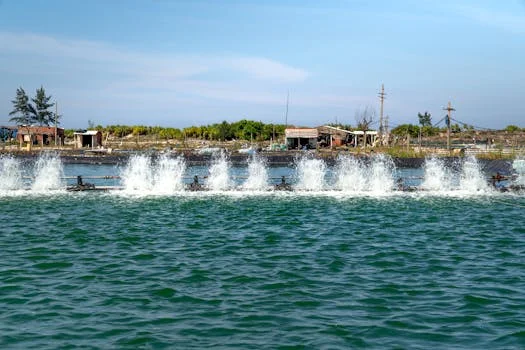
Procuring a package wastewater treatment system in Kentucky requires a rigorous vetting process to ensure the vendor can navigate local regulatory hurdles and provide long-term support. A critical first step is verifying "Kentucky Experience." A qualified vendor should demonstrate at least three successful installations within the Commonwealth over the last five years. These references should be specific to the application; for example, a school district in Shaker Village should prioritize vendors who have successfully permitted systems with the Kentucky Division of Water for similar educational facilities, as they will be familiar with the specific "peak-and-valley" flow patterns of a school calendar.
Equipment quality and certification are non-negotiable for