Why Hospitals and Factories Are Switching to ClO₂ Disinfection Systems
Johns Hopkins Hospital in Baltimore has utilized chlorine dioxide (ClO₂) treatment systems since 2001 to successfully eliminate Legionella in its inpatient buildings, maintaining a residual of 0.5 mg/L at injection points to ensure safety across miles of potable piping. This 23-year case study highlights a shift in industrial and municipal water treatment: the move away from traditional chlorine toward more stable, selective oxidants. While chlorine has been the standard for a century, its efficacy is severely limited in complex water matrices. In industrial settings, biofilms cost plants an estimated $1 billion annually in pipe corrosion, heat transfer efficiency losses, and energy consumption (EPA 2024). Chlorine dioxide removes these biofilms 99.9% more effectively than chlorine because it does not react with the extracellular polymeric substances (EPS) that protect bacteria (HydropureWater field data, 2025).
The primary technical advantage of ClO₂ is its selectivity. Unlike chlorine, ClO₂ does not react with ammonia or nitrogenous compounds, which are prevalent in food processing wastewater and municipal secondary effluent. This allows the disinfectant to remain "available" for pathogen inactivation rather than being consumed by organic loading. In a typical failure scenario, a cooling tower treated with chlorine may experience a sudden spike in Legionella or Pseudomonas despite high dosing levels. This occurs because the chlorine is neutralized by ammonia or fails to penetrate the thick biofilm layers on the fill media. The resulting "bio-fouling" leads to emergency shutdowns, expensive mechanical cleaning, and potential permit violations for pathogen discharge.
For procurement managers and engineers, the transition to ClO₂ is often driven by the need to avoid the formation of trihalomethanes (THMs) and haloacetic acids (HAAs). These carcinogenic byproducts are strictly regulated under the EPA’s Stage 1 and Stage 2 Disinfectants and Disinfection Byproducts Rules. Because ClO₂ functions via a single-electron transfer mechanism rather than substitution or addition, it does not chlorinate organic matter. This characteristic makes it the preferred choice for hospitals, high-purity food manufacturing, and municipal plants struggling with high Total Organic Carbon (TOC) levels in their source water.
How ClO₂ Disinfection Systems Work: Chemistry, Components, and Process Flow
Chlorine dioxide is an unstable gas that cannot be compressed or stored for shipment; therefore, it must be generated on-site using specialized precision chemical dosing for ClO₂ residuals. The generation process typically involves the controlled reaction of sodium chlorite (NaClO₂) with an acid or a combination of acid and chlorine. According to Henry’s Law, ClO₂ is highly soluble in water, but it remains a dissolved gas rather than reacting with the water molecule itself. In closed piping systems, this allows the gas to remain in solution without significant loss, providing a stable residual throughout the distribution network.
The most common industrial method is the 2-chemical process, which utilizes the following reaction stoichiometry: NaClO₂ + HCl → ClO₂ + NaCl + H₂O. In practice, engineers use an excess of hydrochloric acid to drive the reaction toward 95-98% efficiency. The 3-chemical process adds sodium hypochlorite (NaOCl) to the mix, which can increase the yield for high-volume municipal applications. The physical system consists of six core components: (1) chemical storage tanks with secondary containment, (2) a reaction chamber designed for specific residence times, (3) high-precision dosing pumps, (4) an online residual monitor, (5) a flow meter for paced dosing, and (6) injection quills designed to ensure rapid mixing at the point of entry.
| System Component | Engineering Function | Critical Specification |
|---|---|---|
| Reaction Chamber | Facilitates chemical conversion | PVDF or Titanium construction for corrosion resistance |
| Dosing Pumps | Delivers precursors to reactor | ±1% accuracy; pulse-frequency control |
| Injection Quills | Introduces ClO₂ to main flow | Hastelloy C or PVC; sized for 1.5x pipe diameter depth |
| Residual Monitor | Real-time concentration feedback | Amperometric sensor; 0.01 mg/L resolution |
| Control Logic | Maintains setpoint residuals | PID loop integration with SCADA/PLC |
The process flow begins when the main water line flow meter sends a 4-20mA signal to the ClO₂ generator. The system calculates the required dose based on the flow rate and the target residual (typically 0.5–0.8 mg/L). Precursor chemicals are pumped into the reaction chamber, where they react to form a concentrated ClO₂ solution. This solution is then vacuum-injected or pumped through quills into the process stream. An downstream amperometric sensor continuously measures the residual, providing a feedback loop to the generator to adjust the dosage if the organic demand changes. In 2-chemical systems, the use of excess acid may slightly lower the water's pH, occasionally requiring pH correction for 2-chemical ClO₂ systems to prevent downstream pipe corrosion.
ClO₂ vs. Chlorine vs. UV vs. Ozone: Performance, Cost, and Compliance Comparison
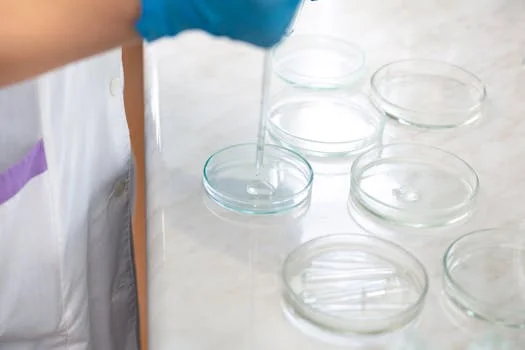
Chlorine dioxide maintains a higher oxidation potential than chlorine (1.50V vs. 1.36V) but is more selective, meaning it does not "waste" its power on non-target organics as ozone does. When evaluating disinfection methods, engineers must balance the high CAPEX of ozone or UV against the high OPEX of ClO₂ and the compliance risks of chlorine. While chlorine is the cheapest chemical disinfectant at approximately $0.05 per 1,000 gallons, it fails to meet modern standards for biofilm control and byproduct management in 40% of industrial cooling applications (HydropureWater field data, 2025).
Ozone is the most powerful oxidant but has a half-life of only 15-30 minutes, providing zero residual protection for long distribution lines. UV irradiation is highly effective against Cryptosporidium and Giardia but offers no "kill" capability for biofilms already present in the piping. In contrast, ClO₂ provides the "best of both worlds": it is a powerful enough oxidant to penetrate biofilm but stable enough to maintain a residual at the furthest tap. For facilities with high turbidity or "dirty" water, UV disinfection as an alternative to ClO₂ is often impractical because suspended solids shield pathogens from the light, whereas ClO₂ continues to function effectively.
| Feature | Chlorine (Gas/Bleach) | Chlorine Dioxide (ClO₂) | Ozone (O₃) | UV Light |
|---|---|---|---|---|
| Biofilm Removal | Poor | Excellent | Good | None |
| Residual Life | High | Moderate (6-12 hrs) | Low (<30 mins) | None |
| THM Formation | High Risk | Zero/Negligible | Zero | Zero |
| OPEX (per 1k gal) | $0.05 - $0.08 | $0.12 - $0.25 | $0.30 - $0.50 | $0.10 - $0.20 |
| CAPEX (Avg) | $10K - $20K | $25K - $50K | $100K+ | $30K - $70K |
The decision tree for selecting a system follows a simple logic: If your primary concern is biofilm or Legionella, ClO₂ is the engineering standard. If the water is highly turbid, UV is disqualified. If the budget is extremely tight and THM compliance is not an issue, chlorine is the default. However, for food processing and hospitals where "zero-risk" is the mandate, the slightly higher OPEX of ClO₂ is justified by the avoidance of facility-wide outbreaks and the subsequent legal or regulatory liabilities.
Engineering Specs: Sizing, Chemical Ratios, and Residual Targets for ClO₂ Systems
Sizing a ClO₂ generator requires calculating the "peak hourly demand" rather than the average daily flow to ensure the system can maintain residuals during high-usage periods. The standard sizing formula used by engineers is: Required Capacity (g/h) = Flow Rate (m³/h) × Target Dose (mg/L) × 1.3 (Safety Factor). For example, a municipal plant processing 100 m³/h with a target residual of 0.5 mg/L would require a generator capable of producing at least 65 grams of ClO₂ per hour (100 × 0.5 × 1.3 = 65). Undersizing the generator is a common failure point that leads to "residual sag" during peak demand, potentially allowing biofilm regrowth.
Reaction efficiency is determined by the precursor chemical ratios. In a 2-chemical system, the theoretical mass ratio is 1 part sodium chlorite (25% solution) to 1.25 parts hydrochloric acid (31% solution). If the acid ratio is too low, unreacted chlorite remains in the water, which can lead to violations of the EPA Maximum Contaminant Level (MCL) for chlorite (1.0 mg/L). In a 3-chemical system, the ratio shifts to 1 part chlorite, 1 part acid, and 0.5 parts sodium hypochlorite. This configuration is often used in large-scale wastewater plants to reduce the overall acid consumption and manage the pH of the final effluent.
| Parameter | Standard Target | Regulatory Limit (EPA/WHO) |
|---|---|---|
| ClO₂ Residual (Injection) | 0.5 - 0.8 mg/L | 0.8 mg/L (MRDL) |
| ClO₂ Residual (Tap) | 0.1 - 0.3 mg/L | 0.7 mg/L (WHO Guideline) |
| Chlorite Byproduct | < 0.7 mg/L | 1.0 mg/L (MCL) |
| Reaction Yield | > 95% | N/A (Industry Standard) |
| pH Range | 6.5 - 8.5 | 6.5 - 8.5 (Secondary Smcl) |
Compliance targets are non-negotiable. The EPA Maximum Residual Disinfectant Level (MRDL) for ClO₂ is 0.8 mg/L. To stay within this limit while ensuring disinfection, most industrial plants aim for 0.5 mg/L at the point of injection. This provides enough "headroom" to account for the oxidant demand of the water while ensuring that the residual at the furthest point in the system is at least 0.1 mg/L, which is the minimum required to inhibit Legionella growth (per ASHRAE 188 standards).
Cost Breakdown: CAPEX, OPEX, and ROI for ClO₂ Disinfection Systems
A 500 g/h ClO₂ disinfection system typically requires a capital investment (CAPEX) of $25,000 to $50,000, covering the generator, dosing skid, and integrated PLC controls. Installation costs, which include chemical-resistant piping, secondary containment, and electrical integration, generally add another $10,000 to $20,000 to the project budget (2025 industry data). While this is higher than a simple liquid bleach pump, the Return on Investment (ROI) is realized through reduced maintenance and the elimination of expensive "shocks" required to treat biofilm outbreaks.
Operating expenses (OPEX) are primarily driven by chemical consumption. At a dosage of 0.5 mg/L, the chemical cost ranges from $0.12 to $0.25 per 1,000 gallons treated. For a facility processing 100,000 gallons per day, the annual chemical spend would be approximately $4,400 to $9,100. Maintenance costs, including annual sensor calibration, pump seal replacement, and reaction chamber inspection, typically average $2,000 to $5,000 per year. For a hospital, the ROI is often immediate; a single Legionella outbreak can cost upwards of $200,000 in legal fees, remediation, and lost revenue, making a $50,000 system pay for itself in less than three months.
| Cost Category | Estimated Range (USD) | Notes |
|---|---|---|
| Generator & Skid (CAPEX) | $25,000 - $50,000 | Based on 500 g/h capacity |
| Installation & Startup | $10,000 - $20,000 | Includes commissioning & training |
| Chemicals (OPEX) | $0.12 - $0.25 / 1k gal | NaClO₂ and HCl consumption |
| Annual Maintenance | $2,000 - $5,000 | Sensors, tubing, and calibrations |
| Total 5-Year TCO | $65,000 - $115,000 | Total Cost of Ownership |
In food processing plants, the ROI is tied to product shelf life and safety. If ClO₂ reduces bacterial spoilage by 15% compared to chlorine, the increased yield can provide a payback period of less than two years. Procurement managers should use a cost calculator that inputs (1) daily flow rate, (2) current chemical costs, and (3) estimated downtime costs to determine the specific ROI for their facility.
Zero-Risk Selection Framework: How to Choose the Right ClO₂ System for Your Application
Selecting the wrong generation method can lead to excessive byproduct formation or mechanical failure due to chemical incompatibility. The first step in a zero-risk framework is defining the primary objective: is it pathogen kill (high residual), biofilm removal (long contact time), or THM reduction (low organic reaction)? For most industrial applications, 2-chemical systems are preferred for their simplicity and high yield, provided the facility has the footprint for acid and chlorite storage. For very large municipal plants where chemical storage is a safety concern, electrochemical generators—which produce ClO₂ from salt brine—may be more appropriate, though they carry a significantly higher CAPEX.
Compliance must be the second gate in the selection process. Ensure the generator is capable of maintaining residuals within the EPA MRDL of 0.8 mg/L and that the control system includes an automatic "high-limit" shutoff. In the European Union, systems must comply with the Drinking Water Directive 98/83/EC, which places strict limits on chlorite. A robust selection process should also include a review of the material of construction; because ClO₂ is a powerful oxidant, all wetted parts must be PVDF, PTFE, or high-grade titanium to prevent leaks and system failure within the first year of operation.
| Application Type | Recommended System | Key Selection Factor |
|---|---|---|
| Hospitals / Healthcare | 2-Chemical (Acid-Chlorite) | Precise residual control for Legionella |
| Food & Beverage | 2-Chemical (Dilute) | No chlorination of organic flavors |
| Municipal Wastewater | 3-Chemical or E-Chem | High volume / chemical cost efficiency |
| Cooling Towers | Automatic Dosing Skid | Biofilm penetration and scale control |
To avoid common mistakes, always verify that the system includes an integrated EPA-compliant ClO₂ generator for industrial wastewater with a built-in residual analyzer. Common errors include undersizing the generator by failing to account for "oxidant demand" (the amount of ClO₂ consumed by the water itself before a residual can be measured) and ignoring the need for secondary containment for precursor chemicals. A final checklist should confirm: (1) flow-proportional dosing, (2) residual-based feedback, (3) leak detection sensors, and (4) SCADA compatibility for remote monitoring.
Frequently Asked Questions
Q: What is the EPA limit for ClO₂ residuals?
A: The EPA Maximum Residual Disinfectant Level (MRDL) is 0.8 mg/L (EPA 2023). Facilities like Johns Hopkins Hospital typically maintain a setpoint of 0.5 mg/L at injection to ensure they stay safely under this limit while providing effective disinfection.
Q: How does ClO₂ compare to chlorine for biofilm removal?
A: ClO₂ is significantly more effective because it is a dissolved gas that can penetrate the slimy EPS layer of a biofilm. Chlorine is often neutralized on the surface of the biofilm, whereas ClO₂ reaches the bacteria underneath, removing biofilms 99.9% more effectively (ProMinent data).
Q: What are the chemical costs for a ClO₂ system?
A: Operating costs generally range from $0.12 to $0.25 per 1,000 gallons treated. This depends on the concentration of the precursor chemicals (sodium chlorite and hydrochloric acid) and the specific organic demand of the water being treated.
Q: Can ClO₂ be used for drinking water disinfection?
A: Yes, it is widely used globally. However, the residual must not exceed the EPA MRDL of 0.8 mg/L or the WHO guideline of 0.7 mg/L. It is especially favored in drinking water for its ability to prevent THM formation.
Q: What are the byproducts of ClO₂ disinfection?
A: The primary byproducts are chlorite (ClO₂⁻) and chlorate (ClO₃⁻). The EPA regulates chlorite with a Maximum Contaminant Level (MCL) of 1.0 mg/L. Proper system sizing and chemical ratios (excess acid) are critical to keeping these byproducts within legal limits.