How RO Water Purification Works: Osmosis vs Reverse Osmosis
RO water purification removes dissolved salts by forcing feed across a semi-permeable membrane at pressure above the osmotic pressure. Industrial trains typically operate at 150–1,200 psi (10–83 bar): about 150–400 psi on brackish water and 800–1,200 psi on seawater. Thin-film composite polyamide membranes commonly reject 99.0%–99.8% NaCl under standard tests.
The process forces water through a membrane with a nominal pore size near 0.0001 microns (about 1 Å). The process rejects most dissolved solids, bacteria, and pyrogens while producing a permeate stream and a concentrate (reject) stream. Semiconductor loops often polish RO permeate further.Dissolved silica near 0.5 µg/L for Type E-1.2 remains a yield-critical limit in wafer fabs.
Osmosis is the spontaneous flow of solvent through a semi-permeable membrane from low solute concentration toward high solute concentration. The driving force is the chemical-potential difference, expressed as osmotic pressure. The van 't Hoff relation is π = iCRT, where π is osmotic pressure, i is the van 't Hoff factor, C is molar concentration (mol/L), R is 0.0821 L·atm/mol·K, and T is absolute temperature. Seawater at about 35,000 mg/L TDS produces roughly 390 psi (about 27 bar) of osmotic pressure at 25°C.
Reverse osmosis starts when applied pressure exceeds that osmotic pressure. At 800–1,200 psi on a seawater feed, water molecules pass the membrane while salts remain on the concentrate side. The membrane blocks monovalent ions such as Na+ and Cl− plus larger species such as glucose, bacteria, and viruses, while H2O permeates. Industrial flow is fixed: pre-treat the raw feed, raise pressure with a high-pressure pump, then split the stream into permeate and concentrate.
Industrial RO Membrane Specifications: Pore Size, Material, and Performance Metrics
Industrial RO membrane specifications control plant recovery, energy use, and replacement interval. The standard RO pore size is about 0.0001 microns, while nanofiltration (NF) membranes typically span 0.001 to 0.1 microns. ASTM D4194 covers standard test methods for the operating characteristics of reverse osmosis devices. Wrong polymer choice shortens life through fouling or chemical attack and raises OPEX.
| Parameter | Thin-Film Composite (TFC) Polyamide | Cellulose Acetate (CA) |
|---|---|---|
| Pore Size | 0.0001 microns | 0.0001 - 0.0005 microns |
| Salt Rejection Rate | 99.0% – 99.8% | 90.0% – 95.0% |
| Flux Rate (GFD) | 10 – 20 (Brackish); 5 – 10 (Seawater) | 8 – 12 (General) |
| pH Tolerance | 2 – 11 (Wide) | 3 – 8 (Narrow) |
| Chlorine Tolerance | < 0.1 ppm (Highly Sensitive) | 0.5 – 1.0 ppm (Tolerant) |
| Operating Pressure | 150 – 1,200 psi | 200 – 400 psi |
Flux, in gallons per square foot per day (GFD), sets array area and pump size. High-performance HydropureWater’s industrial RO systems for pharmaceutical and semiconductor applications typically target 12–15 GFD on brackish water to balance CapEx against membrane life. Polyamide elements can reject up to 99.8% NaCl; cellulose acetate is still used when residual chlorine must stay in the feed to limit biofouling. For every 1°C drop in feed temperature, permeate flux falls by about 3% because viscosity rises, so the high-pressure pump must compensate (HydropureWater field data, 2025).
Industrial recovery usually ranges from 50% to 85% on brackish feeds.Higher recovery cuts wastewater volume but raises scale risk from salts such as CaCO3 and CaSO4. Engineers therefore check Langelier Saturation Index (LSI) or Stiff-Davis Stability Index (S&DSI) so the concentrate stays below precipitation limits. For high-salinity trains, refer to engineering specs for seawater RO desalination systems when choosing stage ratios.
RO System Stages: Engineering the 4-Step Process for Industrial-Grade Purity
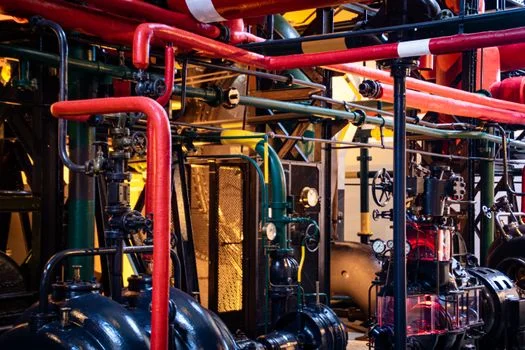
An industrial RO train is a four-stage process built to protect the membrane. Stage one is pre-filtration with 5-micron to 20-micron depth filters or multi-media filters. That step removes silt and rust that abrade spacers or plug feed channels. Silt Density Index testing is mandatory; most industrial RO systems need SDI15 below 5.0 for stable flux.
Stage two is chemical pre-treatment. Polyamide membranes oxidize readily, so sodium metabisulfite (SMBS) is dosed for dechlorination. Anti-scalants such as phosphonates are injected in parallel. Utilizing PLC-controlled chemical dosing for RO pre-treatment and anti-scaling keeps dose rates in the designed ppm band and supports a typical 3-to-5-year membrane life. Without accurate dosing, concentrate LSI can turn positive and deposit calcium carbonate within hours.
Stage three is the high-pressure pump. Brackish water at TDS 1,000–10,000 mg/L commonly runs at 150–400 psi. Seawater or brine concentration steps scale to 800–1,200 psi. Modern plants add Energy Recovery Devices (ERDs)—isobaric chambers or turbochargers—that transfer concentrate hydraulic energy to the feed and can cut specific energy use by 30% to 60%. Stage four is the membrane array in pressure vessels, often arranged as a 2:1 staged array to raise recovery. Post-treatment may add UV for about 6-log microbial reduction or electrodeionization (EDI) to reach 18.2 MΩ·cm resistivity for semiconductor-grade water. Compact skids such as the Integrated Water Purification System (JY Series) combine pretreatment and RO when the duty is mid-flow industrial make-up rather than a full UPW polish loop.
What is the MBR working principle?
MBR working principle combines biological oxidation with membrane solids separation so clarified effluent, not secondary clarifier overflow, becomes RO feed. Typical MBR membrane pores are about 0.04–0.4 μm, removing TSS and much of the BOD/COD load before dissolved-salt removal. In reuse trains, MBR systems for wastewater reuse upstream of RO purification stabilize SDI and organics so RO flux holds longer.
What is the lamella clarifier working principle?
Lamella clarifier working principle uses inclined plates to shorten particle settling distance and raise clarification capacity in a compact footprint. Settled solids slide to a sludge hopper while clarified water overflows to multimedia or cartridge filters ahead of RO. Plants with high inorganic TSS often place a lamella unit before SDI polishing so the RO feed stays below the SDI15 < 5.0 target without oversized sand filters.
RO vs. Alternative Purification Technologies: When to Choose RO for Industrial Applications
Technology choice depends on the contaminant class and the required purity, not on brand preference. RO is the reference process for dissolved solids removal, yet it uses more energy than UF or MBR alone. Many industrial loops therefore treat high-BOD effluent in an MBR first, then polish with RO.
| Technology | Primary Removal Target | Pore Size / MWCO | Energy Use (kWh/m³) | Compliance Standard |
|---|---|---|---|---|
| Reverse Osmosis (RO) | Dissolved Salts (TDS), Pyrogens | 0.0001 μm | 0.5 – 4.0 | ASTM D5127, USP <1231> |
| Nanofiltration (NF) | Divalent Ions (Hardness), Organics | 0.001 μm | 0.3 – 1.0 | WHO Potable (Softening) |
| Ultrafiltration (UF) | TSS, Bacteria, Viruses | 0.01 – 0.1 μm | 0.1 – 0.5 | EPA Surface Water Rule |
| MBR | BOD, COD, Nitrogen, TSS | 0.04 – 0.4 μm | 0.4 – 1.5 | EPA Secondary Treatment |
| DAF | FOG, Oil, Large TSS | N/A (Flotation) | 0.05 – 0.2 | Industrial Pre-treatment |
RO is the practical choice when monovalent ions such as sodium and chloride must be removed. Nanofiltration is often preferred for softening or color organics because it runs at lower pressure, typically 70–150 psi. In food and beverage plants, dissolved air flotation (DAF) units strip fats, oils, and greases before RO and prevent grease-blinding of membrane spacers. Electronics manufacturers evaluating brine routes often review RO applications for high-salinity industrial wastewater to compare simple RO discharge with a Zero Liquid Discharge (ZLD) path.
Industrial RO System Selection: CapEx, OPEX, and Compliance Checklist
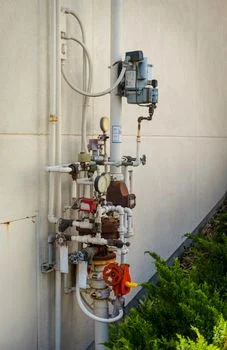
Procurement teams should score Total Cost of Ownership, not only purchase price. An industrial RO system rated 10–200 m³/h typically costs $50,000 to $500,000. A 50 m³/h skid with energy recovery and PLC automation may land near $250,000. Energy at 0.5–4 kWh/m³, membrane replacement every 3–5 years at $50–$200 per 8-inch element, and chemicals at $0.05–$0.20/m³ usually push cumulative OPEX above CapEx within the first 48 months of operation.
Use this selection checklist before freezing the P&ID:
- Confirm feed TDS, temperature range, SDI15, free chlorine, and hardness with a current water analysis.
- Set permeate targets (TDS, TOC, resistivity, microbial limits) against ASTM D5127, USP <1231>, or the plant URS.
- Choose TFC polyamide unless residual chlorine must remain; then evaluate CA and dechlorination strategy.
- Size flux at 12–15 GFD for brackish duty, or 5–10 GFD for seawater duty, with fouling allowance.
- Model recovery with LSI/S&DSI and anti-scalant dose; keep seawater recovery near 40%–50% unless modeling proves otherwise.
- Specify ERDs when concentrate pressure exceeds about 400 psi and energy is a dominant OPEX line.
- Define CIP chemistry, spare-element stock, and instrument setpoints for conductivity, ORP, and differential pressure.
Who this is for: plant engineers and EPC teams sizing make-up, process, or reuse water where dissolved salts drive the specification. Who should look elsewhere: projects that only need TSS or pathogen removal can stop at UF/MBR and avoid RO energy cost. Next step: send feed analysis, flow (m³/h), and permeate limits so a projected array, recovery, and chemical package can be checked before inquiry.
Frequently Asked Questions
What pressure does an industrial RO system need?
Industrial RO feed pressure is set by osmotic pressure plus net driving pressure, not by a single catalog value. Brackish water at 1,000–10,000 mg/L TDS commonly runs at 150–400 psi. Seawater near 35,000 mg/L TDS typically needs 800–1,200 psi at the first stage. Always design from a temperature-corrected osmotic-pressure calculation and the membrane’s maximum operating pressure.
How much salt does an RO membrane reject?
Thin-film composite polyamide RO membranes typically reject 99.0%–99.8% NaCl under standard manufacturer test conditions.Actual field rejection depends on feed TDS, recovery, temperature, and membrane age, so acceptance tests should use site water or a matched surrogate.
Why does RO flux drop when water gets colder?
Permeate flux falls about 3% for every 1°C drop in feed temperature because water viscosity rises and mass transfer slows. Plants that see winter feed near 5–10°C often need higher pump discharge pressure or more membrane area than a 25°C design case. Temperature compensation belongs in both the hydraulic model and the VFD setpoints.
When should MBR or DAF sit upstream of RO?
MBR belongs upstream when biological organics and solids would foul RO spacers or drive SDI above 5.0. DAF belongs upstream when fats, oils, and greases dominate, as in food processing effluent. Neither MBR nor DAF replaces RO for monovalent salt removal; they protect the RO stage and stabilize flux.
How often are industrial RO membranes replaced?
Industrial 8-inch RO elements are commonly replaced every 3–5 years when pretreatment, antiscalant, and CIP stay inside design limits. Element cost is typically $50–$200 each, excluding labor and downtime. Premature replacement usually traces to chlorine attack, scaling from positive LSI, or chronic fouling from high SDI feed.