Why Display Panel Factories Struggle with High-Salinity Wastewater
Display panel manufacturing processes, particularly chemical mechanical planarization (CMP), etching, and developer rinsing, generate high-salinity wastewater with Total Dissolved Solids (TDS) often ranging from 10,000 to 50,000 mg/L. This presents a significant challenge for conventional wastewater treatment systems. For instance, a TFT-LCD plant in Suzhou encountered severe difficulties treating wastewater with a TDS of 35,000 mg/L. Conventional Membrane Bioreactor (MBR) systems, designed for lower salinity, struggled, achieving only 60% COD removal due to the extreme osmotic pressure inhibiting microbial activity.
The composition of this wastewater varies by process: CMP wastewater typically exhibits TDS around 20,000 mg/L and Chemical Oxygen Demand (COD) up to 1,200 mg/L, while etching wastewater can reach TDS of 45,000 mg/L and contain heavy metals like copper (Cu) at concentrations up to 3.2 mg/L. These high TDS levels far exceed regulatory discharge limits. China's GB 31570-2015 standard mandates COD ≤50 mg/L and TDS ≤2,000 mg/L, Taiwan's EPA standards are even stricter with a TDS limit of ≤1,000 mg/L, and the EU Industrial Emissions Directive generally requires TDS ≤1,500 mg/L. Compliance necessitates advanced desalination technologies.
the presence of co-contaminants poses additional hurdles. Heavy metals such as copper (Cu), nickel (Ni), and chromium (Cr), along with organic compounds like Tetramethylammonium Hydroxide (TMAH) and Isopropyl Alcohol (IPA), can inhibit biological treatment processes and foul membranes. For example, the catalytic ozonation process is often employed to break down recalcitrant organic compounds (as noted in research by MDPI). Effective treatment therefore requires robust pretreatment to remove these interfering substances before desalination.
| Wastewater Source | TDS (mg/L) | COD (mg/L) | Heavy Metals (mg/L) | Other Contaminants |
|---|---|---|---|---|
| CMP | 10,000 – 25,000 | 500 – 1,200 | Cu ≤ 5, Ni ≤ 3 | Particles, organics (e.g., surfactants) |
| Etching | 20,000 – 45,000 | 300 – 800 | Cu ≤ 5, Ni ≤ 3, Cr ≤ 2 | Acids, bases, organics (e.g., TMAH) |
| Developer Rinsing | 15,000 – 30,000 | 200 – 600 | Ni ≤ 1, Cr ≤ 1 | TMAH, glycols |
Salt Tolerance Thresholds for Wastewater Treatment Technologies
Understanding the salt tolerance of different wastewater treatment technologies is crucial for selecting an appropriate system for high-salinity display panel wastewater. Conventional biological systems, such as activated sludge, typically fail when TDS exceeds 10,000 mg/L due to osmotic stress on microorganisms. However, specialized salt-tolerant MBR systems, utilizing halophilic bacteria (e.g., *Halomonas* spp.), can operate effectively at TDS levels up to 35,000 mg/L, though they often require increased aeration energy (approximately 30% more than conventional MBRs, translating to 0.6–0.8 kWh/m³ compared to 0.4–0.6 kWh/m³). Research on sequencing biofilm batch reactors (SBBR) also indicates their potential for high-salinity wastewater.
Physicochemical systems offer different salt tolerance profiles. Reverse Osmosis (RO) membranes are highly effective at rejecting salts, achieving up to 99% removal. However, RO systems are typically limited to feed water with TDS below 40,000 mg/L to mitigate the risk of membrane scaling, particularly from sulfates and silicates. Electrodialysis (ED) is a more suitable option for very high TDS concentrations, generally handling feed water from 50,000 to 100,000 mg/L. However, ED systems can be less effective at removing dissolved organics and may require upstream pretreatment for such contaminants.
Hybrid systems, combining technologies like MBR and RO, are often employed to achieve high water recovery rates and meet stringent discharge standards. For example, a hybrid MBR + RO system can achieve up to 95% water recovery for wastewater with TDS around 30,000 mg/L. These systems leverage the biological treatment's COD reduction capabilities and RO's desalination power, often incorporating advanced membrane separation and electrolysis techniques for enhanced performance.
| Technology | Max TDS (mg/L) | Typical COD Removal (%) | Typical TDS Removal (%) | Energy Consumption (kWh/m³) | Key Limitations |
|---|---|---|---|---|---|
| Conventional MBR | ~10,000 | 85-95 | 0-5 | 0.4-0.6 | Osmotic inhibition |
| Salt-Tolerant MBR | ~35,000 | 92 | 0-5 | 0.6-0.8 | Requires halophilic bacteria, higher aeration cost |
| Reverse Osmosis (RO) | < 40,000 | 95-99 (post-pretreatment) | 95-99 | 2-5 (depends on pressure) | Scaling risk, requires extensive pretreatment |
| Electrodialysis (ED) | 50,000 – 100,000 | Moderate (organic removal) | 90-98 | 3-6 | Less effective for high organics, requires pretreatment |
| Hybrid (MBR + RO) | ~30,000 | 98 | 95 | 2.5-5.5 | Complex operation, higher CapEx |
For advanced treatment of high-salinity wastewater, consider our salt-tolerant MBR system for high-TDS wastewater.
Display Panel High-Salinity Wastewater: Engineering Specs for Treatment Systems
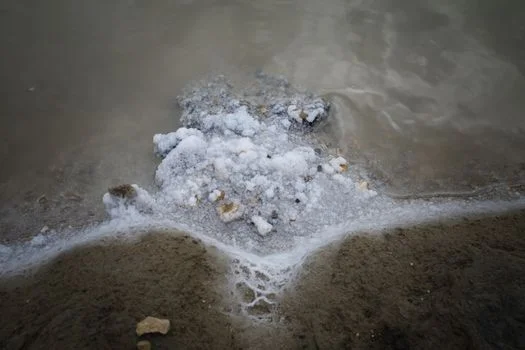
Designing effective treatment systems for display panel high-salinity wastewater requires precise engineering specifications. Typical influent parameters include TDS ranging from 10,000–50,000 mg/L, COD levels between 800–3,000 mg/L, a pH of 6.5–9.0, and heavy metals such as Cu up to 5 mg/L, Ni up to 3 mg/L, and Cr up to 2 mg/L. These parameters dictate the configuration and sizing of the treatment train.
For a salt-tolerant MBR component, operating parameters typically include a flux rate of 12–18 LMH, Mixed Liquor Suspended Solids (MLSS) maintained at 8,000–12,000 mg/L, and a Hydraulic Retention Time (HRT) of 12–24 hours. Pilot data from HydropureWater in 2025 indicates that such systems can achieve approximately 92% COD removal even at 35,000 mg/L TDS, provided halophilic bacteria are successfully cultivated. For RO systems, a recovery rate of 75–85% is common, with salt rejection rates of 99%. The feed pressure typically falls between 40–60 bar, and maintaining a Scaling Index (LSI) below 0.5 is critical, necessitating careful antiscalant dosing.
Zero Liquid Discharge (ZLD) systems often employ a multi-stage RO process for initial concentration (around 75% recovery), followed by a crystallizer for further water recovery (approximately 20%). The capital expenditure (CapEx) for ZLD systems ranges from ¥850–¥1,200/m³, with operational expenditure (OPEX) between ¥12–¥18/m³, encompassing energy, chemicals, and maintenance. Effective pretreatment is paramount. For heavy metal removal, chemical precipitation using ferric chloride (FeCl₃) at a pH of 9–10 can reduce Cu and Ni to ≤0.5 mg/L. For CMP wastewater, a Dissolved Air Flotation (DAF) system can achieve over 95% removal of FOG (Fats, Oils, and Grease).
| Parameter | Salt-Tolerant MBR | RO System | ZLD System | Pretreatment (Heavy Metals) | Pretreatment (CMP) |
|---|---|---|---|---|---|
| Flux Rate (LMH) | 12-18 | N/A | N/A | N/A | N/A |
| MLSS (mg/L) | 8,000-12,000 | N/A | N/A | N/A | N/A |
| HRT (h) | 12-24 | N/A | N/A | N/A | N/A |
| COD Removal (%) | ~92% (at 35,000 mg/L TDS) | N/A (post-MBR) | ~99% (integrated) | N/A | N/A |
| TDS Removal (%) | 0-5% | 95-99% | 99% | N/A | N/A |
| Recovery Rate (%) | N/A | 75-85% | ~95% (RO + Crystallizer) | N/A | N/A |
| Feed Pressure (bar) | N/A | 40-60 | 40-60 (for RO stage) | N/A | N/A |
| Target Effluent (Cu/Ni, mg/L) | N/A | < 0.5 | < 0.5 | < 0.5 | N/A |
| CapEx (¥/m³) | 500-700 | N/A | 850-1,200 | N/A | N/A |
| OPEX (¥/m³) | 8-12 | N/A | 12-18 | N/A | N/A |
For CMP wastewater pretreatment, consider our DAF system for CMP wastewater pretreatment. For the desalination stage, our high-recovery RO system for ZLD pretreatment is a key component.
Salt-Tolerant MBR vs. ZLD vs. Hybrid Systems: Cost, Performance, and Compliance
Selecting the optimal treatment strategy for display panel high-salinity wastewater involves a careful balance of cost, performance, and regulatory compliance. A salt-tolerant MBR system offers a lower capital investment, typically ranging from ¥500–¥700/m³, with OPEX between ¥8–¥12/m³. It excels at COD removal (up to 92%) but provides minimal TDS reduction. This makes it suitable for facilities with TDS below 35,000 mg/L where discharge to a municipal sewer is permissible after blending or further polishing to meet discharge limits.
Zero Liquid Discharge (ZLD) systems represent the highest investment, with CapEx from ¥850–¥1,200/m³ and OPEX from ¥12–¥18/m³. ZLD systems achieve near-complete water recovery (99%) and effluent quality that fully complies with the strictest TDS discharge limits (e.g., ≤2,000 mg/L for GB 31570-2015). They are essential for plants requiring water reuse or those facing extremely high influent TDS (>40,000 mg/L). However, ZLD systems, particularly those involving crystallizers, can experience downtime (estimated 10–15%) for cleaning and maintenance.
Hybrid systems, such as MBR followed by RO, offer a middle ground. They combine the COD reduction of MBR with the desalination power of RO, typically achieving 98% COD removal and 95% TDS removal, with CapEx between ¥650–¥900/m³ and OPEX of ¥10–¥15/m³. These are ideal for TDS levels between 30,000–40,000 mg/L, allowing for partial water reuse and compliance with discharge standards. A 3-year Return on Investment (ROI) calculation for a ZLD system can be compelling; if water reuse saves ¥25/m³ and the plant treats 500 m³/day, the annual savings approach ¥4.5 million.
| System Type | CapEx (¥/m³) | OPEX (¥/m³) | Typical COD Removal (%) | Typical TDS Removal (%) | Ideal for TDS (mg/L) | Compliance Strategy |
|---|---|---|---|---|---|---|
| Salt-Tolerant MBR | 500–700 | 8–12 | 92 | 0–5 | < 35,000 | Blending with low-TDS water, polishing |
| ZLD | 850–1,200 | 12–18 | 99 | 99 | > 40,000 or Water Reuse | Full compliance, water recovery |
| Hybrid (MBR + RO) | 650–900 | 10–15 | 98 | 95 | 30,000–40,000 | Partial reuse, meets stringent discharge |
For comprehensive ZLD system cost and compliance details, refer to our guide.
Heavy Metal Pretreatment: Chemical Precipitation vs. Ion Exchange for RO Protection
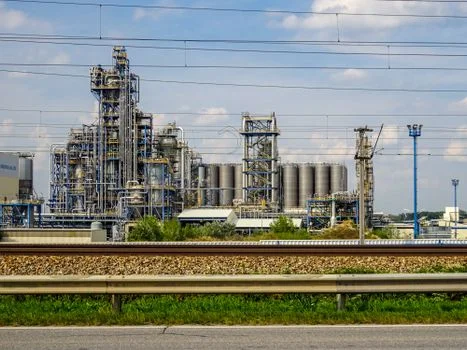
Protecting RO membranes from heavy metal fouling is critical in display panel wastewater treatment. Chemical precipitation is a widely adopted and cost-effective method. By adjusting the wastewater pH to 9–10 and dosing with coagulants like ferric chloride (FeCl₃) or calcium hydroxide (Ca(OH)₂), heavy metals such as copper and nickel can be effectively removed, achieving 90–95% reduction and leaving residual concentrations below 0.5 mg/L. The primary drawback is the generation of sludge, which incurs disposal costs typically ranging from ¥300–¥500/ton.
Ion exchange offers a more selective and higher removal efficiency, capable of achieving 99% removal of specific metals like copper. This is accomplished using specialized resins (e.g., chelating resins like Amberlite IRC748). However, ion exchange systems have a higher initial CapEx, often between ¥2,000–¥3,000/m³ of resin volume, and require periodic regeneration using acids or bases. While ion exchange provides excellent protection for RO membranes, its higher cost often makes chemical precipitation the preferred primary treatment for heavy metals.
A practical example from the Suzhou plant illustrates the effectiveness of chemical precipitation. By implementing FeCl₃ precipitation at a pH of 9.5, copper levels were reduced from 4.2 mg/L to a mere 0.3 mg/L. This pretreatment significantly extended the operational lifespan of their RO membranes from an average of 12 months to 36 months, demonstrating substantial long-term cost savings. It's also important to manage potential scaling from hardness; for instance, if calcium hardness exceeds 500 mg/L, calcium sulfate (CaSO₄) precipitation can occur in RO systems, necessitating antiscalant dosing (e.g., 2–5 mg/L of polyacrylate).
For precise chemical dosing in your pretreatment process, consider our automated FeCl₃ dosing for heavy metal precipitation.
Frequently Asked Questions
What’s the maximum TDS for salt-tolerant MBR?
The maximum TDS for a salt-tolerant MBR is generally considered to be 35,000 mg/L. This threshold is achievable with specialized halophilic bacteria, such as *Halomonas* spp. Conventional MBR systems, lacking these salt-tolerant microorganisms, typically fail when TDS exceeds 10,000 mg/L due to osmotic pressure impacts on cell membranes and enzymes.
How much does ZLD cost for display panel wastewater?
The cost for Zero Liquid Discharge (ZLD) systems for display panel wastewater typically ranges from ¥850–¥1,200/m³ for CapEx and ¥12–¥18/m³ for OPEX. This OPEX includes energy consumption, antiscalant chemicals, and maintenance. It's important to note that the uptime for ZLD systems, particularly those with crystallizers, can be between 85–90% due to periodic cleaning requirements.
Can RO membranes handle 50,000 mg/L TDS?
No, standard RO membranes are generally not suitable for treating feed water with 50,000 mg/L TDS. RO systems are typically recommended for feed water with TDS below 40,000 mg/L to minimize the risk of scaling, such as calcium sulfate (CaSO₄) and silica precipitation. For TDS concentrations in the 50,000–100,000 mg/L range, Electrodialysis (ED) is a more appropriate desalination technology, though it may require upstream pretreatment for organic removal.
What’s the best pretreatment for heavy metals in display panel wastewater?
The most common and cost-effective pretreatment for heavy metals like copper and nickel in display panel wastewater is chemical precipitation. This involves adjusting the pH to 9–10 and dosing with chemicals like FeCl₃, achieving 90–95% removal and residual concentrations ≤0.5 mg/L. Ion exchange is an alternative that offers higher removal efficiency (up to 99%) but comes with significantly higher CapEx.
How do I comply with China’s GB 31570-2015 for TDS?
To comply with China’s GB 31570-2015 standard, which sets a TDS limit of ≤2,000 mg/L, hybrid systems (e.g., MBR + RO) are often employed. These systems can achieve TDS levels down to the required limit. For wastewater with influent TDS exceeding 40,000 mg/L or when water reuse is a requirement, a full ZLD system is necessary to guarantee compliance and recover water resources. For more detailed specifications, refer to our display panel heavy metal wastewater treatment article and CMP wastewater treatment engineering blueprint.