Why Industrial Water Purification Maintenance Differs from Residential
An effective water purification system maintenance guide for industrial applications includes daily inspection of pressure drops, monthly SDI testing (<5 required for RO protection), quarterly membrane cleaning, and annual calibration of chemical dosing systems. Systems operating without scheduled maintenance face 68% higher downtime risk (per 2023 WHO industrial water report). Unlike residential units that primarily focus on simple filter swaps or salt replenishment, industrial-grade systems treating volumes exceeding 10 m³/h operate under strict regulatory compliance and high-pressure mechanical stress.
Industrial water treatment maintenance requires continuous monitoring of influent and effluent parameters to ensure process stability. While a home softener might only require a monthly visual check of the brine tank, an industrial system demands precise measurement of turbidity, Silt Density Index (SDI), and residual disinfectant levels. For example, maintaining a residual chlorine dioxide (ClO₂) level of >0.2 mg/L post-contact is a standard safety requirement for many food processing and medical facilities to prevent microbial regrowth. These thresholds are not merely suggestions; they are critical benchmarks for ISO and EPA compliance.
the integration of PLC-controlled automation distinguishes industrial protocols from light commercial upkeep. Modern systems, such as those found in a fully automated JY series water purification unit, rely on a network of sensors (pH, ORP, conductivity, and flow) that feed data back to a central SCADA system. Maintenance in this environment is as much about software validation and sensor calibration as it is about mechanical upkeep. A failure to calibrate a pH probe can lead to improper chemical dosing, resulting in catastrophic membrane scaling or non-compliant discharge within hours.
Core Components of Industrial Water Purification Systems
Industrial systems are comprised of modular subsystems that each require specific maintenance frequencies to handle high-solids loading and chemical variability. Multi-media filters, for instance, are designed to reduce influent turbidity from 3,000 mg/L to less than 3 mg/L, but this performance is contingent upon a rigorous backwash schedule triggered when the differential pressure (ΔP) exceeds 15 psi. Without this, the media beds compact, leading to channeling and breakthrough of suspended solids into downstream equipment.
Reverse Osmosis (RO) membranes represent the most sensitive component in the purification chain. To achieve recovery rates of up to 95%, the feedwater must consistently maintain an SDI of less than 5 and remain free of oxidizing agents like chlorine, which can permanently degrade polyamide layers. Pretreatment maintenance is therefore the primary defense for a high-recovery industrial RO system with automated CIP. Similarly, Membrane Bioreactor (MBR) systems utilize 0.1 μm PVDF membranes that rely on continuous aeration scouring. If the air flow drops below the threshold of 0.3 m³/min/m², the risk of irreversible clogging increases exponentially due to the accumulation of extracellular polymeric substances (EPS).
| System Component | Primary Function | Critical Maintenance Trigger | Technical Benchmark |
|---|---|---|---|
| Multi-Media Filter | Suspended solids removal | Differential Pressure (ΔP) | Backwash at >15 psi ΔP |
| RO Membranes | Dissolved solids/Ion removal | Permeate Flow Decay | CIP at 10% flux decline; Feed SDI <5 |
| Chemical Dosing Pumps | Coagulation/pH adjustment | Calibration Drift | Weekly verification; ±2% accuracy |
| MBR Modules | Biological filtration | Transmembrane Pressure (TMP) | Aeration flow >0.3 m³/min/m² |
| Activated Carbon | Chlorine/Organics removal | Adsorption Capacity | Effluent Cl₂ <0.1 mg/L |
A fully automated JY series water purification unit will typically incorporate these components into a single, skid-mounted frame, allowing for centralized maintenance and data logging. These integrated systems are common in power generation and pharmaceutical manufacturing, where downtime is measured in thousands of dollars per hour. Proper upkeep of the high-recovery industrial RO system with automated CIP ensures that these critical processes are not interrupted by membrane scaling or pump failure. For more information on dosing maintenance, see our industrial lime dosing system maintenance guide, which provides a detailed breakdown of pump calibration and sludge management protocols.
Daily, Weekly, and Monthly Maintenance Protocols

Daily maintenance in an industrial setting is primarily focused on data acquisition and visual inspection to prevent system drift. Operators must check inlet/outlet pressures, verify PLC alarm logs for any non-critical faults, and inspect chemical tank levels for coagulants like polyaluminum chloride (PAC) or sodium hypochlorite (NaOCl). Any deviation in these levels can signal a dosing pump issue or a change in raw water quality that the system hasn't yet accounted for. These daily checks are the foundation of any 7-step skid-mounted plant maintenance protocol, providing the baseline data needed for long-term optimization.
Weekly tasks shift toward performance testing and mechanical upkeep. Testing turbidity and SDI at the RO inlet is a non-negotiable weekly requirement to ensure the pretreatment filters are performing as expected. For systems with mechanical screens, such as the GX Series, a weekly inspection of the rake teeth for debris buildup is essential to prevent motor strain. Monthly protocols then move into sensor maintenance and system integrity. Calibrating pH and ORP sensors monthly ensures that oxidation-reduction potentials are within the safe range for disinfection (0.2–0.5 mg/L residual chlorine) without damaging sensitive RO membranes.
| Frequency | Maintenance Task | Data/Metric to Record | Compliance Threshold |
|---|---|---|---|
| Daily | PLC Alarm Log Review | Error codes/Fault frequency | Zero unaddressed critical alarms |
| Daily | Chemical Tank Inventory | Usage rate (L/h) | Consistent with flow throughput |
| Weekly | SDI Testing (RO Inlet) | Silt Density Index value | SDI <5 (Required for RO) |
| Weekly | Backwash Cycle Performance | Media expansion/Turbidity reduction | Turbidity <3 mg/L post-filter |
| Monthly | pH/ORP Sensor Calibration | Voltage offset/Slope | Within ±0.1 pH units |
| Monthly | Membrane Integrity Test | Pressure decay rate | <0.1 psi/min decay |
For RO systems specifically, monitoring the permeate flow decline is the most critical monthly task. If the normalized flux drops by more than 10%, a clean-in-place (CIP) procedure must be scheduled immediately. Delaying this process can lead to irreversible membrane compaction or severe biofouling that standard cleaning chemicals cannot resolve. For more granular details on filter media, refer to our sand filter water treatment maintenance guide industrial best practices, which covers the nuances of media bed stratification and backwash optimization.
Quarterly and Annual Deep Maintenance Tasks
Quarterly maintenance is the period for intensive chemical interventions and mechanical seals inspection. A standard Clean-In-Place (CIP) for RO membranes should be performed every three months, even if performance has not significantly degraded, to prevent the hardening of scale. This typically involves a low-pH wash (citric acid, pH 3) to remove inorganic scaling followed by a high-pH wash (sodium hydroxide, pH 12) to dissolve organic fouling and biofilms. During this time, all O-rings and gaskets should be inspected for signs of brittleness or compression set, as these are common points of failure in high-pressure systems.
Annual maintenance focuses on full-system calibration and structural integrity. Dosing pumps should undergo a full calibration to ensure their accuracy remains within ±2%. This is also the time to inspect sedimentation tank sludge recirculation nozzles for wear and to verify the disinfection contact time (CT value). Per EPA guidelines, a CT value of at least 45 mg·min/L is necessary for a 99.9% pathogen kill in municipal and industrial wastewater applications. If the system utilizes a chlorine dioxide generator, the reaction chamber and precursor dosing lines must be thoroughly flushed and inspected for crystalline deposits.
Replacing cartridge filters (typically 5 μm) every three to six months is another critical quarterly task, though the exact interval depends on the SDI of the feedwater. If the SDI is consistently high, these filters may need more frequent replacement to protect the more expensive RO membranes downstream. For facilities using lime for pH adjustment or softening, our industrial lime dosing system maintenance guide outlines the specific steps needed to prevent the "scaling-in" of dosing lines, which is a common cause of annual system failure in hard water environments. These deep maintenance tasks are essential for ensuring the system meets its 20-year design life without major component failure.
Master Maintenance Checklist by System Type
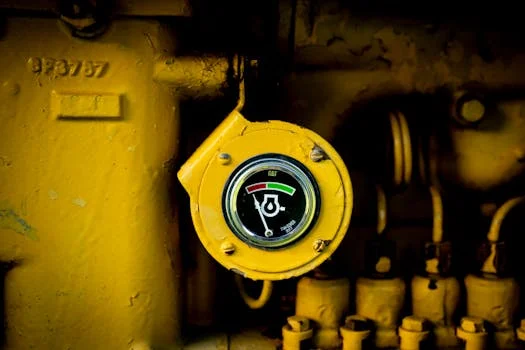
Standardizing maintenance across different water treatment technologies is the only way to ensure plant-wide compliance and reliability. Each system type—whether it be RO, MBR, or multi-media filtration—has a unique set of vulnerabilities that must be addressed through a structured checklist. For instance, while an RO system is highly sensitive to chemical oxidation, an MBR system is more sensitive to aeration failures and biomass concentration (MLSS levels). Establishing a master checklist allows maintenance managers to allocate resources effectively and track historical performance data for predictive maintenance.
| System Type | Daily Checkpoint | Weekly Checkpoint | Quarterly/Annual Task |
|---|---|---|---|
| RO System | Permeate/Reject flow rates | SDI and Conductivity test | Quarterly CIP; Annual pump seal check |
| MBR System | Aeration blower pressure | MLSS/VSS concentration test | Quarterly membrane autopsy; Annual module plan |
| Multi-Media Filter | Differential Pressure (ΔP) | Backwash cycle duration | Annual media inspection; Replace every 3-5 yrs |
| Chemical Dosing | Tank levels and leak check | Pump calibration (volumetric) | Quarterly tubing replacement; Annual valve check |
In an MBR system, utilizing a high-quality MBR membrane bioreactor module is only half the battle; the other half is maintaining the biological health of the system. Weekly Mixed Liquor Suspended Solids (MLSS) tests are required to ensure the biological load does not exceed the membrane's filtration capacity. For pre-treatment, a multi-media filter for ultrapure water must have its media bed inspected annually for "mud-balling" or media loss, which can occur during high-velocity backwashing. By following this master checklist, facility engineers can ensure that each subsystem operates at peak efficiency, protecting the overall investment in water purification infrastructure.
Troubleshooting Common Maintenance Failures
When industrial systems fail, the cause is often a deviation from the established maintenance protocol that has gone unnoticed. A common issue is low RO flux, which is typically caused by biofouling or scaling. If the ATP (adenosine triphosphate) levels in the feed water exceed 100 pg/mL, biofouling is the likely culprit, requiring an immediate non-oxidizing biocide treatment. Conversely, if the calcium sulfate (CaSO₄) levels in the reject stream exceed twice their solubility limit, mineral scaling is occurring, indicating a failure in the antiscalant dosing system.
High turbidity in the effluent is another frequent failure point, often linked to improper coagulation. For a feed water with 100 NTU, an optimal Al³⁺ dose of 10–30 mg/L is generally required; if the dose is too high or too low, the floc will not form correctly, leading to filter breakthrough. Mechanical failures, such as frequent pump breakdowns, are often the result of insufficient Net Positive Suction Head (NPSH). Engineers should verify that the NPSH margin is at least 1.5 times the required NPSH to prevent cavitation, which can destroy an impeller in weeks. For more on mechanical troubleshooting, see our sludge press equipment maintenance guide or the DAF clarifier maintenance guide for daily and annual mechanical tasks.
Frequently Asked Questions
How often should RO membranes be cleaned?
RO membranes should typically be cleaned every 3 to 6 months. However, the exact frequency depends on the feedwater SDI and the efficiency of the pretreatment system. A 10% drop in normalized permeate flow is the standard technical trigger for a Clean-In-Place (CIP) procedure.
What is the ideal SDI for RO feedwater?
The Silt Density Index (SDI) must be less than 5 to prevent rapid membrane fouling. For high-recovery industrial systems, an SDI of less than 3 is often targeted to extend membrane life and maintain high recovery rates above 95%.
Do MBR systems require more maintenance than conventional clarifiers?
Yes, MBR systems require more frequent monitoring of aeration rates and membrane transmembrane pressure (TMP). While they offer a 60% smaller footprint and superior effluent quality, they demand more technical expertise in membrane cleaning and biomass management.
Can chemical dosing systems be automated?
Yes, modern industrial dosing systems are PLC-controlled and can automatically adjust dosing rates based on real-time pH, ORP, or flow feedback, maintaining a dosing accuracy of ±2%.
How to prevent sludge buildup in sedimentation tanks?
To prevent sludge buildup, maintain a sludge recirculation rate of 3% to 5% of the total flow and inspect the scraper mechanisms monthly for mechanical wear or misalignment.
Related Equipment
- fully automated JY series water purification unit — view specifications, capacity range, and technical data
- high-recovery industrial RO system with automated CIP — view specifications, capacity range, and technical data
Need a customized solution? Request a free quote with your specific flow rate and pollutant parameters.