What Drives Industrial Wastewater Treatment Cost in Rajshahi?
Industrial wastewater treatment cost in Rajshahi runs BDT 50 million to BDT 1.2 billion installed for plants treating 100–5,000 m³/day of factory effluent. High COD and FOG loads from textile dyeing and food processing push budgets 30–50% above many national averages for comparable capacity.
Rajshahi textile and food plants discharge high-strength effluent that needs more than a municipal secondary train. High COD and FOG drive advanced pretreatment such as DAF systems for Rajshahi's food processing and textile pretreatment, which typically adds 15–25% to initial CAPEX versus a standard municipal plant under 2023 DOE effluent practice.
Utility rates raise total ownership cost. Electricity for industrial users sits near BDT 8.5/kWh in 2025 DOE projections, versus about BDT 7.2/kWh in Chittagong, which lifts OPEX by roughly 15–20%. For MBR systems for Rajshahi's high-organic-load wastewater, aeration alone can take about 40% of energy use when packs run at design MLSS. Most dyeing houses we size for keep aeration at the lower end of the DO band to protect the power bill.
Sector scale explains why effluent strength stays high. Bangladesh's textile and garment complex earned $50 billion from exports by December 2024, an 8.3% increase over the year (Export Promotion Bureau data via Wikipedia), on a base of roughly 5,000 garment factories recorded by 2013 (Wikipedia). Rajshahi itself — a historic silk center located on the north bank of the Padma River, forming an agglomeration of about 1 million — runs its industry mostly inside two BSCIC industrial city sites, of which Industrial City-02 did not attract significant investment (Wikipedia). That concentration keeps DOE attention fixed on a compact set of estates.
The China Eximbank-funded Rajshahi surface water plant sets a municipal benchmark, not a factory ETP design basis. According to AidData project records, the preferential buyer's credit is USD 276.25 million (signed 10 May 2023) for a roughly 200 million L/day drinking-water works planned from July 2023 toward mid-2026. Factories still carry the full cost of specialized effluent treatment for 100–5,000 m³/day process streams.
| Industry Sector | Key Effluent Parameters (Rajshahi Average) | National Average (Approx.) | Treatment Implication | Estimated CAPEX Addition (vs. standard) |
|---|---|---|---|---|
| Textile Dyeing & Printing | COD: 1,200–3,500 mg/L ADMI Color: 500–1,200 |
COD: 800–1,500 mg/L | High COD/Color removal required (e.g., advanced oxidation, MBR) | 20–30% |
| Food Processing | FOG: 300–800 mg/L BOD: 800–1,500 mg/L |
FOG: 100–300 mg/L | Significant FOG and BOD reduction (e.g., DAF pretreatment, anaerobic digestion) | 15–25% (for DAF) |
Read the sector table as a budgeting screen before any site survey. Textile dyeing effluent at COD 1,200–3,500 mg/L and ADMI color 500–1,200 forces tertiary steps that food streams at BOD 800–1,500 mg/L usually avoid. The 20–30% and 15–25% CAPEX additions hold only when the baseline bid is a standard biological train of the same hydraulic size.
Which Effluent Standards Apply in Rajshahi: ECR 1997 Limits and DOE Fines?
Bangladesh's Environmental Conservation Rules (ECR) 1997 remain the baseline discharge rule set that DOE offices apply to Rajshahi factories. Earlier plant briefs often cited BOD ≤30 mg/L and TSS ≤50 mg/L for local planning packages. Schedule 10 of ECR 1997 sets inland-surface BOD at 50 mg/L at 20°C and suspended solids at 150 mg/L, with oil and grease at 10 mg/L and pH 6–9 (Environment Conservation Rules, 1997). Many buyers still write tighter internal targets so composite samples stay under the legal ceiling on weak production days.
One legal update matters for new clearances. The Environment Conservation Rules, 2023 (S.R.O. No. 53, dated 5 March 2023) repeal the 1997 Rules, and its Rules 31 and 32 now carry the environmental standards for water quality and liquid waste emission (UNEP Law and Environment Assistance Platform). DOE offices continue to apply the familiar Schedule 10 values when reviewing older consents, so design teams should state which instrument their limits follow in the Environmental Clearance narrative.
Textile color control stays strict in practice. DOE guidance used in 2025 briefs often targets ADMI color ≤200 for dyed streams. Non-compliance can trigger DOE fines up to BDT 50,000 per instance (2024 data cited in local enforcement summaries). Repeat failures have led to shutdowns, including three textile units in a BSCIC estate in 2023. Food plants face FOG limits of ≤10 mg/L as oil and grease under ECR Schedule 10, so grease traps alone rarely suffice at FOG 300–800 mg/L.
Most food lines we size in Rajshahi still need flotation before biology. Sampling discipline then decides whether the limits hold on paper and in the field. DOE compliance is judged on composite samples at the final discharge point, so a grab sample taken right after a batch dump can read far worse than the daily average. Plants that log every batch event alongside lab results defend their numbers faster during inspections.
DOE's 2025 "Zero Discharge" pilot framing for Rajshahi textiles aims toward about 90% water reuse by 2027. That roadmap pushes more buyers toward compact reuse-grade effluent trains when reuse is on the capital plan. Cost and land models for comparable industrial plants also appear in our Puebla wastewater treatment plant cost breakdown for buyers comparing CAPEX drivers across markets.
| Parameter | ECR 1997 Limit (Rajshahi Focus) | Enforcement Priority | Typical Technology Solution |
|---|---|---|---|
| BOD | ≤ 30 mg/L | High | MBR, Aerobic Treatment Units (ATU) |
| TSS | ≤ 50 mg/L | High | DAF, Clarifiers, MBR |
| FOG | ≤ 10 mg/L (Food Processing) | Very High | DAF, Grease Traps |
| pH | 6–9 | Medium | Neutralization Dosing Systems |
| Color (ADMI) | ≤ 200 (Textiles) | High | Coagulation/Flocculation, Activated Carbon, MBR |
Read the BOD and TSS table cells as the tighter internal targets many Rajshahi EPC packages still quote. Align the legal floor to ECR Schedule 10 inland-surface values above when you write the Environmental Clearance narrative. Keep the tighter numbers as contracted performance commitments only if the buyer's contract demands them and the lab method matches the commitment clause.
MBR vs DAF vs Conventional A/O: Which Technology Fits Rajshahi Effluent?
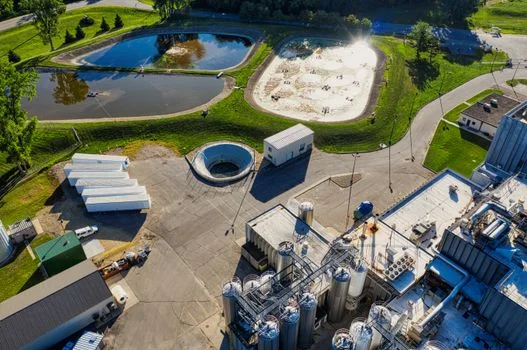
Technology choice in Rajshahi follows three constraints: effluent strength, plot size, and who will operate the plant at night. MBR packages (DF Series) reach about 98% COD removal on high-organic textile and pharmaceutical streams. They also cut footprint by up to 60% versus conventional A/O. CAPEX runs about 25% higher, with 500–5,000 m³/day trains often priced from BDT 80 million to BDT 1.2 billion, and they need membrane O&M skill on site.
DAF removes about 90–95% of FOG and 80–85% of TSS, so food plants and textile pretreatment lines use it before biology. Unit CAPEX is typically BDT 12–25 million, with PAC and PAM dosing as a standing OPEX line. Conventional A/O is usually 20–30% cheaper (about BDT 50–900 million across similar capacities). It needs roughly twice the land and often fails color goals without tertiary polishing.
On BSCIC plots where land sells at a premium, compact trains matter as much as removal rates. The Underground Package Sewage Treatment Plant (WSZ Series) at 1–80 m³/h keeps surface take small and supports phased expansion when a dyeing line adds a second shift. Buyers comparing Gulf and ASEAN estate constraints can also scan the Ajman Industrial Effluent Guide: 2026 Specs and Compliance for another hot-climate, land-tight reference case.
| Technology | Primary Application | COD Removal (%) | FOG/TSS Removal (%) | Footprint (vs. Conventional) | Typical CAPEX (BDT, 100 m³/day) | Key OPEX Driver |
|---|---|---|---|---|---|---|
| Conventional A/O | General industrial, low-strength | 70–85 | 40–60 | 1x | 50–90 Million | Sludge disposal, aeration energy |
| DAF | Food processing, textile pretreatment | N/A (Pretreatment) | 90–95 (FOG), 80–85 (TSS) | 0.8x (standalone) | 12–25 Million (for DAF unit) | Chemicals, sludge disposal |
| MBR (DF Series) | Textile, pharmaceutical, high-strength organics | 98+ | 95+ | 0.4x | 80–120 Million | Membrane replacement, aeration energy |
BSCIC Estate ETP Design for Limited Land: Compact Solutions Below 0.3 Acres
Land scarcity shapes almost every ETP layout inside Rajshahi's Bangladesh Small and Cottage Industries Corporation (BSCIC) estates. Average plots run about 0.8–1.2 acres. Many dyeing or food units must fit treatment inside less than 0.3 acres after production halls take their share. Underground integrated plants cut surface footprint by up to 70% versus conventional above-ground A/O, so yards can return to storage, parking, or green cover.
Modular DAF skids that stack can shrink installation area by up to 40%. That matters when FOG loads force pretreatment beside a crowded kitchen drain gallery. A Rajshahi textile unit in 2023 cut treatment land need by about 65% after moving to an MBR train with sludge dewatering on a plate-frame filter press. That pairing kept cake handling inside the same compact block instead of a separate drying bed field.
Similar Chonburi estate layouts are covered in Chonburi Wastewater Treatment: Specs, Cost Models & Compliance for readers who buy equipment across multiple Asian industrial parks. Selection tip for sub-acre plots: freeze the hydraulic peak (m³/h), not only the daily average (m³/day). A 500 m³/day dye house that dumps two hours of desizing flow can double the instantaneous load and wipe out a compact design sized on average flow alone.
What Do CAPEX and OPEX Look Like for Rajshahi Plants in 2026?
Full ownership cost in Rajshahi splits into equipment, civil works, permits, and daily OPEX. For 100–5,000 m³/day in 2026 planning models, conventional A/O sits near BDT 50 million to BDT 900 million. MBR packages span about BDT 80 million to BDT 1.2 billion. DAF pretreatment units add about BDT 12–25 million each.
Civil works—excavation, structures, and pipe racks—often take 25–35% of equipment CAPEX on open A/O sites. DAF skids often need 15–25%, and compact MBR blocks often need 10–20%, with underground options pushing civil share higher. Permitting and clearances commonly add BDT 2–5 million. Operator training budgets of BDT 1–3 million prevent early membrane or blower failures.
OPEX is where Rajshahi's tariff and sludge path bite. Aeration energy can reach about 40% of MBR operating cost when dissolved oxygen setpoints stay conservative. Chemical dosing for flotation and color trim is about 20% of OPEX on physicochemical trains. Sludge haulage on conventional plants is often near 15% of OPEX when cake solids stay low.
A Rajshahi food plant in 2024 reported a 22% OPEX cut after installing dissolved air flotation with an automatic chemical dosing system, mainly by cutting overdosing and float-sludge volume. Parallel market cost structures for industrial wastewater treatment in other jurisdictions help procurement teams separate local tariff effects from pure technology premiums. When you compare bids, normalize each offer to BDT per m³/day of contracted capacity and to kWh/m³ at the stated COD load, not to a bare equipment sticker price.
Industrial wastewater treatment cost in Rajshahi, benchmarked this way, usually lands inside the bands above once civil share and training are counted. Most budgets we review for first-time ETP buyers underestimate civil works before the first invoice arrives.
| Cost Component | Conventional A/O | DAF System | MBR System (DF Series) | Notes |
|---|---|---|---|---|
| Equipment CAPEX (100 m³/day) | BDT 50–90M | BDT 12–25M (Unit) | BDT 80–120M | Excludes civil works |
| Civil Works (Est.) | 25–35% of Equip. CAPEX | 15–25% of Equip. CAPEX | 10–20% of Equip. CAPEX | Higher for underground options |
| Annual OPEX (Est.) | BDT 5–10M | BDT 3–7M | BDT 10–15M | Includes power, chemicals, sludge, maintenance |
| Key OPEX Driver | Sludge Disposal, Aeration | Chemicals, Sludge Disposal | Aeration Energy, Membrane Maintenance |
How Do You Select a Wastewater Treatment Supplier in Rajshahi?
A structured buy reduces undersized reactors and failed DOE sampling days. Use this seven-point checklist before you freeze the purchase order.
1. Map the effluent for at least 30 days. Sample COD, BOD, TSS, FOG, color, and metals through DOE-accepted labs in Rajshahi such as BCSIR or RUET. Weekend peaks matter more than weekday averages on dyeing lines.
2. Match process to land and reuse goals. High FOG food streams usually start with DAF. High COD color streams often need MBR or A/O plus tertiary color removal. Tight plots favor underground package plants over long aeration ditches.
3. Price civil and power, not only equipment. Add 25–35% civil on open A/O where site work is heavy. Confirm BDT/kWh at the meter, and model sludge haul distance in kilometers.
4. Verify supplier clearance paperwork. Ask for DOE-related certifications and references from similar Rajshahi or BSCIC projects, not only brochure photos from another city.
5. Require a pilot when the stream is unusual. Three months of pilot data on removal rate, polymer dose, and specific energy (kWh/m³) beats a single jar-test slide deck.
6. Lock performance commitments to sample points. State BOD, COD, TSS, FOG, and color limits at the final discharge chamber under defined influent ranges.
7. Plan operators before commissioning. Budget BDT 1–3 million for training. Write who owns membrane cleaning chemicals, spare blowers, and weekend call-out duty.
Who This Brief Serves and What to Do Next
Plant engineers, EPC contractors, and procurement managers use this brief when sizing textile, food, or mixed BSCIC effluent plants in Rajshahi at roughly 100–5,000 m³/day. Municipal drinking-water teams focused only on Padma surface-water supply should use WASA project documents instead of this factory ETP brief.
If you already hold a 30-day influent set and a plot sketch, send them through our request-quote form. A process engineer can then check whether DAF, MBR, or a compact underground package fits your COD/FOG and land numbers.
Frequently Asked Questions
What does an industrial ETP cost in Rajshahi?
Rajshahi industrial plants for 100–5,000 m³/day typically cost BDT 50 million to BDT 1.2 billion installed. Technology choice and influent strength move the number inside that band. Conventional A/O often sits lower; MBR packages for high COD textile streams sit toward the top, especially when civil works and permits are included.
How do factories avoid DOE fines on discharge?
Factories avoid DOE fines—cited up to BDT 50,000 per instance in 2024 summaries—by holding effluent inside ECR 1997 limits on every composite sample. Design to Schedule 10 inland-surface floors (BOD 50 mg/L, SS 150 mg/L, oil and grease 10 mg/L) or tighter buyer commitments. Food lines usually need flotation for FOG; textile lines need reliable color and COD control before the final chamber.
What ETP options fit a small BSCIC plot?
Underground integrated package plants and stacked modular flotation skids are the usual answers on plots under about 0.3 acres. Underground trains can cut surface footprint by up to 70% versus open A/O. Modular DAF can shrink area by about 40% when FOG pretreatment must sit beside production buildings.
How can food plants cut FOG before biology?
Dissolved air flotation is the standard FOG cut for Rajshahi food effluent when influent FOG sits at 300–800 mg/L. Well-run DAF units remove about 90–95% of FOG by attaching micro-bubbles to grease particles and scraping the float. Grease traps alone seldom meet the ≤10 mg/L oil and grease discharge limit on those loads.
What Is the MBR System Cost for a Textile Factory in Bangladesh?
An MBR system for a Bangladesh textile factory generally carries about 25% higher CAPEX than conventional A/O at similar hydraulic capacity. A 100 m³/day MBR block is often BDT 80–120 million for equipment, while A/O equipment is often BDT 50–90 million before civil works. The premium buys higher COD removal and a footprint near 0.4× conventional.