For industrial wastewater with high FOG, TSS, or colloidal matter, an industrial DAF clarifier typically reaches 92–97% floatable-solids removal at hydraulic loading rates up to 10 m/h. HydropureWater DAF units cover 4–300 m³/h with micro-bubbles and adjustable air-to-solids (A/S) ratios of 0.02–0.06 for influent TSS of about 50–500 mg/L. Selection hinges on wastewater composition, peak flow, and the discharge limits set by the receiving POTW or direct-discharge permit.
Why Industrial Facilities Are Switching from Clarifiers to DAF Systems
An industrial DAF clarifier is preferred when FOG, light organics, or colloids dominate. Micro-bubble flotation at 5–10 m/h routinely delivers 92–97% removal of floatable solids in about one-quarter the footprint of gravity settling for the same peak flow. Saturation at 4–6 bar yields 50–100 μm bubbles. A/S ratios of 0.02–0.06 match FOG-heavy versus denser TSS streams.
Industrial facilities processing high-fat or light-solid streams frequently face municipal surcharges exceeding $25,000 per year due to Fats, Oils, and Grease (FOG) and Total Suspended Solids (TSS) violations. Conventional gravity clarifiers rely on density difference alone, which often fails when contaminants are light or emulsified. In a typical food processing scenario, a standard clarifier might only achieve 70% removal for buoyant oils, whereas a DAF system reaches 95% or higher by raising particle buoyancy (HydropureWater field data, 2025).
The core mechanism generates micro-bubbles of 50 to 100 μm. These bubbles attach to suspended particles, cut their effective density, and drive them to the surface. The process is faster than gravity settling and shrinks the physical footprint. For the same flow rate, a DAF system can occupy roughly 25% of the space of a conventional clarifier, which matters on brownfield upgrades.
Regulatory drivers also push the shift. Earlier vendor guidance often treated “EPA’s 30 mg/L TSS pretreatment limit” as a universal industrial rule before discharge to a Publicly Owned Treatment Works (POTW). According to EPA’s NPDES Permit Writers’ Manual (Chapter 5), 30 mg/L TSS as a 30-day average is the secondary treatment standard for POTW effluent under 40 CFR Part 133, not a flat industrial-user pretreatment number. Industrial users instead face categorical pretreatment standards where they apply, plus local POTW limits. The EU Urban Waste Water Directive 91/271/EEC likewise tightens organic-load expectations. Pulp and paper, petrochemical, textile, and metalworking plants adopt DAF to stay inside those site-specific limits and to support reuse loops.
DAF Clarifier Design Parameters: What Engineers Need to Know Before Specifying
Hydraulic loading rates (HLR) for modern DAF systems typically range between 5 and 10 m/h, which sets flotation-tank surface area. Higher HLR shortens retention—often to 10–30 minutes—but needs tight bubble control so removal does not fall. When specifying a Dissolved Air Flotation (DAF) System, engineers must balance loading against the specific gravity of the target contaminants.
The Air-to-Solids (A/S) ratio is the mass of air released per mass of solids in the influent. For high-FOG streams such as meat processing, an A/S ratio of 0.05 or higher supports bubble-particle adhesion. TSS-heavy streams with denser mineral solids may run at about 0.03. Recycle is typically 10% to 30% of treated effluent, pressurized to 4–6 bar in a saturation tank, then returned to the influent.
| Parameter | Optimal Range | Impact on Performance | Notes |
|---|---|---|---|
| Hydraulic Loading Rate | 5–10 m/h | Determines tank surface area and footprint | Lower rates (5-7) preferred for fragile flocs |
| Air-to-Solids (A/S) Ratio | 0.02–0.06 | Governs bubble-particle adhesion and buoyancy | Higher for FOG; lower for heavy TSS |
| Bubble Size | 50–100 μm | Affects rise velocity and attachment efficiency | Generated via 4–6 bar saturation pressure |
| Recycle Ratio | 10%–30% | Controls the volume of air introduced | Dependent on influent concentration |
| pH Range | 6.0–8.0 | Critical for chemical flocculation efficiency | Adjust via PLC-controlled chemical dosing for DAF pretreatment |
Chemical pretreatment is almost always required. Coagulants neutralize particle charge; flocculants bridge particles into aggregates that bubbles can capture. Holding pH between 6 and 8 matters; outside that band, alum or ferric chloride stay dissolved instead of forming flocs.
What Design Criteria Matter for Clarifier Selection?
Clarifier selection for industrial wastewater starts with solids type: heavy mineral TSS favors gravity or lamella settling, while FOG, fibers, and colloids favor DAF at HLR 5–10 m/h and A/S 0.02–0.06. Peak hourly flow—not average daily flow—sets surface area. Emulsified oils above about 200 mg/L FOG need chemical cracking before flotation.
Primary clarifiers remove settleable solids ahead of biological treatment. Secondary clarifiers separate biomass after aeration. Lamella packs raise settling area for dense silt. DAF is the flotation path when particles are light. By comparing lamella clarifier vs. conventional clarifier comparison data, engineers often find lamella units efficient for heavy silt, while DAF fits lightweight colloidal textile or food streams.
Industry-Specific DAF Performance: Removal Efficiency, Cost, and Compliance Benchmarks
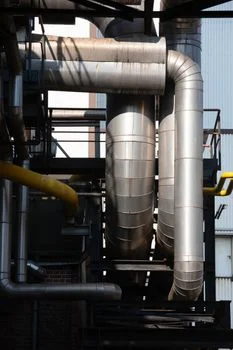
Food processing facilities need DAF units that tolerate organic-load swings, often reaching 95% FOG removal and 90% TSS removal. For 50–200 m³/h, CAPEX usually falls between $120,000 and $300,000. Payback often comes from surcharge cuts when effluent meets local industrial sewer limits.
In pulp and paper, the goal is fiber recovery and TSS removal. DAF systems here achieve 92% TSS removal and up to 85% COD removal. Engineers keep hydraulic loading rates ≤7 m/h to limit fiber clogging. Petrochemical duty focuses on oil removal, needs A/S ≥0.05 for emulsified oils, and often adds explosion-proof gear, raising CAPEX by 20–30% versus standard industrial models.
| Industry | Influent TSS (mg/L) | DAF Removal Efficiency | CAPEX Range (50 m³/h) | OPEX Savings vs. Clarifier |
|---|---|---|---|---|
| Food Processing | 500–2,000 | 90–95% | $120k – $180k | 35% (via surcharge reduction) |
| Pulp & Paper | 1,000–3,000 | 92–94% | $140k – $210k | 25% (via fiber recovery) |
| Petrochemical | 200–800 | 95–97% | $180k – $280k | 40% (via oil reclamation) |
| Textile/Dyeing | 300–1,200 | 85–88% | $110k – $160k | 20% (via chemical optimization) |
Textile plants use DAF for dye and colloidal control. About 88% dye removal needs precise PAC or similar coagulant dosing. Match chemistry to jar-test results before freezing the equipment size.
How Do You Select an Industrial DAF Clarifier?
Selection of flotation versus settling equipment begins with a 24-hour composite of TSS, FOG, COD, and pH so peak events are not missed. If FOG exceeds 200 mg/L, test for emulsions that need chemical cracking before flotation. Heavy solids above 1,000 mg/L TSS usually need screening or grit removal first.
- Characterize Wastewater: Establish TSS, FOG, and flow variability. If the stream contains heavy solids (>1,000 mg/L), add primary screening or grit removal.
- Match Specs to Stream: Size with HLR 5–10 m/h and A/S 0.02–0.06. For FOG-dominant duty, a DAF systems for industrial wastewater with an efficient saturation tank is a practical match.
- Evaluate Cost vs. Compliance: Model CAPEX against municipal fines. A $200,000 DAF investment is often justified if it eliminates $50,000/year in surcharges, yielding a 4-year simple payback.
- Assess Vendor Capabilities: Confirm integrated controls. Flotation tracks chemical dose; include flocculant dosing units for DAF pretreatment in the package.
- Pilot Test: For complex streams, rent a 10 m³/h pilot for 30 days to lock A/S ratio and chemical dose under plant conditions.
Decision logic: if influent FOG is >100 mg/L, specify A/S ≥0.05. Mineral-heavy TSS may suit a gravity clarifier; organic or biological solids (for example waste activated sludge) usually favor DAF thickening and clarification, such as a DAF-100 class unit.
DAF Clarifier Cost Models: CAPEX, OPEX, and ROI for Industrial Applications
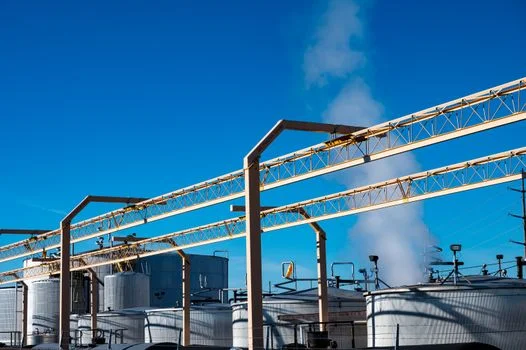
DAF capital cost varies with flow and material (304 vs. 316 stainless steel). A 50 m³/h system typically starts at $80,000; large 300 m³/h systems can reach $450,000. Quotes usually cover the flotation tank, saturation system, sludge skimmer, and a basic PLC panel. Site work and installation typically add another 10–15%.
| Flow Rate (m³/h) | Estimated CAPEX | Key Components Included |
|---|---|---|
| 10–30 | $45,000 – $75,000 | Skid-mounted tank, pump, basic controls |
| 50–100 | $80,000 – $160,000 | Saturation tank, chain-plate skimmer, PLC |
| 150–200 | $180,000 – $290,000 | Dual saturation tanks, automated sludge discharge |
| 250–300+ | $320,000 – $450,000+ | Full stainless construction, advanced SCADA integration |
OPEX is driven by energy, chemicals, and maintenance. Saturation-pump and skimmer energy often runs 0.1 to 0.3 kWh/m³ of treated water. Chemical cost typically ranges from $0.05 to $0.20/m³, depending on polymer demand. Effective thickening can cut sludge volume by up to 30%, which lowers hauling fees.
According to the US EPA Clean Water State Revolving Fund (CWSRF) program page, low-cost financing remains available for eligible water-quality infrastructure, including wastewater facilities. Vendor payment plans are another path. Frame the unit as compliance insurance that reduces the chance of production stops from permit breaches.
Common DAF Clarifier Mistakes and How to Avoid Them
Skipping pH control is the most common industrial DAF failure mode. Outside pH 6–8, flocs weaken or never form, and removal can drop about 40%. Integrate PLC-controlled chemical dosing for DAF pretreatment with real-time pH monitoring and acid/caustic feed.
Overloading is the next frequent error. Hydraulic loading above 10 m/h shortens contact so bubbles cannot attach, causing solids carryover. Design for peak hourly flow, not average daily flow, especially during wash-downs.
Neglecting the saturation train can cut bubble efficiency by about 50%. Clogged nozzles or a weak saturation pump produce large “burps” instead of a micro-bubble mist. Weekly checks should hold saturation pressure at 4–6 bar and inspect skimmer blades for wear.
Who This Is For
Plant engineers and EPC teams sizing FOG- or colloid-heavy pretreatment are the primary readers. Gravity or lamella settlers remain better when solids are dense and settleable. Share a 24-hour composite analysis and peak flow so DAF surface area and A/S ratio can be checked against local sewer or permit limits.
Frequently Asked Questions
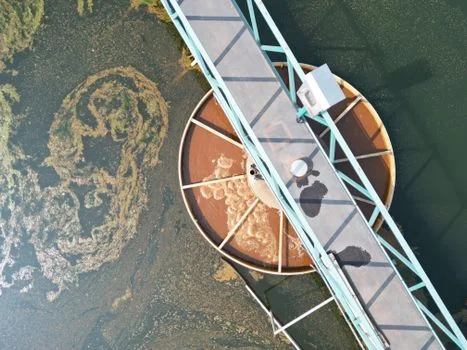
What is the difference between DAF and a clarifier?
DAF uses 50–100 μm micro-bubbles to float oils, greases, and fine solids, often reaching about 95% removal of floatables in a compact tank. Conventional clarifiers rely on gravity to settle heavy solids, which is slower and weaker on buoyant FOG. Choose DAF when particles are light or emulsified; choose settling when solids are dense and settleable under the design overflow rate.
How much does a DAF clarifier cost for a 100 m³/h system?
CAPEX for a 100 m³/h industrial DAF system typically ranges from $130,000 to $160,000 for a standard package with saturation, skimmer, and PLC controls. OPEX is generally $0.15–$0.35 per cubic meter, covering energy plus chemicals. Stainless upgrades, explosion-proof gear, or dual saturation trains push capital toward the high end of the broader 50–100 m³/h band.
What industries use DAF clarifiers?
DAF is standard in food processing for FOG removal, pulp and paper for fiber recovery, petrochemical plants for oil-water separation, and textile mills for dye and colloidal solids. Metalworking oily waste is another common duty. In each case, jar tests set coagulant and polymer dose before the hydraulic loading rate and A/S ratio are frozen.
How do I size a DAF clarifier for my wastewater?
Sizing uses hydraulic loading rate, typically 5–10 m/h, plus solids loading. Divide peak flow by the design HLR to get required surface area, then confirm A/S between 0.02 and 0.06 for the measured TSS and FOG. Always size on peak hourly flow so wash-down spikes do not create carryover.
Can DAF clarifiers handle high-TSS wastewater?
Yes, DAF can handle influent TSS up to about 1,000 mg/L effectively when chemistry and recycle are matched to the load. Above that level, add primary settling or screening so the flotation zone is not overloaded. Pulp streams often also keep HLR at or below 7 m/h to limit fiber blinding.