Why Coimbatore’s Sewage Treatment Equipment Market Needs a Buyer’s Guide in 2025
Coimbatore’s sewage treatment equipment market offers 20+ suppliers, but only 5 meet TNPCB’s 2025 effluent standards (BOD <30 mg/L, COD <250 mg/L) for industrial zones like SIDCO. Costs range from ₹5L for a 10 m³/day underground STP to ₹50L+ for a 500 m³/day MBR system, with 30–40% variance between vendors for identical specs. This guide compares suppliers on compliance, technical performance, and 5-year TCO—critical for avoiding fines (₹1L–₹5L/month for non-compliance) and operational downtime.
The urgency for a structured procurement strategy is driven by the Tamil Nadu Pollution Control Board (TNPCB) Notification No. 12/2024, which mandates stricter discharge limits for all units within the Coimbatore Zonal Master Plan. For the city’s 1,200+ textile units, the stakes are particularly high; data from the Tamil Nadu Textile & Common Effluent Treatment Plant Association (2024) indicates that 68% of existing facilities require immediate equipment upgrades to remain operational by 2025. A single compliance failure can result in immediate "Consent to Operate" (CTO) revocation, halting production lines that generate crores in monthly revenue.
the local market is saturated with "generic" equipment assemblers. IndiaMART data (2024) reveals that nearly 40% of local equipment dealers lack formal TNPCB certification or engineering validation for their process flow diagrams. For a procurement manager at a SIDCO textile unit or a facility head at a hospital in Peelamedu, selecting a vendor based solely on the lowest quote often leads to "hidden" engineering failures: undersized aeration tanks, low-quality blowers, or membranes that clog within six months. This guide provides the technical framework to vet suppliers based on engineering parameters rather than sales promises.
TNPCB Compliance Checklist: What Your Sewage Treatment Equipment Must Achieve in Coimbatore
TNPCB compliance in 2025 is no longer a "one-size-fits-all" metric; it is highly dependent on your industry vertical and your specific location within Coimbatore’s industrial geography. Equipment installed in the SIDCO industrial estate faces different scrutiny regarding heavy metal removal than a residential STP in Peelamedu, which focuses on noise reduction and odor control. Failure to verify these specific thresholds during the procurement phase results in equipment that is technically functional but legally non-compliant.
According to the TNPCB 2024 guidelines, industrial facilities must ensure their sewage treatment equipment achieves specific chemical and biological markers. For instance, food processing units must prioritize Chemical Oxygen Demand (COD) reduction to <200 mg/L, while healthcare facilities like specialized medical wastewater treatment systems must guarantee an E. coli count of <100 MPN/100mL. In contrast, textile units must achieve a Biological Oxygen Demand (BOD) of <50 mg/L for inland surface water discharge.
| Parameter | Textile Units (SIDCO) | Food Processing | Hospitals/Residential |
|---|---|---|---|
| BOD (mg/L) | < 50 | < 30 | < 20 |
| COD (mg/L) | < 250 | < 200 | < 150 |
| TSS (mg/L) | < 100 | < 50 | < 30 |
| pH Range | 5.5 – 9.0 | 6.5 – 8.5 | 6.5 – 9.0 |
| Oil & Grease (mg/L) | < 10 | < 10 | < 5 |
To verify a supplier’s compliance, procurement heads must demand three specific documents: the TNPCB Consent-to-Establish (CTE) process diagram approval, CE marking for electromechanical components (pumps/blowers), and ISO 14001 certification for environmental management. A common pitfall in the Coimbatore market is the "assembled STP," where a vendor sources individual components from various unbranded manufacturers. While cheaper, these systems often lack the synchronized control logic required to maintain stable effluent quality under fluctuating loads, a key requirement for how TNPCB’s norms compare to other Indian states regarding stringent enforcement.
Sewage Treatment Technologies Compared: Which Fits Your Coimbatore Facility?
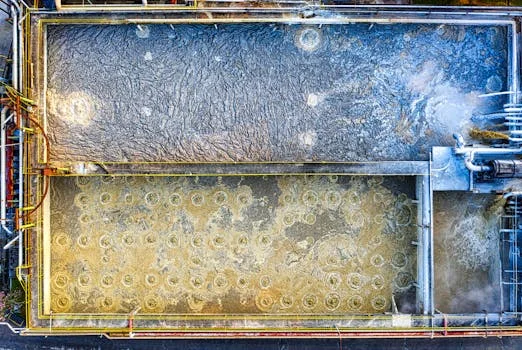
Selecting the right technology is a balance between available footprint, required effluent quality, and the technical capability of your on-site staff. In Coimbatore, three technologies dominate the 2025 landscape: Membrane Bioreactor (MBR), Sequential Batch Reactor (SBR), and Dissolved Air Flotation (DAF) for pretreatment. For space-constrained facilities in central Coimbatore, an underground STP for Coimbatore’s space-constrained facilities is often the only viable option, though it requires careful engineering of ventilation and access ports.
MBR (Membrane Bioreactor): This is the gold standard for facilities requiring high-quality treated water for reuse (e.g., textile dyeing or hospital cooling towers). An MBR system for Coimbatore’s high-efficiency effluent needs offers a 60% smaller footprint than traditional SBR systems. It achieves BOD levels <5 mg/L, making it ideal for the "Zero Liquid Discharge" (ZLD) aspirations of many SIDCO units. However, it carries a higher energy footprint (0.8–1.2 kWh/m³) and requires disciplined membrane cleaning protocols.
SBR (Sequential Batch Reactor): SBRs are the preferred choice for larger residential complexes and industrial units with fluctuating sewage volumes. They operate in cycles (Fill, React, Settle, Decant), which allows for high flexibility. While the footprint is larger than MBR, the energy consumption is significantly lower (0.4–0.6 kWh/m³). The effluent quality is sufficient for gardening and secondary industrial uses, but rarely for high-end process reuse.
DAF (Dissolved Air Flotation): In the textile and food sectors, a DAF system for Coimbatore’s textile wastewater pretreatment is essential. It removes fats, oils, and suspended solids that would otherwise clog MBR membranes or inhibit biological growth in SBR tanks. Using DAF can reduce the TSS load by up to 90% before it enters the biological stage.
| Technology | Capacity Range (m³/day) | BOD Removal | Footprint | Energy Use (kWh/m³) |
|---|---|---|---|---|
| MBR | 10 – 2,000 | > 98% | Ultra-Compact | 0.8 – 1.2 |
| SBR | 50 – 1,000 | > 90% | Moderate | 0.4 – 0.6 |
| Underground STP | 1 – 80 | > 85% | Zero (Surface) | 0.3 – 0.5 |
| DAF (Pretreatment) | 5 – 5,000 | N/A (TSS focus) | Small | 0.2 – 0.4 |
Cost Breakdown: How Much Does Sewage Treatment Equipment Cost in Coimbatore?
Budgeting for a sewage treatment plant in Coimbatore requires a split analysis of Capital Expenditure (Capex) and Operational Expenditure (Opex). Based on 2024 market quotes from leading vendors, the initial investment varies drastically by technology. A 100 m³/day SBR system typically costs between ₹15L and ₹40L, whereas an MBR system of the same capacity ranges from ₹20L to ₹50L. The premium for MBR is justified by its ability to produce recyclable water, reducing the "freshwater purchase" cost which currently averages ₹80–₹120 per kiloliter in Coimbatore’s industrial zones.
Operational costs are the "silent budget killers." In Tamil Nadu, the industrial electricity tariff of ₹7.5/kWh means that an energy-inefficient blower can add ₹1L to your annual opex. chemical costs for coagulation and pH adjustment range from ₹0.2 to ₹0.8 per cubic meter. For MBR users, the membrane replacement cost—typically occurring every 3 to 5 years—can range from ₹2L to ₹5L depending on the flux rate and cleaning frequency. For a more detailed cost analysis for Coimbatore facilities, one must factor in local labor costs, where a skilled operator commands ₹20,000 to ₹25,000 per month.
| System Type | Capacity (m³/day) | Capex Range (₹) | Opex (₹/m³) |
|---|---|---|---|
| Underground Package | 10 – 50 | 5L – 15L | 12 – 18 |
| MBR System | 100 – 500 | 20L – 50L | 25 – 45 |
| SBR System | 100 – 500 | 15L – 40L | 15 – 25 |
| Sludge Dewatering Unit | N/A | 3L – 8L | 5 – 10 |
Hidden costs often arise during the retrofitting of older STPs. Many Coimbatore textile units built in the early 2000s use outdated activated sludge processes that cannot meet 2025 norms. Retrofitting these systems with modern diffusers and automated controllers usually costs 30–50% of a new system price but can save up to 20% in energy. Additionally, don't overlook sludge dewatering options for Coimbatore’s STPs, as TNPCB now strictly monitors sludge disposal logs; a filter press is often mandatory for units over 50 m³/day.
Top 5 Sewage Treatment Equipment Suppliers in Coimbatore: Head-to-Head Comparison
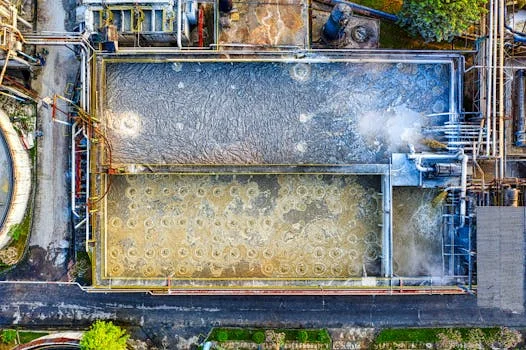
Evaluating suppliers in Coimbatore requires moving beyond the "lowest bidder" mindset. The following comparison matrix evaluates the city’s top-tier vendors based on their 2024 performance, technical depth, and TNPCB compliance history. We have categorized these vendors by their primary strength to help you align with your facility's specific needs.
| Vendor Category | Core Technology | Typical Lead Time | Service Strength | Red Flags |
|---|---|---|---|---|
| The Hospital/Healthcare Specialist | MBR & Ultrafiltration | 6 – 8 Weeks | High (24/7 AMC) | Premium Pricing |
| The Textile/Industrial Expert | SBR & DAF | 8 – 10 Weeks | Process Engineering | Min. Capacity Limits |
| The Residential/Package Specialist | Underground STP | 3 – 4 Weeks | Installation Speed | Low Effluent Reuse |
| The SIDCO Industrial Vendor | Custom ETP/STP | 10 – 12 Weeks | TNPCB Liasoning | Manual Controls |
| The Tech-Driven Startup | IoT-Enabled MBR | 6 – 7 Weeks | Remote Monitoring | Lack of Local Refs |
When vetting these suppliers, look for local case studies. For instance, a vendor who has successfully installed a 200 m³/day MBR at a major healthcare facility like PSG Hospitals will understand the nuances of pathogen removal better than a general contractor. Similarly, a supplier with a strong presence in the SIDCO industrial estate will be familiar with the specific "Consent to Establish" (CTE) quirks of the Coimbatore North vs. South TNPCB offices. Avoid any vendor who cannot provide a detailed process design calculation or one who claims their system requires "zero maintenance"—a technical impossibility in biological treatment.
5-Year Total Cost of Ownership (TCO) Calculator for Coimbatore Facilities
A procurement decision based solely on the purchase price is often a multi-lakh mistake. The Total Cost of Ownership (TCO) framework allows Coimbatore facility managers to see the long-term financial impact of their equipment choice. The formula for a 5-year TCO is: Capex + (Opex × 1,825 days) + (Major Component Replacement) + (Risk of Compliance Fines).
In Coimbatore, the risk of compliance fines is a tangible variable. With TNPCB’s 2024 penalty schedule citing fines of ₹1L to ₹5L per month for non-compliance, even a 10% probability of failure significantly alters the TCO. For example, consider a 100 m³/day requirement: An MBR system may have a ₹25L Capex and ₹40/m³ Opex, while an SBR has a ₹20L Capex and ₹25/m³ Opex. At first glance, SBR seems cheaper. However, if the MBR allows for 100% water reuse (saving ₹100/m³ in freshwater costs), the MBR system actually pays for itself within 18 months and has a 30% lower TCO over five years.
| TCO Component | MBR (100 m³/day) | SBR (100 m³/day) | Impact Factor |
|---|---|---|---|
| Initial Capex | ₹25,00,000 | ₹20,00,000 | One-time |
| 5-Year Opex (Energy/Chem) | ₹45,62,500 | ₹27,37,500 | Variable |
| Membrane/Media Replacement | ₹4,00,000 | ₹1,50,000 | Year 3 or 4 |
| Freshwater Savings (Credit) | (₹1,09,50,000) | (₹36,50,000) | Based on Reuse |
| Net 5-Year TCO | (₹34,87,500) Profit | ₹12,37,500 Cost | ROI Focus |
Sensitivity analysis shows that as capacity increases, the TCO gap between MBR and SBR narrows. For a 500 m³/day system, the economies of scale in energy use make the SBR more attractive if water reuse is not a priority. However, for most Coimbatore industries facing water scarcity, the "reuse credit" makes high-efficiency equipment the logical financial choice. (HydropureWater field data, 2025).
Frequently Asked Questions
How much does it cost to set up a sewage treatment plant in Coimbatore?
The cost ranges from ₹5L to ₹50L+ depending on capacity (10–500 m³/day) and technology. Textile mills in SIDCO typically spend ₹20L–₹40L for 100–200 m³/day systems using SBR or MBR technology, factoring in the specific pretreatment required for industrial dyes.
What are the disadvantages of STP?
Traditional STPs (like SBR) have higher energy use (0.4–0.6 kWh/m³), a larger footprint (2–3x larger than MBR), and lower effluent quality (BOD <20 mg/L vs. <5 mg/L for MBR). They also require more intensive operator training to manage the sludge settling cycles effectively.
How much does it cost to build a sewage treatment plant in Tamil Nadu?
According to the TNPCB 2024 cost index, industrial STPs cost between ₹8,000 and ₹15,000 per cubic meter of capacity. A 100 m³/day MBR system usually costs ₹8L–₹12L for the equipment alone, while a full 500 m³/day civil-plus-mechanical SBR installation can reach ₹25L–₹40L.
What is the cost of a sewage treatment plant in Coimbatore?
Underground package STPs start at ₹5L for 10 m³/day. MBR systems for hospitals or high-end residential units cost ₹15L–₹30L for 50–100 m³/day. You should also budget an additional 10–15% for TNPCB consent fees and professional installation services.
Which is the best sewage treatment equipment supplier in Coimbatore?
Selection should be based on your industry: Choose a healthcare specialist for hospitals (MBR focus), a textile-focused vendor for SIDCO units (DAF/SBR focus), or a residential package provider for apartments. Prioritize vendors with local Coimbatore case studies and active TNPCB certifications.