
Plate frame filter presses still dewater industrial sludge to 30–40% cake dryness at 6–12 bar. Recessed chamber presses (35–45%), belt presses (18–25%), and centrifuges (20–35%) trade CAPEX, OPEX, and footprint. A 100 m³/h stream may need a 150 m² plate frame press ($120K CAPEX) versus a 2.5 m belt press ($85K CAPEX). The belt press uses about 30% more polymer and yields wetter cake, raising disposal cost by $2.50/ton. Buyers asking how much does a 2 ton filter press cost should fold that CAPEX into a 5–10 year polymer and disposal model.
Why Sludge Dewatering Technology Selection Matters: A Plant Manager’s Dilemma
Plate frame filter presses typically reach 30–40% cake solids at 6–12 bar, versus 35–45% for recessed chamber presses, 18–25% for belt presses, and 20–35% for centrifuges. At 50 m³/h, 2025 CAPEX spans about $85K–$250K by technology. Wetter cake raises disposal cost per wet ton, so permits and labor often outweigh sticker price.
For plant managers and engineers, sludge dewatering is often the most expensive stage of the wastewater treatment process. Improper technology selection leads to a cascade of operational inefficiencies that bleed capital. Consider a food processing plant in Ohio that, until 2024, faced $450,000 per year in sludge disposal costs. Their aging belt press consistently produced cake at 22% solids. By upgrading to a recessed chamber filter press, the plant improved cake dryness to 38%. This 16% improvement reduced the total weight of sludge hauled to the landfill by over 40%, resulting in a payback period of just 18 months (HydropureWater field data, 2024).
Beyond simple hauling fees, poor technology selection introduces three hidden costs:
- Excessive Chemical Consumption: Technologies like belt presses often require 30-50% more polymer to maintain belt integrity compared to the pressure-driven filtration of a filter press.
- Labor Intensity: Manual plate frame presses require dedicated operators for cake discharge, whereas automated recessed chamber or centrifuge systems can run nearly unattended.
- Regulatory Non-Compliance: Missing site dryness targets can complicate EPA 40 CFR Part 503 land-application pathways. The EU Landfill Directive 1999/31/EC also restricts liquid waste landfilling and drives national solids criteria.
Engineers should balance CAPEX and OPEX against footprint and automation needs. Consistent influent quality also matters, which is why many trains add HydropureWater’s lamella clarifiers for belt press pretreatment ahead of dewatering.
How Plate Frame Filter Presses Work: Mechanism, Parameters, and Limitations
The traditional plate and frame filter press operates on a batch filtration principle. The unit consists of a series of flush plates and hollow frames alternating along a heavy-duty metal skeleton. Filter cloths are draped over the flush plates, and the entire assembly is compressed by a hydraulic ram.
The Mechanism: Slurry is pumped into the hollow frames. As pressure builds, the liquid (filtrate) is forced through the filter cloth, traveling along the grooves of the flush plates and exiting through drainage ports. The solids accumulate within the frame, eventually forming a dense "cake." Once the frames are full and the filtrate flow drops below a specific threshold, the pump stops, the press opens, and the cakes are removed.
Key Engineering Parameters:
| Parameter | Standard Specification (2025) |
|---|---|
| Operating Pressure | 6–12 bar (Standard); Up to 16 bar (High-Solids) |
| Cake Dryness (Industrial) | 40–50% (with proper conditioning) |
| Cycle Time | 2–6 hours (Manual); 1–3 hours (Semi-Automated) |
| Conditioning Requirements | 2–5 kg polymer/ton dry solids; Lime/Ferric optional |
| Footprint | 1.5–2.5 m² per m² of filtration area |
While Plate and Frame Filter Press for Sludge Dewatering offers high cake dryness, it has notable limitations. The manual nature of cake removal in basic models is labor-intensive. The fixed frame thickness (typically 25–50 mm) limits the volume of cake that can be formed per cycle. Cloth blinding is also a concern with fine particles, requiring integrated high-pressure cloth washing systems to maintain throughput.
Recessed Chamber Filter Presses: The Modern Standard for Dryer Cake and Automation
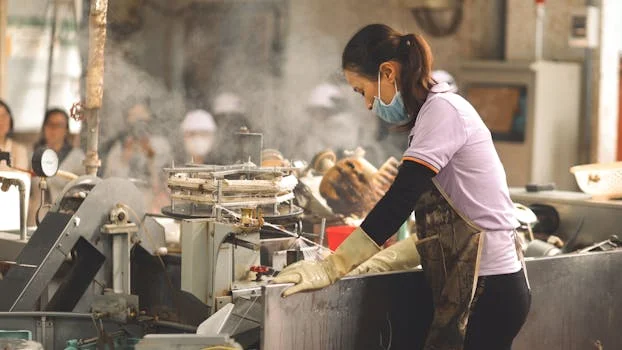
Recessed chamber filter presses have largely superseded plate and frame designs in modern municipal and high-volume industrial applications. Unlike the plate-and-frame design, recessed plates combine the plate and frame into a single piece with a concave center. When clamped together, these recesses form the chamber where the cake accumulates.
Engineering Advantages: Recessed chamber presses typically handle higher pressures (up to 15 bar) than standard plate frame units. Because the feed hole is located in the center of the plate rather than a corner, they are far less prone to clogging and can handle thicker slurries. This design also facilitates the use of membrane plates, which allow for a "squeeze" cycle after the initial pump-fill, further reducing moisture by 5-10%.
Performance Benchmarks:
- Cake Dryness: 35–45% for municipal sludge; 45–55% for industrial mining or chemical tailings.
- Automation: Most 2025 models include automatic plate shifters and vibrating cake release mechanisms.
- Maintenance: While CAPEX is 20-30% higher than plate frame units, the lack of separate frames simplifies the mechanical assembly.
Recessed chamber presses are the preferred choice for operations where sedimentation tanks improve sludge dewatering performance by providing a consistent 3-5% solids feed.
Belt Presses vs Filter Presses: When Continuous Operation Outweighs Cake Dryness
The primary differentiator for the belt press is its continuous operation. Filter presses run batch cycles, while a belt press takes a constant sludge stream and cuts the need for large buffer tanks. Detailed belt filter press cost ranges help separate CAPEX from polymer and disposal OPEX at high flow and modest dryness targets.
Mechanism: sludge is fed onto a moving porous belt where gravity drainage removes the initial water. It is then sandwiched between two belts and passed through a series of rollers of decreasing diameter. This "squeeze" removes water through a combination of tension and shear.
| Feature | Belt Filter Press | Recessed Filter Press |
|---|---|---|
| Operation Mode | Continuous | Batch |
| Typical Cake Dryness | 18–25% | 35–50% |
| Polymer Demand | High (3–8 kg/ton) | Moderate (2–5 kg/ton) |
| CAPEX (50 m³/h) | $85K – $150K | $150K – $250K |
| OPEX (Disposal) | High (Wetter cake) | Low (Drier cake) |
When to choose a belt press: They are ideal for high-volume, low-solids applications such as paper mills or textile plants where continuous flow is critical and disposal costs are secondary to throughput. When to avoid: If your disposal facility requires >25% solids or if you are incinerating the sludge, the energy required to evaporate the extra water in belt-press cake makes it economically unviable.
Centrifuges vs Filter Presses: High-Speed Dewatering for Space-Constrained Plants

Decanter centrifuges use high-speed rotation (1,500 to 3,500 RPM) to generate centrifugal forces thousands of times greater than gravity. This force separates solids from liquids instantaneously within a horizontal bowl.
Advantages over Filter Presses:
- Footprint: A centrifuge capable of 50 m³/h occupies roughly 25% of the floor space required for an equivalent filter press.
- Oily Sludge: Centrifuges excel at processing "sticky" or oily sludges (e.g., petrochemical or rendering plant waste) that would rapidly blind filter cloths.
- Containment: The enclosed design minimizes odors and aerosolized pathogens, a critical factor for urban WWTPs.
Limitations: Centrifuges are energy-intensive, consuming 0.5–1.5 kWh/m³ compared to 0.1–0.3 kWh/m³ for filter presses. They also struggle to match the cake dryness of a filter press, typically maxing out at 30-35% for industrial sludge. Maintenance costs are also higher due to the precision balancing required for the scroll and bowl.
Which wastewater pumps cut energy use?
Wastewater pumps cut energy use most when head, duty point, and solids handling match the sludge transfer and filtrate return loops around the dewatering train. Oversized constant-speed pumps on intermittent filter-press fill cycles waste power; VFD-driven progressive cavity or centrifugal slurry pumps sized to the actual fill curve usually lower kWh per cubic meter processed. Select seals and materials for grit and polymer, then verify NPSH at the lowest wet-well level.
DAF Systems as a Filter Press Alternative: When Flotation Beats Filtration
Dissolved Air Flotation (DAF) is often misunderstood as a direct competitor to the filter press. In reality, DAF is a thickening technology rather than a final dewatering technology. It is used to increase solids concentration from <1% to roughly 5-10%.
Mechanism: By injecting microbubbles (30–50 μm) into the sludge, solids are floated to the surface and skimmed off. This is particularly effective for light, greasy solids found in dairy, brewery, and meat processing wastewater. Using HydropureWater’s DAF systems for sludge thickening before a filter press can reduce the size of the required press by 50%, as the press handles a much more concentrated feed.
When to use DAF instead of a press: Use DAF when you only need to return thickened sludge to an anaerobic digester. Also choose DAF first when FOG levels would destroy filter cloths. In those cases DAF is the better primary stage.
What water treatment do UK data centres need?
UK data centres typically need makeup-water treatment, cooling blowdown control, and discharge permits aligned with Environment Agency abstraction and water-efficiency conditions, not a standalone sludge press as the first unit. Where cooling or process bleed creates oily or solids-bearing wastewater, DAF thickening plus a filter press can cut haulage volume after equalization. Abstraction licence limits often push plants toward reuse loops before they size dewatering hardware.
How Much Does a 2 Ton Filter Press Cost?
Small industrial plate frame packages in the roughly 2-ton-per-batch class often sit near the lower $80,000–$120,000 CAPEX band for manual units. Automation, membrane plates, and higher bar ratings can push the same frame size toward $150,000–$200,000. Published 2025 benchmarks for a 50 m³/h plate frame press remain $120K–$200K CAPEX with about $25K–$40K/year labor and chemical OPEX. Compare those figures with sludge press equipment cost drivers such as polymer dose, cake haulage, and cloth life.

Procurement teams must evaluate the Total Cost of Ownership (TCO) over a 10-year horizon. While a belt press has the lowest CAPEX, its high OPEX often makes it the most expensive option over time.
| Technology (50 m³/h) | CAPEX (2025 USD) | Annual OPEX (Labor/Chem) | Avg. Disposal Cost/Ton |
|---|---|---|---|
| Plate Frame Press | $120K – $200K | $25K – $40K | $1.85 |
| Recessed Chamber Press | $150K – $250K | $30K – $50K | $1.70 |
| Belt Press | $85K – $150K | $40K – $60K | $2.50 |
| Decanter Centrifuge | $100K – $220K | $50K – $80K | $2.10 |
ROI Calculation: To justify a recessed chamber press over a belt press, calculate the annual disposal savings. If the recessed press saves $47,000/year in hauling fees (due to drier cake) and the CAPEX difference is $100,000, the payback is 2.1 years. You can calculate your sludge dewatering ROI with our 2025 cost calculator to see how these variables apply to your local utility rates.
Compliance and Regulatory Considerations: How Sludge Dewatering Technology Affects Permitting
Regulatory frameworks still influence technology selection in the United States through EPA 40 CFR Part 503 for land application of biosolids. Earlier guidance used >35% cake solids as a practical handling threshold for Class A pathways.Drier filter-press cake still cuts downstream drying load even when no flat 35% rule applies.
In Europe, the EU Landfill Directive 1999/31/EC continues to restrict landfilling of liquid waste. Earlier industry summaries often cited >35% dryness as a common member-state landfill acceptance practice for sludge cake. Plants that must landfill therefore still favor recessed chamber presses with membrane squeezing when national permits demand high cake solids. Filter-press dryness also supports incineration fuel-value targets better than 18–25% belt-press cake.
In mining operations, the move toward "dry stack tailings" to prevent dam failures (as seen in recent disasters in South America) has made high-pressure recessed chamber presses the industry mandate. These units can reduce water content to 15%, ensuring structural stability of the waste pile. For more on local requirements, see how sludge dewatering fits into industrial wastewater treatment systems in your region.
Decision Framework: How to Choose the Right Sludge Dewatering Technology for Your Plant
Follow this step-by-step framework to narrow your selection:
- Define the Disposal Goal: If you are landfilling or incinerating, prioritize cake dryness (Filter Press). If you are land-applying liquid sludge, prioritize thickening (DAF).
- Analyze Sludge Characteristics: Is it oily? (Centrifuge). Is it high in fine silts? (Recessed Press). Is it high-volume municipal? (Belt Press or Centrifuge).
- Evaluate Space and Labor: Do you have a 24/7 operator? (Manual Plate Frame is okay). Do you have zero floor space? (Centrifuge).
- Calculate TCO: Don't look at the purchase price alone. Use the 2025 cost benchmarks to estimate polymer and disposal costs over 5 years.
- Pilot Testing: Never purchase a full-scale system without a pilot. Rent a mobile unit to verify actual cake dryness and polymer demand with your specific waste stream.
- Confirm Permit Solids: Match cake dryness to landfill, incineration, or Part 503 pathway requirements before freezing CAPEX.
- Check Upstream Consistency: Stabilize feed solids with clarification or DAF so the press or centrifuge sees a narrow solids band.
| If your priority is... | Recommended Technology |
|---|---|
| Maximum Cake Dryness | Recessed Chamber Filter Press |
| Lowest CAPEX | Belt Filter Press |
| Smallest Footprint | Decanter Centrifuge |
| FOG/Oil Removal | DAF System |
Who this is for: EPC engineers, plant managers, and procurement teams comparing batch filter presses with belt presses or centrifuges. Who should look elsewhere: Buyers seeking only potable demineralization skids or pump packages without a solids disposal problem. Next step: Share sludge solids, polymer dose, and disposal gate fees for a sized press or DAF-plus-press quote.
Frequently Asked Questions
What’s the difference between a plate frame filter press and a recessed chamber filter press?
Plate frame presses use separate flush plates and frames to form chambers, making them flexible but labor-intensive. Recessed chamber presses use a single-piece plate with a built-in recess, allowing for higher pressures (15 bar), better automation, and 10–20% drier cake (35–45% vs 30–40% dryness). Most high-volume industrial upgrades now specify recessed plates with optional membrane squeeze for the final moisture cut.
How much does a plate frame filter press cost in 2025?
CAPEX ranges from $80,000 for a small manual unit to over $300,000 for large-scale, fully automated industrial systems. OPEX typically runs between $25,000 and $40,000 annually for a 50 m³/h system, primarily driven by polymer and maintenance labor. Local disposal fees and cloth life often move 10-year TCO more than the initial equipment invoice.
What’s the best sludge dewatering technology for a small food processing plant?
For plants processing <20 m³/h, a combination of a DAF system for FOG removal followed by a recessed chamber filter press is ideal. This ensures the oil doesn't blind the filter cloths while achieving the 40%+ dryness required for economical disposal. Pilot the polymer package on real FOG sludge before freezing plate count and chamber depth.
Can a belt press replace a filter press?
Only if your disposal requirements are lenient. A belt press is cheaper upfront but will produce a wetter cake (18-25% solids). If your landfill requires >30% solids, a belt press will fail to meet compliance without secondary drying. Continuous duty helps hydraulic peaks, yet incineration or long-haul landfill economics usually favor the drier filter-press cake.
What’s the most energy-efficient sludge dewatering technology?
Filter presses are the most energy-efficient, consuming only 0.1–0.3 kWh/m³ because they rely on hydraulic pressure rather than high-speed rotation (centrifuges) or constant motor drive (belt presses). Include polymer make-down and cake conveying power when you compare site energy intensity across technologies.