High-efficiency sedimentation tanks—including lamella clarifiers, microsand settling tanks, and high-rate clarifiers—achieve TSS removal rates of 90–98% and COD reduction of 60–85%, outperforming conventional tanks by 3–4x in surface loading rates (20–40 m/h vs. 5–10 m/h). For industrial applications, lamella clarifiers reduce footprint by 70% and chemical consumption by 30%, while microsand systems excel in high-turbidity influent (up to 3,000 mg/L). Costs range from $50,000 to $500,000 depending on capacity and technology, with ROI typically achieved in 2–5 years through reduced sludge disposal and chemical costs.
Why Industrial Facilities Are Replacing Conventional Sedimentation Tanks
Conventional horizontal flow sedimentation tanks often fail to meet modern industrial throughput requirements due to their limited surface loading rates of 5–10 m/h. This inefficiency forces facilities to maintain massive footprints, often exceeding 500 square meters for moderate flow rates, which is increasingly untenable in land-constrained industrial zones. A textile factory in Bangladesh recently demonstrated the impact of upgrading, where replacing a conventional primary settler with a high-efficiency HydropureWater lamella clarifier for industrial wastewater treatment resulted in a 40% reduction in annual sludge disposal costs and a 70% reduction in occupied space.
Regulatory pressure is the primary driver for this shift. Under the EPA’s National Pollutant Discharge Elimination System (NPDES), industrial effluent limits for Total Suspended Solids (TSS) are frequently set below 30 mg/L. Conventional tanks, which typically achieve only 60–80% TSS removal, often require extensive secondary polishing to hit these targets. the EU Industrial Emissions Directive 2010/75/EU mandates stricter water reuse protocols, requiring primary treatment systems to deliver higher quality influent to downstream membranes or biological stages.
Operational pain points also plague older systems. Conventional tanks are prone to frequent sludge buildup and "short-circuiting," where influent bypasses the settling zone, leading to inconsistent effluent quality. Cleaning these large basins often requires 48–72 hours of downtime, disrupting production cycles. High-efficiency systems address these issues through automated desludging and optimized hydraulic designs that ensure consistent performance even during peak flow events.
High-Efficiency Sedimentation Tank Technologies: How They Work and Where They Excel
High-efficiency sedimentation relies on increasing the effective settling area or utilizing ballast to accelerate particle downward velocity. Understanding the mechanical differences between the three primary technologies is essential for selecting the correct system for a specific industrial waste stream.
Lamella Clarifiers: These systems utilize a series of inclined plates (typically at 55–60 degrees) to divide the tank volume into multiple shallow settling layers. This design increases the settling area by up to 10 times the physical footprint of the tank. As water flows upward through the plates, solids settle onto the plate surfaces and slide down into a collection hopper. This technology is ideal for metal finishing, mining, and food processing where space is limited and solids are relatively uniform.
Microsand Settling Tanks (Ballasted Flocculation): These tanks use "carrier flocculation" technology, where fine sand (microsand) is added during the coagulation stage. The sand acts as a seed for floc formation, creating dense, heavy particles that settle at rates up to 60–80 m/h. This allows the system to handle extreme turbidity spikes (up to 3,000 mg/L TSS) and is widely used in municipal drinking water and high-load industrial wastewater applications.
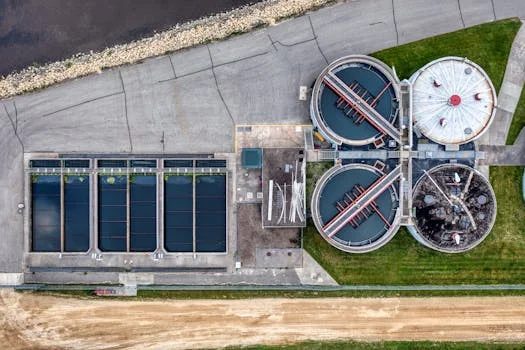
High-Rate Clarifiers: Often circular in design, these units feature integrated flocculation zones and cone-shaped bottoms for rapid sludge evacuation. Some advanced designs, such as those utilized in large-scale municipal and petrochemical plants, offer flow rates 4x faster than conventional clarifiers by utilizing internal sludge recirculation to enhance floc contact and density.
| Feature | Lamella Clarifier | Microsand Tank | High-Rate Clarifier |
|---|---|---|---|
| Primary Mechanism | Inclined Plate Separation | Carrier (Sand) Flocculation | Sludge Recirculation/Cone Bottom |
| Surface Loading Rate | 15–30 m/h | 40–80 m/h | 20–40 m/h |
| Influent TSS Limit | < 1,000 mg/L | < 3,000 mg/L | < 1,500 mg/L |
| Ideal Application | Metal finishing, Chemical plants | Surface water, High-turbidity waste | Municipal sewage, Large industrial |
Performance Benchmarks: TSS, COD, and BOD Removal Rates by Tank Type
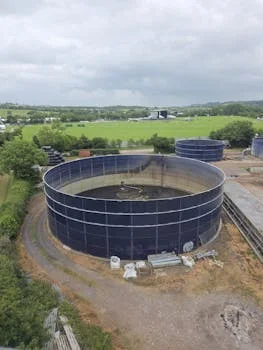
Performance in industrial sedimentation is measured by the reduction of Total Suspended Solids (TSS) and the associated Chemical Oxygen Demand (COD). According to EPA 2024 benchmarks for industrial wastewater treatment, high-efficiency systems significantly outperform conventional gravity settlers in all key metrics. Microsand systems typically lead in TSS removal due to the high density of the ballasted flocs, while lamella clarifiers offer the most consistent performance for medium-load organic wastes.
COD removal in these tanks is primarily achieved through the removal of particulate-associated organic matter. While soluble COD remains in the effluent, high-efficiency tanks can reduce total COD by 60–85% depending on the ratio of particulate to soluble organics. In the pulp and paper industry, for instance, a microsand system can reduce influent COD from 2,000 mg/L to under 500 mg/L in a single stage, significantly reducing the load on downstream aerobic treatment (HydropureWater field data, 2025).
| Metric | Lamella Clarifier | Microsand Tank | High-Rate Clarifier |
|---|---|---|---|
| TSS Removal Rate | 90–95% | 95–98% | 85–92% |
| COD Removal Rate | 60–75% | 70–85% | 55–70% |
| BOD Removal Rate | 50–65% | 60–75% | 45–60% |
| Footprint Reduction | 70% | 85% | 50% |
| Chemical Savings | 20–30% | 30–40% | 15–25% |
Footprint reduction is another critical benchmark. A lamella clarifier handling 100 m³/h typically requires only 15–20 m² of floor space, whereas a conventional clarifier would require over 60 m². This 70% space saving allows industrial plants to expand capacity within existing building footprints, avoiding costly civil engineering projects.
Cost Breakdown: Capital, Operating, and ROI for Industrial Sedimentation Tanks
Budgeting for a high-efficiency sedimentation tank requires a balance between initial Capital Expenditure (CapEx) and long-term Operational Expenditure (OpEx). While high-efficiency units have a higher purchase price than simple gravity tanks, the reduction in chemical use and sludge handling costs typically leads to a rapid Return on Investment (ROI).
CapEx varies based on material of construction; stainless steel (SS304/SS316) is standard for corrosive industrial wastewater, while epoxy-coated carbon steel is used for less aggressive applications. A 100 m³/h lamella clarifier in SS304 typically costs between $120,000 and $180,000. Microsand systems are more expensive ($180,000–$250,000) due to the addition of sand hydrocyclones and specialized mixing equipment. To manage the resulting solids effectively, engineers should compare sludge dewatering machines to handle sedimentation tank output to ensure the entire solids train is cost-optimized.
| Cost Factor | Lamella Clarifier | Microsand Tank | High-Rate Clarifier |
|---|---|---|---|
| CapEx (100 m³/h) | $50k – $200k | $80k – $300k | $100k – $500k |
| Energy Use | Low (Gravity-driven) | High (Mixers/Cyclones) | Medium (Recirculation) |
| Chemical Dosing | Medium | Low (Ballast help) | Medium-High |
| Sludge Disposal | Reduced 30% | Reduced 50% | Reduced 20% |
ROI Calculation Example: An automotive parts manufacturer processing 50 m³/h of oily wastewater switched to a lamella system. By reducing coagulant consumption by 25% ($12,000/year savings) and decreasing sludge volume by 40% ($28,000/year savings in haulage), the $140,000 investment achieved full ROI in 3.5 years. Hidden costs to consider include the periodic replacement of inclined plates (every 10–15 years) and the cost of sand makeup in ballasted systems (approximately 2–5% sand loss per year).
Choosing the Right Sedimentation Tank: Decision Framework for Industrial Applications
Selecting the best high efficiency sedimentation tank for industrial use requires a systematic evaluation of influent characteristics and site constraints. Engineers should follow this five-step framework to ensure the selected technology aligns with long-term operational goals.
- Step 1: Characterize the Influent. If TSS is consistently above 1,000 mg/L or subject to sudden spikes, a microsand ballasted system is preferred. For steady flows with TSS < 500 mg/L, a lamella clarifier is more cost-effective.
- Step 2: Define Effluent Requirements. Learn how sedimentation tanks fit into primary vs. secondary wastewater treatment to determine if the tank is the final step or a pre-treatment for membranes. If the goal is water reuse (TSS < 5 mg/L), a lamella clarifier must be paired with a polishing filter.
- Step 3: Evaluate Space Constraints. In indoor installations or crowded factory floors, the 70–85% footprint reduction of lamella or microsand systems is usually the deciding factor over circular high-rate clarifiers.
- Step 4: Analyze Chemical Sensitivity. If the wastewater has high chemical variability (e.g., varying pH or surfactant levels), ballasted flocculation (microsand) provides a more robust physical barrier against floc shear than plate-based systems.
- Step 5: Assess Maintenance Capability. Lamella clarifiers are mechanically simpler with fewer moving parts, making them ideal for facilities with limited specialized maintenance staff.
Decision Logic: If (Space = Limited) AND (TSS > 1,000 mg/L), Choose Microsand. If (Space = Limited) AND (Budget = Priority), Choose Lamella. If (Flow > 1,000 m³/h) AND (Land = Available), Choose High-Rate Circular Clarifier.
Operational Challenges and Troubleshooting Tips for High-Efficiency Sedimentation Tanks
Even the most advanced sedimentation tanks face operational hurdles, most commonly related to chemical dosing imbalances or hydraulic overloading. Sludge buildup is the most frequent failure mode, often caused by inadequate desludging frequency or a failure in the sludge recirculation pump. In lamella systems, this can lead to "clogging" of the inclined plates, which causes water to channel through a small section of the tank, drastically reducing efficiency.
Poor flocculation is often a symptom of incorrect pH or improper mixing energy. Industrial engineers should utilize PLC-controlled chemical dosing systems for sedimentation tank optimization to ensure that coagulant and flocculant dosages adjust in real-time to influent flow and turbidity. Jar testing should be performed weekly to account for changes in production chemicals that may interfere with settling.
| Issue | Probable Cause | Engineering Solution |
|---|---|---|
| Short-Circuiting | Uneven inlet distribution | Install/Adjust perforated baffles |
| Floc Carryover | Excessive surface loading | Reduce flow or increase polymer dose |
| Sludge Fermentation | Retention time too high | Increase desludging pump frequency |
| Plate Scaling | Calcium/Mineral buildup | Implement routine acid wash or vibration |
Maintenance for lamella clarifiers should include a quarterly inspection of the inclined plates for biofouling or scaling. For microsand systems, the hydrocyclone must be checked monthly for wear, as abrasive sand can erode internal surfaces over time. Ensuring even flow distribution at the inlet is the single most effective way to prevent "dead zones" and maximize the TSS removal potential of any high-efficiency tank.
Frequently Asked Questions
What is the ideal sedimentation tank for high-turbidity industrial wastewater?
Microsand settling tanks (ballasted flocculation) are the ideal choice for high-turbidity influent exceeding 1,000 mg/L TSS. The use of microsand as a ballast allows the system to maintain high settling velocities (60–80 m/h) even when solids concentrations spike, which would overwhelm lamella or conventional tanks.
What are the disadvantages of high-efficiency sedimentation tanks?
The primary disadvantages are higher initial capital costs and a greater sensitivity to influent chemistry changes. Unlike large conventional basins that provide significant hydraulic buffering, high-efficiency tanks have shorter retention times, meaning any error in chemical dosing can lead to rapid effluent quality degradation.
How can I increase the efficiency of an existing sedimentation tank?
Efficiency can be increased by installing lamella plate packs into existing basins to increase settling area, or by upgrading to an automated chemical dosing system that uses real-time turbidity feedback. Optimizing the G-value (mixing energy) in the flocculation zone can also improve floc density and settling speed.
Can high-efficiency sedimentation tanks handle oily wastewater?
Yes, but they typically require pre-treatment. Free oil and grease (FOG) should be removed via a Dissolved Air Flotation (DAF) system or an oil-water separator before entering a sedimentation tank. If oil is not removed, it can coat the lamella plates or sand particles, preventing solids from settling and causing "floaters" in the effluent.
What is the typical lifespan of a high-efficiency sedimentation tank?
With proper maintenance, these systems last 15–25 years. Stainless steel units offer the longest lifespan (20–25 years) in industrial environments. The internal components, such as lamella plates (PVC or PP) or sand pumps, typically require replacement or refurbishment every 7–10 years.