Industrial wastewater treatment in Dallas requires compliance with the City of Dallas Pretreatment Program, which enforces limits of 250 mg/L TSS, 250 mg/L BOD₅, and 10 mg/L oil & grease for industrial discharges (per Dallas Water Utilities 2024). With Dallas’ high mineral content (300–500 mg/L hardness) and summer temperatures exceeding 100°F, biological systems like MBR face reduced efficiency, while physical-chemical systems like DAF achieve 92–97% TSS removal. Costs range from $0.85/m³ (chemical dosing) to $4.20/m³ (MBR), with payback periods of 3–7 years depending on industry and flow rate.
Why Dallas’ Water Quality Makes Industrial Wastewater Treatment Harder
Dallas’ raw water possesses a high mineral content, typically ranging from 300–500 mg/L hardness, which significantly exceeds the national average of 120 mg/L (per EABM 2024 data). This elevated hardness increases the risk of scaling in critical equipment such as membranes within MBR systems and heat exchangers, leading to reduced efficiency and higher maintenance demands. During Dallas’ summer months, air temperatures frequently surpass 100°F, contributing to higher wastewater temperatures that reduce dissolved oxygen levels to below 4 mg/L. This oxygen depletion severely limits the efficiency of aerobic biological treatment processes; for instance, MBR systems can experience a 15–20% lower BOD removal rate in July and August due to these conditions.
Beyond treatment efficiency, the high mineral content in Dallas’ water accelerates biofilm growth in cooling towers and exacerbates corrosion in metal piping, which collectively increases maintenance costs for industrial facilities by an estimated 22–35% (EABM case study). These factors dictate specific considerations for selecting industrial wastewater treatment equipment:
- Dissolved Air Flotation (DAF) systems are generally more tolerant of high mineral content and suspended solids, making them robust for Dallas’ water quality, especially when effectively managing pH for optimal flocculation.
- Membrane Bioreactor (MBR) systems, while highly efficient, are sensitive to both high hardness (requiring pre-treatment like softening or anti-scalants to prevent membrane fouling) and reduced dissolved oxygen levels from summer heat, which can compromise biological activity and BOD removal.
- Chemical dosing systems, often used for coagulation and precipitation, can face increased chemical consumption and scaling risks when dealing with high-hardness water, necessitating careful chemical selection and system design.
| Parameter | Dallas Typical (EABM 2024) | National Average (EPA) | Impact on Treatment Systems in Dallas |
|---|---|---|---|
| Hardness | 300–500 mg/L | 120 mg/L | Increased scaling in membranes (MBR), heat exchangers; higher chemical dosing for softening. |
| Summer Water Temp | >90°F (from >100°F air temp) | ~75°F | Reduced dissolved oxygen (<4 mg/L); 15–20% lower BOD removal in MBR systems. |
| Mineral Content (TDS) | High (Ca, Mg, SO₄) | Moderate | Accelerated biofilm growth, increased corrosion (22–35% higher maintenance costs). |
| Raw Water pH | 7.8–8.2 | 7.0–8.0 | Requires pH adjustment for optimal flocculation in DAF, chemical coagulation. |
Dallas’ Industrial Wastewater Compliance: Pretreatment Limits, Permits, and Penalties
The City of Dallas Pretreatment Program mandates stringent categorical limits for industrial discharges into the municipal sewer system, as outlined in 40 CFR Part 403. Key parameters include maximum concentrations of 250 mg/L for Total Suspended Solids (TSS), 250 mg/L for Biochemical Oxygen Demand (BOD₅), and 10 mg/L for oil & grease, along with a pH range of 6.0–9.0 (Dallas Water Utilities 2024). These limits are critical for protecting the municipal wastewater treatment infrastructure, such as the Dallas Southside Wastewater Treatment Plant, and ensuring the quality of effluent discharged into local waterways.
In addition to federal categorical standards, Dallas enforces specific local limits tailored to regional environmental concerns and the capacity of its treatment facilities. These include a 5 mg/L phosphorus limit, particularly relevant for food processing plants, a 0.5 mg/L cyanide limit for industries like metal finishing, and a 100 mg/L Chemical Oxygen Demand (COD) limit for textile manufacturing. Compliance is enforced through a permit process for new industrial users, which typically takes 30–60 days to complete and involves an application fee ranging from $1,200–$3,500 (2024 rates). Permitted facilities are subject to quarterly sampling, either through self-monitoring or city audits, to ensure ongoing adherence to discharge limits.
Non-compliance carries significant financial and operational repercussions. Penalties for violations range from $500–$25,000 per incident, with repeat offenders facing mandatory system upgrades imposed by Dallas Water Utilities (2023 enforcement data). Common violations observed in Dallas industrial facilities include pH excursions, frequently encountered by chemical manufacturers due to inadequate neutralization; FOG exceedances, a prevalent issue in food processing plants due to insufficient grease removal; and heavy metal discharges, often originating from metalworking and electroplating operations without proper precipitation and filtration.
| Parameter | Dallas Pretreatment Limit (Dallas Water Utilities 2024) | Common Violating Industries in Dallas | Typical Impact of Exceedance |
|---|---|---|---|
| Total Suspended Solids (TSS) | 250 mg/L | Food Processing, Metal Finishing, Textile | Sewer line blockages, increased sludge volume at municipal plant. |
| Biochemical Oxygen Demand (BOD₅) | 250 mg/L | Food Processing, Pharmaceutical, Chemical Manufacturing | Overload on municipal biological treatment, oxygen depletion. |
| Oil & Grease (FOG) | 10 mg/L | Food Processing, Restaurants, Automotive | Sewer system blockages, municipal plant operational interference. |
| pH | 6.0–9.0 | Chemical Manufacturing, Metal Finishing | Corrosion of infrastructure, disruption of biological processes. |
| Phosphorus (Local Limit) | 5 mg/L | Food Processing, Fertilizer Manufacturing | Eutrophication potential in receiving waters. |
| Cyanide (Local Limit) | 0.5 mg/L | Metal Finishing, Electroplating | Toxicity to biological treatment, environmental hazard. |
| Chemical Oxygen Demand (COD) | 100 mg/L (for textile industry) | Textile Manufacturing, Complex Chemical Plants | High organic load, potential for difficult-to-treat compounds. |
How to Choose the Right Industrial Wastewater Treatment System for Dallas
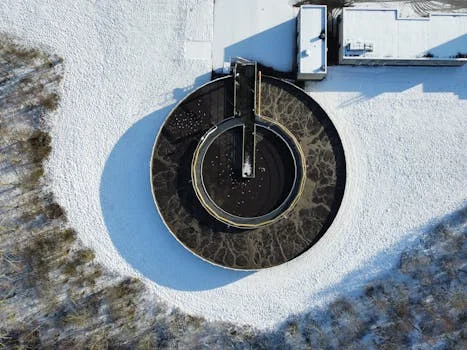
Selecting the optimal industrial wastewater treatment system in Dallas requires a systematic decision framework that considers industry-specific contaminants, flow characteristics, local water quality, space constraints, and budget. This approach ensures compliance and operational efficiency.
- Step 1: Identify Industry-Specific Contaminants. The first step is to characterize your wastewater's unique composition. For example, food processing plants typically contend with high levels of FOG (fats, oils, and grease) and BOD, whereas metalworking facilities must manage heavy metals like chromium and nickel. Petrochemical operations often deal with significant oil & grease and complex organic compounds. Understanding these primary contaminants guides the initial technology screening.
- Step 2: Evaluate Flow Rate and Variability. The volume and consistency of your wastewater flow dictate system sizing and operational flexibility. Dissolved Air Flotation (DAF) systems, such as the DAF system for Dallas industrial wastewater, are well-suited for high-flow, consistent loads ranging from 100–300 m³/h, providing effective removal of suspended solids and FOG. Conversely, Membrane Bioreactor (MBR) systems are generally more appropriate for lower-flow, variable loads (10–50 m³/h), offering superior effluent quality for sensitive applications.
- Step 3: Account for Dallas Water Quality Impact. Dallas’ unique water chemistry significantly influences system performance. MBR systems, while effective, require specific pre-treatment for hardness (e.g., softening or anti-scalants) to prevent membrane fouling due to Dallas’ high mineral content. DAF systems, by contrast, are more tolerant of high TSS loads (up to 5,000 mg/L) but may require precise pH adjustment (Dallas raw water pH is typically 7.8–8.2) for optimal flocculation.
- Step 4: Consider Space Constraints. The physical footprint of a treatment system is often a critical factor. MBR systems offer a significantly smaller footprint, up to 60% less than conventional activated sludge systems, making them ideal for facilities with limited space. However, due to Dallas’ intense summer heat, MBR systems often require indoor installation or robust cooling to maintain optimal biological activity and prevent efficiency reduction. DAF systems generally have a larger footprint but can often be installed outdoors.
- Step 5: Assess Budget (CAPEX and OPEX). Financial considerations are paramount. Initial Capital Expenditure (CAPEX) for a DAF system typically ranges from $50,000–$500,000, while an MBR system can cost $200,000–$1.2M. Operational Expenditure (OPEX) for DAF systems is generally $0.85–$1.50/m³, whereas MBR systems incur higher OPEX at $2.50–$4.20/m³, primarily due to energy for aeration and membrane cleaning. Chemical dosing systems typically have the lowest CAPEX and moderate OPEX.
By systematically evaluating these factors, industrial facilities in Dallas can select a treatment solution that not only meets stringent compliance requirements but also aligns with operational and financial objectives.
| Selection Factor | Key Consideration for Dallas Industries | Recommended Technology(ies) |
|---|---|---|
| Primary Contaminants | High FOG, BOD, TSS (Food Processing); Heavy Metals (Metalworking); Complex Organics (Pharmaceutical) | DAF (FOG, TSS); MBR (BOD, TSS, organics); Chemical Dosing (Metals, specific chemicals) |
| Flow Rate & Variability | High-flow, consistent (100–300 m³/h); Low-flow, variable (10–50 m³/h) | DAF (High flow); MBR (Low flow, variable); Chemical Dosing (Variable, targeted) |
| Dallas Water Quality | High hardness (300–500 mg/L); Summer heat (>100°F affecting DO) | DAF (Tolerant to minerals, less heat-sensitive); MBR (Requires pre-treatment for hardness, sensitive to heat/low DO) |
| Space Constraints | Limited footprint vs. outdoor installation feasibility | MBR (Smaller footprint, often indoor); DAF (Larger footprint, can be outdoor) |
| Budget (CAPEX/OPEX) | Initial investment vs. ongoing operational costs and ROI | Chemical Dosing (Lowest CAPEX); DAF (Mid-range CAPEX/OPEX); MBR (Highest CAPEX/OPEX) |
DAF vs. MBR vs. Chemical Dosing: Cost, Efficiency, and Compliance for Dallas Industries
Comparing Dissolved Air Flotation (DAF), Membrane Bioreactor (MBR), and chemical dosing systems provides a clear understanding of their respective strengths in meeting Dallas’ industrial wastewater treatment demands. Each technology offers distinct removal efficiencies, operational profiles, and cost implications, especially when considering Dallas’ unique environmental conditions.
Based on EPA 2024 benchmarks, DAF systems typically achieve 92–97% TSS removal and 60–80% BOD removal, making them highly effective for separating suspended solids, fats, oils, and grease. MBR systems, such as an integrated MBR system for Dallas pharmaceutical and hospital wastewater, offer superior performance, reaching 99% TSS removal and 95% BOD removal, along with significant pathogen reduction. Chemical dosing systems, including a PLC-controlled chemical dosing for Dallas metal finishing and textile wastewater, typically achieve 70–90% TSS removal and 50–70% BOD removal, with high efficiency for specific contaminants like heavy metals.
Dallas’ specific challenges impact these technologies differently. MBR systems, reliant on biological activity, struggle with low dissolved oxygen (DO) levels during summer months when water temperatures rise due to ambient heat exceeding 100°F; this can reduce BOD removal efficiency to 80–85%. Dallas' high hardness necessitates pre-treatment for MBR systems to prevent membrane fouling. DAF systems, while robust for TSS, require precise pH adjustment for optimal flocculation, given Dallas’ raw water pH typically ranges from 7.8–8.2. Chemical dosing systems can also experience scaling issues with high mineral content and frequently need post-treatment pH correction to meet discharge limits.
Capital Expenditure (CAPEX) varies significantly: DAF systems generally cost $50–$200 per m³/h capacity, MBR systems range from $150–$400 per m³/h, and chemical dosing systems are the most economical at $20–$80 per m³/h. Operational Expenditure (OPEX) follows a similar trend: DAF is $0.85–$1.50/m³, chemical dosing is $1.20–$2.00/m³, and MBR is the highest at $2.50–$4.20/m³, largely due to energy consumption for aeration and membrane maintenance.
In terms of compliance performance, MBR systems consistently meet all Dallas pretreatment limits, including phosphorus, often making them suitable for industries requiring high-purity effluent. DAF systems effectively address TSS and FOG but may require post-treatment steps for BOD or dissolved contaminants to fully comply. Chemical dosing systems are excellent for targeted contaminant removal (e.g., heavy metals) but often need further treatment for overall BOD and TSS reduction, as well as pH correction, to meet Dallas' stringent requirements.
Industry fit is a critical differentiator. DAF systems are widely adopted in food processing, pulp & paper, and meat processing due to their efficiency in removing FOG and suspended solids. MBR systems are preferred for pharmaceuticals, hospitals, and facilities requiring high-quality effluent for reuse, given their superior biological and pathogen removal capabilities. Chemical dosing systems are commonly employed in metal finishing, textiles, and other industries where specific chemical precipitation or pH neutralization is the primary treatment goal.
| Feature | DAF System | MBR System | Chemical Dosing System |
|---|---|---|---|
| Removal Efficiency (Benchmark) | TSS: 92–97%, BOD: 60–80%, FOG: 90–99% | TSS: 99%, BOD: 95%, Pathogens: >99.9% | TSS: 70–90%, BOD: 50–70%, Metals: 80–99% |
| Dallas-Specific Challenges | Requires pH adjustment (Dallas pH 7.8–8.2) for optimal flocculation. | Low DO in summer (>100°F) reduces BOD removal to 80–85%. High hardness requires pre-treatment. | Scaling risk with high mineral content. Often needs pH correction. |
| CAPEX ($/m³/h capacity) | $50–$200 | $150–$400 | $20–$80 |
| OPEX ($/m³ treated) | $0.85–$1.50 (energy, chemicals, sludge) | $2.50–$4.20 (energy, membranes, sludge, pre-treatment) | $1.20–$2.00 (chemicals, energy, sludge) |
| Compliance Performance | Meets TSS, FOG. May require post-treatment for BOD/Phosphorus. | Consistently meets all Dallas limits (including phosphorus) post-treatment. | Meets specific metal limits. Often needs further treatment for BOD/TSS, pH correction. |
| Industry Fit | Food Processing, Pulp & Paper, Meat Processing | Pharmaceuticals, Hospitals, Municipal, High-purity reuse | Metal Finishing, Textiles, Chemical Manufacturing |
Real-World Costs: Industrial Wastewater Treatment in Dallas (2025 Data)

The Capital Expenditure (CAPEX) for industrial wastewater treatment systems in Dallas varies significantly by technology and capacity. For DAF systems, the cost typically ranges from $50–$200 per m³/h of capacity. A mid-sized 100 m³/h DAF system, for example, would cost approximately $50,000–$200,000 for the core equipment. MBR systems, due to their advanced membrane technology, have a higher CAPEX of $150–$400 per m³/h. Chemical dosing systems, often simpler in design, represent the lowest initial investment at $20–$80 per m³/h.
Operational Expenditure (OPEX) is a critical long-term consideration, calculated per cubic meter of treated water. DAF systems typically incur OPEX of $0.85–$1.50/m³, which includes energy for pumps, chemical coagulants/flocculants, labor, and sludge handling. MBR systems have the highest OPEX at $2.50–$4.20/m³, primarily driven by higher energy consumption for aeration, membrane cleaning, and the cost of membrane replacement. Chemical dosing systems fall in the middle at $1.20–$2.00/m³, with chemical consumption being a major factor.
The payback period for these investments is influenced by avoided penalties and operational savings. DAF systems typically offer a payback period of 2–4 years, while MBR systems, with higher CAPEX, generally take 5–7 years. Chemical dosing systems often have the shortest payback of 1–3 years. These calculations assume an average of $50,000/year in avoided penalties under the Dallas Pretreatment Program for facilities that previously struggled with compliance. For instance, a 50 m³/h food processing plant investing in a DAF system at a CAPEX of $75,000 could save an estimated $35,000/year in fines and surcharges, leading to a payback period of just 2.1 years.
Beyond direct equipment and operational costs, several hidden costs must be factored into the total cost of ownership for industrial wastewater treatment in Dallas. These include pre-treatment requirements (e.g., softening for MBR systems to mitigate Dallas’ high hardness), sludge disposal costs (typically $0.15–$0.30/kg), and recurring permit fees ($1,200–$3,500/year) mandated by Dallas Water Utilities.
| Cost Category | DAF System (100 m³/h capacity) | MBR System (50 m³/h capacity) | Chemical Dosing (100 m³/h capacity) |
|---|---|---|---|
| CAPEX (Equipment Only) | $50,000–$200,000 | $200,000–$600,000 | $20,000–$80,000 |
| OPEX (per m³ treated) | $0.85–$1.50 (energy, chemicals, sludge, labor) | $2.50–$4.20 (energy, membranes, sludge, pre-treatment, labor) | $1.20–$2.00 (chemicals, energy, sludge, labor) |
| Typical Payback Period | 2–4 years | 5–7 years | 1–3 years |
| Sludge Disposal Cost | ~$0.15–$0.30/kg | ~$0.15–$0.30/kg | ~$0.15–$0.30/kg |
| Annual Permit Fees | $1,200–$3,500/year | $1,200–$3,500/year | $1,200–$3,500/year |
| Example ROI (50 m³/h Food Processing) | $75,000 CAPEX, $35,000/year savings = 2.1 years | (Not ideal for high FOG) | (May not meet all FOG/BOD limits) |
Frequently Asked Questions
What are the three types of industrial wastewater treatment?
Industrial wastewater treatment typically involves three stages: primary treatment (physical processes like screening, sedimentation, and flotation to remove large solids and FOG); secondary treatment (biological processes that use microorganisms to break down dissolved organic matter like BOD); and tertiary treatment (advanced chemical or physical processes such as filtration, disinfection, or nutrient removal for specific contaminants). Dallas industries commonly require secondary or tertiary treatment to meet stringent pretreatment limits. To understand more, you can understand the difference between primary and secondary treatment for Dallas compliance.
Is only 27% of industrial wastewater safely treated?
Globally, it is estimated that only 27% of industrial wastewater is safely treated (UN 2023). However, in Dallas, the industrial pretreatment program for permitted facilities achieves >95% compliance. Instances of non-compliance in Dallas are usually attributable to a lack of adequate pre-treatment systems, equipment failure, or operational oversight rather than a systemic failure of regulation.
How much does a DAF system cost for a Dallas food processing plant?
A DAF system for a Dallas food processing plant typically costs between $80,000–$250,000 for systems handling 50–200 m³/h. Operational costs (OPEX) range from $1.00–$1.80/m³, encompassing chemicals, energy, and sludge disposal. Facilities experiencing frequent FOG exceedances often see a payback period of 2–4 years due to significant savings in avoided penalties and surcharges. You can learn more about DAF systems for U.S. industrial wastewater compliance.
What happens if my Dallas facility fails a pretreatment inspection?
If your Dallas facility fails a pretreatment inspection, a first violation typically results in a fine of $500–$5,000, accompanied by a mandatory corrective action plan. For repeat violations, penalties escalate significantly, ranging from $10,000–$25,000 per violation, and often lead to mandatory system upgrades as enforced by Dallas Water Utilities (2024 enforcement data).
Can I use a package wastewater treatment plant for my Dallas industrial facility?
Yes, package wastewater treatment plants can be considered for Dallas industrial facilities, but they are generally only suitable for small flows, typically less than 50 m³/h. For larger industrial operations or those with complex waste streams, custom-engineered systems like DAF or MBR are usually necessary to effectively meet Dallas’ stringent categorical discharge limits and specific industry requirements.
Further Reading
Explore these in-depth articles on related wastewater treatment topics: