Why Knoxville Chemical Factories Are Re-Evaluating Primary Treatment in 2026
Knoxville Utilities Board enforces industrial pretreatment limits that most chemical plants cannot meet with a single clarifier, and the local enforcement posture in 2026 has tightened around slug-control and Significant Industrial User (SIU) sampling. Typical KUB/KPDES local limits are oil & grease 100 mg/L, TSS 250 mg/L daily maximum (50 mg/L monthly average for SIUs), pH 6.0–9.0, plus metals including Cu, Ni, Zn, and Pb — these values should be confirmed against the facility's current KUB SIU permit before any design is locked. At the federal level, 40 CFR Part 414 (the Organic Chemicals, Plastics and Synthetic Fibers — OCPSF — subcategory) sets Best Available Technology (BAT) effluent limits for subcategories such as 414.22–414.33 (thermoplastics) and 414.61–414.65 (OCPSF intermediates), and BAT typically requires tighter TSS and COD control than a standalone gravity clarifier can deliver on chemical-plant streams. Tennessee Department of Environment and Conservation (TDEC) renewed focus on SIU reporting and slug-control plans in 2026 forces EHS managers to document, in writing, why the chosen primary-treatment unit supports the plan narrative. The practical question on every Knoxville engineer's desk is therefore narrow: which single piece of equipment — or which pair — actually moves the needle on FOG, TSS, and metals under local limits.
How a DAF and a Clarifier Actually Work in a Chemical Plant
A Dissolved Air Flotation (DAF) system saturates a recycle stream with air at 60–80 psig, then releases the pressure through needle valves or a micro-bubble generator, producing 20–40 μm bubbles (per the DAF Corporation micro-bubbler specification) that attach to oil droplets, FOG, and fine suspended solids. The bubble-particle agglomerates float to the surface in a quiescent zone and are skimmed by a traveling flight or scoop. Manufacturer data for the DAF Corp FC Maximizer (round, 6–70 ft diameter) gives 92–98% TSS removal at flows from 10 to 11,000 GPM, while the rectangular RC UniMax delivers 85–90% TSS at 10–1,000 GPM; typical float solids consistency is 2–4% dry solids. A clarifier — circular or rectangular — relies on gravity sedimentation: heavier settleables drop to a sludge blanket, a slow-moving rake drives solids to a central hopper, and clarified water overflows a peripheral launder. Removal depends on particle density and is generally ineffective on emulsified oil, which stays in the aqueous phase. A lamella (inclined-plate) clarifier stacks settling surfaces inside a fraction of the footprint; the HydropureWater lamella clarifier runs 20–40 m/h surface loading, roughly 3–5× a conventional clarifier, but still cannot float oils because no gas is dissolved into the stream. For a chemical plant, the practical implication is that the HydropureWater DAF system is the only single-step option that lifts FOG and fine TSS simultaneously; a clarifier or lamella handles only the heavy, non-buoyant fraction.
Side-by-Side Comparison: DAF vs Clarifier for Chemical Wastewater
For a procurement memo, the numbers below are the ones to cite. Removal efficiencies are drawn from manufacturer and field data, footprint figures from DAF Corp product literature and the EPA 1998 CWT costing document (EPA 821-R-98-016, Section 2.2.2 for clarification and Section 2.8 for DAF), escalated to 2026 using a 1.95× multiplier on the ENR Construction Cost Index (ENR CCI ≈ 7,950 in 1998 vs ≈ 15,500 in Q1 2026, per the ENR historical series).
| Parameter | DAF (FC Maximizer / RC UniMax class) | Conventional Clarifier | Lamella / Inclined-Plate Clarifier |
|---|---|---|---|
| TSS removal on chemical emulsions | 85–98% (DAF Corp, 2025) | 50–70% | 60–80% |
| Oil & grease removal | ~95% (Ecologix, 2026) | ~70% on free oil only; poor on emulsified | ~70% on free oil only |
| Footprint | 6–70 ft diameter round, 10–1,000 GPM rectangular (DAF Corp) | ~2–4 ft²/GPM at typical chemical loadings | ~⅓ the footprint of a conventional clarifier (HydropureWater lamella spec, 2026) |
| Capital cost, 2026 $ (250 GPM example) | $145,000–$210,000 installed (EPA 1998 CWT §2.8 × 1.95 ENR factor) | $90,000–$140,000 installed (EPA 1998 CWT §2.2.2 × 1.95) | $110,000–$160,000 installed |
| OPEX drivers | Saturator compressor, recycle pump, polymer | Sludge pump, rake drive, polymer | Sludge pump, minimal polymer |
| Complexity (Ecologix, 2026) | Moderate — air compressor, saturator, pumps | Low — sludge rake + underflow pump | Low–Moderate |
| Sludge consistency | 2–4% DS float (DAF Corp) | 0.5–2% DS underflow | 1–3% DS underflow |
| Best-fit stream | Oily emulsions, FOG, fine TSS | Heavy settleables, catalyst fines, lime sludge | Space-constrained heavy-settleable duty |
The lamella option is a compact clarifier alternative worth modeling when brownfield floor space is the binding constraint, but it does not change the FOG-removal story.
Which Technology Wins for Each Chemical-Plant Waste Stream
Generic removal percentages hide the real decision. A chemical plant engineer should match the equipment to the dominant contaminant class, then check the secondary constituents.
| Waste stream | Primary recommendation | Why | Typical downstream step |
|---|---|---|---|
| Oily emulsions, FOG, surfactant rinse water | DAF | ~95% O&G removal (Ecologix, 2026); bubbles attach to emulsified droplets a clarifier cannot capture | Biological polishing (e.g., MBR or SBR) |
| Heavy settleables — catalyst fines, lime neutralization sludge | Clarifier or lamella | DAF air-scour re-suspends dense particles; clarifier/lamella handles 90%+ settleables at lower air cost | Filter press for sludge |
| Mixed emulsions + metals (Ni, hex-Cr, Cu) | DAF first, then clarifier/lamella polish | DAF strips FOG that would blind a clarifier surface; clarifier/lamella polishes TSS to <50 mg/L before 40 CFR Part 414 monitoring | pH adjustment + biological |
| High-COD refractory organics (BOD₅ > 1,000 mg/L) | Neither alone is sufficient — DAF as pre-treatment, then biology | Primary units remove particulates and FOG; a biological step is required to hit BOD/COD limits | Membrane bioreactor or activated sludge |
For a mixed stream with both FOG and metals, the hybrid DAF-then-lamella is the most defensible path under 40 CFR Part 414 because the FOG is removed before it can coat the lamella plates, and the lamella carries the TSS to a tighter effluent without paying for a second air system.
Knoxville-Specific Compliance: KUB, TDEC, and 40 CFR Part 414
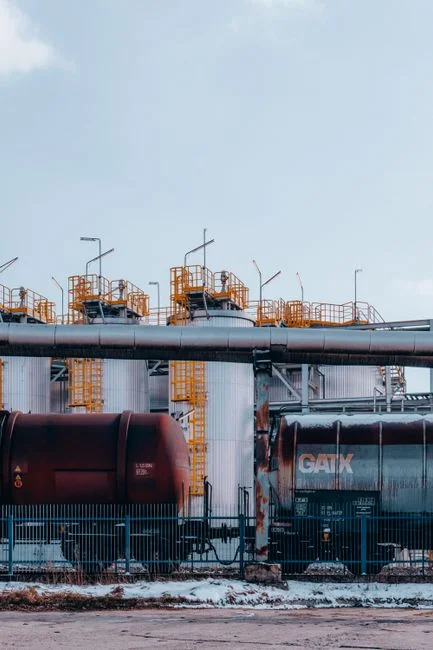
The compliance picture in Knoxville is layered, and a defensible capex memo should cite each layer. KUB's pretreatment program, administered under a KPDES permit issued by TDEC, sets local limits on top of the federal OCPSF effluent guidelines. Typical local limits to model are O&G 100 mg/L, TSS 250 mg/L daily maximum (50 mg/L monthly average for SIUs), pH 6.0–9.0, and metals (Cu, Ni, Zn, Pb) at low single-digit mg/L — values should be verified against the facility's current KUB SIU permit because KUB revises limits per industry. At the federal level, 40 CFR Part 414 subcategories set BAT effluent limits; for OCPSF intermediates (414.61–414.65) and thermoplastics (414.22–414.33), BAT typically means DAF or equivalent primary treatment feeding a biological polishing step. TDEC's 2026 enforcement emphasis on slug-control plans and SIU reporting means the EHS team must document, in the plan, why the chosen primary unit will contain a worst-case slug — a DAF's 20–40 μm bubble surface area and short hydraulic residence time are a stronger defense than a clarifier's on a slug of hex-Cr-bearing rinse water, for example. For a deeper cross-state comparison of pretreatment strategies, the patterns in our 2026 Houston chemical-plant pretreatment compliance guide translate well to KUB's framework because both run under state-issued KPDES/TPDES permits with local POTW limits stacked on top of federal categorical standards.
5-Year Total Cost of Ownership: Knoxville Numbers
The capital and O&M ranges below are pulled from EPA 821-R-98-016 (Detailed Costing Document for the Centralized Waste Treatment Industry), Section 2.8 for DAF and Section 2.2.2 for clarification, escalated to 2026 with a 1.95× ENR CCI multiplier. The numbers are order-of-magnitude planning estimates for a Knoxville-area chemical plant; site-specific installation, soil, and KUB tap fees will move them ±20%.
| Design flow | DAF installed (2026 $) | Conventional clarifier (2026 $) | DAF + lamella hybrid (2026 $) |
|---|---|---|---|
| 50 GPM | $65,000–$95,000 | $50,000–$80,000 | $90,000–$130,000 |
| 250 GPM | $145,000–$210,000 | $90,000–$140,000 | $190,000–$275,000 |
| 1,000 GPM | $360,000–$520,000 | $230,000–$340,000 | $470,000–$680,000 |
On OPEX, expect DAF to consume roughly 4–7 kWh per 1,000 gallons treated for saturator and recycle-pump power, while a clarifier is dominated by polymer ($0.015–$0.04 per gallon treated at typical chemical-plant flocculant dose) and rake drive. Over a 5-year horizon at 250 GPM and 60% uptime, a DAF-only system carries approximately 15–20% higher 5-year TCO than a clarifier on a heavy-settleable stream, but on a mixed stream the DAF + lamella hybrid pays back the extra first cost because the DAF float runs 2–4% DS (versus 0.5–2% from a clarifier underflow), which sharply reduces downstream dewatering volume. Pairing the primary unit with a HydropureWater plate and frame filter press for sludge and a HydropureWater automatic chemical dosing system for coagulant/polymer closes the mass balance and is the configuration most Knoxville chemical plants are budgeting for in 2026 capex cycles. For dewatering-side alternatives, see the 2026 filter press vs belt filter press comparison.
Frequently Asked Questions
For a Knoxville chemical plant with oily emulsions and a 100 mg/L O&G KUB limit, is DAF or clarifier the right primary unit?
DAF. Field data shows DAF delivers ~95% oil and grease removal (Ecologix, 2026) versus ~70% for a clarifier on the same stream, and the 100 mg/L local O&G limit is unachievable on most chemical emulsions with a clarifier alone.
Can a lamella clarifier replace a DAF to save capex on a chemical-plant retrofit?
Not if the stream contains FOG or emulsified oil. The HydropureWater lamella clarifier hits 20–40 m/h surface loading (2026 spec) and cuts footprint by ~⅔, but it still cannot float oils — only a HydropureWater DAF system can.
What 5-year TCO premium should I expect for a DAF-then-lamella hybrid versus a single clarifier at 250 GPM?
About 10–25% higher capital cost ($190,000–$275,000 vs $90,000–$140,000 in 2026 dollars, per EPA 821-R-98-016 escalated by 1.95×), but 15–20% lower 5-year TCO on mixed streams because the DAF float runs 2–4% DS versus 0.5–2% clarifier underflow, which reduces downstream dewatering cost.
Does a DAF satisfy 40 CFR Part 414 BAT by itself for an OCPSF facility?
No. 40 CFR Part 414 BAT for OCPSF subcategories (414.22–414.33, 414.61–414.65) typically requires a biological polishing step after primary treatment; DAF alone is the pre-treatment, not the complete BAT train.