What Is a Filter Press and What Is a Belt Filter Press?
A filter press is a batch-operated pressure dewatering unit — typically a recessed-chamber, plate-and-frame, or membrane plate-and-frame press — that compresses sludge between filter plates to produce dry cake in the 25–55% DS range. A belt filter press is a continuous-belt dewatering unit that uses gravity drainage followed by progressively tighter nip rollers, typically producing 18–28% DS cake. Choose the filter press for low-to-mid feed solids (1–4% DS) when minimum cake volume, landfill diversion, or incinerator auto-thermal threshold matters; choose the belt press for high-throughput, mid-solids (0.4–2% DS) municipal or biological sludge where simplicity and low CAPEX dominate.
The filter press stacks 30–150 polypropylene filter plates (recessed-chamber, plate-and-frame, or membrane variants) on a frame; a hydraulic ram closes the pack at 6–15 bar closure pressure, and sludge is pumped into the chambers at 4–8 bar feed pressure. Water passes through the filter cloth, solids build into cake, and a final squeeze (membrane variants inflate at 15–30 bar) and air-blow step (compressed air at 6–8 bar) push final cake moisture down. The cycle — fill, press, wash, open, discharge — runs 20–90 minutes depending on cake thickness, feed solids, and target dryness. The machine is sized by total filtration area, and a single line of the type catalogued at plate and frame filter press (1–500 m², hydraulic or PLC) covers most municipal and industrial throughputs.
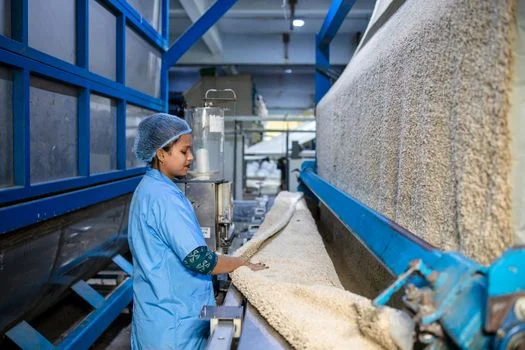
The belt filter press works on a fundamentally different mechanism. Sludge is conditioned with polymer and flocculated before it drops onto a horizontal porous belt; free water drains by gravity, the flocculated mat enters a wedge zone where two belts converge through progressively tighter roller nips (typically 3–5 nips, 1–3 bar line pressure), and the cake is shed at the end of the belt in 30–90 seconds of total residence time. Because the belts move continuously, the machine accepts a steady feed from a wastewater treatment process (per KUOSI: "a belt press can accept a steady feed from a wastewater treatment process … continuous belt filtration system"). Application breadth is wide: petroleum, chemical, coal, metallurgy, building materials, light textile, food, and water-supply/drainage environmental protection (per supplier product copy, YIMEI).
Filter Press vs Belt Filter Press: Side-by-Side Engineering Parameters
| Parameter | Filter Press (Chamber / Membrane) | Belt Filter Press |
|---|---|---|
| Operating mode | Batch (20–90 min cycle) | Continuous (steady-state feed) |
| Typical feed solids | 1.5–4% DS | 0.4–2% DS |
| Cake dryness | 25–45% DS (chamber) / 30–55% DS (membrane) | 18–28% DS |
| Filtration / nip pressure | 6–15 bar closure, 15–30 bar squeeze (membrane) | 1–3 bar line pressure |
| Throughput | 1–6 kg DS/m²·h | 5–25 m³/h hydraulic loading |
| Polymer consumption | 1–3 kg active / t DS | 4–10 kg active / t DS |
| Wash-water demand | 0.5–1.5 m³ wash / m³ cake | 0.1–0.4 m³ wash / m³ cake (belt cleaning) |
| Footprint per 100 kg DS/h | 0.8–1.5 m² (plus 1.5–2× for discharge conveyor) | 1.5–3 m² |
| Noise at 1 m | 75–85 dB(A) during hydraulic cycle | 65–75 dB(A) steady-state |
| CAPEX (2026) | $80,000–$400,000 for 50 m² automatic unit | $30,000–$120,000 for 1.5–2.5 m belt |
| OPEX driver | Cake haul/disposal cost (lower volume) | Polymer dose (higher consumption) |
| Automation | PLC automatic cycle, one operator per 2–3 presses | Semi-automatic standard; requires belt-wash and tracking attention |
Cake-dryness, polymer-dose, and CAPEX figures are catalogued supplier ranges and field baselines; wash-water and noise data are industry-typical operating values. The 1–500 m² filtration-area range is the HydropureWater plate-and-frame catalog span, which sets the practical scalability ceiling for the filter-press category.
How Each Press Reaches Its Cake Solids: Mechanism Compared
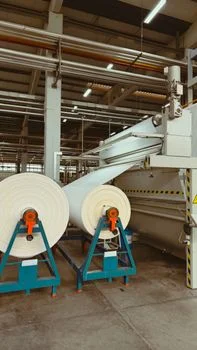
The filter press sequence has three distinct dewatering stages. First, sludge is pumped into the closed plate pack at 4–8 bar until all chambers are full — this is the filtration phase, and cake begins to build against the filter cloth. Second, the high-pressure squeeze: in membrane variants the elastic diaphragm inflates at 15–30 bar against the already-formed cake, mechanically compressing the entire cake surface uniformly at end-of-fill and eliminating the filtration-pressure gradient that limits recessed-chamber presses. Third, an air-blow drying step blows compressed air at 6–8 bar through the cake, displacing bound water and dropping cake moisture a further 2–5 percentage points.
The belt press operates in three stages that look similar in number but differ fundamentally in physics. Stage one is gravity drainage on the horizontal belt section, where free water falls through the porous belt and typically concentrates feed from 0.8% DS to 4–6% DS before any pressure is applied. Stage two is the wedge zone, where the two belts first converge and apply low shear to begin cake formation. Stage three is the roller-nip zone — typically 3–5 nips of progressively smaller roller diameter — which reaches maximum line pressure (1–3 bar) and maximum shear to deliver the final cake.
The mechanism difference explains the cake-dryness gap. The membrane press compresses the cake volumetrically across its entire face at the end of the cycle, which is why membrane variants reliably reach 30–55% DS while chamber presses top out at 25–45% DS. The belt press has no volumetric compression step — its only dewatering forces are capillary drainage and shear in the nip zone, and cake residence time is short (30–90 s in the nip), so the cake can never cross the 28% DS ceiling in normal operation.
Throughput, Footprint, and Operating Cost Compared
| Cost / Sizing Driver | Filter Press | Belt Filter Press |
|---|---|---|
| Footprint per 100 kg DS/h | 0.8–1.5 m² (process) + 1.5–2× for cake conveyor and plate cleaning | 1.5–3 m² (process only) |
| CAPEX (2026 pricing) | $80,000–$400,000 for 50 m² automatic unit | $30,000–$120,000 for 1.5–2.5 m belt width |
| Polymer cost ($3–6/kg active) | 2 kg/t DS → $6–12/t DS | 8 kg/t DS → $24–48/t DS |
| Energy | 8–25 kWh/t DS | 5–12 kWh/t DS |
| Labor | PLC automatic; one operator per 2–3 presses | More frequent belt wash and tracking adjustment |
| Cake volume | ~50% of belt-press cake mass for same DS feed | Baseline |
Polymer cost dominates OPEX for both units. At $3–6/kg active polymer, a filter press running 2 kg/t DS saves $12–48 per ton DS versus a belt press at 8 kg/t DS — on a 10,000 t DS/year sludge plant that is $120,000–$480,000/year in polymer alone. Energy favors the belt press (5–12 kWh/t DS vs 8–25 kWh/t DS), but the filter press wins on total dewatering OPEX because the lower cake volume cuts haul and tipping fees. For a working polymer conditioning setup that supports either line, an automatic chemical dosing system for polymer conditioning is the practical pairing on both sides. Readers scoping disposal-cost economics in parallel should also review Sludge Disposal Cost Optimization in Wastewater: 7 Engineering Levers That Cut OPEX 30–60%.
When to Choose a Filter Press vs a Belt Filter Press
Use the matrix below to pre-select. The deciding variables are feed solids, target cake dryness, and end-use — not CAPEX.
Decision Framework by Feed Solids and End-Use
- Choose recessed-chamber filter press for 1.5–4% DS feed when target cake ≥30% DS, when landfill-diversion requirements apply, when cake feeds an incinerator auto-thermal threshold (DS >30%), and for high-inorganic sludges (drinking-water alum sludge, FGD gypsum, mining tailings) that would blind belt cloth.
- Choose membrane filter press for the same feed range when cake must reach 35–55% DS for cost-driven transport minimization, when thermal drying follows dewatering, or when EU/US PFAS-driven waste classification demands dryness to pass the paint-filter test.
- Choose belt filter press for continuous operation on biological/secondary sludge at 0.4–2% DS, mid-solids throughput above 5 m³/h, low-CAPEX budgets, and applications where 22–26% DS cake is acceptable for agricultural land application under China GB/T 24600 or EU UWWD sludge-reuse rules, or where feed variability is high and operational flexibility matters.
- Avoid belt press for high-density inorganic sludge, oily sludge that blinds belt cloth, or any application requiring cake DS >30%.
- Avoid recessed-chamber filter press for very low-solids feed (<1% DS) — filter-area requirements grow prohibitively; thicken first with DAF or gravity belt, or use a belt press.
For sector-specific sizing, the galvanizing-wastewater line is a useful adjacent reference: Filter Press for Galvanizing Wastewater Cost: 2026 Pricing & Buyer's Guide. For a regional procurement view, see Filter Press Supplier in Morocco: 2026 Buyer's Guide & Specs.
2026 Compliance and Economic Drivers Reshaping Press Selection
Three 2026 regulatory and economic shifts are pushing buyers from belt press to filter press — or forcing belt-press retrofits with pre-thickening. First, the EU Landfill Directive 1999/31/EC member-state caps: Germany's AbfAblV 2024 update restricts landfilling of sludge with DS <35% in some categories, which is driving municipal WWTPs in Germany and neighboring jurisdictions to retrofit membrane presses. Second, China GB 16889-2024 tightens land-application limits for treated sludge, which is driving belt-press retrofits with pre-thickening (DAF or gravity thickener) to push cake above 22% DS. Third, PFAS-driven sludge classification in the US (EPA Multi-Sector General Permit 2024 updates) classifies high-DS cake as non-liquid waste, which lowers transport and disposal cost and favors higher-DS filter press selection.
Trucking and tipping-fee inflation — reported at >15% YoY in 2024–2026 in many US and EU jurisdictions (municipal procurement data, 2025) — shifts the OPEX calculus toward lower cake volume, which favors higher-DS filter press even at higher CAPEX. Across both lines, the practical filter-press envelope (1–500 m² filtration area, hydraulic or PLC closing) covers the throughput range where this tipping-fee math now pays back the CAPEX premium in 2–4 years for most municipal plants above 5,000 t DS/year.
Frequently Asked Questions
What is the difference between a filter press and a belt filter press? A filter press is a batch pressure device that compresses sludge between plates at 6–15 bar (membrane variants to 30 bar) and produces 25–55% DS cake; a belt filter press is a continuous device that dewaters sludge by gravity drainage and roller-nip shear at 1–3 bar and produces 18–28% DS cake.
Which produces drier cake, a filter press or a belt press? A filter press — the membrane variant delivers 30–55% DS versus a belt press at 18–28% DS, a 10–30 percentage-point gap that translates to roughly half the cake mass for the same dry-solids throughput.
Is a filter press more expensive than a belt filter press? Yes — CAPEX is roughly 3–5× higher for a filter press of comparable capacity, but polymer-driven OPEX savings of $12–48 per ton DS typically recover the premium in 2–4 years for plants above 5,000 t DS/year.
Can a belt filter press handle oily or greasy sludge? Not reliably — oil blinds the belt cloth within hours, dropping throughput and raising cake moisture. Polymer preconditioning with an emulsifier breaker can extend runtime, but for sustained oily-sludge operation a recessed-chamber or membrane filter press with washable polypropylene cloth is the correct choice.
When is a belt filter press preferred over a plate and frame filter press? For high-throughput biological or secondary sludge at 0.4–2% DS where 22–26% DS cake meets the end-use rule, where continuous steady-state operation matters more than peak dryness, and where CAPEX budget is the binding constraint — typical of mid-size municipal WWTPs in the 2,000–10,000 m³/day range.