Filter Press Supplier in Morocco: Reseller vs Direct OEM
A filter press supplier in Morocco typically delivers 1-500 m² units. Chamber presses cost 180,000-450,000 MAD delivered to Casablanca; membrane presses cost 320,000-900,000 MAD. Local resellers stock 5-30 m² frames. Direct Chinese OEM orders need 18-25 day sea freight, 2.5-17% import duty, and 20% TVA.
Casablanca hosts 8 filter press resellers (MAROC SEFAR FILTRATION, SPCHIM, EXPERFIL, RIVALIA, SOFILAIR, AERGF, LEAD'AIR MAROC, AQUAPROX MAROC) alongside roughly 90 filter-element distributors. Morocco has no domestic plate press manufacturer. Every chamber or membrane unit sold locally is imported finished or assembled from European-sourced components. Resellers typically mark up 30-50% over factory price to cover inventory, French/Arabic technical support, and same-day service on the Casablanca-Tangier axis. The typical in-stock unit is a 5-30 m² recessed plate press from Italian, French, or German OEMs (HydropureWater field data, 2025).
Direct OEM import from China covers 1-500 m² at factory-direct pricing. A documented 70 m² plate and frame press has been shipped to Morocco from a Chinese manufacturer. That shipment is a verifiable benchmark for sea freight, customs clearance, and commissioning timelines. The buyer then owns logistics, warranty enforcement, and commissioning oversight, or hires a local engineering firm to supervise installation.
| Parameter | Casablanca Reseller | Direct Chinese OEM | Direct EU OEM |
|---|---|---|---|
| Typical filtration area stocked | 5-30 m² | 1-500 m² (built to order) | 5-200 m² |
| Markup over factory price | 30-50% | 0% (FOB) to 8% (CIF) | 10-25% |
| Sea freight to Casablanca | Included in unit price | 1,800-3,200 USD per 40ft HC | 3,000-6,000 USD (roll-on/roll-off) |
| Lead time | Stock to 2 weeks | 25-40 days production + 18-25 days transit | 8-12 weeks production + 10-14 days transit |
| On-site service response | Same day to 48 hr | Remote VPN or fly-in engineer (5-10 days) | 3-7 days via regional agent |
| Warranty enforcement | Local, contract-backed | International, LC- or escrow-backed | Regional office or agent |
For projects needing 50 m² or more, or custom hydraulic/PLC configurations, direct OEM import typically delivers 2-5x larger filtration area per dirham. For emergency replacement of a 10-15 m² unit, a local reseller remains the rational choice. Use the North Africa supplier selection framework to weight these trade-offs against criticality and timeline.
Chamber vs Membrane Plate Filter Press: Which Suits Your Sludge
Chamber filter presses produce cake at 60-75% moisture using 30-50 mm recessed PP plates. Membrane presses compress the same cake a second time at 7-15 bar to reach 55-65% moisture. That squeeze cuts downstream thermal drying energy by 25-40%. Selection depends on feed solids, target cake moisture, and disposal economics under Law 28-00.
A recessed plate chamber press filters sludge by pumping into cavities between two filter cloths. Solids build into a cake while filtrate exits via drainage ports. Cake moisture depends almost entirely on feed solids, chamber depth, and cycle time. At TSS 1.5-3.5%, typical of municipal wastewater treatment, a 30 mm chamber running a 90-180 minute cycle achieves 65-72% moisture. That range is acceptable for engineered landfill disposal at most Moroccan facilities.
A membrane filter press adds a squeezable PP membrane plate inflated by water or compressed air at the end of the fill cycle. The mechanical squeeze expels an additional 5-15% of bound water, dropping final cake moisture to 55-65%. Energy payback is measurable on mid-size duty. A 50 m² membrane press processing 20 m³/day at 60% moisture saves roughly 180,000-260,000 MAD per year versus a chamber press at 70% moisture. The estimate uses natural gas equivalent at 0.80 MAD/kWh and 12 t/day wet cake.
Feed characteristics drive the Moroccan sector decision. Tanneries producing chrome-tanned waste at TSS 3-5% benefit from membrane presses because lower cake moisture reduces chromium leachate risk. Municipal WWTPs with digested sludge at TSS 2-3% usually stay with chamber presses. Disposal savings rarely justify the 40-70% CAPEX premium there. Mining operations in the Khouribga phosphate corridor handling concentrate tailings at TSS 5-10% need recessed plates with reinforced steel frames. Specify polyester filter cloth rated 80-120 L/m²/min air permeability against abrasive wear. Plate material: PP for pH 1-13; PVDF optional for hot brine or solvent-laden sludge above 80°C.
| Parameter | Chamber (Recessed Plate) | Membrane (Squeeze Plate) |
|---|---|---|
| Plate depth / squeeze pressure | 30-50 mm cavity | 7-15 bar membrane inflation |
| Typical cake moisture | 60-75% | 55-65% |
| Cycle time | 90-180 min | 60-120 min (faster dewatering) |
| CAPEX premium vs. chamber | Baseline | +40-70% |
| Polymer consumption | Baseline | 10-20% lower (higher cake density) |
| Best-fit feed solids | 1.5-3.5% TSS | 3-10% TSS |
| Sector examples | Municipal WWTPs, food processing | Tanneries, mining, chemical plants |
The Plate and Frame Filter Press for Sludge Dewatering range covers chamber and membrane configurations from 1-500 m². PP is standard; PVDF is optional for high-temperature or aggressive chemical service.
What filter press chamber depth should you choose?
Filter press chamber depth for Moroccan municipal and food sludge is usually 30-50 mm on recessed PP plates. Shallower 30 mm chambers favor shorter fill times and lower cake mass per cycle at TSS 1.5-3.5%. Deeper 40-50 mm chambers raise solids hold-up per cycle when feed solids sit nearer 3-5% TSS, common in tannery and some food lines. Match depth to pump pressure (typically 6-8 bar fill) and cloth permeability. Most plants we size for Morocco run at the lower end of depth unless cake dryness targets force a membrane squeeze.
How does a filter press dewater sludge at 6 bar?
Chamber presses dewater filter press feed by filling cavities at about 6-8 bar until filtrate flow slows. The hold period then completes a 90-180 minute cycle. At 6 bar on 30 mm plates with municipal TSS 1.5-3.5%, cake moisture typically lands in the 65-72% band when cloth condition and polymer dose are correct. Raising fill pressure alone rarely replaces a membrane squeeze when the target is 55-65% moisture. The secondary 7-15 bar inflation does that work.
What Are Alternatives to a Sludge Filter Press?
Alternatives to a sludge filter press for Moroccan plants include screw presses, belt filter presses, and centrifuges. Each trades cake dryness, continuity, and service complexity against the batch plate press. A screw press versus filter press comparison matters when floor space is tight and continuous discharge is preferred over plate packs. Screw presses typically deliver wetter cake than a well-run chamber or membrane press on the same feed. Landfill haulage and Law 28-00 disposal mass therefore stay higher unless thermal drying follows.
Belt presses suit large continuous municipal flows but need higher polymer dose and more operator attention to belt tracking. Centrifuges cut footprint and handle oily or variable feeds. Power draw and spare-bowl lead times often exceed those of a plate press on the Casablanca-Tangier service corridor. When cake moisture below about 65% drives disposal cost, the plate and frame unit remains the baseline. Abrasive phosphate tailings that need reinforced recessed plates point the same way. Use screw or belt options mainly for small continuous streams where dryness is secondary.
Screw press vs filter press: which dewaters better?
Screw press filter press selection hinges on continuity versus cake dryness. Screw presses run continuous and occupy less area, which helps compact retrofit rooms. Plate filter presses remain batch machines but usually reach lower cake moisture on tannery, food, and phosphate feeds when chamber depth and membrane squeeze are specified correctly. If disposal cost tracks wet tonnes under Law 28-00, most Moroccan industrial sites still favor the plate press despite the batch cycle.
Sizing a Filter Press for Moroccan Industrial Loads
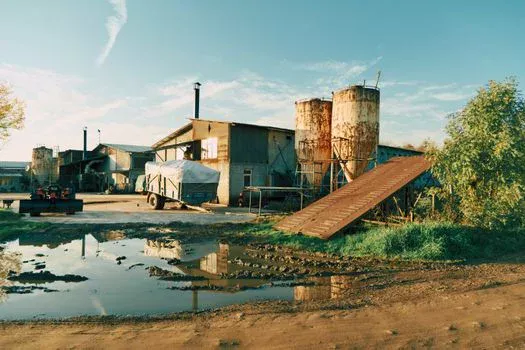
Most Moroccan buyers initially request 10-15 m² presses based on local reseller stock. Industrial loads typically need 30-80 m². Under-sized presses force 24/7 operation and premature cloth failure within 6-9 months. Apply the EPC sizing method below before issuing a purchase inquiry.
Core relationship: Filtration area (m²) = [Daily wet sludge volume (m³/day) × (1 - feed moisture fraction) × cycle time (hr) × 16] / [(target cake moisture fraction) × cycles per day]. The constant 16 accounts for typical filter cake yield per m² per hour under standard chamber pressure of 6-8 bar. If sludge is very fine, oily, or viscous, add a 20-30% safety margin.
Worked example: A Casablanca food-processing plant producing 25 m³/day of sludge at 3% solids (97% moisture) targeting 70% cake moisture with 4-hour cycles. Required area = (25 × 0.03 × 4 × 16) / (0.70 × 6) = 48 / 4.2 ≈ 11.4 m². Cycles per day at a 4-hour cycle equal 6, so the result is approximately 11-12 m². Targeting 60% cake moisture for off-site incineration raises area to (25 × 0.03 × 4 × 16) / (0.60 × 6) ≈ 13.3 m². At 50% cake moisture the area climbs to 16 m². Lower moisture needs more filtration area and higher CAPEX, but cuts disposal volume.
For mining tailings in the Khouribga phosphate corridor (TSS 6-10%, abrasive particles), add 20-30% area margin. Specify steel-reinforced plates with polyester filter cloth rated 80-120 L/m²/min air permeability. A 100 tpd tailings stream at 8% solids targeting 65% cake moisture needs a 60-80 m² chamber press, beyond Casablanca reseller stock. That is where direct OEM import becomes the only viable channel. Facilities with a lamella clarifier upstream of the filter press typically feed the press at 2-4% solids, which simplifies the sizing math.
Common pitfall: sizing on average daily flow, not peak day. Add 15-20% for seasonal variation. Tanneries see post-Ramadan spikes; food processors see summer fruit-campaign surges. Add another 10% for future capacity. The final recommended size is almost always larger than the first request.
CAPEX Delivered to Casablanca: 2026 Pricing in MAD
A 50 m² automatic chamber filter press delivered to Casablanca costs 350,000-650,000 MAD. That figure includes 2.5-17% import duty (HS 8421.29), 20% TVA, customs clearance, and inland transport. Budget an additional 5-8% of CAPEX annually for spare parts and shutdown maintenance.
Delivered price is more than ex-factory cost. For Chinese OEM shipments to Casablanca, the buyer pays FOB Shanghai unit price plus sea freight of 1,800-3,200 USD for a 40ft HC holding a complete 50 m² press. Add marine insurance at 0.3-0.5% of cargo value. Import duty under HS 8421.29 is 2.5% for EU origin and up to 17% for Chinese origin, though the Morocco-China FTA reduces this to 2.5% with a Certificate of Origin. TVA is 20%. Customs broker fees run 0.5-1% of CIF value. Inland transport from Casablanca or Tangier Med to site runs 8,000-15,000 MAD. Total landed-cost markup over FOB is typically 25-40%.
Membrane filter press CAPEX runs 40-70% above chamber equivalents. The premium covers the squeeze system (hydraulic pack rated 200-300 bar), membrane plate sets, and higher-pressure cycle controls. For the same 50 m² filtration area, expect 600,000-1,100,000 MAD delivered for a membrane configuration. Larger 200+ m² units need breakbulk handling at Casablanca port. That adds 8,000-15,000 USD to logistics and extends transit by 5-10 days.
| Filtration Area | Chamber Press (MAD, delivered Casablanca) | Membrane Press (MAD, delivered Casablanca) |
|---|---|---|
| 1-10 m² | 180,000-280,000 | 320,000-450,000 |
| 20-50 m² | 350,000-650,000 | 600,000-1,100,000 |
| 80-200 m² | 900,000-2,200,000 | 1,500,000-3,800,000 |
| 200-500 m² | 2,500,000-6,000,000 | 4,000,000-9,500,000 |
Hidden cost lines buyers miss include commissioning and operator training at 25,000-60,000 MAD if sourced from a third-party engineer. Budget a spare filter cloth set for the first change-out at 8,000-18,000 MAD depending on cloth area. Polymer dosing is often paired with an automatic chemical dosing system for sludge conditioning at 40,000-120,000 MAD. Keep a shutdown maintenance reserve of 5-8% of CAPEX annually. For plant-level budget cross-checks, see the Morocco wastewater treatment CAPEX benchmarks.
Morocco Regulatory and Logistics Checklist for Importing a Filter Press
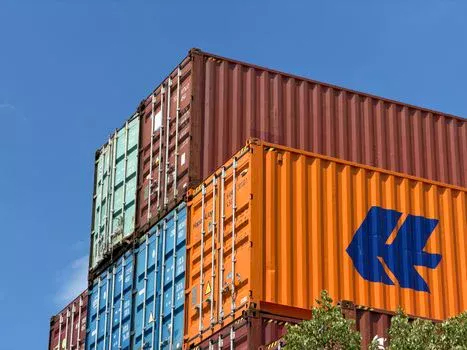
Importing a filter press into Morocco requires compliance with Law 10-95 (Water Law), Law 28-00 (Waste Management), and ONEE/ONEMA discharge standards. A licensed transitaire handles customs clearance at Casablanca or Tangier Med. Regulation shapes both sizing and the cake disposal pathway.
Law 10-95 and its implementing decrees set the discharge envelope: treated effluent TSS ≤50 mg/L for surface water. Heavy metals are capped at Cd ≤0.2 mg/L, Pb ≤0.5 mg/L, and Cr³⁺ ≤2 mg/L. Tanneries face stricter 0.5 mg/L total chromium under ONEE industrial permits. The filter press sits in the sludge train so upstream clarification can meet these limits reliably. Under-sized presses compromise the whole train.
Law 28-00 classifies dewatered cake as industrial waste. Cake with greater than 5% dry solids (95% moisture) typically qualifies as non-hazardous Class 2 waste for engineered landfill disposal. Wetter cake may need further dewatering or solidification before landfill acceptance. The Ministry of Energy Transition and Sustainable Development issues disposal authorizations. Engaging a licensed waste hauler early avoids post-commissioning delays. Chromium-bearing tannery cake may be reclassified as hazardous if total Cr exceeds 1,000 mg/kg dry weight. That triggers specialized disposal at typically 3-5x Class 2 rates.
Logistics for a Chinese OEM shipment start with FOB Shanghai or CIF Casablanca (INCOTERMS 2020). The buyer engages a Moroccan-licensed transitaire. Required documents are original Bill of Lading, commercial invoice, packing list, Certificate of Conformity, and Certificate of Origin (Form A for the Morocco-China FTA to claim reduced duty). Port options include Casablanca for general cargo with longer dwell, Tangier Med for faster clearance on time-sensitive projects, and Jorf Lasfar for the El Jadida-Safi industrial corridor. Sea freight transit is 18-25 days from Shanghai via the Strait of Gibraltar to Tangier Med. Payment terms typical for Chinese OEM are 30% T/T deposit on order confirmation and 70% against B/L copy. LC at sight is available above 50 m² and recommended for first-time buyers.
Supplier Vetting Scorecard: 7 Questions to Ask Any Filter Press Bidder
Apply this scorecard to every quotation. A bidder who cannot answer all seven questions with documentation should be downgraded regardless of unit price. Hidden risk in plate quality, hydraulics, or warranty enforcement usually costs more than the apparent savings.
- Plate production line ownership: Does the bidder own the plate production line (extrusion + machining + assembly) or resell third-party plates? Own-production lines offer replacement-part lead times of 7-15 days vs. 30-60 days for resellers. Ask for a factory video showing the plate press, not just a stock photo.
- Hydraulic system brand: Original Bosch/Rexroth, Yuken, or Atos components vs. unbranded clones. Critical for 10+ year service life. A 50 m² press running 6 cycles per day accumulates over 21,000 cycles per year; non-branded cylinders often fail at 8,000-12,000 cycles.
- PLC platform: Siemens S7-1200, Schneider M221, or Allen-Bradley CompactLogix with HMI in French/Arabic vs. unbranded controllers that limit local troubleshooting. Ask which PLC integrator programmed it and whether source code is provided. Locked source code creates long-term dependency on the supplier.
- Reference projects: Contact details of at least 2 African or MENA installations commissioned in the last 36 months. Verify by calling, not by email. A documented 70 m² shipment to Morocco is a verifiable benchmark; ask for the end-user name and commissioning date.
- Warranty terms: Minimum 12 months on hydraulic and electrical systems, 6 months on filter cloth and wearing parts. On-site response commitment or remote-diagnostic VPN access to the PLC. Avoid bidders who offer only "factory warranty" with no local escalation path.
- Filter cloth specification: Cloth weight (g/m²), air permeability (L/m²/min), material (polyester, polypropylene, or nylon), and whether the cloth is factory-sewn or site-assembled. Pre-sewn cloths reduce commissioning labor by 2-3 days.
- Documentation package: Hydraulic schematic, electrical drawing, PLC program backup, operating manual in French or Arabic, and a recommended spare parts list with part numbers. A bidder who provides these before PO is serious; one who provides them only after commissioning is not.
Score each bidder 0-2 per question (0 = no answer, 1 = partial, 2 = documented). A score below 9 out of 14 indicates elevated supply risk regardless of price. For a second look at plate and frame hardware options before RFQ, review the Plate and Frame Filter Press for Sludge Dewatering configuration notes against your sludge TSS and cake target.
Who This Is For and Next Step
This guide is for plant engineers, EPC contractors, and procurement managers sizing sludge dewatering for Moroccan industrial or municipal sites. It also helps teams choosing between Casablanca stock and direct OEM import. Look elsewhere if you only need a laboratory bench press under 1 m², or a rental emergency unit for under two weeks. When filtration area, chamber vs membrane, and landed MAD cost are clear, send the sludge TSS, target cake moisture, and duty cycle through the filter press inquiry form. Sizing and Incoterms can then be checked against the same assumptions used above.
Frequently Asked Questions

What is the delivered cost of a 50 m² filter press in Morocco?
A 50 m² automatic chamber filter press costs 350,000-650,000 MAD delivered to Casablanca. That stack includes FOB unit price, sea freight of 1,800-3,200 USD per 40ft HC, import duty of 2.5-17% under HS 8421.29, 20% TVA, customs clearance, and inland transport. Duty falls to 2.5% with a Morocco-China FTA Certificate of Origin. Membrane versions of the same area run 600,000-1,100,000 MAD delivered.
How long does sea freight from China to Casablanca take?
Sea freight from Shanghai to Casablanca or Tangier Med port takes 18-25 days. Add 5-7 days for customs clearance and inland transport to site. Total door-to-door is typically 28-35 days for a 40ft HC container. Larger 200+ m² units shipped as breakbulk add 5-10 days to the transit estimate on top of that window.
Chamber or membrane press for tannery sludge?
Membrane plate filter presses are recommended for tannery sludge, particularly chrome-tanned waste at TSS 3-5%. The squeeze stage drops cake moisture from 70-75% to 55-60%. That cut reduces chromium leachate volume in disposal and can trim disposal cost by 3-5x when classification improves. The 40-70% CAPEX premium is recovered in 18-30 months at most tanneries producing over 15 m³/day of sludge.
What is the typical cake moisture from an automatic plate press?
Chamber filter presses typically produce cake at 60-75% moisture depending on feed solids and cycle time. Membrane filter presses produce cake at 55-65% moisture after the secondary squeeze. Adding a thermal dryer downstream can push final moisture below 10%. The press alone rarely achieves that dryness on Moroccan municipal or industrial feeds.
Can a single 40ft container ship a 50 m² filter press?
Yes. A complete 50 m² automatic filter press with plates, frame, hydraulic pack, PLC panel, cloth set, and spare parts fits in one 40ft HC container. Total shipping weight is usually 12-18 tonnes. Sea freight cost is 1,800-3,200 USD from Shanghai to Casablanca. A 100-150 m² press typically needs a 40ft HC plus a 20ft GP, or a single flat-rack container.