Why Industrial Plants Are Ditching Manual Flocculant Dosing in 2026
An industrial flocculant dosing unit use skid automates polymer preparation and injection at ±2% accuracy, replacing manual dosing that typically wastes 10–20% of chemical. At 1,500 m³/day, one textile plant cut flocculant cost 28% after automation and held TSS under a 15 mg/L permit limit with a PLC + HMI package.
Manual dosing also produces weak flocs that upset sedimentation or flotation and force operators to chase the process.Most plants we size now recover CAPEX through avoided fines and labor reduction, not through any single feature.
How Flocculant Dosing Units Work: A 3-Stage Process for Maximum Efficiency
A flocculant dosing unit combines three sequential stages—wetting, mixing, and maturation—to activate dry or liquid polymer before it enters the wastewater stream. The wetting stage uses a jet mixer that disperses each polymer particle individually with high-velocity water, eliminating "fish eyes" that would otherwise pass through the system as inert clumps.
A VSD-controlled auger meters dry powder from the hopper into the jet mixer at ±2% accuracy. The wetted slurry then moves into a mixing chamber with high-torque, low-shear agitators that disperse the polymer without scissioning the chains. From there the solution enters a maturation tank, where 20–40 minutes of quiescent residence allows the long polymer chains to extend fully and develop their bridging structure. A PLC panel sequences the entire batch, and skid-level integration with HydropureWater's PLC-controlled automatic chemical dosing system handles alarms, batching, and remote trending.
2026 Flocculant Dosing Unit Specs: Capacity, Accuracy, and Material Standards
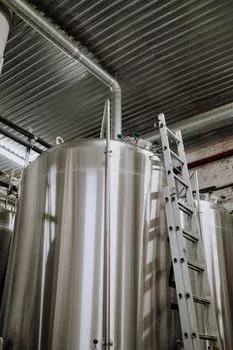
Specifying a flocculant dosing unit comes down to seven parameters: tank capacity, dosing accuracy, pump flow range, solution concentration, wetted material, control system, and power supply. The table below captures the values that procurement and EPC teams compare most often when sourcing an industrial polymer preparation package.
| Spec | Range | Industry Standard | Why It Matters |
|---|---|---|---|
| Capacity | 1,800L – 7,500L | Application-specific | Determines batch size and continuous run time; 1,800L is suitable for smaller facilities, while 7,500L units support large industrial operations and offer greater scalability. |
| Dosing Accuracy | ±2% | High precision required | Essential for minimizing flocculant consumption, ensuring consistent effluent quality, and meeting stringent discharge limits (e.g., <15 mg/L TSS). Achieved via VSD-controlled augers and precise pump calibration. |
| Flow Rate (Dosing Pump) | 0.1 – 500 L/h | Variable based on treatment volume | Must match the hydraulic load of the wastewater treatment plant, allowing for precise chemical injection at varying flow rates. |
| Solution Concentration (Prepared) | 0.1–0.5% (dry polymer), 5–15% (liquid coagulant) | Manufacturer-recommended | Influences the volume of flocculant solution prepared and the required storage capacity. Optimal concentration ensures effective floc formation without over-application. |
| Material Construction | 304/316 Stainless Steel | Corrosion-resistant | 316 SS is preferred for highly corrosive wastewater streams (e.g., chemical, metalworking, or mining industries) to prevent premature degradation and ensure equipment longevity. |
| Control System | PLC + HMI (Human-Machine Interface) | Automated operation | Enables real-time monitoring, automated batching, remote access, alarm functions, and seamless integration with plant-wide SCADA systems for enhanced operational oversight. |
| Power Supply | 220V/380V (3-phase) | Standard industrial | Ensures compatibility with existing plant electrical infrastructure. |
Capacity drives the batch frequency and therefore the operator workload. A 7,500L tank suits a plant processing 5,000 m³/day where downtime between batches is unacceptable; a 1,800L unit is enough for sub-1,000 m³/day flows but leaves little headroom for shock loads. Material choice matters as much: 316 SS resists chloride and sulfate attack in metal finishing and mining effluents, while 304 SS is adequate for less aggressive streams such as food processing wash water.
Dry vs. Liquid Flocculant Dosing: Which System Fits Your Wastewater?
Dry polymer and liquid coagulant systems differ in concentration, storage footprint, handling complexity, and per-kg cost. The right choice depends on flow rate, available storage, and how much operator attention the site can dedicate to chemical handling.
| Criteria | Dry Polymer Dosing System | Liquid Coagulant Dosing System | Best For |
|---|---|---|---|
| Solution Concentration | 0.1–0.5% | 5–15% | N/A |
| Storage Requirements | Bags or bulk bags; requires dry, climate-controlled storage. | IBC totes or bulk tanks; requires containment and potentially heating in cold climates. | Dry systems are generally more space-efficient for the active polymer. |
| Handling Complexity | Automated hopper, auger, and wetting systems; requires management of dust and manual bag handling. | Requires chemical transfer pumps, metering pumps, and potentially dilution systems; less dust but higher risk of spills and leaks. | Liquid systems can be simpler for very low-volume applications or where dust is a major concern. |
| Cost Per Kg of Active Polymer | Often lower, especially for high-volume users. | Can be higher due to formulation and shipping costs. | Dry polymer is typically more cost-effective on a per-unit-of-active-ingredient basis. |
| Suitability | High-volume applications, large industrial plants (e.g., pulp & paper, mining). | Low-volume applications, facilities with limited space for dry storage, or where dust control is paramount (e.g., food processing, some chemical plants). | Dry systems are generally favored for large-scale industrial wastewater treatment due to cost and handling efficiencies. |
Dry polymer systems require hoppers, augers, and wetting skids, but the active polymer typically costs less per kilogram and ships more cheaply than pre-diluted liquid. Liquid systems win on simplicity at low flow rates and where dust is a safety issue, but they freeze in cold weather, degrade faster in storage, and need spill containment. For a 5,000 m³/day pulp and paper line, dry polymer usually wins on total cost of ownership; for a 200 m³/day food wash stream, liquid coagulant often wins on operability. If you are weighing this decision against other consumables, see our guide to flushing floculant cost for 200microns filters, which covers the filter-protection side of the same chemistry budget.
Top 3 Flocculant Dosing Units for Industrial Use: Head-to-Head Comparison
Three vendors dominate the 2026 industrial shortlist: Westpro Machinery, IFA Technology, and Nijhuis Saur Industries. They differ mainly in deployment format, control sophistication, and price tier, not in core dosing accuracy, which all three hold at roughly ±2%.
| Brand | Model | Capacity | Dosing Accuracy | Material | Control | Modular? | Cost Range | Best For |
|---|---|---|---|---|---|---|---|---|
| Westpro Machinery | FMS25-4 | Variable (e.g., 2,500L standard) | ±2% (VFD controlled) | Stainless Steel | PLC + HMI | Yes | $$$-$$$$ | Medium to large industrial plants requiring robust, scalable solutions. |
| IFA Technology | Containerized System | Customizable (typically smaller to medium) | ±2-3% | Stainless Steel / FRP | PLC + HMI | Yes (Containerized) | $$$-$$$$ | Remote sites, temporary installations, or facilities requiring rapid deployment and flexibility. |
| Nijhuis Saur Industries | Smart Dosing Unit | Variable (customizable) | ±2% | Stainless Steel | Advanced PLC + Smart Monitoring | Yes | $$$$-$$$$$ | Compliance-intensive industries valuing real-time data, remote diagnostics, and integration with digital platforms. |
Westpro's FMS25-4 is the workhorse option for mining and pulp and paper: VFD-controlled augers, PLC + HMI, and a modular frame that bolts onto an existing concrete pad. IFA Technology packages a similar skid inside a shipping container for sites that need to commission in weeks rather than months. Nijhuis Saur adds cloud telemetry and remote diagnostics, which matters most for highly regulated plants where audit trails and trend data are part of the compliance package. Westpro and IFA sit in the same mid-tier price band; Nijhuis commands a premium for the digital layer.
Cost Breakdown: Flocculant Dosing Units in 2026 (CAPEX, OPEX, and ROI)
An industrial flocculant dosing unit use budget has four line items: the skid itself, automation upgrades, installation and commissioning, and training. The base unit runs $25,000–$80,000 depending on capacity and material; adding PLC/SCADA upgrades $10,000–$30,000; installation and commissioning $5,000–$15,000; and operator training $2,000–$5,000. A fully integrated system therefore lands between $42,000 and $130,000.
On the OPEX side, automated dosing cuts polymer consumption by 28–30%, which on a 1,500 m³/day textile plant is worth $50,000–$200,000 per year. Labor savings from removing manual preparation add another $20,000–$50,000 per year. Avoiding a single TSS excursion also removes fine exposure that earlier budgets put at $10,000–$50,000 and that can now reach the $68,445 per-day Clean Water Act civil maximum under 40 CFR 19.4. Net of 1–3% annual maintenance and $2,000–$5,000 for spare augers, ROI lands in 12–18 months for most plants in the 1,500–5,000 m³/day range.
Step-by-Step Guide: How to Select the Best Flocculant Dosing Unit for Your Plant
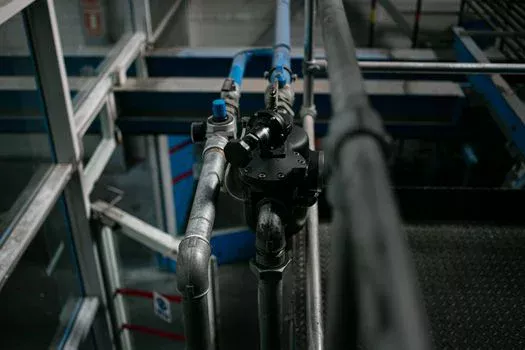
A disciplined selection process keeps procurement off the back foot. Five steps cover most industrial dosing-skid decisions:
- Assess Wastewater Characteristics: The first step is a thorough analysis of your wastewater. Key parameters include:
- Influent Total Suspended Solids (TSS) concentration (mg/L)
- Peak and average flow rates (m³/h)
- pH range and temperature
- Presence of corrosive contaminants (e.g., chlorides, sulfates)
- Required effluent quality standards (e.g., <15 mg/L TSS)
- Choose Between Dry or Liquid Flocculant: Based on chemical availability, cost, storage capacity, and handling preferences, decide whether a dry polymer or liquid coagulant system is more suitable. Refer to the 'Dry vs. Liquid Flocculant Dosing' comparison table for detailed insights.
- Match Capacity to Needs: Select a unit with adequate capacity to handle your peak flow rates and desired solution concentration. A general rule of thumb is to select a unit with at least 20% excess capacity to accommodate future expansion or unforeseen process demands. Units typically range from 1,800L to 7,500L.
- Evaluate Automation Level: Determine the required level of automation. Basic units offer manual control, while advanced systems feature PLC and HMI for automated batching, real-time monitoring, and remote access. Higher automation levels increase upfront costs but significantly reduce labor, improve accuracy, and enhance compliance. Consider integration with existing SCADA systems.
- Request Vendor Site Audits and Proposals: Engage with manufacturers and request site-specific assessments. During these interactions, ask critical questions such as:
- What is the guaranteed dosing accuracy under varying conditions?
- What is the warranty period for the PLC and critical components?
- Can the system integrate with our current SCADA infrastructure?
- What is the estimated lead time for delivery and installation?
- What training is provided for operators and maintenance staff?
By working through these five steps, engineering and procurement end up with a shortlist that is sized correctly, built from the right alloy, and integrated with the SCADA stack already on site. Plants that want a turnkey skid rather than a custom build usually start from HydropureWater's PLC-controlled automatic chemical dosing system and adapt it to their layout.
Compliance Checklist: Ensuring Your Flocculant Dosing Unit Meets EPA and ISO Standards
EPA and ISO 14001 compliance for industrial polymer dosing hinges on three things: dose repeatability, calibrated instrumentation, and a documented audit trail. Dosing accuracy of ±2% supports permit TSS targets. According to 40 CFR 133.102, EPA secondary treatment standards set suspended solids at 30 mg/L as a 30-day average and 45 mg/L as a 7-day average. Many industrial and water-quality-based permits set tighter limits such as <15 mg/L TSS.
NPDES permits require self-monitoring on the schedule stated in the permit. According to 40 CFR 122.41(j)(2), permittees must retain monitoring records for at least three years. ISO 14001 layers on continuous improvement: corrective-action procedures when the dose drifts out of band, training records for every operator who touches the panel, and trending of polymer consumption against throughput. The compliance checklist below maps those requirements to actions the dosing unit must support.
Compliance-Focused Checklist:
- Install calibrated flow meters on all chemical dosing pumps for accurate record-keeping.
- Establish a routine for calibrating all sensors (e.g., pH, flow, turbidity) quarterly.
- Maintain detailed dosing logs, including chemical type, concentration, dosage rate, and batch start/end times, for a minimum of three years.
- Ensure all operators receive comprehensive training on PLC operation, alarm response, and basic troubleshooting for the dosing system.
- Periodically review effluent test results against discharge permits and adjust dosing parameters as needed to maintain compliance.
- Document any process upsets or non-compliance events, along with the corrective actions taken.
The same dose-control discipline applies to adjacent chemical-precipitation processes, including the electroplating wastewater treatment by chemical precipitation workflow, where a shared PLC platform can log metal-removal and TSS data in parallel. For plants that need to bring the upstream feed water up to the chemistry specs those dosing units rely on, our water purification system selection guide covers capacity matching, RO recovery, and pretreatment selection.
Who This Is For and Next Step
This guide fits plant engineers, EPC contractors, and procurement managers sizing an industrial flocculant dosing unit use skid for flows between 1,500 and 5,000 m³/day. At those flows, chemical cost and compliance exposure dominate the ROI math. Sites below 500 m³/day with simple chemistry may be over-served by a PLC + HMI skid and can usually run on a basic metering-pump panel. Send your flow rate, TSS target, and current chemical spend to our engineering team. We will return a sized skid drawing with CAPEX and 12-month payback within two business days: request a flocculant dosing unit quote.
Frequently Asked Questions
What is the typical lifespan of a flocculant dosing unit?
Industrial flocculant dosing units built from 316 stainless steel typically last 10 to 15 years or more with proper maintenance. Lifespan depends on wastewater corrosiveness, duty cycle, and how often hoppers, seals, and augers are inspected. Plants that keep a preventive maintenance schedule and stock critical spares usually reach the upper end of that range.
How does dosing accuracy impact wastewater treatment costs?
Higher dosing accuracy, such as ±2%, cuts flocculant overconsumption that can waste 10–20% of chemical in manual systems. That precision lowers annual polymer spend and stabilizes effluent quality under changing flow. Most plants recover the automation premium through chemical savings alone within the first operating year at 1,500 m³/day and above.
Can flocculant dosing units be integrated with SCADA systems?
Yes. Most modern flocculant dosing units with PLC and HMI controls integrate with plant-wide SCADA for centralized monitoring, control, and data logging. Integration usually covers batch status, dose rate, alarms, and trend historians used in compliance audits. Confirm protocol support and I/O mapping during the vendor site assessment.
What maintenance is required for a flocculant dosing unit?
Routine maintenance covers cleaning hoppers, tanks, and mixing chambers; calibrating pumps and sensors; lubricating augers and agitators; and inspecting seals and hoses. A written preventive schedule keeps dose accuracy inside the ±2% band and protects warranty coverage. Most plants also budget $2,000–$5,000 per year for spare augers and wear parts.
How does temperature affect flocculant performance?
Temperature changes the viscosity of prepared flocculant solution and the rate of polymer activation. Extreme cold can solidify liquid coagulants, while high heat can accelerate degradation in storage tanks. Operate dosing systems inside the manufacturer's recommended temperature range and add tote heating where winter ambient drops below that band.
Related Equipment
- Dissolved air flotation (DAF) system for post-flocculation separation — view specifications, capacity range, and technical data
Need a customized solution? Request a free quote with your specific flow rate and pollutant parameters.