Frankfurt’s sewage treatment equipment market in 2025 is shaped by EU Directive 91/271/EEC and local Hessian regulations, requiring industrial facilities to achieve <125 mg/L COD and <25 mg/L BOD5 for discharge. Suppliers like RWO (shipboard systems) and BWT (modular plants) dominate, but Frankfurt’s industrial zones (e.g., Höchst) demand tailored solutions. This guide compares 5 equipment types (DAF, MBR, package plants, etc.) with cost benchmarks (€50K–€2M CAPEX) and vendor selection criteria to meet Frankfurt’s 2025 compliance deadlines.
Why Frankfurt’s Sewage Treatment Needs Are Unique in 2025
Frankfurt’s industrial zones, including Höchst and Fechenheim, generate approximately 30% of the total industrial wastewater in the state of Hesse, according to 2024 data from the Hessian Ministry of Environment. The challenge for facilities like food processing plants located near the Main River is meeting the strict 2025 enforcement of EU Directive 91/271/EEC, which mandates that industrial discharge into municipal sewers must not exceed 125 mg/L Chemical Oxygen Demand (COD) and 25 mg/L Biochemical Oxygen Demand (BOD5). Failure to meet these levels results in heavy surcharges from local utilities or, in severe cases, plant shutdowns.
The Hessian Water Act (HWG) adds another layer of complexity. Facilities processing more than 50 m³/day are required to implement on-site pre-treatment systems. Non-compliance can lead to administrative fines of up to €50,000 per violation. This regulatory environment has shifted the focus from simple primary treatment to advanced secondary and tertiary systems. Frankfurt’s urban density, particularly in the Industriepark Höchst, creates significant space constraints. Large, open-air lagoons are non-viable, forcing engineers to opt for high-rate, compact technologies like Membrane Bioreactors (MBR) or underground package plants.
Sustainability is also a commercial driver. A 2025 report by BWT indicates that 20% of Frankfurt’s industrial facilities have transitioned to wastewater reuse models. By treating effluent to a high standard, plants reuse water for cooling towers or boiler feed, directly reducing the cost of freshwater intake and sewage disposal. This trend toward "circular water" drives demand for equipment handling fluctuating organic loads while maintaining a small physical footprint. Frankfurt industrial wastewater treatment strategies now prioritize modularity to allow for future expansion as production capacity grows.
5 Sewage Treatment Equipment Types for Frankfurt’s Industrial and Municipal Needs
The following equipment types serve Frankfurt’s industrial and municipal sectors.Industrial wastewater treatment in Frankfurt utilizes five primary equipment configurations—DAF, MBR, package plants, chemical dosing, and sludge dewatering—to meet stringent EU discharge limits. Each technology serves a specific hydraulic and organic profile. For instance, Frankfurt’s food processors use DAF systems to meet EU FOG limits, particularly in the dairy and meat processing sectors where fats and oils can quickly foul municipal lines. DAF units achieve 90–95% Total Suspended Solids (TSS) removal and 85–90% Fats, Oils, and Grease (FOG) removal by utilizing micro-bubbles to float contaminants to the surface for skimming.
For facilities with high organic loads but limited land, MBR systems for Frankfurt’s space-constrained urban sites offer a superior alternative to traditional activated sludge. MBR combines biological treatment with membrane filtration, typically achieving effluent quality of <10 mg/L BOD5 and <5 mg/L TSS. A Frankfurt-based hospital recently implemented a modular MBR system, reducing its treatment footprint by 60% compared to conventional clarifiers. Meanwhile, in residential developments and peripheral industrial parks, Frankfurt’s suburbs install WSZ plants to meet EU reuse targets. These underground systems handle flows from 1 to 80 m³/h and operate with minimal noise and odor, making them ideal for urban integration.
| Equipment Type | Best Use Case in Frankfurt | Performance Benchmark | Footprint Requirement |
|---|---|---|---|
| Dissolved Air Flotation (DAF) | Food & Beverage (Höchst/Fechenheim) | 90% TSS / 85% FOG Removal | Moderate (Skid-mounted) |
| Membrane Bioreactor (MBR) | Pharmaceuticals & Hospitals | <5 mg/L TSS / <10 mg/L BOD5 | Low (Very Compact) |
| WSZ Package Plants | Residential & Small Industrial | EU Directive 91/271/EEC Compliant | Zero (Underground) |
| Chemical Dosing Systems | Metalworking & Surface Finishing | pH 6.5–9.5 / Heavy Metal Removal | Minimal (Cabinet-based) |
| Sludge Filter Press | Municipal & Large Industrial | 75% Sludge Volume Reduction | Moderate to High |
Sludge management remains a critical cost factor. Frankfurt’s municipal plants and large-scale industrial operators utilize plate-and-frame filter presses to dewater sludge, reducing volume by up to 80%. This significantly lowers the "gate fees" paid to disposal contractors. Chemical dosing systems are essential for Frankfurt’s metalworking shops to ensure pH levels and heavy metal concentrations remain within limits set by the Hessian Water Act. These systems use PLC-controlled pumps to precisely inject coagulants and flocculants based on real-time flow data.
Frankfurt’s Top 7 Sewage Treatment Equipment Suppliers: Technical Specs and Use Cases
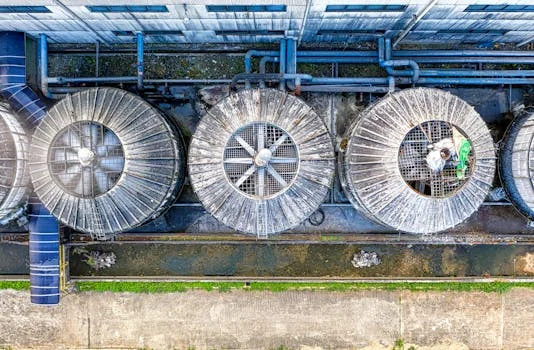
RWO Water Technologies is a primary supplier for Frankfurt’s port and river logistics, specializing in oily water separators and sewage treatment plants that meet MARPOL Annex IV requirements. Their systems are engineered for the high-vibration environment of river vessels and port facilities, ensuring bilge and sewage water meet international maritime discharge standards.
BWT (Best Water Technology) provides modular systems tailored for industrial reuse. Their AquaPro X7 system is frequently deployed in Frankfurt’s chemical plants to achieve up to 45% reduction in wastewater discharge through advanced filtration and disinfection. For monitoring and reporting, Heyl Neomeris is the regional standard for handheld and inline measurement of pH, conductivity, and dissolved oxygen. Frankfurt’s municipal labs rely on these tools for daily compliance reporting required by the Hessian Ministry of Environment.
| Supplier | Core Technology | Frankfurt Application | Key Advantage |
|---|---|---|---|
| RWO Water Technologies | Oily Water Separators | Main River Port Facilities | MARPOL Annex IV Compliance |
| BWT | Modular Filtration (AquaPro X7) | Chemical Plant Water Reuse | 45% Discharge Reduction |
| Heyl Neomeris | Monitoring Sensors | Municipal Compliance Reporting | High-Precision Data Logging |
| Amodes | Mobile Desludging Units | Construction Site Dewatering | Rental Flexibility |
| HydropureWater | WSZ Underground Plants | Suburban Residential Districts | Automated, No Operator Needed |
| AquaTech Innovations | IoT-Enabled WWTP | Food Processing (Real-time COD) | Predictive Maintenance |
| EcoFlow Systems | Energy-Efficient MBR | Urban Hospital Facilities | 30% Lower Energy Consumption |
In the construction sector, Amodes provides mobile desludging and dewatering services. For short-term projects near Frankfurt City Forest, renting mobile units allows contractors to manage groundwater and runoff without investing in permanent infrastructure. Meanwhile, AquaTech Innovations and EcoFlow Systems lead the market in "Smart Water" solutions. AquaTech integrates IoT sensors for real-time COD tracking, while EcoFlow focuses on reducing energy intensity of MBR systems—a critical factor given Frankfurt’s high industrial electricity rates. HydropureWater bridges the gap for decentralized treatment, providing WSZ series plants that allow Frankfurt suburbs to meet EU reuse targets with CAPEX-efficient, underground installations.
Cost Benchmarks for Sewage Treatment Equipment in Frankfurt (2025)
Capital expenditure (CAPEX) for sewage treatment equipment in Frankfurt currently ranges from €50,000 for basic DAF systems to over €2 million for large-scale MBR installations.These costs vary significantly depending on the hydraulic load (m³/day) and complexity of the influent. For example, a DAF system for a medium-sized bakery in Frankfurt usually costs between €50,000 and €150,000, whereas a full-scale MBR plant for a pharmaceutical facility can exceed €1.5 million due to the need for advanced membrane materials and automated cleaning-in-place (CIP) systems.
Operational expenditure (OPEX) is equally vital for long-term budgeting. In the industrial sector, OPEX typically ranges from €0.50 to €2.00 per cubic meter of treated water. This includes chemical consumption, energy use, and sludge disposal fees. Municipal systems benefit from economies of scale, with OPEX ranging from €0.20 to €0.80 per cubic meter. To assist with these projections, facility managers can calculate your Frankfurt facility’s wastewater treatment costs with this ROI tool, which factors in local utility rates and Hessian disposal taxes.
| Equipment Type | CAPEX Range (EUR) | OPEX (EUR/m³) | Typical ROI Period |
|---|---|---|---|
| DAF System | €50,000 – €300,000 | €0.40 – €0.90 | 2.5 – 4 Years |
| MBR Plant | €200,000 – €2,000,000 | €0.80 – €1.80 | 4 – 6 Years |
| WSZ Package Plant | €80,000 – €500,000 | €0.30 – €0.70 | 3 – 5 Years |
| Sludge Press | €40,000 – €250,000 | €0.15 – €0.40 | 2 – 3 Years |
Financing options in Frankfurt are robust. The KfW Bank offers specialized environmental loans with interest rates as low as 2% for projects that exceed EU compliance standards. These loans often cover up to 100% of investment costs. However, buyers must account for hidden costs: permitting through the Hessian Water Authority can cost between €5,000 and €20,000, and professional installation typically adds 10–20% to equipment's base CAPEX. Annual maintenance contracts are generally priced at 5–10% of initial investment, covering membrane replacement, sensor calibration, and mechanical servicing.
How to Select a Sewage Treatment Equipment Supplier in Frankfurt: A 7-Step Checklist
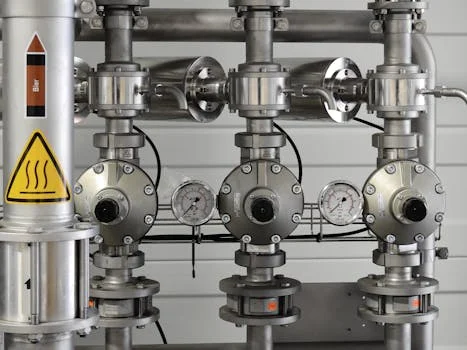
Generic equipment often fails to meet specific peak load requirements