In Nova Scotia, wastewater treatment plant costs vary widely based on capacity, technology, and site conditions. Recent projects range from $6M (Wolfville lagoon upgrades) to $17.5M (Chester’s new plant with collection system upgrades). For municipalities, the average cost per future residential unit is ~$26,800 (Chester’s $17.5M for 652 units). Funding typically covers 60–80% of costs, with federal and provincial grants covering the majority. This guide breaks down costs by component, compares treatment technologies, and provides an ROI calculator to estimate payback periods for your project.
Why Nova Scotia’s Wastewater Infrastructure Is Under Pressure
Nova Scotia’s population grew 5% from 2016–2021 according to Statistics Canada, a trend that has strained existing wastewater systems in both coastal and rural communities. This demographic shift, coupled with aging infrastructure, has forced many municipalities to prioritize capital-intensive upgrades. Halifax’s 2023 Integrated Water Resource Plan identified 12 priority wastewater projects, forecasting a need for $120M in upgrades by 2030 to maintain service levels and accommodate new housing developments. Beyond population growth, the regulatory landscape is a primary driver of investment. Canada’s Wastewater Systems Effluent Regulations (WSER) set stringent national standards for effluent quality, with mandatory deadlines for secondary treatment implementation between 2030 and 2040 (per Environment Canada 2024).
Climate resilience is the third pillar of pressure. Nova Scotia’s 2022 Climate Risk Assessment highlights rising sea levels and an increase in high-intensity rainfall events, which threaten to overwhelm combined sewer systems and cause untreated overflows. This environmental reality necessitates infrastructure that can withstand storm surges and flooding. For example, Chester’s $17.5M project is specifically designed with storm resilience features to protect the coastal ecosystem. For engineers and planners, the challenge is no longer just treating waste—it is building a system that remains operational during extreme weather while meeting federal discharge limits. These pressures often lead to a search for how other countries handle municipal wastewater treatment to find cost-effective, resilient strategies.
Wastewater Treatment Plant Cost Breakdown: What Drives the Price Tag?
Civil works, including site preparation, excavation, and concrete construction, typically account for 35% to 45% of the total capital expenditure for a wastewater treatment project in Nova Scotia. This is the largest single cost driver and is heavily influenced by the province's unique geography. For a project like the $7M Berwick upgrade, civil works represent between $2.1M and $3.15M. Mechanical and electrical equipment, such as pumps, aerators, and control systems, represent the next largest portion at 25% to 35%. Engineering design and permitting are often underestimated but can consume up to 25% of the budget when navigating the Nova Scotia Environment Act and federal WSER compliance.
| Cost Component | Percentage of Total Cost | Estimated Cost ($7M Project) | Key Variables |
|---|---|---|---|
| Civil Works | 35–45% | $2.45M – $3.15M | Soil quality, rock excavation, site access |
| Mechanical/Electrical | 25–35% | $1.75M – $2.45M | Technology choice (MBR vs. Lagoon), automation level |
| Engineering & Design | 10–15% | $700K – $1.05M | Complexity of treatment process |
| Permitting & Approvals | 5–10% | $350K – $700K | Environmental impact assessments (EIA) |
| Contingency | 10% | $700K | Market volatility, unforeseen site conditions |
Regional factors in Nova Scotia significantly impact these benchmarks. Remote sites, such as those in Cape Breton, often face a 20–30% premium due to transportation and logistics for specialized equipment. Coastal locations require a 15–25% premium for corrosion-resistant materials like 316 stainless steel to withstand saltwater exposure. the cold climate necessitates insulated tanks and heated piping to prevent freezing, adding 10–20% to the mechanical budget. These costs are comparable to detailed breakdown of wastewater treatment costs per cubic meter seen in other northern industrial regions. On average, lagoon systems in the province cost between $1,500 and $3,000 per m³/day of capacity, while more advanced Membrane Bioreactor (MBR) systems range from $3,000 to $6,000 per m³/day.
Nova Scotia Wastewater Treatment Projects: Real Costs and Lessons Learned
Recent municipal projects in Nova Scotia show a significant variance in capital intensity, with costs ranging from $3,000 to nearly $6,000 per m³/day of capacity depending on the technology and scope. The Town of Wolfville, for instance, completed lagoon and aeration upgrades in 2023 for $6M, achieving a relatively low cost of $3,000 per m³/day by leveraging existing infrastructure. In contrast, the Municipality of the District of Chester is investing $17.5M into a new plant and collection system, resulting in a higher cost of $5,833 per m³/day. This discrepancy highlights the impact of including collection system upgrades and the premium paid for new, modular technology in coastal zones.
| Location | Capacity (m³/day) | Technology | Total Cost | Cost per m³/day | Completion |
|---|---|---|---|---|---|
| Wolfville | 2,000 | Lagoon + Aeration | $6.0M | $3,000 | 2023 |
| Berwick | 1,500 | Lagoon Upgrades | $7.0M | $4,667 | 2026 (Est.) |
| Chester | 3,000 | New Plant + Collection | $17.5M | $5,833 | 2025 (Est.) |
A major lesson learned from these projects is the trade-off between land use and effluent quality. While lagoons are cost-effective upfront, they require 1–2 acres per 1,000 m³/day of capacity. In areas where land is expensive or unavailable, MBR systems for constrained sites or water reuse applications provide a 60% smaller footprint and near-reuse-quality effluent. Another common pitfall is underestimating the time required for Nova Scotia’s Environment Act approvals; projects typically require 6–12 months for permitting alone, which can lead to cost escalations if not factored into the initial timeline. Berwick’s project also emphasizes the importance of odor control in municipal planning, as $7M of their budget includes specific measures to mitigate community impact.
Funding Your Wastewater Treatment Project in Nova Scotia: Grants, Loans, and Cost-Sharing
The Canada Housing Infrastructure Fund (CHIF) has allocated $170.9 million over a 10-year period to Nova Scotia specifically for infrastructure that supports residential growth. This is a primary funding vehicle for large-scale projects like Chester’s $17.5M expansion. Additionally, the Investing in Canada Infrastructure Program (ICIP) remains a vital source for rural and northern communities, such as the $6M Wolfville project. Typically, these federal programs are matched 1:1 by provincial contributions from Nova Scotia Municipal Affairs. For instance, in Wolfville, the province invested $2M alongside a $2.4M federal contribution, leaving the town to cover only 26% of the total cost.
| Funding Source | Typical Coverage | Primary Focus | Example Project |
|---|---|---|---|
| Federal (CHIF/ICIP) | 33–40% | Housing growth, rural sustainability | Chester ($7M Federal) |
| Provincial (NS Municipal Affairs) | 30–33% | Infrastructure modernization | Wolfville ($2M Provincial) |
| Municipal Contribution | 10–30% | Local development and O&M | Berwick ($1.8M Local) |
| Green Infrastructure Stream | Up to 40% | Climate resilience, carbon reduction | Stormwater management upgrades |
To secure this funding, municipalities and developers must provide a robust application package. This includes a detailed project scope, a professional cost estimate (aligned with the data in this guide), and an Environmental Assessment for any project exceeding 1,000 m³/day. Proof of municipal contribution, often through a formal council resolution, is mandatory. For smaller communities or private developers, underground package sewage treatment plants for small communities can often be funded through low-interest loans from Nova Scotia Environment, provided they meet the 2030 WSER standards.
Choosing the Right Wastewater Treatment Technology for Nova Scotia’s Climate and Growth
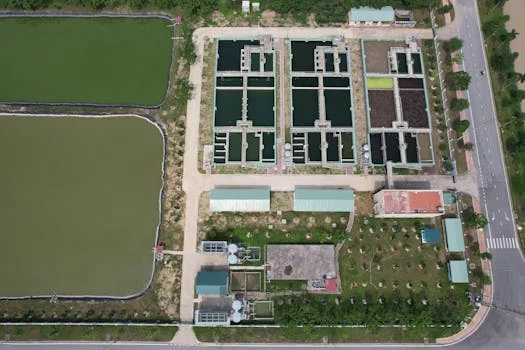
Membrane Bioreactor (MBR) systems require up to 60% less land area than traditional lagoon systems, making them the preferred choice for coastal Nova Scotia developments with limited footprint. While lagoons are suitable for rural areas with abundant land, they struggle with odor control and nutrient removal in colder months. MBR systems, despite a higher upfront cost, offer 99% pathogen removal and can produce effluent suitable for irrigation or industrial process water. For industrial facility managers, particularly in food processing or pulp and paper, DAF systems for industrial wastewater pre-treatment are often necessary to handle high Total Suspended Solids (TSS) and Fats, Oils, and Grease (FOG) before discharging to municipal sewers.
| Technology | Footprint | Effluent Quality | O&M Cost | Cold Climate Suitability |
|---|---|---|---|---|
| Lagoon | Very High | Secondary (BOD/TSS) | Low | Moderate (Freezing risk) |
| MBR | Very Low | Tertiary (Reuse) | Moderate | High (Insulated units) |
| DAF | Low | Pre-treatment (FOG) | High (Chemicals) | High (Indoor install) |
| SBR | Moderate | High Secondary | Moderate | High |
The decision framework for Nova Scotia engineers should follow a four-step process. First, define the effluent requirements—municipal discharge is governed by WSER, but industrial discharge may have stricter local bylaws. Second, assess site constraints; rocky terrain or coastal proximity often makes modular MBR systems more cost-effective than large-scale excavation for lagoons. Third, estimate future growth; modular systems scale much better than fixed-capacity lagoons. Finally, compare lifecycle costs. While a lagoon may be cheaper to build, the potential for odor-related fines and the inability to reuse water may make it more expensive over a 20-year horizon. These considerations are similar to wastewater treatment plant cost benchmarks in other regions where land and environmental compliance are primary drivers.
ROI Calculator: Estimating Payback for Your Wastewater Treatment Project
The return on investment for a wastewater treatment plant in Nova Scotia is increasingly driven by development fees, which can exceed $1.3 million annually for mid-sized municipal expansions. The standard ROI formula—(Net Benefits / Total Cost) × 100—must account for both avoided costs and new revenue streams. Avoided costs include WSER non-compliance fines, which can reach $250,000 per year for persistent violations. Operational savings also contribute; modern, energy-efficient aeration systems can reduce energy consumption by 30–50% compared to legacy equipment. For example, Wolfville’s $6M project included high-efficiency blowers that significantly lowered their annual utility bill.
| Revenue/Savings Stream | Estimated Value (Annual) | Payback Impact |
|---|---|---|
| Development Fees | $2,000 per unit | High (Major revenue driver) |
| Avoided WSER Fines | Up to $250,000 | Critical for compliance ROI |
| Energy Efficiency | $15,000 – $40,000 | Reduces ongoing O&M |
| Water Reuse Revenue | $0.50 – $1.50 per m³ | Emerging market in NS |
Payback periods in Nova Scotia typically range from 8 to 15 years. Chester’s $17.5M project, which unlocks 652 new residential units, is estimated to have an 8-year payback when factoring in new property taxes and development fees. In contrast, Berwick’s $7M upgrade focuses on odor control and compliance, resulting in a longer 12-year payback period driven primarily by avoided fines and reduced maintenance. To calculate your specific ROI, engineers should use a gated spreadsheet template that includes Nova Scotia-specific inputs for local labor rates (averaging $45–$65/hour for skilled operators) and energy costs (per Nova Scotia Power industrial rates).
Frequently Asked Questions
Does Halifax have a sewage treatment plant?
Yes, Halifax operates three major wastewater treatment plants, including the Eastern Passage facility which has a capacity of 100,000 m³/day. The Eastern Passage plant underwent a $120M upgrade in 2022 to meet federal WSER standards. The city’s 2023 Integrated Water Resource Plan includes an additional $200M in upgrades by 2030 to manage growth in the Halifax Regional Municipality (HRM).
How much does a wastewater treatment project cost?
Costs vary by capacity and technology. In Nova Scotia, recent projects range from $6M for lagoon upgrades (Wolfville) to $17.5M for a new plant and collection system (Chester). On a per-unit basis, this equates to approximately $26,800 per future residential unit for new developments. Factors such as coastal location and cold-climate insulation can add 15-25% to the base cost.
How much does a domestic sewage treatment plant cost?
For small-scale applications, such as a single commercial building or a small residential cluster, costs range from $15,000 to $50,000 for a package plant with a capacity of 5–20 m³/day. Larger systems for small communities (50–500 m³/day) typically cost between $100,000 and $1M depending on the level of treatment required and site conditions.
Do wastewater treatment plants make money?
While municipal plants usually operate on a cost-recovery basis, they can generate significant revenue. Chester’s project is expected to generate $1.3M annually in development fees. industrial plants can save 30–50% on water costs by treating and reusing effluent for non-potable processes, effectively turning a treatment cost into a resource recovery opportunity.
What are the biggest cost drivers for wastewater treatment plants in Nova Scotia?
The three primary drivers are: 1) Civil works (35–45% of cost), which are affected by the province's rocky and coastal terrain; 2) Technology choice, where MBR systems have higher upfront costs but lower land requirements than lagoons; and 3) Permitting and regulatory compliance, which can add 10% to the budget and up to a year to the project timeline.