As of 2025, municipal sewage treatment plants in Thailand number about 68 operating units, with 16 more under construction, serving Bangkok, Chiang Mai, and Phuket. These plants primarily use activated sludge (A/O) or membrane bioreactor (MBR) trains, typically achieving 85–95% BOD removal and 90–98% TSS reduction under Pollution Control Department (PCD) community discharge rules. Energy-efficient aeration upgrades can cut electricity use by 20–30% under tropical duty cycles, while MBR trains often deliver effluent below 1 NTU for reuse. This guide covers plant capacity, compliance limits, technology selection, and cost ranges for engineers and procurement teams.
Municipal Sewage Treatment Plants in Thailand: Capacity and Growth
Thailand operated about 68 municipal plants as of 2025, with 16 more under construction. Bangkok’s existing central plants total about 1,112,000 m³/day, with Din Dang at 350,000 m³/day as the largest unit in BMA data. Plants mainly use A/O or MBR processes to meet BOD below 20 mg/L and COD below 120 mg/L before discharge.
Earlier materials cited a single Bangkok plant capacity of 4.8 million m³/day; BMA figures instead put existing central capacity near 1,112,000 m³/day across eight plants under O&M (Bangkok Metropolitan Administration presentation via BOI). Other cited regional capacities include Chiang Mai at 200,000 m³/day and Phuket at 120,000 m³/day. Urbanization growing at about 2.2% per year (World Bank 2024) continues to raise demand for centralized and package treatment capacity.
High load and coverage gaps concentrate in the Bangkok Metropolitan Area, the Eastern Economic Corridor (EEC), and tourist hubs such as Phuket, Pattaya, and Koh Samui. The PCD oversees permitting, operation oversight, and compliance monitoring for municipal wastewater plants. Where sewerage is incomplete, an Underground Package Sewage Treatment Plant (WSZ Series) can serve clusters or satellite catchments without a full civil plant footprint.
| Region/City | Number of Major Plants (approx.) | Total Capacity (m³/day) | Key Drivers |
|---|---|---|---|
| Bangkok Metropolitan Area | 10+ | >5,000,000 | High population density, commercial activity |
| Eastern Economic Corridor (EEC) | 5+ | >500,000 | Industrial expansion, residential growth |
| Chiang Mai | 3 | 200,000 | Tourism, urban population |
| Phuket | 4 | 120,000 | International tourism, island development |
| Pattaya | 2 | 100,000 | Tourism, coastal urban area |
Regulatory Standards and Compliance: What Thai Plants Must Achieve
Thai municipal sewage treatment plants must meet PCD effluent limits before discharge to public waterways. As of the 2025 guidance cited for municipal plants, primary limits remain BOD < 20 mg/L, TSS < 30 mg/L, COD < 120 mg/L, and E. coli < 1,000 MPN/100mL. For industrial general effluent under Ministry of Industry rules, BOD ≤ 20 mg/L and COD ≤ 120 mg/L are unchanged, while TSS is set at ≤ 50 mg/L (MOI Notification B.E. 2560; confirmed in WEPA Thailand PCD materials, 2025).
Industrial contributors such as hospitals and food processors often face tighter BOD targets near < 10 mg/L at the source. Municipal plants that receive strong industrial loads therefore need stronger pretreatment and nutrient control. Monitoring typically includes continuous pH, flow, and turbidity, weekly BOD and COD checks, and quarterly heavy-metal sampling under PCD plant permits.
Non-compliance can trigger fines up to 1 million THB or temporary shutdown under PCD’s 2024 enforcement guidance. New municipal builds still require an environmental impact assessment (EIA) before construction approval. Design teams should confirm whether the discharge point falls under community plant rules (TSS < 30 mg/L in many municipal tables) or industrial general rules (TSS ≤ 50 mg/L).
| Parameter | Municipal Effluent Limit (PCD 2025) | Industrial Effluent Limit (Example: Food Processing) | Minimum Monitoring Frequency |
|---|---|---|---|
| BOD | < 20 mg/L | < 10 mg/L | Weekly |
| TSS | < 30 mg/L | < 20 mg/L | Weekly |
| COD | < 120 mg/L | < 80 mg/L | Weekly |
| pH | 5.5–9.0 | 5.5–9.0 | Continuous |
| E. coli | < 1,000 MPN/100mL | < 400 MPN/100mL | Monthly |
| Heavy Metals (e.g., Pb, Cd) | Trace limits (specific to metal) | Trace limits (specific to metal) | Quarterly |
Treatment Technologies Compared: A/O, MBR, and DAF for Thailand’s Climate
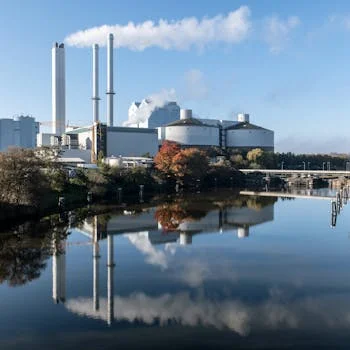
Technology choice for a Thai municipal plant hinges on removal targets, energy use, and tropical fouling risk. Three common building blocks are Anoxic/Oxic (A/O) activated sludge, Membrane Bioreactors (MBR), and Dissolved Air Flotation (DAF) for high-FOG pretreatment.
A/O (Anoxic/Oxic) systems typically deliver 85–92% BOD removal and 90–95% TSS removal at about 0.3–0.5 kWh/m³ (Xylem 2024 data cited for aeration duty). High ambient temperature can slow nitrification, so some tropical plants add cooling or longer anoxic/oxic contact time. Compact A/O trains suit smaller towns and decentralized catchments where capital must stay moderate.
MBR (Membrane Bioreactor) systems usually reach 95–99% BOD removal and over 99% TSS removal, with turbidity often below 1 NTU for reuse. Energy use is higher at about 0.6–0.9 kWh/m³ because of membrane scouring and filtration. Humid tropical service shortens cleaning intervals and raises chemical demand. Bangkok’s Rattanakosin plant upgraded from A/O to MBR in 2023 and reduced effluent BOD from 25 mg/L to 5 mg/L under the reported project conditions. An MBR system for near-reuse-quality effluent in Thailand’s water-scarce regions fits plants chasing reuse or stricter TSS.
DAF (Dissolved Air Flotation) systems serve as pretreatment when municipal influent carries industrial fats, oils, and grease. DAF commonly removes 70–85% TSS and 60–80% FOG ahead of biology. A DAF system for pre-treatment in industrial or high-FOG municipal wastewater lowers load on A/O or MBR tanks. Chemical dosing for flocculation must track temperature swings to keep bubble–floc contact stable.
| Technology | BOD Removal Efficiency | TSS Removal Efficiency | Energy Use (kWh/m³) | Effluent Quality (Typical) | Climate Suitability (Thailand) |
|---|---|---|---|---|---|
| A/O (Activated Sludge) | 85–92% | 90–95% | 0.3–0.5 | BOD < 20 mg/L, TSS < 30 mg/L | Good, but may require cooling for optimal nitrification. |
| MBR (Membrane Bioreactor) | 95–99% | >99% | 0.6–0.9 | BOD < 5 mg/L, TSS < 1 mg/L, <1 NTU | Excellent for reuse; requires frequent membrane cleaning due to humidity. |
| DAF (Dissolved Air Flotation) | N/A (Pre-treatment) | 70–85% | 0.1–0.2 (for pre-treatment) | Reduced TSS, FOG (pre-treatment) | Good for high FOG/TSS influent; less sensitive to temperature. |
Energy Efficiency Upgrades: How to Cut Costs by 20–30%
Energy often accounts for 25–40% of operating cost at Thai municipal plants, so aeration upgrades deliver the fastest savings. Fine-bubble diffuser retrofits can cut aeration energy by 15–25% when oxygen transfer improves under the same blower power (Xylem 2024 case data). Variable frequency drives (VFDs) on blowers and pumps typically save another 10–20% by matching speed to dissolved-oxygen demand (EPA 2023 benchmarks), with payback often in 3–5 years.
Solar-assisted blowers in a 2024 Phuket pilot offset up to 30% of local aeration cost in high-irradiance months. Anaerobic digestion can yield about 0.3–0.5 kWh of biogas energy per cubic meter of wastewater treated in Bangkok plant data, while also cutting sludge hauling volume. For stable residual disinfection after secondary treatment, an on-site chlorine dioxide generator for disinfection compliance supports controlled dosing without relying on bulk chlorine logistics.
Microplastic and Emerging Contaminant Removal in Thai Plants
Municipal influent in Thailand has shown about 10–50 microplastic particles per liter in a ScienceDirect 2024 study. Conventional activated sludge typically removes 70–90% of microplastics by floc entrapment, while MBR membranes often exceed 95% removal because of fine pore size (2023 PCD-cited performance data). PCD still does not set a numeric microplastic limit, but monitoring roadmaps discussed for 2025 raise the chance of future reporting duties.
Pharmaceuticals appeared in about 60% of Bangkok municipal plants sampled in a 2024 study. Granular activated carbon or ozone polishing can remove many of these compounds at roughly 0.1–0.3 THB/m³ of operating cost when added after secondary treatment. Operators should treat these figures as planning ranges until plant-specific jar tests confirm dose and empty-bed contact time.
Cost Benchmarks: Building or Upgrading a Plant in Thailand (2025)
Capital cost for new A/O capacity typically falls in the 5,000–15,000 THB/m³/day range, while new MBR capacity often sits at 20,000–40,000 THB/m³/day under 2025 Thai project benchmarks. Operating cost for A/O is about 0.5–1.5 THB/m³; MBR usually runs 1.5–3.0 THB/m³ when membrane replacement and scouring air are included. Aeration retrofits with fine-bubble diffusers and VFDs commonly pay back in 3–5 years; full MBR upgrades often need 7–10 years when reuse revenue is counted (2024 PCD cost-benefit analysis cited in prior guidance).
The Thai Board of Investment (BOI) has offered a 30% tax credit for qualifying energy-efficient upgrades (BOI 2025 program notes). Chiang Mai plant data for 2024 reported a 22% O&M reduction after VFD blowers and solar integration. Use these THB ranges only after normalizing for land cost, import duties, and local labor rates on the specific site.
| System Type/Upgrade | Capital Cost (THB/m³/day capacity) | Operating Cost (THB/m³) | Typical ROI for Upgrades |
|---|---|---|---|
| New A/O System | 5,000–15,000 | 0.5–1.5 | N/A (New build) |
| New MBR System | 20,000–40,000 | 1.5–3.0 | N/A (New build) |
| Aeration Retrofit (e.g., fine-bubble diffusers, VFDs) | 500–1,500 (per m³/day, partial) | 0.1–0.3 (reduction) | 3–5 years |
| MBR Upgrade (from A/O) | 15,000–30,000 (per m³/day, delta) | 0.5–1.5 (increase, but higher value effluent) | 7–10 years |
How to Select the Right Equipment for Your Plant: A Decision Framework
Equipment selection for Thai municipal duty should follow a fixed decision sequence so capital, compliance, and O&M stay aligned. Start with measured influent and the exact PCD or industrial limit that applies at the outfall.
- Step 1: Define Influent Parameters and Effluent Targets. Characterize average and peak flow, BOD, TSS, COD, pH, and nutrients. Lock effluent targets to PCD municipal limits or stricter reuse specs before comparing process trains.
- Step 2: Assess Site Constraints. Map footprint, soil bearing, neighbor setbacks, and reliable power. MBR often wins on land; A/O usually wins on capital when space is available.
- Step 3: Compare Technologies. Rank A/O, MBR, and DAF using the removal and energy table above. For tropical MBR cost context, review MBR system cost and ROI benchmarks for tropical climates.
- Step 4: Evaluate Energy Efficiency and O&M Costs. Model aeration kWh/m³, chemical use, membrane replacement, and sludge haul. Apply the 3–5 year and 7–10 year payback bands only after site power tariffs are known.
- Step 5: Request Pilot Testing. Pilot MBR or DAF on the real influent before full-scale buyout. For clarification upstream of biology, a comparison of sedimentation tanks for pre-treatment helps size solids capture.
Common pitfalls include underestimating MBR fouling rates in humid service and omitting sludge disposal from the O&M model. Both errors inflate true life-cycle cost after commissioning.
What chemical dosing equipment suits treatment plants?
Chemical dosing for Thai water and wastewater plants usually covers coagulants for DAF or clarification, pH correction, nutrient polishing, and final disinfection. Metering pumps with flow-paced control keep dose proportional to influent variability and protect BOD/TSS compliance. Chlorine dioxide generators support residual disinfection when bulk chlorine supply is unreliable. Jar tests at 25–35 °C should set coagulant dose before locking pump capacity and day-tank volume.
Who supplies equipment for large municipal wastewater plants?
Large municipal projects typically buy from EPC contractors and specialized process-equipment vendors that can supply aeration, MBR cassettes, DAF units, and package plants under Thai PCD permitting. Buyers should require tropical reference plants, documented kWh/m³, and spare-parts lead times in THB-quoted bids. For satellite or underground capacity beside a central works, the Underground Package Sewage Treatment Plant (WSZ Series) is one package option used when civil footprint is limited. Always verify local agent support and commissioning responsibility before award.
Who this is for: municipal engineers, EPC process leads, and procurement teams sizing Thai plant upgrades or new builds. Who should look elsewhere: buyers seeking only household septic systems or pure drinking-water RO without municipal compliance drivers. Next step: match your influent sheet and PCD outfall class to A/O, MBR, or package capacity, then request a duty-sized quotation with energy and chemical O&M spelled out.
Frequently Asked Questions
Does Thailand have sewage treatment plants?
Yes. Thailand had about 68 operating municipal sewage treatment plants as of 2025, with 16 more under construction. Facilities concentrate in Bangkok, Chiang Mai, Phuket, and other urban or tourist zones. Plants treat wastewater to PCD effluent limits before discharge. Bangkok’s existing central plants alone provide about 1,112,000 m³/day of capacity under BMA operating data.
What are the main technologies used in Thailand's municipal wastewater treatment?
Activated sludge A/O trains and MBR systems are the main municipal process options. A/O is chosen when capital and energy must stay moderate while meeting BOD < 20 mg/L. MBR is chosen when reuse turbidity below 1 NTU or very low TSS is required. DAF appears as pretreatment where FOG from commercial or industrial contributors would overload biology.
What are the compliance requirements for municipal sewage treatment plants in Thailand?
Municipal plants commonly target BOD < 20 mg/L, TSS < 30 mg/L, COD < 120 mg/L, and E. coli < 1,000 MPN/100mL under the PCD municipal figures used in 2025 guidance. Industrial general effluent confirmed by MOI and WEPA materials keeps BOD ≤ 20 mg/L and COD ≤ 120 mg/L, with TSS ≤ 50 mg/L. Continuous pH/flow/turbidity plus weekly BOD/COD testing are typical permit conditions. Fines or shutdown can follow repeated exceedances.
How can municipal plants in Thailand reduce energy costs?
Fine-bubble diffuser upgrades can cut aeration energy by 15–25% when oxygen transfer rises at the same blower power. VFDs on blowers and pumps typically save 10–20% by tracking dissolved-oxygen setpoints. Solar offset and biogas from anaerobic digestion can further reduce purchased power where site conditions allow. Payback for aeration and VFD packages often falls in the 3–5 year band at Thai municipal tariffs.
What are the capital costs for building or upgrading a municipal sewage treatment plant in Thailand?
New A/O capacity typically costs 5,000–15,000 THB/m³/day, while new MBR capacity often costs 20,000–40,000 THB/m³/day. Aeration retrofits are far cheaper per cubic meter of capacity and often pay back in 3–5 years. MBR upgrades from A/O commonly need 7–10 years when reuse value is included. BOI incentives such as a 30% tax credit for qualifying energy-efficient upgrades can improve project cash flow when eligibility is confirmed.
Related Equipment
- compact A/O sewage treatment system for municipal use — view specifications, capacity range, and technical data
Need a customized solution? Request a free quote with your specific flow rate and pollutant parameters.