Ajman industrial wastewater discharge limits pair UAE Federal Law No. 24 of 1999 with ASPCL sewer acceptance values such as COD ≤ 500 mg/L and TSS ≤ 30 mg/L, so factory trains are sized to the tighter of the two.
Ajman Industrial Wastewater Discharge Limits Factories Must Meet in 2026
Ajman factories discharge under two overlapping rulebooks: Federal Law No. 24 of 1999 sets environmental protection values, while ASPCL sewer acceptance holds COD ≤ 500 mg/L, TSS ≤ 30 mg/L, and pH 6–9 at the connection point. Compliance is checked by inspection and sampling.
Ajman industrial waste discharge must comply with UAE Federal Law No. 24 of 1999 and Ajman Sewerage acceptance limits (for example COD ≤ 500 mg/L, TSS ≤ 30 mg/L, pH 6–9). Factories that miss these limits face inspections, sewer rejection, and municipality fines.
Industrial waste discharge in Ajman is governed by Federal Law No. 24 of 1999. Article 35 bans untreated liquid wastes that can pollute the water environment. Article 37 leaves numeric industrial standards to the Executive Order and competent authorities. According to Federal Law No. 24 of 1999 (FAOLEX English text), industrial establishments may discharge only after meeting those approved specifications. Ajman Sewerage (ASPCL) applies its own sewer acceptance limits to protect the Ajman Sewerage Biorefinery. Published local values commonly cited for discharge include COD ≤ 500 mg/L, BOD ≤ 300 mg/L, TSS ≤ 30 mg/L, FOG ≤ 50 mg/L, pH 6.0–9.0, and total heavy metals ≤ 2.0 mg/L.
ASPCL Sewer Acceptance Limits COD TSS: What Gets Rejected
ASPCL sewer acceptance limits for COD and TSS gate every industrial discharge into the Ajman network, because the flow feeds the Ajman Sewerage Biorefinery. For regional context on sewer trade effluent, Abu Dhabi's Trade Effluent Control Regulations 2010 Schedule B sets COD ≤ 1000 mg/L and TSS ≤ 500 mg/L for restricted substances to sewer (Abu Dhabi RSB, 2010). Ajman's ASPCL limits in the table below are tighter on COD and TSS than that Abu Dhabi sewer schedule, so plants sized only to a looser emirate schedule can still fail Ajman acceptance.
ASPCL monitoring for high-volume dischargers often includes online meters and short-notice inspections. Under 2024 Ajman Municipality guidelines cited for enforcement practice, fines for illegal discharge or heavy-metal exceedances can reach AED 500,000 per violation. The operator behind those rules, Ajman Sewerage, runs the first public-private partnership (PPP) sewerage system in the UAE (Ajman Sewerage).
Ajman's 2025 sustainability target mandates a 50% industrial water reuse rate. That push favors reuse-ready effluent for district cooling or industrial irrigation. Compact MBR systems for Ajman's pathogen and COD compliance therefore show up in many Free Zone layouts.
| Parameter | Ajman Sewerage Limit (Discharge) | UAE Federal Law No. 24 (Protection) | Typical Industrial Raw Effluent |
|---|---|---|---|
| Chemical Oxygen Demand (COD) | ≤ 500 mg/L | ≤ 150 mg/L (Environment) | 1,500 – 15,000 mg/L |
| Biochemical Oxygen Demand (BOD) | ≤ 300 mg/L | ≤ 50 mg/L | 800 – 5,000 mg/L |
| Total Suspended Solids (TSS) | ≤ 30 mg/L | ≤ 30 mg/L | 200 – 2,000 mg/L |
| Oil & Grease (FOG) | ≤ 50 mg/L | ≤ 10 mg/L | 100 – 1,200 mg/L |
| pH Range | 6.0 – 9.0 | 6.5 – 8.5 | 3.0 – 11.0 |
| Heavy Metals (Total) | ≤ 2.0 mg/L | ≤ 0.5 mg/L | 5.0 – 50.0 mg/L |
Buyers comparing emirates should also read the sibling note on UAE wastewater discharge standards before freezing a design basis. If your site is outside Ajman, process selection patterns used for industrial wastewater treatment in other cities still start from the same COD/FOG/TSS characterization step.
How to Match Treatment Technology to Your Ajman Industry
Treatment technology in Ajman must track the chemical profile of each effluent stream, not the industry label alone. Fats, oils, and grease (FOG) plus high COD remain the main loads in Al Jurf and the New Industrial Area. Food processing and dairy plants almost always need Dissolved Air Flotation (DAF) as primary treatment before any biological stage.
Petrochemical and textile streams with dissolved organics and pathogens usually need Membrane Bioreactor (MBR) polishing rather than conventional activated sludge alone. MBR packages combine biological degradation with membrane filtration. They typically need about 60% less footprint than a comparable conventional activated sludge (CAS) train. Most Free Zone plots we size for run short on land before they run short of power.
Reinforced hollow-fiber MBR units commonly deliver turbidity below 0.2 NTU when flux is held in the design band. Acidic or alkaline batches still need pH control; PLC-controlled chemical dosing for Ajman's pH adjustment needs meters sulfuric acid or caustic soda to protect sewer concrete and stay inside ASPCL pH windows.
| Industry Sector | Key Contaminants | Primary Technology | Secondary/Polishing |
|---|---|---|---|
| Food & Beverage | FOG, BOD, TSS | DAF systems for Ajman's FOG-heavy effluents | Aerobic Bioreactor |
| Petrochemicals | Hydrocarbons, Phenols, COD | API Separator + DAF | MBR + Carbon Filter |
| Textiles/Dyeing | Color, TSS, Heavy Metals | Chemical Coagulation | Ultrafiltration (UF) |
| Pharmaceuticals | API residues, Pathogens | Advanced Oxidation (AOP) | MBR (High Flux) |
Industrial Wastewater Treatment Ajman Free Zone: Permit and Plot Basics
Ajman Free Zone plots run small and share sewer connections, so treatment trains there are usually skid-mounted after FOG pretreatment. Permit conversations with ASPCL move faster when the characterization report covers peak shifts and CIP dumps. Land pressure, not power, is the binding constraint on most Free Zone sites we size.
Where a buried package plant fits the hydraulic load better than a stick-built hall, an Underground Package Sewage Treatment Plant (WSZ Series) can cover sanitary plus light industrial flows after FOG pretreatment. Cost models for a full industrial waste treatment plant still hinge on the same CAPEX/OPEX drivers listed later in this guide.
Engineering Specs for Ajman's Top 3 Industrial Wastewater Systems
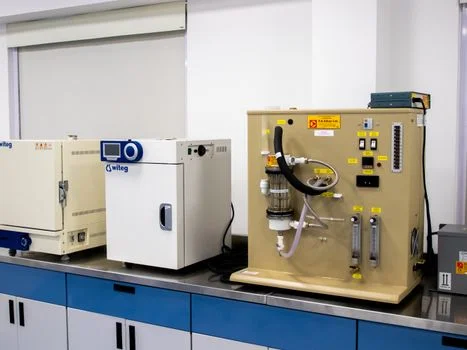
DAF systems for Ajman industry must tolerate high ambient temperature and variable salinity in the feed. The DAF uses a dissolved-air pump that forms micro-bubbles in the 30–50 μm range. That bubble band sticks to flocculated industrial particles without shearing weak flocs. Most food plants we commission run FOG removal near the top of the 95% band when coagulation is stable.
MBR designs in the UAE must also allow for elevated biological rates in hot weather. HydropureWater DF series membranes use reinforced PVDF hollow fibers with a nominal pore size of 0.1 μm. That pore size supports about 99.9% pathogen removal when operated inside the 15–25 LMH flux window. The result aligns with UAE municipal sewage treatment standards often referenced for unrestricted irrigation quality.
MBR System for Ajman Industrial Reuse: Flux, Pores, and Payback
An MBR system for Ajman industrial reuse is specified around the 15–25 LMH flux window and the 0.1 μm reinforced PVDF pore, which together hold turbidity below 0.2 NTU. District cooling make-up and industrial irrigation are the two off-takes that justify membrane CAPEX under the 50% reuse push. Payback improves further when reuse credit stacks with avoided compensation fees, which is the argument that carries finance sign-off.
| System Component | Technical Parameter | Specification Range | Performance Metric |
|---|---|---|---|
| DAF | Micro-bubble Size | 30 – 50 μm | 95% FOG Removal |
| MBR (DF Series) | Membrane Flux | 15 – 25 LMH | Turbidity < 0.2 NTU |
| Chemical Dosing | Dosing Accuracy | ± 1.0% | pH Stability 6.5 – 8.5 |
| Filter Press | Filtration Pressure | 0.6 – 1.2 MPa | Cake Moisture < 70% |
CAPEX and OPEX Breakdown for Industrial Wastewater Plants in Ajman
Total cost of ownership in Ajman swings on whether the plant buys a low-CAPEX chemical line or a reuse-ready biological train. For a 50 m³/h facility, a standalone chemical dosing and sedimentation package may cost about AED 800,000. An integrated MBR plant at the same flow typically needs AED 2.5M CAPEX, but recovers value when treated water displaces potable makeup.
ROI in Ajman also includes avoided environmental compensation fees. A 2024 Ajman petrochemical case in the source material reported about AED 1.2M annual savings after moving from basic chemical precipitation to a hybrid DAF-MBR train. Similar capacity planning questions appear in other markets, including guides on Industrial Waste Water Management in Auckland: 2026 Specs. Local power tariffs and reuse credit still change the payback curve.
| Plant Capacity | Technology Type | Estimated CAPEX (AED) | Estimated OPEX (AED/m³) |
|---|---|---|---|
| 50 m³/h | DAF System | 1.2M – 1.5M | 0.45 – 0.60 |
| 50 m³/h | MBR System | 2.2M – 2.7M | 0.70 – 0.95 |
| 200 m³/h | DAF System | 3.5M – 4.0M | 0.35 – 0.50 |
| 200 m³/h | Hybrid DAF-MBR | 4.2M – 5.0M | 0.65 – 0.85 |
OPEX ranking follows the same driver list used in the selection steps: power in AED/kWh, sludge haulage, chemical dose, membrane replacement, and sewer surcharge risk. Plants that meter each line separately catch drift before ASPCL sampling does. On 50 m³/h DAF lines, chemicals dominate the bill; on MBR lines, power and membrane reserve set the number.
Step-by-Step Guide to Selecting Wastewater Equipment for Ajman Factories
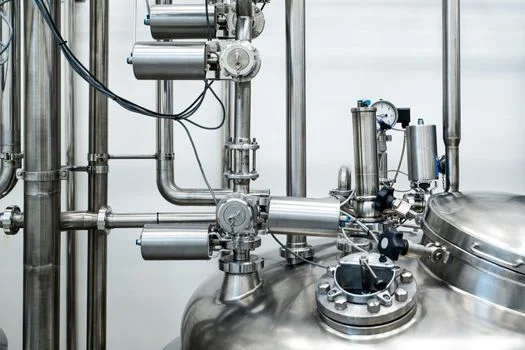
Equipment selection starts with a 7-day effluent characterization that catches peak shifts, CIP dumps, and weekend lulls. The decision order that holds up in Ajman audits is simple: map the tightest discharge limit first, then the available footprint, then the 10-year life-cycle cost (LCC).
- Step 1: Effluent Analysis: Test for COD, TSS, FOG, pH, and heavy metals at peak production.
- Step 2: Compliance Mapping: Compare results against Ajman Sewerage and Federal Law No. 24 limits.
- Step 3: Space & Budget Audit: Assess if the facility can accommodate a 60% larger CAS footprint or requires a compact MBR.
- Step 4: Technology Selection: Use DAF for solids/oil, MBR for organics/pathogens, and Chemical Dosing for pH/metals.
- Step 5: Vendor Vetting: Verify UAE-specific case studies and availability of local O&M teams.
- Step 6: Reuse Check: If irrigation or process reuse is planned, confirm turbidity, pathogen, and FOG targets before locking membrane area.
- Step 7: Cost Drivers: Rank power (AED/kWh), sludge haulage, chemical dose, membrane replacement, and sewer surcharge risk.
Who this is for: plant engineers, EPC contractors, and procurement managers sizing pretreatment for Ajman Free Zone, Al Jurf, or New Industrial Area factories that discharge to ASPCL or reuse on site.
Who should look elsewhere: households and small commercial sites with only sanitary sewage and no industrial COD or FOG load.
Next step: Send peak-flow, COD/FOG/TSS data and the target reuse or sewer limit for a sized DAF, MBR, or hybrid train via our request a project quote form.
Frequently Asked Questions
How high can Ajman Municipality industrial discharge fines 2024 rules go?
Under those 2024 guidelines, fines for discharging untreated industrial effluent to the public sewer or environment range from AED 50,000 to AED 500,000 per violation. High-volume sites also face short-notice inspections and may need online monitoring. Budget both the fine risk and any ASPCL rejection of non-conforming loads when you compare CAPEX options.
Which is better for Ajman factories: DAF or MBR?
DAF is the better primary step when FOG and TSS dominate, which is typical for food and dairy plants in Al Jurf. MBR is the better secondary or polishing step when dissolved COD and pathogens drive compliance or reuse. Most plants we size above about 50 m³/h with mixed FOG and soluble COD end up on a hybrid DAF-MBR line.
Can treated industrial wastewater be used for irrigation in Ajman?
Yes, when the effluent meets the UAE Federal Law No. 24 protection pathway and the irrigation quality targets applied by the competent authority. Unrestricted irrigation usually needs low turbidity, controlled pathogens, and FOG well below sewer-only limits. Confirm the end use—amenity irrigation versus process water—before freezing membrane pore size and disinfection dose.
How much space is required for a 100 m³/h MBR treatment plant?
A modern integrated MBR system for 100 m³/h typically needs about 150–200 m² of footprint when tanks are packaged tightly. That assumes balanced equalization and no large outdoor drying beds. If you keep a conventional activated sludge layout instead, plan roughly 60% more area for the same hydraulic load under Ajman land constraints.
Does ASPCL require online monitoring for high-volume industrial dischargers?
Often, yes. ASPCL monitoring for high-volume dischargers commonly includes online meters and short-notice inspections under current enforcement practice. Sites near the AED 500,000 fine ceiling treat continuous COD and pH logging as cheap insurance, since a data trail speeds permit renewals and dispute resolution. Confirm the metering scope in writing during the trade effluent application.