Industrial wastewater treatment in Auckland pairs NZS 4441:2021 with Auckland Council trade waste rules that set agreement-level effluent COD ≤ 250 mg/L, TSS ≤ 30 mg/L, and chromium ≤ 0.1 mg/L. Industrial waste water management also answers to Watercare's Mangere plant, which recycles 25,000 m³/day of treated wastewater for industrial reuse. Food, petrochemical, and metalworking sites rely on DAF (95% FOG removal) or MBR (99% pathogen reduction) to stay inside permit limits and avoid fines up to NZD 200,000 per breach.
What Does Industrial Waste Water Management Require in Auckland in 2026?
Industrial waste water management in Auckland in 2026 requires compliance with the Auckland Trade Waste Bylaw 2013 and the Trade Waste Control 2019. Dischargers above 10 m³/day or 0.5 L/s need a trade waste agreement, and pre-treatment must hold COD, FOG, TSS, and metals inside agreement limits before sewer discharge.
Which Bylaw and Controls Actually Apply to Auckland Dischargers?
Trade waste is commercial and industrial liquid waste discharged into the Auckland wastewater network for treatment. According to Watercare, the governing documents are the Auckland Trade Waste Bylaw 2013 and the Trade Waste Control 2019. Guidance circulating under a "Trade Waste Bylaw 2022" label describes agreement-level targets, not a newer bylaw, so engineers should cite the 2013 bylaw in permit documents.
Pre-treatment is required when COD exceeds 1,000 mg/L or FOG exceeds 100 mg/L. Pressure on the Mangere plant pushed local limits below national baselines, and Watercare's 2023 compliance guide states that dischargers must meet these thresholds or pay surcharges. Mangere recycles about 25,000 m³/day for industrial reuse, so reuse-targeted zones often need TSS ≤ 10 mg/L instead of the national TSS ≤ 30 mg/L figure. For cross-jurisdiction baselines, compare industrial waste water discharge requirements when mapping permit language across markets.
Penalties stay high. A Ministry for the Environment 2024 report notes Watercare issued 12 enforcement notices in 2023, with fines from NZD 50,000 to NZD 200,000 per breach. Auckland Council manages stormwater while Watercare manages wastewater, so sites must prevent cross-contamination between the two networks.
| Parameter | Auckland Council Bylaw 2022 | NZS 4441:2021 (National) | Watercare Reuse Standard |
|---|---|---|---|
| COD (mg/L) | ≤ 1,000 (Pre-treatment required) | Variable by region | ≤ 250 |
| FOG (mg/L) | ≤ 100 | ≤ 100 | ≤ 10 |
| TSS (mg/L) | ≤ 30 | ≤ 30 | ≤ 10 |
| Chromium (mg/L) | ≤ 0.1 | ≤ 0.5 | ≤ 0.05 |
Those numeric gaps explain why Auckland plants specify tighter polishing than many other NZ regions, because industrial waste water management here is fixed by agreement conditions rather than bylaw schedules alone.
Low-Risk Thresholds, Trade Waste Agreements, and Mass Limits
Watercare classifies a discharge as low risk only when five tests pass. The activity must appear in Schedule 1 of the bylaw, avoid Schedule 3 prohibitions, and stay below 10 m³/day and 0.5 L/s. The discharge must also comply with the Trade Waste Controls 2019 and contain no combined stormwater, rainwater, surface water, or groundwater. Every other discharge needs a trade waste agreement before it begins.
According to Watercare, applications pair a form with a management plan, and standard processing takes 20 working days. Agreements run a fixed term of usually up to five years, most holders self-monitor and report results, and audit monitoring costs are passed on to the customer.
Compliance is enforced on mass, not concentration alone. Watercare's worked example multiplies 150 grams per cubic metre of oil and grease by 100 cubic metres over 24 hours to reach 15 kilograms per day. Dischargers must also hold pH between 6 and 10.5.
Stormwater and groundwater discharges to the wastewater network are prohibited under Section 14 of the Auckland Council Water Supply and Wastewater Network Bylaw 2015, except case by case under a strict agreement.
Which Contaminants Drive Auckland Industrial Wastewater Loads?
Food plants in South Auckland generate about 30–50% of regional industrial wastewater volume, with FOG often near 1,200 mg/L. High organics raise fatberg and blockage risk in municipal sewers. Many sites install DAF systems for Auckland’s food processing plants to bring FOG under the 100 mg/L bylaw limit before discharge.
In Wiri and East Tamaki, metalworking and surface finishing plants often face chromium 5 to 10 times above the 0.1 mg/L limit from electroplating and anodizing. Non-biodegradable metals need chemical or electrochemical removal before they reach the Hauraki Gulf. Petrochemical streams must also hold benzene ≤ 0.01 mg/L and toluene ≤ 0.1 mg/L, which often needs advanced oxidation or MBR systems for pharmaceutical and petrochemical effluent in Auckland.
Winter rainfall infiltrates aging industrial sewers and dilutes influent strength. Automated dosing then struggles to stay stable. Equalization tanks sized at 1.5 to 2 times average dry-weather flow hold steady effluent quality through hydraulic peaks.
| Industry | Primary Contaminant | Typical Influent (mg/L) | Auckland Council Limit |
|---|---|---|---|
| Food Processing | FOG / COD | 1,200 / 3,500 | 100 / 1,000 |
| Metalworking (Wiri) | Chromium / Zinc | 1.5 / 5.0 | 0.1 / 1.0 |
| Petrochemical | Benzene / Phenols | 0.5 / 10.0 | 0.01 / 0.5 |
| Pharmaceutical | Pathogens / API | High Variable | 99% reduction |
DAF vs. MBR vs. Chemical Precipitation: Which System Fits Your Auckland Facility?
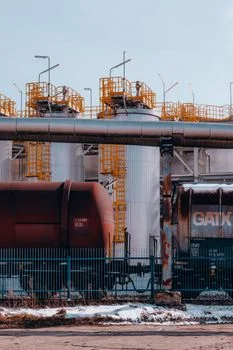
Dissolved Air Flotation (DAF) units suit Auckland food and beverage plants, removing 92–97% of FOG and TSS. They work well at 50–300 m³/h and cut high-strength waste surcharges. Micro-bubbles float solids for skimming and protect downstream biology or sewer assets.
Membrane Bioreactor (MBR) trains fit pharmaceutical sites and direct reuse goals. They deliver 99% pathogen reduction and hold COD below 50 mg/L against Mangere reuse targets. With industrial land at NZD 2,000–4,000 per square meter, the compact MBR footprint beats large activated-sludge basins or lagoons.
Chemical precipitation remains the metalworking default. Using chemical dosing for heavy metal precipitation in Auckland’s metalworking facilities, plants can reach 99.9% removal of chromium and arsenic. Hazardous sludge then needs off-site disposal at NZD 1,200–1,800 per tonne in Auckland. Some sites compare electrocoagulation as an alternative to chemical precipitation for Auckland’s metalworking plants to cut chemical use and sludge mass.
| Technology | Removal Efficiency | Footprint | CapEx (NZD) | Best Use Case |
|---|---|---|---|---|
| DAF | 95% FOG / 90% TSS | Medium | $500k - $1.2M | Meat/Dairy Processing |
| MBR (DF) | 99% Pathogens / 98% COD | Compact | $2M - $4M | Pharmaceutical/Reuse |
| Chem-Precip | 99.9% Metals | Small-Medium | $300k - $800k | Electroplating/Wiri Industrial |
MBR Design Specs for Auckland Pharmaceutical Wastewater
Pharmaceutical loads combine residual APIs, pathogens, and variable organics, so membrane selection drives both compliance and cost. Design flux of 15–25 LMH balances throughput against fouling, while MLSS of 8,000–12,000 mg/L sustains removal in a compact tank. Aeration demand of 0.3–0.5 kWh/m³ remains the key OPEX lever. Hospital and laboratory streams can standardize on the Medical & Hospital Wastewater Treatment System for the same membrane polish.
Chemical Precipitation Chromium Removal in Wiri Metalworking
Chromium-focused precipitation needs tight pH control between 8.5 and 9.5. Ministry for the Environment 2024 guidelines keep sulfide dosage at 1.5–2.0 times the stoichiometric ratio for complete reaction. The same chemistry supports 99.9% arsenic removal when metals are the primary load.
Watercare Reuse Standard and Mangere Wastewater Compliance
Reuse-grade targets sit below bylaw defaults and drive technology choice. The Mangere-linked reuse standard targets TSS ≤ 10 mg/L, COD ≤ 250 mg/L, and FOG ≤ 10 mg/L, tighter than the sewer column above. MBR trains hold COD below 50 mg/L against these limits, which is why membrane plants dominate reuse submissions.
How Does Sulfide Precipitation Achieve Arsenic Removal Targets?
Sulfide precipitation settles metals at far lower solubility than hydroxide chemistry allows. Outside the pH window of 8.5 to 9.5, chromium can resolubilize and breach the 0.1 mg/L limit even after correct dosing. Auckland water hardness of 120–180 mg/L CaCO₃ changes buffering, so automated controllers limit pH swings that would resolubilize metals. Compact skids such as an Underground Package Sewage Treatment Plant (WSZ Series) can house polishing stages where land is scarce.
Engineering Specs for Auckland-Compliant Wastewater Treatment Systems
DAF design should hold hydraulic loading at 5–10 m/h and an air-to-solids ratio of 0.02–0.06 for Watercare permits. High-protein meat-plant wastewater in South Auckland needs 20–40 minutes retention in the flotation cell. Those settings keep separation stable through peak production cycles.
MBR design should target membrane flux of 15–25 LMH to balance throughput and membrane life, with MLSS at 8,000–12,000 mg/L in a small tank. Aeration demand of 0.3–0.5 kWh/m³ remains a key OPEX lever as utility prices rise. Teams specifying industrial wastewater treatment equipment cross-check these bands against agreement mass limits, as the industrial wastewater treatment in Sydney guide shows for Sydney Water.
| Spec Parameter | DAF (Food) | MBR (Chem/Pharm) | Precipitation (Metal) |
|---|---|---|---|
| Hydraulic Loading | 5 - 10 m/h | 15 - 25 LMH (Flux) | 1.0 - 2.0 m/h (Settling) |
| Retention Time | 20 - 40 mins | 6 - 10 hours (HRT) | 30 - 60 mins |
| Sludge Yield | 0.05 - 0.1 kg/m³ | 0.2 - 0.4 kg/m³ | 0.5 - 1.2 kg/m³ |
| Target Effluent | FOG < 100 mg/L | COD < 50 mg/L | Cr < 0.1 mg/L |
Why Does Early Nanofiltration Underperformance Signal Structural Design Risk?
When a polishing stage misses design flow from day one, the gap is rarely a short tuning issue. It points to hydraulic or membrane selection risk that restoring nominal setpoints may not fix. Auckland plants see similar instability when stormwater dilution shifts influent strength, and equalization at 1.5–2 times dry-weather flow reduces that risk. Christchurch engineering notes in the industrial wastewater treatment in Christchurch guide stress the same early hydraulic checks.
Cost Breakdown: Industrial Wastewater Treatment in Auckland (2026 CapEx/OPEX)
DAF systems in Auckland carry a CapEx of NZD 500,000–1.2M for capacities of 50–300 m³/h. Table ranges place MBR CapEx at NZD 2M–4M and chemical precipitation at NZD 300k–800k. Sludge disposal at NZD 1,200–1,800 per tonne often dominates OPEX for metal plants. Industrial waste water management budgets should also price land opportunity cost at NZD 2,000–4,000 per square meter when comparing footprints.
What Does a DAF System Cost for Auckland Food Processing?
A DAF system for Auckland food processing typically lands between NZD 500,000 and NZD 1.2M installed, sized for 50–300 m³/h. Meat and dairy sites sit at the upper band because of scaler capacity and sludge handling. Most industrial wastewater management reviews start by logging twelve months of influent COD, FOG, metals, and peak flow before vendors are shortlisted. Teams tendering beyond New Zealand also cross-check the Industrial Wastewater Treatment in Perth 2026 engineering guide for comparable spec tables.
Who This Is For / Who Should Look Elsewhere / Next Step
This guide is for Auckland food, metalworking, pharmaceutical, and petrochemical plants facing trade waste duties and Watercare reuse limits with defined CapEx bands. Municipal-only sewer users without pre-treatment duties, or sites outside NZ permit regimes, should use local utility manuals instead. Share influent COD, FOG, metals, and peak flow with your process engineer to confirm sizing, or send your influent numbers to our engineering team for a sized equipment proposal.
Frequently Asked Questions
What are the Auckland trade waste bylaw 2022 discharge limits?
The operative rules are the Auckland Trade Waste Bylaw 2013 and the Trade Waste Control 2019, not a 2022 bylaw. Low-risk discharges stay under 10 m³/day and 0.5 L/s, with pH held between 6 and 10.5. Agreement targets such as COD ≤ 250 mg/L, TSS ≤ 30 mg/L, and chromium ≤ 0.1 mg/L sit inside those defaults, so check your agreement schedules first.
When does an Auckland plant need a trade waste agreement?
Any discharge that fails one low-risk test needs an agreement. Flow above 10 m³/day or 0.5 L/s, an activity outside Schedule 1, Schedule 3 prohibitions, or combined stormwater each trigger the requirement. Watercare processes complete applications in 20 working days and issues agreements for terms of usually up to five years.
How does Watercare calculate mass limits for oil and grease?
Watercare multiplies the concentration of each substance by the discharge volume over 24 hours. Its worked example takes 150 grams per cubic metre of oil and grease across 100 cubic metres to reach 15 kilograms per day. The same method converts agreement concentration caps into daily mass limits.
Can stormwater or groundwater go into the Auckland sewer network?
No. Section 14 of the Auckland Council Water Supply and Wastewater Network Bylaw 2015 prohibits those discharges to the wastewater network. Contaminated groundwater is only considered case by case under an agreement with strict controls. Keep roof and yard drainage on the stormwater system.
Which treatment train suits high-FOG food processing waste?
Dissolved air flotation is the default first stage. DAF units remove 92–97% of FOG and TSS at 50–300 m³/h, holding discharge below the 100 mg/L FOG threshold. Meat and dairy plants pair DAF with screening and equalization at 1.5 to 2 times dry-weather flow before biological polish.
What does full compliance cost for an Auckland industrial plant?
CapEx runs from about NZD 300k for chemical precipitation to NZD 4M for MBR reuse trains, with DAF between NZD 500,000 and NZD 1.2M. OPEX is dominated by sludge disposal at NZD 1,200–1,800 per tonne and aeration at 0.3–0.5 kWh/m³. Fines up to NZD 200,000 per breach usually dwarf both.