Why Winery Wastewater Is a Unique Challenge for Biological Treatment
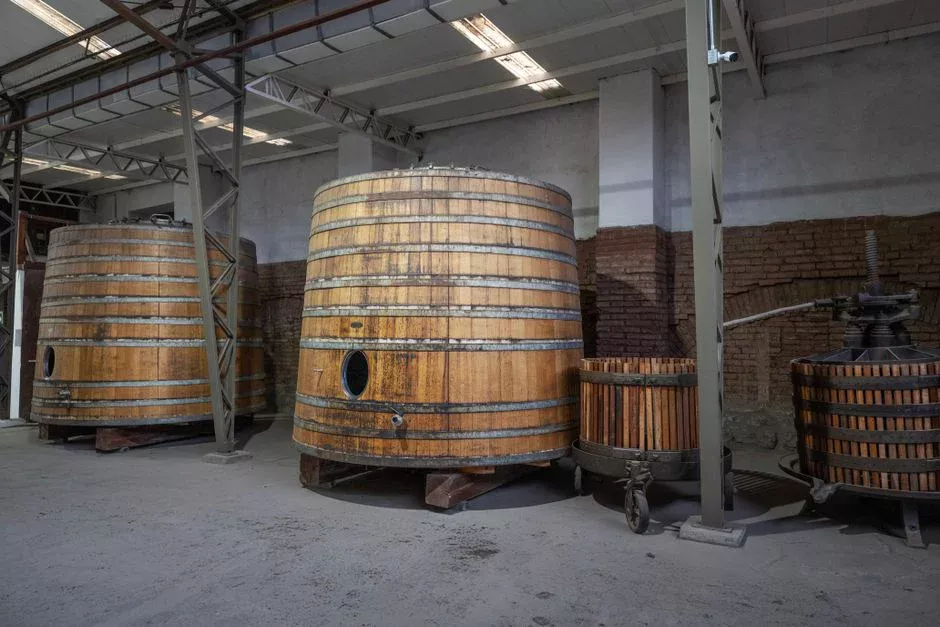
Winery effluent breaks conventional activated sludge (CAS) because the load is not just high — it is violently seasonal. During crush, raw wastewater registers COD of 8,000–25,000 mg/L, BOD of 5,000–15,000 mg/L, TSS of 1,000–4,000 mg/L, pH of 3.5–5.0, and temperatures of 20–35 °C (HydropureWater field data, 2026). Peak hydraulic flows in September–October (Northern Hemisphere) or February–April (Southern Hemisphere) hit 5–10× the annual average, and a single red-wine varietal with extended maceration can deliver a 3× higher COD spike than a white-wine crush at the same flow rate. Ethanol carryover from fermenter washes, polyphenols that inhibit nitrifiers, and caustic cleaning chemicals (NaOH at pH 12–13 plus P3-family surfactants) create a triple shock — organic, toxic, and pH — that a CAS basin at 3,000–5,000 mg/L MLSS cannot buffer. A submerged membrane bioreactor running at 8,000–12,000 mg/L MLSS absorbs those shocks because hydraulic retention time and solids retention time are decoupled; the biomass stays put while the permeate flows out. The EU Winery BREF (Best Available Techniques Reference Document, 2024 update) explicitly calls for treatment trains that can handle this seasonal variability, and that regulatory pressure is why more New World wineries are now moving away from pond systems designed in the 1990s.
How an MBR Works on Winery Effluent: Process Flow and Mechanism
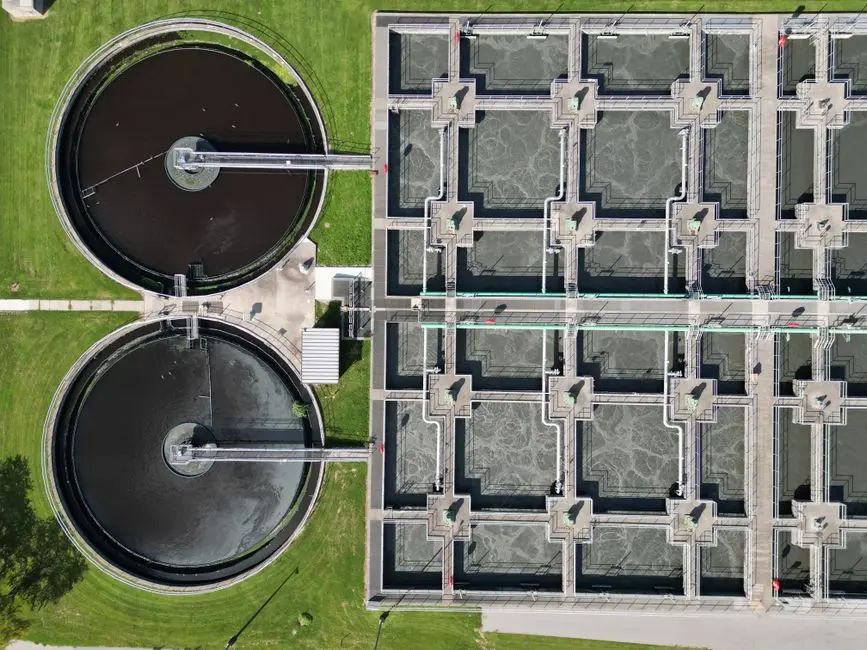
The defensible process flow for a winery MBR trains unit operations to strip the worst fouling precursors before they ever touch the membrane. A rotary bar screen for headworks removes stems, labels, and grape solids at 2–3 mm spacing; flow equalization sized for ≥48 h peak retention dampens the 5–10× seasonal swing; NaOH dosing lifts pH from 3.5–5.0 into the 6.5–7.5 biology window; a DAF pre-treatment unit floats lees, light solids, and emulsified cleaning residues; a plate heat exchanger drops temperature below 35 °C to protect biomass activity. The stream then enters the anoxic/aerobic MBR tank where DF series flat-sheet PVDF membrane modules with 0.1 μm nominal pore size physically retain biomass. Submerged flat-sheet geometry is preferred over hollow-fiber or external cross-flow for wineries because it runs at 10–20× lower energy (no recirculation loop), tolerates the intermittent operation that off-season brings, and lets maintenance staff pull and replace one cassette at a time during the December–January shutdown window. Final permeate passes through a ClO₂ disinfection generator for permeate polishing before discharge or RO polish for reuse. The global MBR market is tracking from $4.1B in 2024 toward $6.8B by 2030 at an 8.9% CAGR, with food and beverage plus water-reuse mandates as the two largest demand drivers (MBR market 2026 outlook).
MBR Design Parameters for Winery Applications
The numeric envelope below can be lifted into a P&ID or tender document without further interpretation. A 500 m³/day peak winery flow needs roughly 3,000–4,500 m² of installed membrane area — typically 20–30 DF-series cassettes at 150 m² each, given module availability in 80–225 m² configurations with per-cassette throughput of 32–135 m³/day (per DF module spec). The table summarizes the operating window.
| Parameter | Design value (off-season) | Design value (harvest peak) | Notes |
|---|---|---|---|
| MLSS | 8,000 mg/L | 10,000–12,000 mg/L | Higher MLSS buffers organic shock |
| HRT | 36 h | 18–24 h | Shortened at peak to maintain throughput |
| SRT | 60 days | 30–45 days | Decoupled from HRT by membrane |
| F/M ratio | 0.05 kg BOD/kg MLSS·d | 0.10–0.15 kg BOD/kg MLSS·d | Stay below 0.15 to limit foaming |
| Membrane flux (25 °C) | 12–15 LMH | 15–20 LMH (derate to 8–12 LMH if TMP rises) | Flux derate is the harvest safety margin |
| Scour aeration | 0.3 m³ air/m²·h | 0.4–0.5 m³ air/m²·h | Coarse-bubble, dedicated blower |
| Process aeration SOTE | ≥30% | ≥30% | Fine-bubble diffusers in aerobic zone |
| Equalization | ≥48 h at peak day flow | ≥48 h at peak day flow | Single most under-designed element in failed winery MBRs |
Coarse-bubble scour at 0.3–0.5 m³ air per m² of membrane area per hour is set independently of process aeration; one blower feeds the membrane, a second feeds the biology. Sizing the equalization tank for at least 48 hours at peak day flow is the single most under-designed element in failed winery MBR retrofits — operators consistently underestimate the September–October surge. For a packaged plant on a constrained site, the integrated MBR membrane bioreactor system ships the equalization, biology, and membrane cassette in a single skid, which removes most of the field-fabrication error from the schedule.
Effluent Quality and Compliance Targets for 2026
A properly commissioned submerged PVDF MBR routinely delivers COD <50 mg/L, BOD <10 mg/L, TSS <5 mg/L, turbidity <1 NTU, and fecal coliforms <2.2 CFU/100 mL after ClO₂ polishing — numbers that sit comfortably below the tightest reuse envelopes and most surface-discharge permits (HydropureWater field data, 2026). The table crosswalks the major regulatory frameworks a winery engineer will face in 2026.
| Parameter | EU Winery BREF (2024) | US EPA MSGP (food/beverage) | China GB 19821-2005 | California Title 22 (landscape reuse) | Typical MBR permeate |
|---|---|---|---|---|---|
| COD | ≤125 mg/L | ≤120 mg/L (30-day avg) | ≤100 mg/L | — | <50 mg/L |
| BOD | ≤25 mg/L | ≤30 mg/L (30-day avg) | ≤20 mg/L | ≤10 mg/L | <10 mg/L |
| TSS | ≤35 mg/L | ≤30 mg/L | ≤30 mg/L | ≤5 mg/L (filtered) | <5 mg/L |
| Turbidity | — | — | — | ≤2 NTU (avg) | <1 NTU |
| Fecal coliforms | — | — | — | ≤2.2 CFU/100 mL | <2.2 CFU/100 mL post-ClO₂ |
For vineyard irrigation or clean-in-place (CIP) water reuse, MBR permeate typically meets the spec without further treatment, with RO polish available where the winery needs process-grade water. Some EU member states (Spain, Italy, France) require additional tertiary polishing — sand filters or constructed wetlands — before soil aquifer recharge; that is a site-specific design call, not an MBR limitation.
Cost and ROI: 2026 CAPEX and OPEX for a Winery MBR
For a small-to-mid winery in the 50–1,000 m³/day design-flow range, turnkey CAPEX lands at $35,000–$90,000 per 100 m³/day, with larger plants benefiting from modular cassette scaling. OPEX breaks down as energy $0.05–$0.12/m³ (aeration plus permeate pump), membrane replacement 15–20% of annual OPEX, chemical dosing (NaOH, antifoam, ClO₂) $0.03–$0.08/m³, and labor plus sludge handling filling the remainder, for a total OPEX typically in the $0.18–$0.42/m³ band. PVDF flat-sheet membranes last 5–8 years with routine maintenance cleaning (CIP with dilute NaOH + citric acid, monthly), and cassette-level replacement avoids a full-system rebuild at end of life. The table summarizes the financial envelope.
| Cost element | Winery MBR (2026) | SBR (2026, comparison) |
|---|---|---|
| Turnkey CAPEX | $35,000–$90,000 per 100 m³/day | $25,000–$60,000 per 100 m³/day |
| Energy OPEX | $0.05–$0.12/m³ | $0.06–$0.15/m³ |
| Total OPEX | $0.18–$0.42/m³ | $0.20–$0.55/m³ (SBR plant OPEX benchmark for comparison) |
| Footprint (per m³/day) | ~0.15–0.25 m² | ~0.40–0.60 m² |
| Permeate reuse | 60–80% recovery, irrigation/CIP grade | Typically not reuse-grade |
| Typical payback | 3–5 years (reuse offset) | 5–8 years |
Reuse is where MBR pays back fastest. At 60–80% permeate recovery for vineyard irrigation or CIP, a 500 m³/day winery saves $15,000–$40,000/year in freshwater purchase plus sewer discharge fees, which compresses payback to 3–5 years. Process-flow CAPEX/OPEX detail sits in the winery effluent treatment plant buyer's guide.
When MBR Is and Isn't the Right Choice for a Winery
MBR is the right call when discharge limits are tight (COD <50 mg/L), reuse for vineyard irrigation or CIP is a stated goal, site footprint is constrained, and seasonal shock loading is high — the typical mid-to-large winery profile. It is overkill when the winery flow is under 20 m³/day, the site has ample land for constructed wetlands or aerated lagoons, and the discharge permit is lenient (COD <250 mg/L); in that envelope DAF + SBR or a lagoon system wins on CAPEX by a wide margin. A hybrid option — SBR followed by MBR polish — suits very large facilities that need both high-rate biology and ultra-low TSS for the strictest reuse permits. The decision rule of thumb: if the winemaking operation produces more than 100 m³/day at peak AND the owner values water reuse, MBR is the technical and economic sweet spot; below that threshold and without a reuse driver, SBR or wetlands usually wins.
Frequently Asked Questions
What COD removal can a winery MBR achieve?
A submerged PVDF MBR reduces raw winery COD of 8,000–25,000 mg/L to <50 mg/L in the permeate — a >99% removal across the membrane stage.
What membrane flux is used for winery effluent?
Design flux is 12–20 LMH at 25 °C, derated to 8–12 LMH during harvest when viscosity and fouling load rise.
How much does a winery MBR cost in 2026?
Turnkey CAPEX runs $35,000–$90,000 per 100 m³/day, with OPEX of $0.18–$0.42/m³ across a 50–1,000 m³/day design envelope.
Can MBR permeate be reused in the winery?
Yes — permeate typically meets vineyard irrigation and CIP water quality at 60–80% recovery, saving $15,000–$40,000/year at a 500 m³/day site.
How long do PVDF flat-sheet membranes last in a winery?
PVDF flat-sheet membranes run 5–8 years with monthly maintenance CIP; end-of-life replacement is cassette-by-cassette, not full skid. For a wider process-design view, see the winery effluent treatment plant buyer's guide.