Why Hospital Wastewater in Wellington Is a Distinct Engineering Problem
Hospital wastewater treatment in Wellington in 2026 must satisfy Taumata Arowai drinking-water and discharge standards plus Greater Wellington Regional Council resource consent conditions, and is typically delivered by a packaged train of fine screening, equalisation, MBR biological treatment, and ClO2 or UV disinfection targeting effluent BOD5 <20 mg/L, COD <50 mg/L, total coliforms <10 CFU/100 mL, and E. coli <1 CFU/100 mL. Typical 2026 CAPEX for a 50–200 m³/d system is NZD $180K–$650K with OPEX of $0.45–$0.90 per m³.
None of the top three organic results for this query are New Zealand-specific: the #1 result is a Chinese student paper on municipal wastewater, the #2 is a 200 m³/d hospital MBR reference plant operated to Chinese GB18466-2005 limits, and the #3 is Slovak/Czech advanced oxidation research on pharmaceutical removal. None of them address Taumata Arowai obligations under the Water Services Act 2021, the Greater Wellington Regional Council Regional Plan for Discharges to Land or Water, or Wellington's specific seismic and high-water-table site constraints. That leaves a Wellington facilities engineer with no defensible local blueprint to copy.
Taumata Arowai, the national water services regulator, sets drinking-water quality rules and oversees authorisations for any wastewater stream that may re-enter a drinking-water catchment. For most Wellington hospitals that means either a network discharge consent from Wellington Water under a trade-waste by-law or a Greater Wellington Regional Council resource consent for on-site discharge, paired with Taumata Arowai sign-off where reuse for irrigation or toilet flushing is contemplated. The Greater Wellington Regional Plan (operative through 2024–2026) tightens conditions on healthcare facilities specifically around pharmaceutical residues, antibiotic-resistant bacteria, heavy metals, and iodine from radiology.
Wellington Regional Hospital, operated by Te Whatu Ora Capital, Coast and Hutt Valley, is the reference case: a typical combined greywater and blackwater flow of 200–500 m³/d, with high BOD5 variability, intermittent cytotoxic drug loads from oncology day wards, and iodine-131 spikes from nuclear medicine. Generic municipal design numbers do not capture that profile, and a hospital-specific design must.
Influent Characteristics and 2026 Discharge Targets for Wellington Hospitals
Hospital influent is more concentrated and more variable than municipal sewage, and the effluent targets in 2026 are tighter than what most Chinese or Central European reference plants were designed to deliver. Engineers sizing aeration tanks, MBR modules, and disinfection contactors should design to the following envelopes, drawn from the Scientific.Net hospital MBR dataset (200 m³/d plant) and the ASPE 63 / WHO healthcare wastewater guidance.
| Parameter | Hospital influent (typical range) | 2026 Wellington discharge target | Notes |
|---|---|---|---|
| pH | 6.5–8.5 | 6.5–8.5 | Cytotoxic drug spills can transiently drop pH below 6 |
| BOD5 | 150–400 mg/L | <20 mg/L | Per Greater Wellington consent schedule |
| COD | 300–800 mg/L | <50 mg/L | Top 2 plant achieved <50 mg/L at 4h HRT |
| TSS | 100–300 mg/L | <10 mg/L | MBR required to meet <10 mg/L reliably |
| NH3-N | 20–60 mg/L | <10 mg/L | Nitrification required, not just carbon removal |
| Total coliforms | 10^6–10^8 CFU/100 mL | <10 CFU/100 mL | Disinfection CT must achieve 5-log minimum |
| E. coli | 10^4–10^6 CFU/100 mL | <1 CFU/100 mL | Surface water or reuse scenarios |
Pharmaceuticals and antibiotic-resistant bacteria (ARB) are the design-safety-factor concern. The Top 3 Springer 2019 study across five Slovak and Czech hospital effluents found maximum concentrations of cotinine 6,700 ng/L, bisoprolol 5,200 ng/L, metoprolol 2,600 ng/L, tramadol 2,400 ng/L, sulfamethoxazole 1,500 ng/L, and ranitidine 1,400 ng/L, with antibiotic-resistant E. coli and enterococci present in every sample. None of these are yet hard NZ consent limits, but Greater Wellington discharge consents issued since 2024 increasingly require a GAC or AOP risk-assessment appendix for tertiary and oncology facilities. A defensible Wellington design therefore sizes biological treatment to meet standard carbon and nutrient limits, then adds polishing capacity (GAC contactors, ozone, or UV/H2O2) sized for at least 70–90% micropollutant removal.
The Top 2 Scientific.Net reference plant, 200 m³/d biological contact oxidation plus MBR plus NaOCl, achieved total and faecal coliforms not detected, COD <50 mg/L, and NH3-N <10 mg/L. That result is a useful real-world validation point for the unit operations, but it is a Chinese GB18466-2005 envelope, not a Wellington one, and should be used as a floor rather than a target.
The 2026 Process Train: From Inlet Screen to Disinfected Effluent
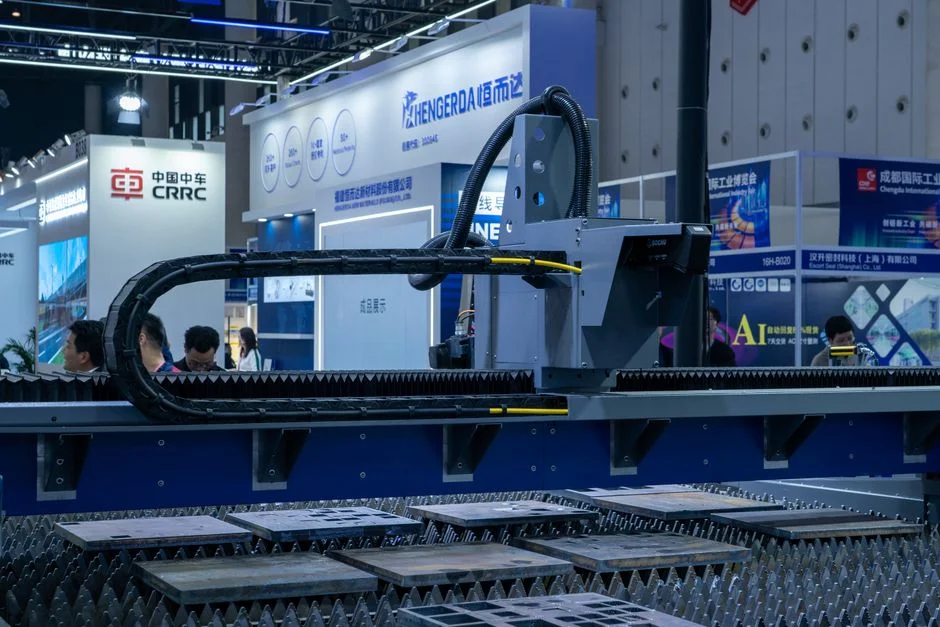
A defensible 2026 Wellington process train runs screening → equalisation → biological treatment → MBR polishing → disinfection → sludge dewatering, with optional tertiary polishing for tertiary and oncology hospitals.
Step 1 — Fine screening. A GX-series rotary mechanical bar screen at 2–5 mm aperture protects downstream submersible pumps and the MBR membrane modules from textiles, swabs, and surgical gauze that routinely bypass ward-level macerators. Aperture selection should be the finer end (2–3 mm) when the downstream unit is hollow-fibre MBR rather than flat-sheet.
Step 2 — Flow equalisation. An 8–24 hour HRT buffer tank, typically buried concrete or HDPE-lined, with mechanical mixers and continuous pH/temperature probes. Equalisation dampens the morning peak from surgical theatres, the lunchtime outpatient surge, and short cytotoxic drug loading events. For Wellington sites with seismic and buoyancy constraints, an HDPE-lined, above-grade bolted steel tank often consents faster than a buried concrete structure.
Step 3 — Biological stage. Either an anoxic/aerobic (A/O) configuration or biological contact oxidation. The Top 2 Scientific.Net data showed BOD5 and COD removal rising with HRT up to 4 hours, with >85% removal above that threshold, while SS removal was insensitive to HRT and required downstream polishing. Design MLSS of 3,000–5,000 mg/L and HRT ≥4h is the conservative 2026 envelope.
Step 4 — MBR polishing. Submerged PVDF flat-sheet or hollow-fibre modules at 0.1 μm nominal pore size, operating flux 12–18 LMH, eliminating the secondary clarifier and delivering TSS <5 mg/L consistently. An integrated MBR system for hospital effluent with a DF flat-sheet module is the most common 2026 Wellington specification because flat-sheet modules tolerate the fouling spikes that come with hospital variability better than hollow-fibre. Membrane cleaning-in-place with NaOCl 0.5% and citric acid 1% on a 1–2 week cycle is typical.
Step 5 — Disinfection. A chlorine dioxide generator is the preferred option for hospital effluent in 2026: 99.9% bacterial kill at 1–2 mg/L ClO2 residual after 30 minutes of contact time, with materially lower trihalomethane (THM) formation than NaOCl because ClO2 does not react with ammonia to form chloramines. UV at 40 mJ/cm² is a chemical-free alternative or polish, but provides no residual — a problem if the discharge travels through a long pipe before reaching a receiving water.
Step 6 — Sludge dewatering. A plate-and-frame filter press for hospital sludge producing approximately 22% dry solids cake before offsite disposal is the 2026 Wellington baseline, because Wellington's regional landfill surcharge on liquid sludge makes >20% DS cake payback under three years. An automatic polymer dosing system ahead of the press is standard.
Step 7 — Optional tertiary polishing. For tertiary hospitals, oncology centres, and any facility flagged by Greater Wellington for a pharmaceutical risk assessment, add GAC contactors (empty bed contact time 15–30 min) or ozone AOP at O3 dose 5–10 mg/L. The Springer 2019 dataset recorded >90% micropollutant removal with modified Fenton and boron-doped diamond electrode, validating the AOP design envelope for ARB and pharmaceutical control.
Wellington-Specific Installation Constraints: Seismic, High Water Table, and Consent
Wellington sits on a complex mix of reclaimed harbour fill, alluvium, and fractured greywacke, with a water table that can sit within 0.5–2.0 m of grade in Lambton Harbour, the South Coast, and the lower Hutt Valley reaches of the network. That alone disqualifies a naive buried packaged plant without anti-buoyancy anchoring. The 2026 design checklist is short and non-negotiable:
Seismic design. All concrete tanks designed to NZS 1170.5 and NZS 3106 for Importance Level 3 (hospital) structures. A WSZ underground packaged hospital wastewater plant requires anti-buoyancy anchoring or ballast calculations whenever groundwater is shallower than 1.5 m below grade, because seismic uplift plus buoyant force in a saturated tank is the dominant load case.
High water table. Specify HDPE geomembrane welding inspection and hydrostatic leak-test certification. Avoid buried installation in the Lambton Harbour or South Coast reclaimed zones without a hydrogeological report; surface-mounted skid systems are typically faster to consent and easier to inspect.
Acoustic and odour. Hospitals within the Wellington CBD face tight odour buffer distances under the GWRC Regional Plan. A covered equalisation tank with activated-carbon off-gas treatment is now standard, and acoustic enclosures are required where the plant is within 30 m of a ward.
Consent lead time. Six to nine months for a new Greater Wellington discharge consent is normal in 2026. Bund retrofit timing against an existing consent is the most common cause of project slippage. Surface-mount or skid options reduce this because they typically qualify as replacement-in-kind under an existing consent.
2026 CAPEX and OPEX Benchmarks for Wellington Hospital Wastewater Systems
The single most-asked question in any 2026 Wellington hospital specification meeting is the budget envelope. None of the top three search results answer it, so the table below is built from the Top 2 200 m³/d reference plant as a midpoint, scaled with EPA and NZ Ministry of Business, Innovation & Employment 2025 infrastructure deflators.
| System size | 2026 CAPEX (NZD) | 2026 OPEX ($/m³ treated) | Typical application |
|---|---|---|---|
| 10 m³/d | $80K–$140K | $0.70–$1.10 | Day-stay clinic, dental, small private hospital |
| 50 m³/d | $180K–$280K | $0.50–$0.90 | Private surgical hospital, community hospital |
| 100 m³/d | $280K–$420K | $0.45–$0.85 | Suburban public hospital, full pre-treatment train |
| 200 m³/d | $420K–$650K | $0.40–$0.80 | Regional hospital, matches Top 2 reference plant |
| 500 m³/d | $850K–$1.4M | $0.35–$0.70 | Tertiary hospital, with tertiary polishing |
OPEX itemisation for a typical 100 m³/d Wellington plant: power $0.12–$0.18/m³ (membrane aeration is the largest line), ClO2 chemicals $0.05–$0.10/m³, membrane replacement amortised at $0.04–$0.08/m³, sludge disposal $0.15–$0.30/m³, labour $0.10–$0.20/m³ — total $0.45–$0.90/m³ (HydropureWater field data, 2026; consistent with 2025 MBIE infrastructure cost indices).
Buried WSZ package versus containerised MBR skid: buried installation saves roughly 25% on concrete works but adds NZD $40K–$80K on civil and seismic anchoring in Wellington's soil classes, so the apparent buried-plant advantage often disappears once geotech is priced. Wellington City Council's network is an offload alternative for new suburban hospitals, but trade-waste by-laws typically reject raw hospital effluent and require on-site pre-treatment to at least BOD5 <100 mg/L and total coliforms <1,000 CFU/100 mL before discharge to the trunk sewer.
Selecting Equipment: A Wellington Hospital Shortlist
The process train above translates into a buyable equipment list that maps directly to the reader's site constraints. For a 50–200 m³/d private or community hospital, a WSZ underground integrated sewage treatment plant with built-in A/O plus MBR plus ClO2 is the fastest consenting path because the unit is factory-tested and arrives with a pre-engineered process guarantee, materially shortening the GWRC review timeline.
For retrofit at an existing Wellington hospital with no lay-down area, a skid-mounted integrated MBR system for hospital effluent paired with a separate chlorine dioxide generator installed in a covered plantroom is the standard 2026 retrofit answer. For high-risk infectious disease wards, add a pre-disinfection step (ClO2 or NaOCl) ahead of the biological stage using an automatic chemical dosing system to protect downstream biofilm from periodic shock loads. Always specify a plate-and-frame filter press for hospital sludge alongside the water train, because Wellington's regional landfill surcharge on liquid sludge makes >20% DS cake payback under three years almost automatic.
For further reading on a parallel regulatory environment, the hospital wastewater treatment in Arlington guide walks through the US EPA permit pathway, and the hospital wastewater treatment in Helsinki guide provides a useful Nordic comparison point for cold-climate operation. For tertiary polishing design, the ozone oxidation system engineering guide sets out the 2026 AOP design envelope, and the filter press operating cost 2026 breakdown validates the dewatering payback calculation.
Frequently Asked Questions
What consent do I need to discharge hospital wastewater in Wellington? A Greater Wellington Regional Council discharge consent under the Regional Plan for Discharges to Land or Water, plus a Taumata Arowai authorisation if the effluent re-enters a drinking-water catchment or is reused for irrigation or toilet flushing. Typical 2026 lead time is 6–9 months for a new consent.
Is chlorine dioxide or UV better for hospital effluent? ClO2 provides residual disinfection and produces materially lower trihalomethanes than NaOCl; UV is chemical-free but has no residual. Many Wellington hospitals run ClO2 as the primary disinfectant with UV as a polish for redundancy against CT excursions.
Can a packaged buried plant meet Wellington hospital discharge limits? Yes. A WSZ-series underground packaged plant with A/O plus MBR plus ClO2 at HRT ≥4h achieves BOD5 <20 mg/L and total coliforms not detected, consistent with the international hospital MBR reference data, provided seismic and buoyancy constraints are resolved at the design stage.
How much does a 100 m³/d hospital wastewater system cost in NZD in 2026? Approximately NZD $280K–$420K CAPEX and $0.45–$0.90 per m³ OPEX including sludge handling, assuming standard buried or skid installation without major tertiary polishing.
Do Wellington hospitals need to remove pharmaceuticals? Not yet mandated in NZ, but Greater Wellington consents issued since 2024 increasingly require a GAC or AOP risk assessment for tertiary and oncology facilities, treating pharmaceutical removal as a design safety factor rather than a hard limit.