Alexandria’s hospital wastewater treatment must comply with Egyptian Law 48/1982 and WHO guidelines, targeting COD < 120 mg/L, BOD < 60 mg/L, and phenol < 0.5 mg/L (per 2024 Alexandria Environmental Affairs Agency data). Local surveys reveal 68% of medical facilities exceed phenol limits, requiring advanced treatment like MBR (95%+ removal) or chlorine dioxide disinfection (99.9% pathogen kill). This guide provides Alexandria-specific engineering specs, cost breakdowns, and equipment selection criteria for 2025.
Why Alexandria’s Hospital Wastewater Requires Specialized Treatment
Hospital wastewater in Alexandria exhibits a chemical profile significantly more complex than standard municipal sewage, primarily due to the high concentration of disinfectants, pharmaceuticals, and laboratory reagents. According to a comprehensive survey of 4,935 medical facilities in the region, hospital effluent contains 3–5× higher phenol concentrations than municipal sewage, frequently exceeding the stringent limits set by the Alexandria Environmental Affairs Agency (AEAA). Phenol exceedances are a critical concern, as these compounds are recalcitrant to standard activated sludge processes and can inhibit the biological activity required for effective treatment.
The Nile Delta’s unique geography introduces additional engineering challenges, specifically regarding salinity. Total Dissolved Solids (TDS) in Alexandria’s source water and subsequent wastewater typically range between 1,000 and 3,000 mg/L. High salinity increases the osmotic pressure on microbial cell walls, which can reduce the efficiency of Chemical Oxygen Demand (COD) and Biochemical Oxygen Demand (BOD) removal by up to 20% if the system is not properly acclimated or designed with salt-tolerant biomass. the persistence of pathogens such as SARS-CoV-2 and various antibiotic-resistant bacteria (ARB) in untreated hospital streams poses a direct threat to the Mediterranean coastal ecosystem and public health.
| Parameter | Alexandria Hospital Influent (Avg) | Municipal Sewage (Alexandria) | Law 48/1982 Discharge Limit |
|---|---|---|---|
| COD (mg/L) | 850 - 1,200 | 300 - 450 | < 120 |
| BOD (mg/L) | 400 - 600 | 150 - 250 | < 60 |
| Phenol (mg/L) | 5.0 - 20.0 | < 0.1 | < 0.5 |
| TDS (mg/L) | 1,500 - 3,000 | 600 - 1,200 | N/A (Site Specific) |
| TSS (mg/L) | 300 - 800 | 200 - 400 | < 50 |
Alexandria’s Regulatory Framework for Hospital Wastewater: Permits, Limits, and Enforcement
The regulatory landscape for medical facilities in Alexandria is governed by the Ministry of Irrigation and Public Works through Egyptian Law 48/1982, which regulates discharges into the Nile River and its branches, including the drainage systems feeding into the Nile Delta. To operate legally, hospital facility managers must obtain a discharge permit from the Alexandria Environmental Affairs Agency (AEAA). The permit process typically requires a detailed engineering design of the onsite treatment plant, an Environmental Impact Assessment (EIA), and a formal application fee. Processing times in 2024 range from 90 to 120 days, depending on the facility's scale and the complexity of the proposed treatment train.
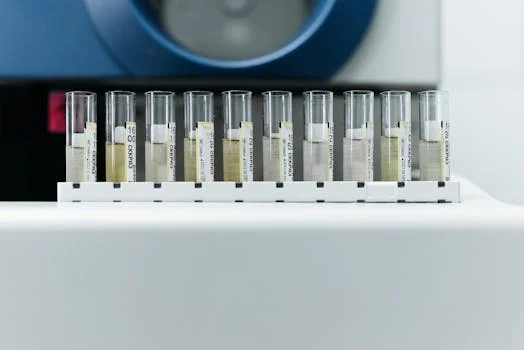
Enforcement has intensified between 2023 and 2024, with the AEAA conducting unannounced inspections and sampling. Non-compliance with phenol or pathogen limits can result in administrative fines reaching EGP 500,000 or the temporary closure of laboratory and surgical wings. Monitoring requirements are stringent: hospitals are mandated to perform weekly internal sampling for BOD, COD, and TSS, while quarterly reports covering heavy metals, phenols, and AOX (Adsorbable Organic Halogens) must be submitted to the Ministry of Health and the AEAA using ISO-certified laboratory methods such as ISO 6060 for COD determination.
| Regulating Body | Egyptian Law 48/1982 | WHO Reuse Guidelines | AEAA 2024 Local Target |
|---|---|---|---|
| COD Limit | 120 mg/L | N/A | 100 mg/L |
| BOD Limit | 60 mg/L | < 30 mg/L | 40 mg/L |
| Phenol Limit | 0.5 mg/L | N/A | 0.1 mg/L |
| Fecal Coliforms | 5000 MPN/100mL | < 10 CFU/100mL | < 100 CFU/100mL |
| Pharmaceuticals | Not Specified | Monitoring Recommended | Target 90% Removal |
Engineering Specs for Hospital Wastewater Treatment in Alexandria: Influent vs. Effluent Targets
Engineering a treatment system for Alexandria’s hospitals requires a precise understanding of the influent's high variability, often referred to as "shock loading," which occurs during peak surgical hours or laboratory cleaning cycles. Typical influent in Alexandria clinics shows COD levels peaking at 1,200 mg/L and phenol concentrations reaching 20 mg/L. Designing for these peaks is essential to prevent biomass washout and ensure the engineering process for medical wastewater treatment remains stable under fluctuating hydraulic loads.
To meet Law 48/1982 standards, the system must achieve a removal efficiency of at least 90% for organic matter and 95% for phenols. Given the high salinity of the Nile Delta water, MBR systems are often preferred for their ability to maintain high biomass concentrations (MLSS of 8,000–12,000 mg/L), which provides greater resilience against osmotic stress. For facilities dealing with high Fat, Oil, and Grease (FOG) from hospital kitchens combined with medical pollutants, DAF systems for phenol and FOG removal in Alexandria hospitals serve as an ideal primary treatment stage. The target effluent must not only meet chemical standards but also achieve a 99.9% pathogen kill rate to satisfy WHO safety protocols for urban environments.
| Process Stage | Target Parameter | Removal Efficiency | Recommended Equipment |
|---|---|---|---|
| Primary | TSS / FOG / Phenol | 70% - 90% | DAF |
| Secondary | COD / BOD / PhACs | 90% - 98% | MBR systems for pharmaceutical removal |
| Tertiary | Pathogens / Viruses | 99.99% | chlorine dioxide disinfection for hospital effluent |
| Pre-treatment | Large Solids | 95% (Sieve) | Rotary Mechanical Bar Screen |
Treatment Process Comparison: MBR vs. DAF vs. Chlorine Dioxide for Alexandria Hospitals
Selecting the appropriate technology involves balancing the high removal requirements for pharmaceuticals and phenols against the operational constraints of Alexandria’s coastal environment. Membrane Bioreactor (MBR) technology offers the highest quality effluent, effectively filtering out micro-pollutants and bacteria. However, MBR systems involve a higher Capital Expenditure (CAPEX) of approximately $250–$400 per m³/day and require careful management of membrane fouling, which is accelerated by the high TDS levels found in the Nile Delta. Pre-treatment is mandatory to extend membrane life in these conditions.
Dissolved Air Flotation (DAF) is a robust alternative or precursor for hospitals with high phenol loads. By using micro-bubbles to float chemically flocculated pollutants to the surface, DAF can remove up to 97% of phenols and suspended solids. This is particularly relevant for Alexandria, as seen in the hybrid configurations used in larger municipal projects like the East Alexandria Wastewater Treatment Plant Phase 2, which utilizes anaerobic digestion and DAF for cost-effective industrial-strength load management. For disinfection, chlorine dioxide disinfection for hospital wastewater is superior to traditional chlorination because it does not produce harmful trihalomethanes (THMs) and remains highly effective against SARS-CoV-2 and antibiotic-resistant strains at lower contact times.
| Feature | MBR (Membrane Bioreactor) | DAF (Dissolved Air Flotation) | Chlorine Dioxide (Disinfection) |
|---|---|---|---|
| Best For | BOD/COD & Pharma removal | Phenol, FOG, & TSS removal | Pathogen & Virus inactivation |
| CAPEX | High ($250 - $400/m³) | Medium ($120 - $200/m³) | Low ($80 - $150/m³) |
| OPEX Drivers | Energy & Membrane Cleaning | Chemical Dosing (Coagulants) | Precursor Chemicals |
| Salinity Tolerance | Moderate (Requires design adj) | High | High |
| Effluent Quality | Ultra-pure (Reuse ready) | Good (Discharge ready) | Pathogen-free |
Cost Breakdown: Hospital Wastewater Treatment Systems for Alexandria (2025 CAPEX/OPEX)
Budgeting for a hospital wastewater system in Alexandria requires accounting for both the initial investment and the long-term operational costs influenced by local factors. For a mid-sized facility (e.g., 50–100 beds) generating 20 m³/day, a hybrid system combining DAF and MBR typically offers the best Total Cost of Ownership (TCO). While the CAPEX for such a system might range from $180 to $300 per m³/day, the reduction in chemical consumption and the prevention of regulatory fines provide a rapid Return on Investment (ROI).
Operational Expenditure (OPEX) in Alexandria is heavily influenced by energy costs (0.8–1.5 kWh/m³ for MBR aeration) and the price of chemical coagulants for DAF units ($0.10–$0.30/m³). Importantly, Alexandria’s labor costs for specialized technicians are lower than European benchmarks, but this is often offset by the increased frequency of membrane replacement due to Nile Delta salinity. A 5-year TCO analysis shows that while MBR has higher upfront costs, its ability to produce reuse-quality water for hospital cooling towers or landscape irrigation can save up to 30% on municipal water procurement costs over time.
| System Type | CAPEX (per m³/day) | OPEX (per m³) | Payback Period (Years) |
|---|---|---|---|
| Standard MBR | $250 - $400 | $0.45 - $0.65 | 3.5 - 5.0 |
| DAF + Biological | $180 - $280 | $0.35 - $0.50 | 2.5 - 4.0 |
| Compact System | $150 - $250 | $0.30 - $0.45 | 2.0 - 3.5 |
| ClO2 Disinfection Only | $80 - $150 | $0.15 - $0.25 | < 2.0 (Compliance) |
Equipment Checklist: Selecting Hospital Wastewater Treatment Systems for Alexandria
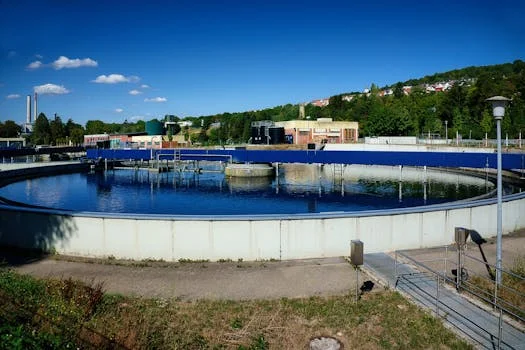
Procuring equipment for medical facilities in the Nile Delta requires a checklist that prioritizes durability against salinity and compliance with Egyptian Law 48/1982. This hospital wastewater treatment in regions with similar water quality challenges demonstrates that integrated, skid-mounted solutions are often most effective for urban hospitals with limited footprint.
- Inlet Screening: Utilize a rotary mechanical bar screen with a mesh size < 3mm to protect downstream pumps and membranes from surgical waste and fibrous materials.
- Primary Clarification: A DAF system is essential if the hospital has a high volume of laboratory reagents or kitchen fats.
- Biological Core: Specify an MBR system for pharmaceutical removal with reinforced PVDF membranes to withstand periodic chemical intensive cleaning (CIP).
- Chemical Management: Install an automatic chemical dosing system for pH adjustment and coagulant delivery to ensure consistent phenol removal.
- Disinfection: Ensure a chlorine dioxide generator is sized for 99.9% pathogen kill, specifically targeting viral loads.
- Sludge Handling: A plate and frame filter press is recommended for dewatering sludge to >30% dry solids to minimize local disposal fees in Alexandria.
- Supplier Verification: Confirm the supplier provides local Egyptian certification and has experience with high-TDS influent common in the Alexandria governorate.
Frequently Asked Questions
What are the discharge limits for hospital wastewater in Alexandria?
Under Egyptian Law 48/1982 and local AEAA 2024 mandates, hospital effluent must meet COD < 120 mg/L, BOD < 60 mg/L, TSS < 50 mg/L, and phenol < 0.5 mg/L. Pathogen levels must be reduced to < 5000 MPN/100mL for sewer discharge and significantly lower for environmental release.
How much does hospital wastewater treatment cost in Alexandria?
For 2025, CAPEX ranges from $120/m³ for basic DAF systems to $400/m³ for advanced MBR systems. Annual OPEX typically averages 10–15% of the initial capital investment, driven by energy for aeration and chemical precursors for disinfection.
What treatment system is best for high phenol loads in medical waste?
Dissolved Air Flotation (DAF) is highly effective, removing 92–97% of phenols when coupled with proper chemical flocculation. For the most stringent limits, a DAF unit followed by an MBR system ensures nearly 100% phenol removal and high-quality effluent.
Can hospital wastewater be reused for irrigation in Egypt?
Yes, provided it meets WHO reuse guidelines and the Egyptian Code for Reuse. This generally requires tertiary treatment (MBR + Chlorine Dioxide) to ensure BOD < 20 mg/L and fecal coliforms < 10 CFU/100mL, making the water safe for non-food crop irrigation or hospital green spaces.
What permits are needed to discharge hospital wastewater in Alexandria?
Facilities must obtain a discharge permit from the Alexandria Environmental Affairs Agency (AEAA). This requires submitting a technical project file, an environmental impact study, and committing to a quarterly monitoring schedule for chemical and biological parameters.