How a ClO₂ Disinfection System Works
A ClO₂ disinfection system generates chlorine dioxide on site, dissolves it into water, and maintains a residual for a defined contact time. Credit uses CT in mg·min/L at a stated temperature. Residuals in drinking water must stay at or below the 0.8 mg/L ClO₂ MRDL. ClO₂ avoids THM formation with NOM and works across pH 4–10.
Most industrial units make ClO₂ by acid-chlorite chemistry (for example 2NaClO₂ + 2HCl → 2ClO₂ + 2NaCl + H₂O) or by electrolytic oxidation of sodium chlorite. The gas is pulled under vacuum into an eductor, then dosed into the wastewater or reuse loop. Unlike free chlorine, ClO₂ oxidizes selected amino acids in the cytoplasm rather than substituting chlorine into organics, so ammonia does not consume the dose as chloramines.
Why Industrial Plants Switch from Chlorine to ClO₂
Industrial plants in food, beverage, and pharmaceutical service often leave sodium hypochlorite because ammonia and organic nitrogen create chloramines. Chloramines are weaker disinfectants and push operators into breakpoint chlorination, which raises chemical use and sludge load. Free chlorine also loses strength as pH rises above about 8.5, when HOCl dissociates to weaker OCl-.
Regulatory pressure on disinfection byproducts reinforces the switch. According to US EPA disinfection profiling guidance (EPA 815-R-20-003, 2020), Stage 1 and Stage 2 DBPR MCLs remain TTHM at 0.080 mg/L (80 µg/L) and HAA5 at 0.060 mg/L (60 µg/L). ClO₂ does not chlorinate natural organic matter to form those THMs the way free chlorine does. The same guidance sets a ClO₂ MRDL of 0.8 mg/L at the entry point to the distribution system and a chlorite MCL of 1.0 mg/L for systems that use ClO₂.
ClO₂ also helps with biofilm control in cooling towers and distribution loops. As a dissolved gas it can penetrate extracellular polymeric substance (EPS) matrices that shelter Legionella. Field reports cited in the source article describe about a 90% reduction in Legionella outbreaks after steady ClO₂ dosing, which also limits microbially induced corrosion on heat exchangers and pipework.
The Chemistry Behind ClO₂: How Oxidation Kills Pathogens
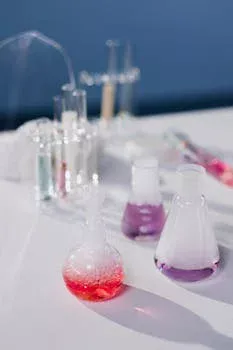
ClO₂ disinfection chemistry differs from free chlorine at the electron level. Free chlorine (HOCl) mainly substitutes chlorine into molecules. ClO₂ acts as a selective oxidant through electron transfer; the full reduction path from ClO₂ to chloride is often described as a five-electron capacity versus two electrons for HOCl/OCl-.
Biocidal action starts when ClO₂ crosses the cell wall and reacts with tyrosine, tryptophan, and cysteine in the cytoplasm. Protein synthesis stops and transmembrane potential collapses, so the organism inactivates structurally rather than through a single metabolic block. At residuals of 0.1–0.5 mg/L in clean matrices, ClO₂ still attacks dormant spores that survive routine chlorination.
| Parameter | Chlorine (HOCl/OCl-) | Chlorine Dioxide (ClO₂) |
|---|---|---|
| Oxidation Capacity | 2 Electrons | 5 Electrons |
| Primary Mechanism | Substitution (Chlorination) | Electron Transfer (Oxidation) |
| Reaction with Ammonia | High (Forms Chloramines) | None (Remains Active) |
| pH Sensitivity | High (Ineffective above pH 8.5) | Low (Stable pH 4–10) |
| THM/HAA5 Formation | High (10–30% yield) | Negligible (<1% yield) |
pH stability matters on alkaline industrial streams. Free chlorine can lose more than half of its disinfecting power between pH 7 and 8.5. ClO₂ remains a dissolved gas across roughly pH 4–10, which suits textile and pulp effluents that stay alkaline after upstream treatment.
ClO₂ Generation Methods: Chemical vs. Electrolytic Systems Compared
A ClO₂ disinfection system must generate the gas on site, because ClO₂ is unstable under pressure and cannot ship in cylinders. The choice between chemical and electrolytic generation depends on required mass output, footprint, and precursor handling rules.
Chemical generation: High-output industrial trains (about 500 to 20,000 g/h) usually run two- or three-precursor chemistry. Sodium chlorite plus hydrochloric acid is the common pair, with conversion efficiencies reported up to 98% at lower baseline CAPEX. Concentrated acid and chlorite storage remain the main safety burden. Modern Chlorine Dioxide (ClO₂) Generator for Water Disinfection skids use vacuum eductors so product gas is not held under pressure.
Electrolytic generation: A single precursor (sodium chlorite) plus electricity yields ClO₂ and avoids bulk acid storage. The reaction (2NaClO₂ + 2H₂O + electricity → 2ClO₂ + 2NaOH + H₂) fits smaller plants or sites with strict chemical-store limits. Energy use is higher (about 0.5–1.2 kWh/kg ClO₂), so this path is typical for 50–500 g/h duty.
| Feature | Chemical (Acid-Chlorite) | Electrolytic System |
|---|---|---|
| Precursors Required | NaClO₂ + HCl (or Cl₂) | NaClO₂ + Electricity |
| Output Range | High (up to 20 kg/h) | Low to Medium (up to 0.5 kg/h) |
| CAPEX | Lower Baseline | 15–20% Higher |
| OPEX | Lower (Chemical costs) | Higher (Energy + Membrane) |
| Maintenance | Precursor pump calibration | Annual electrode/cell service |
Where precursor flow must track demand, an automatic chemical dosing system can meter feeds from online residual or ORP signals. Dual-skid redundancy is common when disinfection cannot stop during maintenance.
System Engineering: How ClO₂ Is Dosed and Monitored in Industrial Wastewater
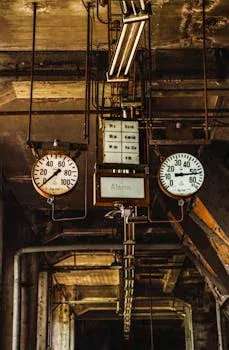
ClO₂ dosing engineering places injectors where oxidation demand and contact time can be controlled. Common points are pre-treatment for iron, manganese, or phenols; post-biological polishing for pathogen kill; and distribution loops for biofilm control. Contact tanks must limit gas stripping while meeting the CT target at peak hourly flow.
PLC loops usually read ORP or amperometric ClO₂ sensors and trim generator output with PID control. Many plants hold a residual between 0.2 and 0.8 mg/L so they stay under the drinking-water ClO₂ MRDL of 0.8 mg/L while keeping a measurable disinfectant. For high-variability hospital effluent, compact ClO₂-based systems for hospital effluent disinfection need fast sensors and frequent calibration checks against manual DPD tests each shift.
Safety design follows process-safety practice similar to OSHA 1910.119 expectations for hazardous chemicals:
- Gas detectors: Ambient ClO₂ sensors on a 0–10 ppm range with dual alarms near 0.1 ppm and 0.3 ppm.
- Vacuum operation: Water-driven venturi generators keep the reaction under vacuum so room releases are unlikely.
- Emergency scrubbers: Passive or active scrubbers neutralize gas if a tank or line fails.
- Fail-safe interlocks: Precursor pumps stop if eductor motive water is lost.
Online analyzers typically poll every 1 to 5 minutes. Operators still run DPD validation once per shift to catch sensor drift before residuals drift outside the control band.
How Do Digital Twin Platforms Improve Real-Time Process Visibility?
Digital twin platforms for SCADA integration map generator output, residual, flow, and energy into one live model of the disinfection train. When the twin compares predicted CT at peak hourly flow against the measured residual, operators see shortfalls before effluent leaves the plant. Energy and chemical use become visible on the same screen, which helps manufacturing and wastewater teams agree on setpoints instead of fighting over batch samples.
Performance Benchmarks: CT Values, Kill Rates, and Residual Levels
CT values for ClO₂ disinfection are the product of residual concentration (mg/L) and contact time (minutes) at a stated water temperature. Earlier simplified figures in this topic listed about 1.0 mg·min/L for 3-log Giardia and about 1.3 mg·min/L for 2-log Cryptosporidium. According to US EPA disinfection profiling guidance (EPA 815-R-20-003, 2020), Table B-3 sets 15 mg·min/L for 3-log Giardia inactivation by ClO₂ at 20 °C (23 mg·min/L at 10 °C).
| Pathogen | ClO₂ CT Value (mg·min/L) | Log Reduction | Required Residual (mg/L) |
|---|---|---|---|
| E. coli | 0.25 | 4-log (99.99%) | 0.2 – 0.5 |
| Legionella | 0.50 | 3-log (99.9%) | 0.5 – 1.0 |
| Giardia | 1.00 | 3-log (99.9%) | 0.8 – 1.2 |
| Cryptosporidium | 1.30 | 2-log (99%) | 1.0 – 2.0 |
Treat the table above as the article’s historical benchmark set for bacteria-focused industrial targets. For regulated drinking-water credit, use the EPA temperature tables instead of the Giardia/Cryptosporidium rows. Source data claim 4-log Salmonella kill in about 30 seconds at 0.5 mg/L ClO₂ in a clean matrix. That speed lets contact tanks stay smaller than free-chlorine designs when organics and ammonia are low.
Reuse loops often hold 1.0–2.0 mg/L residual for biofilm suppression in long piping, while potable standards keep residuals inside the 0.2–0.8 mg/L band under the 0.8 mg/L MRDL. Efficacy loss between pH 4 and 10 stays under about 5% in the source data, so upstream pH swings hurt ClO₂ less than free chlorine.
When to Choose ClO₂ Over Chlorine, UV, or Ozone
Choosing a ClO₂ disinfection system balances ammonia interference, residual need, byproduct limits, and total cost of ownership. CAPEX is often 2–3× a basic hypochlorite skid, yet ammonia-rich streams can cut OPEX by about 30% because dose is not spent on breakpoint chemistry. Plants reviewing how ClO₂ fits into Colorado’s 2025 industrial wastewater compliance standards often find THM monitoring relief and penalty avoidance repay the upgrade inside roughly 24 months.
ClO₂ vs. ozone: Ozone is a stronger oxidant but leaves almost no residual after minutes. ClO₂ residual lasts hours in distribution, and ozone plants need high-voltage power plus oxygen equipment that raise CAPEX further.
ClO₂ vs. UV: UV needs low turbidity; high TSS shields pathogens from the lamp. ClO₂ dose is not blocked by suspended solids the same way. Many reuse trains now combine solids removal with chemical residual by combining ClO₂ disinfection with MBR systems for reuse-quality effluent.
| Criteria | Chlorine | ClO₂ | UV | Ozone |
|---|---|---|---|---|
| Ammonia-Rich Water | Poor | Excellent | Excellent | Good |
| Biofilm Control | Low | High | None | Moderate |
| Residual Life | Long | Moderate | None | Very Short |
| Byproduct Risk | High | Low | None | Moderate (Bromate) |
| Relative CAPEX | 1.0x | 2.5x | 3.0x | 5.0x |
What Does an MBR Process Flow Diagram Include?
An MBR process flow diagram typically shows screening, equalization, biological tanks, membrane tanks, permeate pumps, and chemical clean-in-place. When ClO₂ is added after the membranes, the diagram should also show the generator, residual analyzer, contact volume, and dechlorination if the permit requires it. That layout gives reuse water both low TSS from the MBR and a lasting disinfectant residual ClO₂ can hold in storage and piping.
What Does an MBBR Process Flow Diagram Show?
An MBBR process flow diagram shows influent screening, biofilm carrier reactors with aeration or mixing, clarifiers or secondary solids capture, and effluent discharge or tertiary steps. ClO₂ usually sits after clarification when the goal is final disinfection rather than in-reactor oxidation. Engineers size contact time on clarified flow so carriers and media do not create short-circuiting inside the CT zone.
Can Sanitary Process Equipment Serve Data Center Cooling Loops?
Sanitary process equipment in data center cooling loops is evaluated for cleanability, leak integrity, and biocide compatibility when facilities reclaim or polish water for high-efficiency cooling. ClO₂ fits those loops when Legionella control and biofilm limits matter more than lowest chemical unit cost, provided materials of construction tolerate the residual and gas handling is kept under vacuum.
Selection checklist
- Measure ammonia, NOM, and pH at the proposed dose point under peak load.
- Decide whether you need a distribution residual or end-of-pipe kill only.
- Confirm THM/HAA5, chlorite, and ClO₂ residual limits in the permit.
- Match generator capacity (g/h) to peak demand plus 20–30% spare.
- Specify vacuum generation, gas detection, and scrubber interlocks before procurement.
- Plan online ClO₂ or ORP control with shift DPD verification.
- Compare 5-year chemical, power, and membrane or electrode costs—not CAPEX alone.
Who this is for: Plant engineers and EPC teams treating ammonia-rich, alkaline, or biofilm-prone industrial wastewater who must meet THM/HAA5 or reuse residual rules. Who should look elsewhere: Sites with very low turbidity and no residual requirement may prefer UV alone; sites needing the strongest short-lived oxidant for micropollutants may still need ozone. Next step: Size a Chlorine Dioxide (ClO₂) Generator for Water Disinfection against peak flow and target residual, then verify CT at the coldest design temperature.
Frequently Asked Questions
Is ClO₂ safe for drinking water treatment?
Yes, ClO₂ is approved for drinking water when residuals stay at or below the 0.8 mg/L MRDL. According to US EPA guidance (EPA 815-R-20-003, 2020), systems using ClO₂ must also meet a chlorite MCL of 1.0 mg/L. It forms far fewer THMs than free chlorine with natural organic matter and does not add the same chlorinous taste when controlled inside the residual band.
How does ClO₂ compare to chlorine on cost?
ClO₂ usually costs 2–3× more in CAPEX than a basic hypochlorite system but can cut OPEX by about 30% on ammonia-rich wastewater. Chemical generation in the source data runs about $0.05–$0.15 per kg ClO₂ produced. Electrolytic units run about $0.20–$0.40 per kg because of power and membrane or electrode service.
Can ClO₂ remove biofilms in industrial pipework?
Yes, ClO₂ as a dissolved gas penetrates biofilm EPS and inactivates bacteria sheltered inside the matrix. Industrial cooling programs in the source material report about a 90% reduction in Legionella outbreaks after continuous dosing. That biofilm control also reduces microbially induced corrosion risk on exchangers and piping.
What are the EPA CT values for ClO₂?
EPA tables are temperature-specific, not a single number. According to EPA 815-R-20-003 (2020), 3-log Giardia inactivation by ClO₂ requires 15 mg·min/L at 20 °C. According to 40 CFR 141.720, 2-log Cryptosporidium credit at 20 °C requires 232 mg·min/L ClO₂ CT. Earlier article shorthand near 1.0–1.3 mg·min/L does not match those regulatory tables.
Does ClO₂ work in high-pH wastewater?
Yes, ClO₂ remains effective across about pH 4–10 in industrial wastewater service. Free chlorine can lose roughly 50% of its power above pH 8.5 as HOCl converts to OCl-. That pH tolerance is why textile and pulp plants often prefer ClO₂ when effluent stays alkaline after upstream treatment.