Colorado's Industrial Wastewater Permit Framework: What Indirect Dischargers Must Meet in 2026
In Colorado, industrial facilities that discharge wastewater to municipal sewers must meet pretreatment limits set by local control authorities, with EPA Region 8 as Approval Authority and CDPHE issuing CDPS permits to POTWs. EPA Region 8 data (June 2024) show 26 Colorado POTWs with approved pretreatment programs acting as control authorities for most SIUs. Roughly 85% of Colorado industrial users are indirect dischargers. Typical annual permit fees run $500 to $15,000 by flow and load. Common local limits include pH floors near 5.0, oil and grease at 100 mg/L in many cities, and Longmont copper and zinc caps of 3.31 mg/L and 2.47 mg/L under Code 14.08.312. Plants often use DAF systems at 92–97% TSS removal or MBR systems near 99% pathogen removal before discharge to plants such as Metro Water Recovery Northern in Brighton or Valicor's Denver facility.
Why Colorado's Pretreatment Programs Matter for Industrial Facilities
Failure to comply with industrial pretreatment standards in Colorado carries severe financial and operational risks. In 2023, a Colorado-based metal plating facility incurred a $250,000 fine following repeated copper violations, according to CDPHE enforcement data. This case highlights a critical distinction in the state's regulatory framework: the difference between direct and indirect dischargers. Approximately 85% of Colorado's industrial users are categorized as indirect dischargers, meaning they send their effluent to a Publicly Owned Treatment Works (POTW) rather than directly into state waters. While indirect dischargers avoid the complexities of a full NPDES surface water permit, they must adhere to local limits designed to protect municipal infrastructure and biological treatment processes.
The environmental stakes are equally high. Pretreatment failures at industrial sites contributed to 12 significant NPDES permit violations at municipal plants across Colorado in 2024, as documented in the EPA's Enforcement and Compliance History Online (ECHO) database. When an industrial user discharges high-strength waste, such as excessive fats, oils, and grease (FOG) or heavy metals, it can upset the municipal plant's biological secondary treatment. This leads to pass-through violations where pollutants enter Colorado's rivers untreated. For the business, the impact extends beyond fines; non-compliance often results in mandatory production downtime, permit revocation, and lasting reputational damage within the local community.
Colorado's Pretreatment Regulatory Landscape: Who Regulates What?
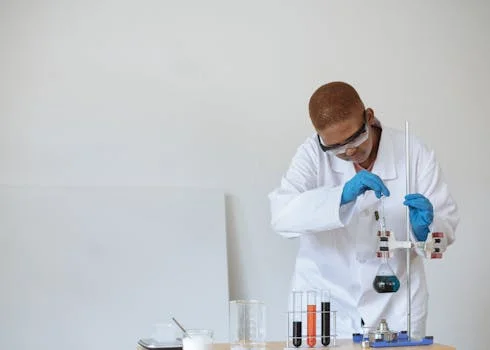
The regulatory authority for industrial wastewater in Colorado depends on the facility's location and whether the receiving POTW holds an EPA-approved pretreatment program. CDPHE administers CDPS (NPDES) permits for POTWs, but Colorado is not authorized to run the federal pretreatment program. EPA Region 8 is the Approval Authority. Identifying the correct control authority is the first compliance step.
As of June 2024, EPA Region 8 reported 26 Colorado POTWs with approved pretreatment programs. Those programs cover cities and districts such as Denver (Metro Water Recovery), Aurora, Colorado Springs, Fort Collins, and Longmont. In those jurisdictions, the utility issues IU permits, inspects sites, and sets local limits that may be tighter than federal categorical standards. For industrial users in smaller towns or unincorporated areas without approved programs, such as Lochbuie or parts of Weld County, EPA Region 8 remains the Approval Authority, and CDPHE industrial-user guidance and state reporting still apply. More detail on how indirect dischargers handle this in other states is covered in our guide to CDPHE's industrial user guidance.
| Regulatory Entity | Jurisdiction | Primary Oversight Document |
|---|---|---|
| Approved Municipal Programs | Brighton, Longmont, Louisville, Denver, etc. | Municipal Code (e.g., Longmont Code 14.08.312) |
| CDPHE | Cities without approved programs (e.g., Lochbuie) | State Industrial User (SIU) Permit |
| EPA Region 8 | Direct dischargers and federal oversight | NPDES Permit / Clean Water Act |
City-by-City Comparison: Pretreatment Requirements in Colorado's Major Municipalities
Industrial users must navigate a fragmented set of local limits. For example, a facility in Brighton faces different requirements depending on which side of Tower Road they occupy. Users west of Tower Road discharge to Metro Water Recovery Northern, where pH limits are strictly 6.0–9.0. Conversely, those east of Tower Road discharge to the Lochbuie WWTP, which allows a wider pH range of 5.5–10.0. These nuances dictate the level of automation required in PLC-controlled chemical dosing for pH adjustment.
In Longmont, the Industrial Pretreatment Program enforces local limits under Code 14.08.312, targeting heavy metals that can inhibit sludge digestion. Current daily maximums for copper (3.31 mg/L) and zinc (2.47 mg/L) are critical for metal finishers and electronics manufacturers. Louisville focuses heavily on commercial and light industrial users, maintaining a strict 100 mg/L limit for FOG to prevent sewer blockages in its aging infrastructure. Denver-area facilities dealing with high-strength organic loads often utilize Valicor's centralized treatment, but they must account for significant surcharges if BOD exceeds 300 mg/L or TSS exceeds 250 mg/L. Based on 2025 fee schedules, annual permit fees are scaled by flow: small users under 50,000 GPD typically pay $500–$2,500, while large-scale industrial users over 500,000 GPD can expect fees between $5,000 and $15,000. Sampling frequency is also tiered, with large users generally required to submit monthly Discharge Monitoring Reports (DMRs).
| City / Program | pH Range | Oil & Grease (Limit) | Key Metal Limits (mg/L) |
|---|---|---|---|
| Longmont | 5.0 – 11.5 | 100 mg/L | Copper: 3.31, Zinc: 2.47 |
| Brighton (Metro) | 6.0 – 9.0 | 100 mg/L | Cadmium: 0.07, Lead: 0.69 |
| Louisville | 6.0 – 9.0 | 100 mg/L | Arsenic: 0.20, Mercury: 0.002 |
| Denver (Metro) | 5.0 – 12.0 | 250 mg/L (Polar) | Chromium: 2.77, Nickel: 3.98 |
Step-by-Step Guide: Obtaining a Discharge Permit in Colorado
Obtaining a permit for industrial wastewater treatment in Colorado USA requires a systematic approach so the facility meets local and federal standards. The process generally takes 60 to 120 days, though complex industrial streams may need longer review.
- Determine Regulatory Authority: Identify if your facility is within an approved municipal program area or falls under CDPHE / EPA Region 8 oversight. This dictates which application forms you must use.
- Wastewater Characterization Study: Conduct a comprehensive analysis of your raw effluent. Required parameters include pH, BOD, TSS, FOG, and heavy metals. For specific industries, such as petrochemical or metal finishing, you must also test for categorical pollutants defined by the EPA.
- Submit Permit Application: Complete the relevant city or state forms (e.g., Longmont's Industrial Pretreatment Program application). This must include a description of your industrial process and the chemicals used on-site.
- Select and Install Pretreatment Equipment: Based on the characterization study, install the necessary technology, such as a high-efficiency DAF system for FOG and TSS removal in Colorado industrial pretreatment, to ensure discharge stays within local limits.
- Implement Monitoring and Reporting: Establish a schedule for sampling and reporting. Large users must typically submit monthly DMRs to their local utility or the CDPHE.
- Compliance Inspection: Pass a site inspection by municipal or state officials. Common failure points include improper composite sampling techniques, lack of maintenance records, or inadequate secondary containment for chemicals.
Equipment Selection Guide: Matching Pretreatment Technology to Your Wastewater Stream
Selecting the right equipment is a function of pollutant type, flow rate, and the specific stringency of Colorado local limits. For food processing facilities in areas like Greeley or Brighton, managing FOG is the primary challenge. A DAF system specification for Colorado food processors usually requires 92–97% removal efficiency to avoid city surcharges. These systems use micro-bubbles to float solids and oils to the surface for mechanical skimming.
Metalworking and plating facilities require chemical precipitation to address dissolved metals. This process involves PLC-controlled chemical dosing for pH adjustment and heavy metal precipitation, followed by clarification. For high-volume flows, high-efficiency sedimentation tanks with lamella plates provide a compact footprint for removing metal hydroxides. In the petrochemical sector, where organic compounds and pathogens are concerns, an on-site ClO2 generation for pathogen control in industrial wastewater pretreatment offers a 99% kill rate without the harmful byproducts associated with chlorine gas.
| Industry | Primary Pollutant | Recommended Equipment | Typical Efficiency |
|---|---|---|---|
| Food Processing | FOG, TSS, BOD | DAF System | 95% TSS Removal |
| Metalworking | Copper, Zinc, Cr | Chemical Dosing + Clarifier | 98% Metal Removal |
| Textile / Tech | Color, COD, TDS | MBR system for advanced pretreatment | 99% TSS Removal |
| Small Ind. Parks | Domestic + Light Ind. | WSZ Underground Plant | 1–80 m³/h capacity |
Cost Breakdown: Pretreatment Compliance in Colorado (2025 Data)
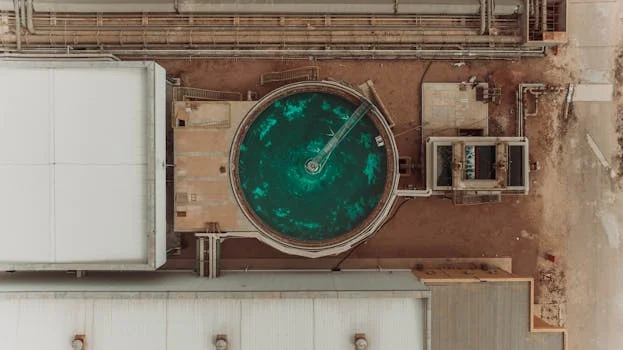
Budgeting for industrial wastewater treatment involves both capital expenditure (CAPEX) and ongoing operational expenditure (OPEX). In 2025, a mid-sized Colorado food processor can expect to invest between $80,000 and $150,000 for a 10 m³/h DAF system. While the initial cost is significant, the ROI is often realized within 24 to 36 months by eliminating municipal surcharges which can exceed $5,000 per month for high-BOD effluent.
Operational costs typically range from $0.50 to $5.00 per cubic meter treated. These costs include polymer chemicals for flocculation, electricity for aeration, and labor for system monitoring. Additionally, third-party laboratory testing for DMR compliance costs between $200 and $1,000 per sample event, depending on the complexity of the parameter list. For facilities generating significant solids, a WSZ underground plant can handle domestic and light industrial flows at 1–80 m³/h, while sludge dewatering solutions for Colorado industrial pretreatment can further reduce costs by minimizing the volume of waste hauled to landfills.
| Cost Category | Estimated Range (USD) | Notes |
|---|---|---|
| Permit Fees | $500 – $15,000 | Annual; based on flow/load |
| Equipment (CAPEX) | $50,000 – $500,000 | Technology dependent (DAF vs MBR) |
| Operational (OPEX) | $0.50 – $5.00 / m³ | Chemicals, energy, and labor |
| Lab Testing | $2,400 – $12,000 | Annual total for monthly sampling |
Common Pretreatment Violations and How to Avoid Them
Understanding why other facilities fail is key to maintaining compliance. According to 2024 CDPHE enforcement trends, pH violations remain the most frequent issue, accounting for 35% of all industrial citations. These are often caused by batch dumps where a cleaning cycle releases high-pH caustic solution that overwhelms a manual treatment system. Implementing PLC-controlled chemical dosing ensures real-time neutralization regardless of influent spikes. Most food plants we size for in Colorado run near the lower end of the violation rate once automation is in place.
FOG violations (28%) typically stem from undersized grease traps or poorly maintained high-efficiency DAF systems for FOG removal. If the skimmer speed is not synchronized with the sludge blanket depth, grease can carry over into the effluent. Heavy metal violations (15%) are often the result of interference, where chelating agents in cleaning chemicals prevent metals from precipitating out of solution. To avoid this, facilities should segregate waste streams or use specialized precipitants. Finally, 12% of violations are administrative, caused by improper sampling locations or using non-certified labs. Always ensure your sampling point is representative of the total discharge and follows the EPA's 2024 updated sampling protocols.
Frequently Asked Questions
Do I need a permit if I discharge to a septic system in Colorado?
Industrial discharge to a septic system is generally prohibited or strictly regulated under the CDPHE's Underground Injection Control (UIC) program. Pretreatment rules in this article apply to discharges to municipal sewer systems. Facilities using on-site wells must obtain UIC authorization and meet well construction and monitoring requirements instead.
What is the difference between DAF and MBR for pretreatment?
DAF (Dissolved Air Flotation) is primarily used for removing physical solids, fats, and oils. MBR (Membrane Bioreactor) combines biological treatment with membrane filtration, making it suitable for removing dissolved organic matter (BOD) and achieving high-quality effluent for water reuse. Most Colorado plants pick DAF first and only add MBR when reuse is on the table.
How often does the CDPHE inspect industrial users?
Significant Industrial Users (SIUs) are typically inspected annually. Non-significant users may be inspected every 2–3 years or in response to a violation at the municipal treatment plant. Inspection scope covers sampling technique, logbooks, and secondary containment.
Can I use a grease trap instead of a DAF system?
For small commercial kitchens, a grease trap may suffice. However, for industrial food processing with high flow rates or emulsified oils, a grease trap is usually insufficient to meet the 100 mg/L local limit, necessitating a DAF system. Engineers usually size the grease trap for peak 2-hour flow and the DAF for the sustained 10 m³/h daily load.
What is the typical ROI for a DAF system in Colorado food processing?
A 10 m³/h DAF system costing $80,000–$150,000 typically pays back within 24 to 36 months by avoiding municipal surcharges that can exceed $5,000 per month for high-BOD effluent. Plants running above 20 m³/h usually see the shorter end of that range.
To get a sizing recommendation and budgetary quote matched to your flow rate and local limits, send your effluent characterization to our Colorado pretreatment engineering team.