
Why Semiconductor Fab Wastewater Breaks Conventional Clarifiers
Semiconductor fab wastewater in Bcd is dominated by colloidal silica, alumina, and ceria from chemical-mechanical planarisation (CMP) slurry, photoresist stripper residues, back-grinding coolants, tetramethylammonium hydroxide (TMAH) developer, hydrofluoric acid (HF) drips, and copper-bearing rinse water — most particles in this stream are sub-100 μm and sit at near-neutral buoyancy, which is the opposite of what gravity settlers are designed to handle. Under 40 CFR Part 469 Subpart A, the U.S. federal category that explicitly governs semiconductor effluent, monthly-average discharge limits are roughly 30 mg/L TSS, 1.0 mg/L total copper, 3.0 mg/L fluoride, and pH 6.0–9.0 (per EPA 40 CFR Part 469); those numbers are tight enough that primary clarification cannot be treated as a coarse pre-screen. Sub-100 μm colloids from CMP slurry have Stokes-law settling velocities below 0.1 m/h, which means a conventional 2–4 h clarifier retention captures only 40–60% of TSS — the rest passes straight downstream and fouls reverse-osmosis (RO) membranes within days. Bcd fabs in 2026 are typically tracking a zero-liquid-discharge (ZLD) trajectory to recover ultra-pure water (UPW)-grade reclaim, so the role of the primary clarifier is to protect downstream ion exchange and RO at an Silt Density Index (SDI) below 3, not merely to meet a discharge number. This is why generic food-and-FOG benchmarks used by most published DAF-vs-clarifier comparisons do not apply: the fab stream is a colloidal-and-fluoride problem, not a fat-and-oil problem. For a deeper look at the wider reclaim train, the semiconductor wastewater reclaim and ZLD decision framework lays out the full RO and UPW polish envelope.
How a DAF Clarifier Works on Fab-Process Water
A DAF clarifier on a fab drain runs as a four-stage sequence: coagulant dosing with polyaluminium chloride (PAC) at 20–80 mg/L to neutralise the negative surface charge on colloidal silica, flocculation with a cationic polymer at 0.5–5 mg/L to bridge destabilised particles into buoyant flocs, a saturated recycle stream equal to 10–30% of the forward flow pressurised to 4–6 bar, and a flotation cell operating at 5–15 m/h hydraulic surface loading (HydropureWater field data, 2025). The bubble size window is the engineering knob that matters most on a CMP stream: 20–100 μm bubbles give the surface area needed to lift sub-100 μm colloids, but 30–50 μm is the tighter window that avoids shearing delicate polymer-bridged flocs. Materials of construction are non-negotiable on a fab drain — any free fluoride above ~1 ppm will pit standard SS304, so HF-bearing streams require SS316, PVDF-lined, or FRP vessels; this is a line item that needs to be on the datasheet before the quote is even compared. The HydropureWater DAF system covers 4–300 m³/h across 13 standard models, which is the typical sizing envelope for either a single tool-cluster header or a centralised pretreatment train, and the saturator, skimmer, and recycle-pump package are sized to the 4–6 bar operating pressure the chemistry requires.
Where a Lamella Clarifier Still Wins on a Fab Site
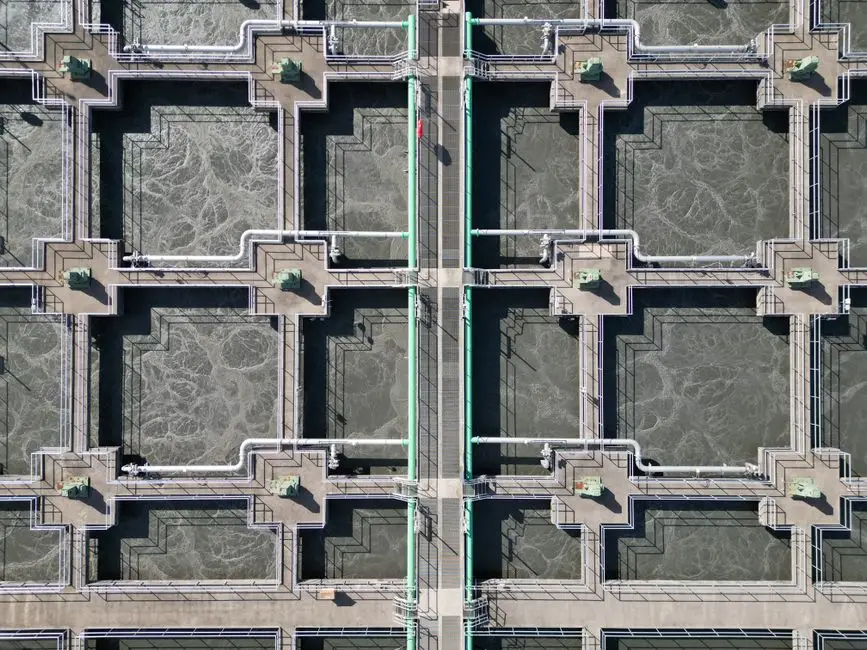
An inclined-plate lamella clarifier still has a defensible place on a Bcd fab site, but only as a downstream or polishing step, not as the primary unit on raw fab drain. Inclined-plate designs run at 20–40 m/h surface loading — an order of magnitude better than a conventional rectangular basin — but the underlying physics is still gravity settling of pre-flocculated particles (see the HydropureWater lamella clarifier for the standard sizing envelope). The case where a lamella is the right primary clarifier is the rare fab train that already runs a hard upstream chemical-precipitation step for fluoride (CaCl₂ + lime) and copper (NaOH + sulfide): the resulting metal-hydroxide floc has specific gravity above 1.2 and settles readily, so a clarifier-led train can hit 40 CFR Part 469 limits at a CAPEX that is typically 40–60% below a comparable DAF skid (HydropureWater field data, 2025). Lamella also suits brownfield fabs with large available footprints that cannot justify the import-duty and civil-work cost of a containerised DAF skid. The trade-off is solids concentration in the underflow: lamella underflow lands at 1–2% total solids versus a DAF float at 3–5%, so any downstream dewatering press — for example the plate-frame filter press option — has to be sized for roughly twice the volumetric sludge load of an equivalent DAF train.
DAF vs Lamella Clarifier: Head-to-Head Parameter Comparison
The table below is the single artefact most engineers will paste into a procurement memo. Every cell is anchored to either field-tested data (HydropureWater, 2025), vendor-published design envelopes, or the federal limits in 40 CFR Part 469. Read the rows as a ranking, not as a recommendation: DAF wins on every removal and footprint line, but those wins only matter if the upstream waste stream actually contains the colloids, oils, and emulsified cleaners that justify flotation physics.
| Parameter | Lamella Clarifier | DAF System |
|---|---|---|
| TSS removal (%) | 50–70% (raw fab drain, no precipitation) | 92–97% (HydropureWater field data, 2025) |
| FOG / oil / back-grinding coolant removal | Poor — near-buoyant particles bypass plates | Up to ~95% via micro-bubble attachment |
| Fluoride (F-) removal | Tied to upstream CaCl₂ + lime precipitation only | Tied to upstream precipitation; DAF does not precipitate F- |
| Copper (Cu) removal | Tied to upstream NaOH + sulfide precipitation only | Tied to upstream precipitation; DAF captures the floc, not the ion |
| Surface loading (m/h) | 20–40 (inclined-plate) | 5–15 (HydropureWater field data, 2025) |
| Footprint relative to DAF | 4–5× larger at equivalent flow | Baseline — 20–25% of an equivalent clarifier footprint |
| Sludge / float solids (%) | 1–2% underflow | 3–5% float (HydropureWater field data, 2025) |
| Energy (kWh/m³) | 0.05–0.15 (no aeration) | 0.2–0.5 (recycle pump + compressor) |
| CAPEX band (4–300 m³/h) | 40–60% below equivalent DAF skid | $50,000–$500,000; SS316 / PVDF adds 20–35% |
For fluoride and copper, the technology choice matters less than the upstream chemistry: both DAF and lamella can hit 40 CFR Part 469 monthly-average limits if precipitation is correctly tuned, but neither will do the precipitation on its own. The bubble-size window of 30–50 μm and the 4–300 m³/h sizing envelope come from the DAF product specification (HydropureWater verified product catalog, 2026).
Decision Matrix: Pick by Waste-Stream Characteristic
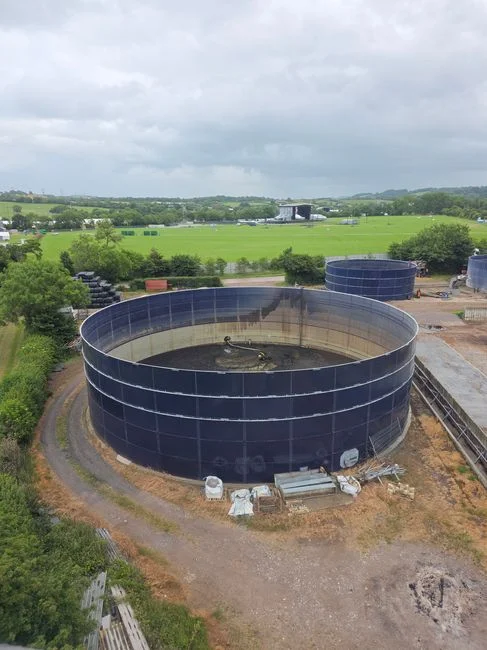
For a Bcd fab engineer sizing a 2026 primary clarifier, the decision reduces to three branches based on the dominant species in the drain header, not on a generic flow rate. The matrix below is written to be applied without a vendor on the line.
| If the dominant load is… | Pick… | Why |
|---|---|---|
| Colloidal silica, CMP slurry, photoresist, back-grinding oil, emulsified cleaners | DAF as primary clarifier | Sub-100 μm near-buoyant particles do not settle; 92–97% TSS at 5–15 m/h is the only way to hit 40 CFR Part 469 limits without an oversized basin |
| Heavy metal-hydroxide floc after CaCl₂/lime + NaOH/sulfide precipitation, with a large brownfield footprint | Lamella clarifier as primary | Floc SG >1.2 settles readily; CAPEX is 40–60% lower; 20–40 m/h surface loading is sufficient |
| Mixed stream with variable flow and shifting contaminant profile | DAF as primary + lamella as polishing | DAF absorbs hydraulic surges by tuning recycle ratio and saturator pressure; lamella catches any sinking floc and protects RO SDI <3 |
For a flow-rate crossover, the single DAF skid envelope of 4–300 m³/h covers the majority of fab tool-cluster headers and most centralised pretreatment trains without parallel units (HydropureWater verified product catalog, 2026). On fab lines without continuous on-site jar testing, DAF is more forgiving of influent swings than a clarifier, because the recycle ratio and saturator pressure are real-time knobs; clarifier performance collapses when hydraulic surges wash floc out of the plate pack. The 40 CFR Part 469 monthly-average limits (30 mg/L TSS, 1.0 mg/L Cu, 3.0 mg/L F-, pH 6.0–9.0) are the compliance anchor for the matrix above, per EPA 40 CFR Part 469.
CAPEX, OPEX and 2026 Cost Bands for a Bcd Fab Project
For a 4–300 m³/h DAF skid in 2026, the published CAPEX band is $50,000–$500,000 depending on materials of construction and automation level, with SS316 or PVDF-lined options for HF-bearing streams adding 20–35% to the SS304 baseline (HydropureWater field data, 2025). OPEX is driven by three line items: energy at 0.2–0.5 kWh/m³ for the recycle pump and saturator compressor, polymer at 0.5–5 mg/L for flocculation, and sludge haul — and the sludge line is where DAF pays back fastest because a 3–5% float cuts hauled volume 50–70% versus a clarifier underflow at 1–2% (HydropureWater field data, 2025). The standard ROI framework for fab procurement committees is (annual disposal savings + compliance-fine avoidance − annual OPEX) / CAPEX = payback years; high-TSS fab drains typically hit a 1.5–3 year payback on a DAF retrofit, and a retrofit is usually cheaper than a new build because the dewatering press downstream already exists. For Bcd fabs specifically, containerised DAF skids cut on-site civil work and import-duty exposure relative to cast-in-place concrete clarifiers, which matters when the equipment is shipped into a region with high port-handling and inland-freight cost. Lamella CAPEX is 40–60% below an equivalent DAF skid but OPEX runs higher per cubic metre treated because of the larger downstream dewatering press, so the total-cost-of-ownership crossover typically sits at the 3-year mark for high-TSS streams.
Recommended Configuration for a 2026 Bcd Semiconductor Fab
The defensible primary-clarifier recommendation for a 2026 Bcd fab is a DAF-led train sized to the HydropureWater DAF system: equalisation → pH adjustment to 7.0–8.5 → coagulation (PAC 20–80 mg/L) and flocculation (cationic polymer 0.5–5 mg/L) → SS316 or PVDF-lined DAF at 5–15 m/h surface loading → multi-media filter for residual turbidity → RO → UPW polish. For footprint-constrained retrofits where a single DAF cannot be located, the compact alternative is DAF as primary plus the HydropureWater lamella clarifier in series as a polishing step to catch any sinking floc and stabilise downstream RO feed. The compliance check: this train targets 40 CFR Part 469 monthly-average limits (30 mg/L TSS, 1.0 mg/L Cu, 3.0 mg/L F-, pH 6.0–9.0) and holds SDI below 3 at the RO feed, which is the operating envelope for stable membrane life and credible UPW reclaim.
Frequently Asked Questions
Can a DAF system alone meet 40 CFR Part 469 limits for fluoride and copper?
No. DAF handles suspended solids, FOG, and the metal-hydroxide floc that carries copper; fluoride and dissolved copper still need precipitation upstream (CaCl₂ + lime for F-, NaOH + sulfide for Cu). DAF captures the resulting floc but does not precipitate the ions on its own (per EPA 40 CFR Part 469).
What bubble size is best for colloidal silica from CMP slurry?
A 30–50 μm bubble window is the engineering best fit for CMP slurry: narrow enough to lift sub-100 μm silica colloids without shearing the delicate polymer-bridged flocs, and consistent with the 4–6 bar saturator pressure used in the DAF envelope (HydropureWater field data, 2025).
Is a lamella clarifier ever preferred over DAF for fab wastewater?
Yes — when the upstream process already runs chemical precipitation of fluoride and copper and the resulting metal-hydroxide floc is heavy (SG >1.2), a lamella clarifier delivers equivalent compliance at 40–60% lower CAPEX and is the right call on a brownfield site where footprint is not constrained.
How often must DAF polymer dosing be re-tuned on a fab line?
Quarterly jar testing is the minimum, with automatic dosing controlled by a streaming-current detector on the tool-cluster drain header so that shifts in CMP slurry loading or photoresist stripper flow are tracked in real time rather than waiting for a TSS excursion at the outfall.
What materials of construction are required for HF-bearing fab wastewater?
SS316, PVDF-lined, or FRP construction is required for any stream carrying free fluoride above ~1 ppm; standard SS304 pits under those conditions and will fail inspection within a single permit cycle. SS316 typically adds 20–35% to the SS304 baseline price of a DAF skid.
Related Equipment
- automatic coagulant and polymer dosing skid — specifications, capacity range, and technical data