A Dissolved Air Flotation (DAF) clarifier removes up to 95% of suspended solids, oils, and grease by injecting 20–100 μm microbubbles into pretreated wastewater. Bubbles attach to flocculated particles and lift them for surface skimming. At surface loading rates of 5–15 m/h, industrial units commonly reach 92–97% TSS removal on light solids and emulsified FOG—about 20–30% higher efficiency than gravity clarifiers on the same streams. This DAF clarifier explained brief covers process mechanics, selection criteria, cost drivers, and operating limits.
DAF Clarifier Explained: Why Flotation Beats Gravity Settling
A DAF clarifier is preferred when influent solids are buoyant or near-neutral density. Microbubble flotation removes up to 95% FOG and 92–97% TSS at 5–15 m/h surface loading with 20–60 min retention. Gravity clarifiers need 120–240 min and 1–3 m/h loading, so they underperform on fats, oils, fine fibers, and emulsions.
Conventional gravity clarifiers rely on sedimentation. Particles denser than water sink over hours. In food processing, dairy, pulp and paper, textile, and metalworking streams, many solids have specific gravity near or below 1.0. Settling then fails, chemical demand rises, and tanks grow large to hold 2–4 hour retention. Most plants we size for high-FOG feed run at the lower end of that retention band and still miss FOG limits during surges.
DAF reverses the separation direction. Field data from HydropureWater installations in 2025 show up to 95% FOG removal when coagulation and recycle air are tuned. Food plants use that margin to cut municipal FOG surcharges. Dairy manure lines use DAF for phosphorus-rich float recovery. Pulp mills capture fine fibers that bypass settlers. Textile and metalworking plants float dyes and emulsified oils that ignore gravity.
Regulatory pressure keeps DAF on the shortlist. US EPA categorical pretreatment programs still set FOG and solids expectations that passive settlers miss during slug loads. Earlier EU guidance relied on Directive 91/271/EEC alone. Directive (EU) 2024/3019 will repeal and replace it as of 1 August 2027 (EUR-Lex summary, updated 24 January 2025). Directive 91/271/EEC remains operative until that date. Active aeration and continuous skimming help hold discharge limits when flow and load swing.
How Does a Dissolved Air Flotation System Work?
A dissolved air flotation system follows four stages: coagulation/flocculation, air dissolution, bubble-particle attachment, and flotation/skimming. Clarified effluent recycle of 10–30% is pressurized and saturated with air, then released into the flotation tank at atmospheric pressure so dissolved air forms millions of microbubbles.
Air dissolution sets performance. Saturation at 4–6 bar typically yields 85–95% efficiency in modern packages, as covered in the pressure flotation systems (DAF) engineering guide. Bubbles of 20–100 μm give high attachment area without shearing fragile flocs. Effective flocculation needs automatic chemical dosing for DAF pretreatment, usually with cationic or anionic polymer at 0.5–5 mg/L to build buoyant aggregates.
| Engineering Parameter | Industrial DAF Specification | Conventional Clarifier Specs |
|---|---|---|
| Bubble Size (μm) | 20 – 100 | N/A (Gravity based) |
| Saturation Pressure (bar) | 4.0 – 6.0 | N/A |
| Surface Loading Rate (m/h) | 5 – 15 | 1 – 3 |
| Retention Time (min) | 20 – 60 | 120 – 240 |
| Recycle Ratio (%) | 10% – 30% | N/A |
| Sludge Concentration (%) | 3.0% – 5.0% | 1.0% – 2.0% |
Surface loading of 5–15 m/h lets a Dissolved Air Flotation (DAF) System treat the same flow as a settler in about 20–25% of the footprint. Float solids commonly reach 3–5%, versus 1–2% for clarifier underflow, which cuts hauling volume before secondary dewatering.
DAF vs. Clarifier: Head-to-Head Comparison for Industrial Applications
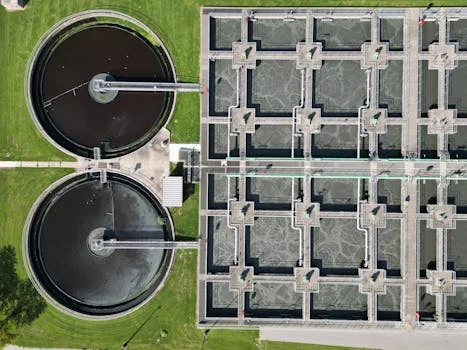
DAF versus gravity clarification starts with solids density and FOG content, not brand preference. Heavy grit, sand, or metal shavings favor a conventional clarifier with lower CAPEX. Organic-heavy, emulsified, or fibrous streams usually favor DAF for removal rate and footprint.
| Parameter | DAF Clarifier | Conventional Clarifier | Performance Note |
|---|---|---|---|
| TSS Removal (%) | 92% – 97% | 70% – 85% | DAF handles fine/light solids better. |
| FOG Removal (%) | Up to 95% | Approx. 70% | DAF uses micro-bubbles to lift oils. |
| Footprint (m²/m³/h) | 0.1 – 0.2 | 0.5 – 1.0 | DAF is 5x more space-efficient. |
| Chemical Usage | Moderate to High | High (for light solids) | DAF requires polymer for bubble attachment. |
| Sludge Volume | Low (3–5% solids) | High (1–2% solids) | DAF sludge is easier to dewater. |
| CAPEX | Higher | Lower | DAF involves pumps and pressure vessels. |
| OPEX | Moderate (Power/Air) | Low (Gravity) | DAF uses 0.2–0.5 kWh/m³ for aeration. |
DAF remains an adjustable mechanical process. Operators change recycle ratio and saturator pressure when production shifts create slug loads. Concentrated float also feeds sludge thickening technologies for DAF systems more cleanly than dilute clarifier underflow.
How Do You Select a Clarifier for Industrial Wastewater?
Clarifier selection for industrial wastewater should follow measurable design criteria: solids specific gravity, FOG concentration, peak-to-average flow ratio, available footprint, and sludge handling cost. Choose gravity or lamella settlers for dense inorganics; choose DAF when FOG or light TSS dominate and retention time must stay under about 60 minutes.
Use this checklist before freezing the process train:
- Influent FOG and TSS ranges at average and peak hour, with sample method noted.
- Particle behavior: settle, float, or stay neutrally buoyant after jar tests.
- Target effluent FOG/TSS and any municipal surcharge thresholds.
- Site area available in m² per m³/h of design flow.
- Polymer type window and pH stability between 6.5 and 8.5.
- Downstream dewatering path and expected float solids of 3–5%.
- Energy budget for recycle pumping at roughly 0.2–0.5 kWh/m³.
Primary clarifiers remove settleable solids ahead of biology. Secondary clarifiers separate biomass after activated sludge. Lamella packs raise settling area in a smaller tank when particles sink reliably. DAF fills the gap when light organics and emulsions control the load. Sizing then locks surface loading, recycle ratio, and air dissolution pressure rather than overflow rate alone.
Cost-Benefit Analysis: Is a DAF Clarifier Worth the Investment?
DAF clarifier ROI balances higher CAPEX against sludge disposal savings and compliance risk. For industrial packages in the 4–300 m³/h range, such as DAF units, CAPEX commonly falls between $50,000 and $500,000 depending on SS304 versus SS316 and automation level.
OPEX splits across energy, chemicals, and maintenance. Energy typically runs 0.2–0.5 kWh/m³ for the recycle pump and air system. Polymer dose usually sits at 0.5–5 mg/L. Float at 3–5% solids can cut haul volume 50–70% versus 1–2% clarifier sludge. According to wastewater treatment engineering budget data, that volume cut can save a medium food plant over $40,000 per year in disposal fees.
A practical payback screen is: (Annual disposal savings + avoided compliance fines − Annual OPEX) / CAPEX. High-FOG plants often reach payback in 1.5 to 3 years. That figure excludes avoided shutdowns and non-potable reuse of clarified water, which improve the case when water is scarce or sewer limits are tight.
Operational Best Practices for DAF Clarifiers
DAF clarifier uptime depends on screening, chemistry, and saturator health more than on skimmer cosmetics. Install rotary mechanical bar screens upstream so debris cannot plug nozzles or recycle pumps. Hold pH near 6.5–8.5; outside that band most polymers form weak flocs that shear under buoyancy.
Confirm polymer charge with jar tests. Wrong charge yields cloudy effluent and thin float. Keep saturator pressure at 4–6 bar and recycle in the design band. Too little recycle starves bubble supply; too much recycle shears flocs so solids sink. Pair float with plate frame filter presses for DAF sludge dewatering to raise cake solids to 25–35%, reaching about 98% total solids removal in HydropureWater field data from 2025.
Weekly skimmer checks catch dragging blades early. Monthly nozzle and saturator cleaning limits scale that shrinks bubble production. Plants under strict reporting regimes, as discussed in the industrial wastewater treatment compliance and equipment selection guide, should calibrate pressure and flow instruments annually so operating logs stay defensible.
Who This Is For / Who Should Look Elsewhere / Next Step
This guide is for plant engineers, EPC designers, and procurement teams specifying primary separation on high-FOG or light-solids industrial wastewater. Look elsewhere if your load is mostly dense grit or metal fines with negligible FOG—a gravity or lamella clarifier usually costs less. For duty sizing, materials, and float handling on your stream, submit design flows and lab data through the DAF clarifier inquiry form.
Frequently Asked Questions
What is the difference between a DAF clarifier and a DAF system?
A DAF clarifier is the flotation vessel where solids separate and float is skimmed. A DAF system is the full train: chemical dosing, air saturation vessel, recycle pumps, clarifier tank, and sludge handling. Buyers comparing quotes should confirm whether CAPEX covers only the tank or the complete package, because pumps and saturators drive much of the installed cost and the achievable 92–97% TSS removal.
How much FOG and TSS can an industrial DAF remove?
Industrial DAF units commonly remove up to 95% FOG and 92–97% TSS when polymer dose, pH, and 4–6 bar saturation are controlled. Those figures assume surface loading of 5–15 m/h and retention of 20–60 minutes on light solids or emulsified oils. Dense grit-heavy streams stay better suited to gravity clarification, where DAF offers little advantage.
When should I choose DAF instead of a lamella or primary clarifier?
Choose DAF when FOG is high, solids are light or emulsified, footprint is tight, or retention must stay under about 60 minutes. Choose a primary or lamella clarifier when particles settle reliably and FOG is low. Run jar tests on peak samples before locking the technology, because a wrong choice shows up first as cloudy effluent and high polymer spend.
What operating costs dominate DAF ownership?
Energy at 0.2–0.5 kWh/m³, polymer at 0.5–5 mg/L, and sludge disposal dominate DAF OPEX. Higher float solids of 3–5% often cut haul volume 50–70% versus 1–2% clarifier sludge, which can offset power and chemical cost. Medium food plants in cited budget cases have saved over $40,000 per year on disposal after conversion.
What pretreatment does a DAF unit need to stay reliable?
DAF reliability needs coarse screening, pH control near 6.5–8.5, and jar-tested polymer before the saturator recycle loop. Screens protect nozzles and pumps; correct chemistry builds flocs strong enough to ride 20–100 μm bubbles. Skip either step and plants see nozzle plugging, cloudy effluent, and float that collapses back into the clear well.