What SMIC Must Resolve Before Closing a Mexico Plant Acquisition
When SMIC acquires a plant in Mexico, wastewater compliance should be treated as a pre-closing transaction issue, not merely a post-closing operating task. The buyer must verify the water source, discharge route, controlling federal or state authority, applicable NOM, permit status, testing and reporting history, and the installed treatment system. Tecma associates well withdrawals with federal jurisdiction and municipal supply with state jurisdiction; it identifies NOM 001 SEMARNAT 1996 for ground or septic discharges and NOM 002 SEMART 1996 for municipal-sewer discharges. The acquisition file should also address prior contamination, because Tecma states that a purchaser immediately becomes responsible for contamination found on an acquired property.
Build the wastewater review as a condition to the acquisition decision, not as a post-signing checklist. Assign environmental counsel, EHS, plant engineering, operations, and procurement clear workstream responsibilities. The legal team should confirm the seller or operating company, the property being acquired, and the entity that holds—or will hold—the wastewater permit. Engineering and operations must map every water source, collection path, treatment train, discharge outlet, and receiving route before assuming that one permit governs the entire site.
Request the permit, renewals, authority correspondence, historical test reports, annual submissions, inspection findings, and treatment-system records before finalizing indemnities, closing conditions, or an equipment budget. Keep three findings separate: whether the site appears to have an applicable regulatory pathway; whether the permit and monitoring record are complete; and whether SMIC is assuming legacy contamination or an inadequate treatment system. Evidence for one does not resolve the others. A practical acquisition approach for wastewater due diligence for industrial plant acquisitions can support that structure, but the conclusions must come from the Mexican site and its authorities.
How Water Source and Discharge Route Determine the Applicable NOM
Water source and discharge destination must be mapped separately because the supplied research identifies different legal pathways for each combination. Tecma states that drawing water from a well places the activity under federal jurisdiction, while drawing from a municipal water system places it under state jurisdiction. For federal ground or septic-system discharges, Tecma identifies NOM 001 SEMARNAT 1996; for industrial wastewater discharged to a municipal sewer, it identifies NOM 002 SEMART 1996.
These standards are candidate legal pathways, not substitutes for the official text or the site’s actual authorization. Obtain the current official NOM, the permit conditions, any sewer agreement, and written confirmation from Mexican environmental counsel before assigning a standard to an outlet. The supplied research does not provide applicable numeric pollutant limits, so the transaction team should request those limits from the controlling instruments rather than import remembered values or generic industry limits.
For a mixed plant, assess each outlet separately. A well-fed process line discharging to ground must not be evaluated solely against the municipal-sewer pathway used by another line. The same source can also feed several destinations, so the review should follow each collection branch to its final discharge point and identify any bypass, unpermitted drain, or combined discharge.
| Site condition identified from source documents and field verification | Candidate pathway identified by Tecma | Pre-close evidence required |
|---|---|---|
| Water from a well; industrial wastewater discharged to ground or a septic system | Federal jurisdiction; NOM 001 SEMARNAT 1996 | Well records, drainage map, discharge authorization, current permit, official NOM text, monitoring history, and confirmation of the receiving route |
| Water from a municipal supply; industrial wastewater discharged to a municipal sewer | State jurisdiction; NOM 002 SEMART 1996 | Supply records, sewer agreement, pretreatment permit, discharge permit, official NOM text, laboratory reports, and any authority-imposed conditions |
| Different sources or destinations within one plant | Separate review required for each outlet | Source-to-collection-to-treatment-to-discharge map, separate permit analysis for each route, and engineering review of shared and isolated systems |
The decision rule is therefore source first, destination second, outlet third. After identifying the apparent pathway, confirm it against current official instruments and the site’s written authorizations. This prevents a mixed-discharge plant from being modeled under a single, potentially wrong, standard.
Permit Transfer, Testing, and Reporting Evidence to Collect
An identified wastewater permit does not prove that it can be transferred to the acquiring entity or operated lawfully after closing. Tecma states that an applicable permit is required and that almost all permits and authorizations must be renewed every year. The transaction file should therefore establish the permit’s current status, the permitted entity, the permitted discharge point and conditions, the renewal history, and the mechanism for transfer or reissuance.
Obtain the complete permit cover page, conditions, supporting authorizations, renewal history, authority correspondence, inspection findings, and proof of the latest renewal. The legal team should determine whether the seller's permit remains usable, must be amended, or must be reissued in SMIC’s or the acquired entity’s name. A Mexico wastewater permit transfer cannot be assumed from property ownership.
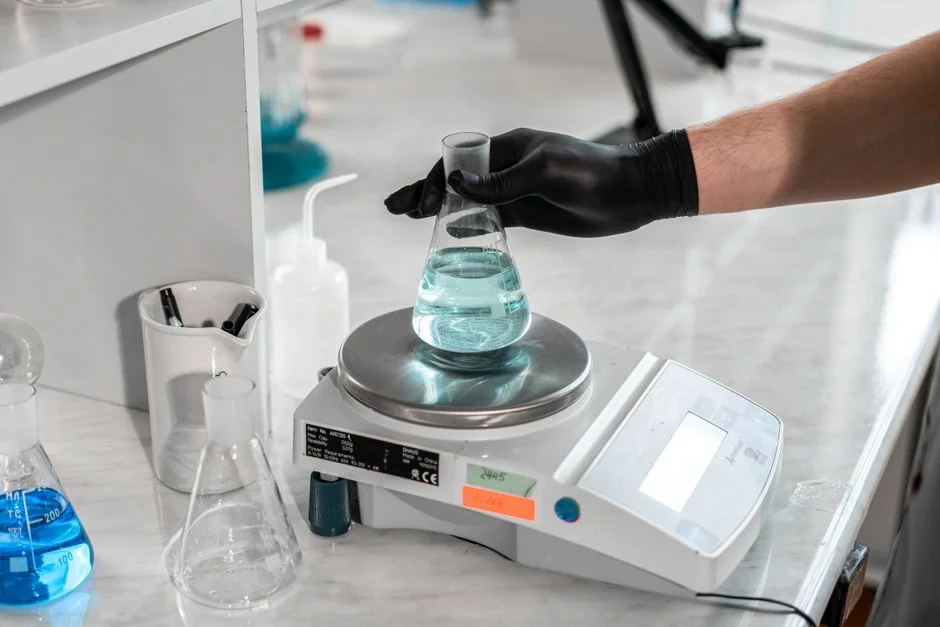
Tecma also states that annual wastewater testing is required and that testing in the municipal-sewer pathway described in its interview must be performed by an accredited and authorized Mexican testing laboratory. Request laboratory reports, chain-of-custody records, sample points, analytical methods, annual discharge and testing reports, and submission receipts. These documents allow the buyer to test the chain from sampling through analysis to regulatory filing.
| Evidence item | What SMIC must establish | Closing treatment if the evidence is incomplete |
|---|---|---|
| Permit and renewals | Legal holder, current status, conditions, discharge points, renewal history, and transfer or reissuance route | Make transfer or reissuance a closing condition, or obtain a written authority pathway approved by Mexican environmental counsel |
| Laboratory reports and chain of custody | Sample location, method, laboratory status, analytical results, and correspondence with the reported operating condition | Commission targeted independent sampling and laboratory verification; do not infer compliance from the permit alone |
| Annual discharge and testing reports | Reported results were submitted through the required reporting process | Obtain submission receipts and authority responses, then reconcile any missing period |
| Inspection findings and authority correspondence | Whether the authority identified violations, corrective actions, monitoring changes, or permit amendments | Require closure evidence, reserve funds, a specific indemnity, or an explicit pre-close condition |
| Site-specific reporting requirements | Whether the permit adds daily, monthly, annual, or other reporting beyond the annual testing and reporting described by Tecma | Assign an owner and verify the obligation against the current permit and official instruments |
Flag missing records, inconsistent parameter lists, unexplained sampling changes, and mismatches between the permit narrative and actual operations for targeted review. These are evidence gaps, not automatic violations. A plate-frame filter press for sludge-handling review may support the engineering inspection, but it does not resolve permit transfer or historical noncompliance.
Legacy Contamination and Environmental Liability in the Purchase Agreement
Acquiring the property can transfer both operational compliance and historical cleanup exposure, and the two risks must be allocated separately. Tecma states that a company leasing, purchasing, or acquiring an industrial property immediately becomes responsible for prior contamination found there. SMIC therefore cannot treat an apparently current permit as evidence that legacy contamination has been resolved.
Commission an independent environmental assessment and involve Mexican counsel. Review historical spills, waste-disposal practices, groundwater use, septic-system use, soil and groundwater findings, and plausible contaminant-migration pathways. The assessment should be informed by the wastewater and treatment history: undocumented discharges, untreated bypasses, sludge handling, and prior process changes can affect the environmental baseline.
Define the remediation scope, responsible party, cost allocation, access rights, agency-approval process, and survival period in the purchase agreement. Include seller representations, a specific indemnity, escrow or holdback where appropriate, access for remediation work, and a mechanism for resolving newly discovered contamination. The agreement should also distinguish regulatory penalties and corrective actions from remediation of physical contamination; these may have different legal treatment and should not be collapsed into one unresolved liability.
Before signing, identify whether the seller or another party has already engaged the relevant authority, whether any investigation or remediation is open, and which documents show closure. Missing records should trigger targeted investigation rather than a clean-estimate assumption. The transaction team should preserve that distinction through closing, so a regulatory transfer does not inadvertently define the scope of inherited contamination.
Prove That the Existing Treatment System Can Meet Site Conditions
The installed system should be accepted, upgraded, or replaced only after the legal pathway and contamination baseline are defined. Request wastewater flow, pollutant parameters, variability, discharge route, reuse objectives, available footprint, sludge-handling constraints, and operating history. The supplied research contains no plant-specific flow or pollutant data, so it cannot support a definitive equipment selection or acquisition-cost estimate.
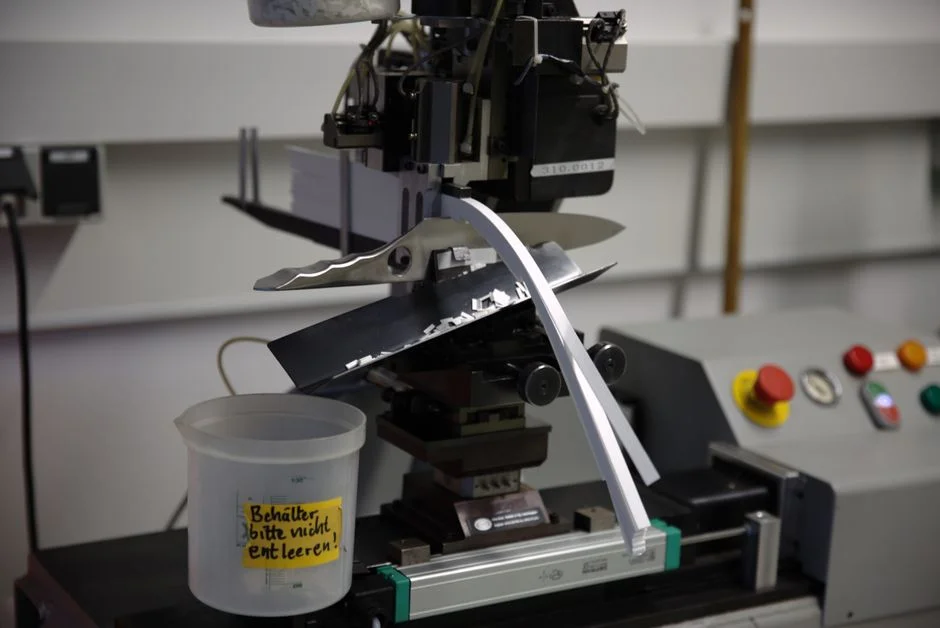
Inspect the complete treatment train: source, collection, equalization, treatment, discharge point, metering, sampling points, bypasses, sludge handling, and maintenance records. A treatment unit alone is not a complete wastewater system. An unapproved bypass, leaking collection line, unidentified outlet, or inconsistent sludge practice can undermine otherwise adequate process equipment.
Check hydraulic and treatment capability against the current permit conditions and characterize operating variability. Engineers should compare the documented design basis with actual flow, pollutant, and production conditions. If suspended solids, oil and grease, FOG, or colloidal matter drive the compliance gap, assess whether an industrial DAF system for acquired plant pretreatment is technically suitable. The governing variables remain site flow, pollutant characteristics, variability, footprint, and permit conditions.
Where biological treatment and high-quality reuse are required, assess whether an MBR wastewater treatment system for plant reuse matches the discharge and reuse objectives. Useful comparisons include DAF versus clarifier selection for industrial wastewater and MBR process design for industrial wastewater, but neither replaces characterization of SMIC’s acquired wastewater.
Do not select equipment or quote acquisition cost from the acquisition alone. A supplier’s proposal should state its process basis, included equipment, civil and installation scope, commissioning and analytical validation, operator training, consumables, sludge disposal, performance guarantees, and warranty exclusions. SMIC should approve the final selection only after the discharge route, wastewater characterization, and permit limits are documented.
Set the Post-Closing Compliance and Inspection Program
The acquired permit and monitoring history should become a controlled operating schedule with named owners and escalation routes. Assign responsibility for sampling, laboratory coordination, annual reporting, annual permit renewal, authority correspondence, and record retention. Maintain an evidence file containing the current permit, renewals, laboratory reports, chain-of-custody records, submissions, monitoring records, operating logs, and corrective-action files.
Require EHS approval before changes in production chemistry, water source, drainage configuration, or treatment operation. A compliant report has little value if it no longer describes the discharge. The change-control process should identify affected permits, sampling plans, monitoring parameters, treatment settings, and authority notifications before implementation.
Tecma states that SEMARNAT may inspect without advance notice. The site should be able to provide records and access while identifying personnel responsible for each process step. Pre-authorize staff to accompany inspectors and preserve the authority’s access process, without presuming that an inspection can be delayed or conditioned on advance notice.
| Control | Accountable role | Required evidence |
|---|---|---|
| Permit and renewal control | Environmental manager or Mexican environmental counsel | Current permit, conditions, renewal application, renewal authorization, and authority correspondence |
| Sampling and laboratory control | Qualified environmental coordinator | Sampling plan, field record, chain of custody, sample identification, laboratory status evidence, and analytical report |
| Reporting and record retention | EHS with plant operations | Reviewed calculation, submission receipt, authority comments, water-use record, and corrective-action log |
| Change control | Operations with EHS approval | Pre-change review of water source, drainage, chemistry, treatment operation, permit impact, and notification decision |
| Inspection response | Plant manager and designated witnesses | Access protocol, record index, operating personnel roles, sampling-preservation plan, authority communication, and remediation approval file |
Create a corrective-action protocol before closing. It should identify who may stop an unauthorized discharge, how samples are preserved, who communicates with the authority, and how remediation is approved and documented. This operational discipline should start with the transfer file, not after the first inspection or exceedance.
Frequently Asked Questions
What should SMIC obtain before selecting a wastewater treatment system or requesting a quotation?
Obtain the source-to-discharge map, current permit and official NOM text, wastewater flow, pollutant parameters and variability, reuse objectives, available footprint, sludge-handling constraints, and operating history. The supplier must state its design basis, included scope, performance basis, commissioning plan, consumables, and warranty exclusions. Without those inputs, a configuration or price is only a preliminary concept.
How should SMIC assess supplier selection and the risk of buying an undersized system?
Require a site-specific process basis and written confirmation of how the proposed treatment train handles the documented flow, pollutant load, variability, footprint, and permit conditions. Evaluate operator burden, sludge handling, validation needs, replacement exposure, and performance obligations—not equipment name alone. Final approval should also require Mexican environmental counsel to confirm the regulatory pathway and the site process engineers to confirm the design inputs.
What wastewater testing and reporting must be transferred with the plant?
Tecma describes annual wastewater testing and annual reporting, with almost all permits and authorizations renewed every year. For the municipal-sewer pathway described in its interview, an accredited and authorized Mexican testing laboratory must perform the annual testing. SMIC should also identify any daily, monthly, site-specific, or permit-condition reporting; annual requirements alone do not establish the full obligation.
What cost and compliance risks should be budgeted before closing?
Budget separately for permit transfer or reissuance, missing-record reconstruction, targeted contamination assessment, remediation, treatment upgrade, installation, commissioning, analytical validation, operator training, and post-closing monitoring. The supplied research provides no acquisition-cost, payback, plant-flow, or applicable pollutant-limit figures. A defensible estimate therefore requires the permit file, wastewater characterization, engineering condition assessment, and supplier’s priced scope.