Start with the permit that governs the Wausau discharge point
Food and beverage plants near Wausau generally meet sewer pretreatment limits by separating process, CIP, floor-wash, and cooling streams, then treating them through screening, equalization, DAF, biological treatment, chemical precipitation, and final polishing. DAF removes FOG and solids, biological systems reduce BOD, and controlled chemical dosing balances pH and removes phosphorus. The enforceable target is the strictest combination of applicable federal categorical standards and the Wausau-area POTW permit, so plants must verify current local limits and characterize peak production and CIP flows before sizing equipment.
The permit, not a generic national table, determines the discharge requirements at a specific Wausau-area discharge point. The federal framework is established under 40 CFR Part 403, while category-specific requirements address dairy, grain milling, canned and preserved fruits and vegetables, canned and preserved seafood, and meat processing in 40 CFR Parts 405, 406, 407, 408, and 409, respectively, as summarized in HydropureWater’s 2026 food and beverage pretreatment guide.
Ask the serving sewer authority for the current industrial discharge or sewer-use permit, local-limit tables, monitoring frequency, sampling method, reporting portal, and any language specific to the plant’s processing category. The categorical standard is not a complete equipment-selection basis. The final design must reflect the applicable permit, actual production profile, wastewater characteristics, and receiving-system capacity. A useful 2026 sewer-limit compliance workflow illustrates why permit verification should precede equipment selection.
Separate the wastewater streams before choosing equipment
Food-processing wastewater can be separated into streams with materially different pollutant loads, so routing is an engineering control rather than a piping preference. Process water normally carries much of the BOD and suspended solids and should be used to establish equalization and biological loading. Floor wash and sanitation streams can contribute substantial FOG, making them candidates for direct collection to DAF. CIP caustic and acid rinses create pH swings that require equalization and controlled trim.
The practical issue is the mismatch between average characterizations and short production or cleaning events. The equipment package must be tested against forward flow, peak-to-average ratio, raw BOD, raw FOG, pH range, temperature, and production and CIP durations. Cooling-water blowdown also requires separate review because it may have a different permit route and may contain lubricants, trace metals, and heat. For additional stream-segregation context, see the wastewater and cooling-blowdown treatment guide.
| Stream | Dominant design concern | Engineering response |
|---|---|---|
| Process water | BOD and suspended solids | Establish equalization and biological capacity from measured loads |
| Floor wash and sanitation | FOG and floatable solids | Route toward DAF when combined with process flow |
| CIP caustic and acid rinses | pH excursions | Equalize and provide controlled chemical dosing and pH trim |
| Cooling-water blowdown | Heat and possible lubricants or trace metals | Evaluate permit route and compatibility before recombination |
HydropureWater’s 2026 pretreatment guide describes fruit-wash and CIP outlet examples from pH 3.5 to pH 12. Equalization therefore cannot be sized from a daily mean alone; it must absorb documented production, washdown, and cleaning cycles.
Build a treatment train that assigns each stage a measurable job
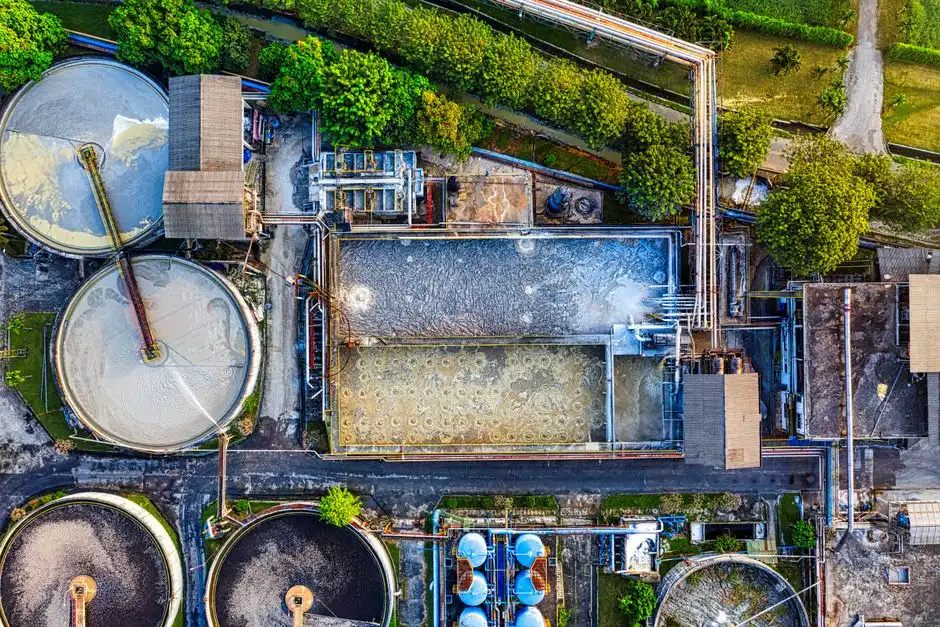
The research-supported food-processing sequence is screening, equalization, DAF, biological treatment, chemical precipitation, and final polishing. Each stage has a specific function, and adding another unit does not cure an undersized upstream step. Screening protects downstream equipment from solids; equalization moderates hydraulic, organic, pH, and temperature peaks; DAF removes floatable material; biological treatment reduces BOD; chemical precipitation addresses phosphorus; polishing controls residual solids before discharge.
| Parameter or stream | Primary treatment responsibility | Evidence or design note |
|---|---|---|
| BOD and COD | Biological treatment | Raw dairy and meat-processing wastewater is reported at 1,000–10,000 mg/L BOD by HydropureWater’s 2026 guide |
| TSS and FOG | DAF or clarification | FOG can reach several thousand mg/L in fryer, rendering, and stickwater streams |
| Phosphorus | Chemical precipitation | 10–100 mg/L as P is an influent range reported for cereal, dairy, and meat wastewater, not a discharge limit |
| pH | Controlled chemical dosing | Plant-specific permit limits govern the final range |
| Temperature | Equalization and biological design | Excursions above 40 °C from CIP and cooking can disrupt downstream nitrification biology |
Primary solids are not an afterthought. DAF skimmings and biological waste sludge require controlled removal, storage, and dewatering. Equipment such as a mechanical bar screen addresses inlet protection, while an PLC-controlled chemical dosing system can vary chemical feed with actual flow and process demand rather than relying on a fixed manual setting.
Choose DAF or clarification from the pollutant profile
The primary-treatment decision follows the measured pollutant profile. HydropureWater’s 2026 guide specifies DAF when FOG or emulsified oils exceed approximately 200 mg/L or when the operation is poultry, meat, or dairy. It specifies a lamella clarifier when TSS dominates and minimizing coagulant and polymer consumption is the priority. This is a selection rule, not a Wausau discharge limit or a substitute for site characterization.
| Design consideration | DAF | Lamella clarifier |
|---|---|---|
| Primary target | FOG, emulsified oils, colloids, and floatable solids | Suspended solids |
| Selection trigger | FOG or emulsified oils above approximately 200 mg/L, or poultry, meat, or dairy operation | TSS-dominant wastewater with chemical-consumption sensitivity |
| Cited surface loading | 4–25 m/h | 20–40 m/h |
| Other cited design inputs | 0.005–0.02 air-to-solids ratio; 20–40% recycle of forward flow | Up to 30% lower chemical consumption than conventional clarifiers |
| Permitted performance reference | 25–50 mg/L oil and grease and 50–100 mg/L TSS in the underflow for properly conditioned feed | Final solids performance must be verified at the plant |
DAF does not replace biological treatment. Its function is to remove FOG, oil, colloids, and floatable solids before those loads increase biological treatment demand. A food-processing DAF system is most defensible where the measured FOG profile supports it, while a high-efficiency sedimentation tank is a candidate for solids-dominated service or polishing. The cited performance bands are design references from HydropureWater’s 2026 guide, not enforceable Wausau permit limits.
Size biological and polishing systems around the permit and peaks
Biological capacity must be based on raw BOD and hydraulic loading, not average daily flow alone. HydropureWater’s 2026 pretreatment guide cites hydraulic retention times of 8–24 hours for conventional activated sludge and 4–10 hours for MBR. It also cites mixed-liquor suspended solids of 3,000–5,000 mg/L for conventional systems and 8,000–12,000 mg/L for MBR. These are design references, not automatic selections or local discharge limits.
The same source reports MBR effluent below 30 mg/L BOD and below 5 mg/L TSS. A plant must verify its local limits and demonstrate whole-system performance, because downstream pH adjustment, chemical precipitation, solids breakthrough, and flow instability can change the final result. An MBR integrated wastewater treatment system can therefore be evaluated against the permit and measured organic loading rather than treated as a standalone guarantee.
For phosphorus, the research cites chemical doses of 50–250 mg/L of alum or 30–150 mg/L of ferric chloride. Flow-proportional PLC dosing is reported to reduce chemical consumption by 10–20% compared with manual feed. The actual dose still depends on phosphorus form, alkalinity, mixed-liquor characteristics, and permit limits.
Temperature deserves a separate design check. HydropureWater’s 2026 guide describes excursions above 40 °C from CIP and cooking as routine and potentially disruptive to downstream nitrification biology. Equalization must address both flow and temperature. Add pH adjustment, disinfection, or other polishing only where the permit, receiving system, or process risks require it; a generic requirement for identical residual or disinfection conditions at every Wausau-area plant is not supported by the research.
Turn operating data into a defensible compliance program
Compliance evidence must connect measured influent conditions to treatment performance and permit obligations. Begin with a baseline campaign that captures production, washdown, and CIP conditions separately rather than relying only on a diluted daily composite. Then assign each monitoring result to the stage responsible for it: FOG to DAF, TSS to clarification or polishing, BOD to biological treatment, phosphorus to precipitation, and pH to controlled dosing.
HydropureWater’s 2026 guide reports continuous flow and pH monitoring for significant industrial users and notes that categorical permits commonly require composite sampling for BOD, TSS, FOG, and total phosphorus. The actual frequency and method must be confirmed in the Wausau-area permit. The industrial discharge monitoring report should be supported by laboratory results, flow records, pH trends, chemical-use records, operating logs, and documented corrective actions.
Sludge handling belongs in the monitoring plan as well. The research cites plate-and-frame filter presses in the 1–500 m² range and reports cake dry matter of 22–28%. These are equipment-selection and disposal-planning references, not guaranteed site outcomes. A plate-frame filter press must be matched to the combined DAF and biological-sludge characteristics.
Establish escalation rules before they are needed. High FOG pass-through should trigger inspection of DAF conditioning and hydraulic loading; pH excursions should trigger review of equalization and the trim loop; CIP-period overload should trigger an EQ-capacity check; and solids breakthrough should trigger investigation of flocculation and clarification. Each event should be recorded in the operating system rather than left only as an informal operator observation.
Use a phased implementation plan for the plant
A defensible implementation begins with permit review, not procurement. Phase one should confirm the controlling authority, current local limits, monitoring and reporting rules, process categories, production profile, and receiving-system constraints. This step should also identify whether cooling-water blowdown follows a separate route and whether any sector-specific language applies.
Phase two should characterize raw and equalized wastewater through production, cleaning, and CIP cycles. The characterization should measure forward flow, peak-to-average ratio, raw BOD, raw FOG, pH, and temperature, with operating durations tied to each production and cleaning event. Where influent variability is high, pilot the proposed primary and biological processes before full-scale installation.
ALAR’s food and beverage wastewater treatment article describes pilot testing as a way for wastewater experts to evaluate changing influent conditions and validate performance before full-scale installation. Related process references include the SBR design guide for vegetable-processing wastewater and the frozen-food wastewater process design guide.
Phase three should verify each installed stage under peak conditions, establish chemical and sludge-handling routines, and document performance against the controlling permit. Equipment selection should follow measured streams and permit conditions—not floor space, packaged-unit claims, or average flow alone. The final commissioning record should show which parameter each stage controls, what operating data supports that claim, and which permit condition the verified result satisfies.
Frequently Asked Questions
Which permit controls a food and beverage plant’s Wausau sewer discharge?
The controlling document is the current permit or sewer-use authorization issued by the Wausau-area POTW or other authority serving the discharge point. Federal pretreatment requirements under 40 CFR Part 403 and the applicable category standard must be reviewed, but the site permit may impose stricter local limits. Obtain the permit, limit tables, sector-specific language, sampling method, monitoring frequency, and reporting portal before designing equipment.
What information is needed to size DAF, biological treatment, and equalization?
Request flow, peak-to-average ratio, raw BOD, raw FOG, pH range, temperature, and production and CIP operating durations. Include separate results for process water, floor wash, sanitation, and CIP streams. These inputs are needed to determine hydraulic capacity, equalization behavior, DAF loading, biological organic loading, and chemical demand.
How should a treatment-equipment supplier be evaluated?
Require demonstrated food-processing experience, control-system integration, sludge handling, commissioning support, and performance testing against the actual permit. Review how the supplier assigns a measurable job to each stage, including DAF conditioning, biological capacity, pH control, phosphorus removal, solids polishing, and operating records. A generic capacity claim without site-based test data is not enough.
What drives the cost of meeting pretreatment limits?
Request a project-specific cost breakdown rather than an equipment price alone. The recurring operating drivers identified in HydropureWater’s 2026 guide are chemical consumption, sludge hauling, aeration power, and pilot or retrofit complexity. The proposal should show how measured FOG, TSS, BOD, flow variability, and permit limits affect each cost category; the research does not provide a defensible Wausau equipment quotation.
What monitoring proves that the treatment train is working?
Confirm the permit’s sampling and reporting requirements, but maintain flow and pH records for significant industrial users and retain laboratory results tied to each treatment stage. Track FOG against DAF performance, TSS against clarification and polishing, BOD against biological treatment, phosphorus against precipitation, and pH against dosing. A DAF-versus-clarifier decision guide can help structure the equipment comparison, while the local permit determines the final compliance standard.