What Determines Sewer Limits Near Thomas
Mining and metals plants near Thomas cannot establish a defensible sewer-compliance target without identifying the applicable federal category, the receiving POTW’s current local limits, the facility’s industrial-user permit, and any state or reuse requirements that also apply. Federal categorical standards establish a baseline; the enforceable permit conditions at the point of connection determine the actual treatment objective. Equipment selection should follow only after representative wastewater testing, peak-flow analysis, and confirmation of sludge-acceptance requirements. No Thomas-specific POTW, permit, numerical discharge limit, or reuse right can be inferred from the supplied research, so those documents must be obtained in writing before procurement.
EPA identifies 40 CFR Part 430 as the categorical standard for Ore Mining and Dressing and Part 433 as the Metal Finishing standard. Other 40 CFR categories may apply depending on the facility’s actual process, so classification must be based on operations rather than the company label. AMPAC USA also identifies Part 436 coverage for mine drainage, mineral processing, and stormwater runoff, with the relevant subpart and NPDES conditions determined by the mineral category (AMPAC USA, 2025-09).
Federal standards do not replace the POTW’s requirements. EPA states that 40 CFR Part 403.5(c) requires applicable POTWs to develop local limits and that these site-specific conditions may be numeric or narrative requirements, including best management practices. They protect the POTW’s treatment, sludge processes, and receiving waters (US EPA, 2026).
| Document or decision | What the buyer must establish | Effect on equipment procurement |
|---|---|---|
| Applicable federal category and subpart | Whether the site is subject to Part 430, Part 433, Part 436, or another category | Defines the baseline pollutants and applicable treatment context |
| POTW sewer-use ordinance and local limits | Current numeric limits, narrative prohibitions, BMPs, monitoring rules, and prohibited discharges | Sets the enforceable point-of-connection treatment targets |
| Industrial-user permit | Significant Industrial User status, permit limits, monitoring, reporting, slug control, and bypass conditions | Defines operating, sampling, control, and documentation duties |
| State authorization and NPDES coverage | Additional state restrictions and any direct-discharge permit conditions | Identifies requirements outside the POTW permit |
| Sludge and reuse documents | Residual acceptance criteria, disposal authorization, and any right to reuse treated water | Confirms whether the complete treatment and solids package is viable |
The due-diligence package should include the current sewer-use ordinance, written local limits, prohibited discharges, monitoring rules, SIU determination, permit conditions, state approvals, and any reuse authorization. This comparison of federal and site-specific sewer controls provides a useful starting structure, but the signed local documents—not assumptions about a nearby municipality—must control the final design.
Characterize Each Wastewater Stream Before Sizing Equipment
Mining wastewater pretreatment cannot be designed from a single composite because pit dewatering, concentrator slurry water, contact stormwater, acid mine drainage, and finishing-shop rinsate have different pollutant fingerprints and hydraulic behavior. AMPAC USA identifies mine drainage, process water, tailings-pond effluent, and dewatering as distinct streams requiring separate sampling and treatment objectives (AMPAC USA, 2025-09). Characterizing them separately prevents dilution of a concentrated stream that controls chemical demand or solids loading.
The sampling plan should cover flow, pH, dissolved metals, TSS, oil and grease, process-reagent residuals, conductivity or TDS, and seasonal or storm-event variation. It should represent normal production, peak discharge, startup, shutdown, and rainfall. For mining and metals facilities, the supplied 2026 compliance research identifies a 24-hour composite sampler and online pH and conductivity at the headworks as the minimum defensible design basis (HydropureWater, 2026). These measurements must be traceable to each stream and operating condition.
Acid mine drainage deserves separate attention. The supplied research describes AMD as commonly having low pH, high dissolved iron, sulfate of 1,000–5,000 mg/L, and elevated TDS (HydropureWater, 2026). These characteristics can drive both neutralization demand and the need for a dissolved-constituent barrier; they should not be averaged into cleaner water.
- Measure each stream during normal, peak, startup, shutdown, and storm conditions.
- Identify the combination producing the highest hydraulic flow and the combination producing the highest pollutant mass load.
- Use the supplied mining wastewater characterization and equipment-selection guidance to define separate or combined treatment objectives.
- Confirm equalization volume against the highest anticipated discharge, not the average daily flow.
Equalization must buffer the controlling hydraulic event and prevent high-concentration streams from overloading chemical feed or solids separation. HydropureWater’s 2026 mining research gives a hydraulic peaking-factor range of 1.5–2.0 as a typical screening input (HydropureWater, 2026); it is not a Thomas rule. Confirm it against measured flow records, permitted storage, storm behavior, and the selected treatment train.
Build a Pretreatment Train with a Measurable Purpose
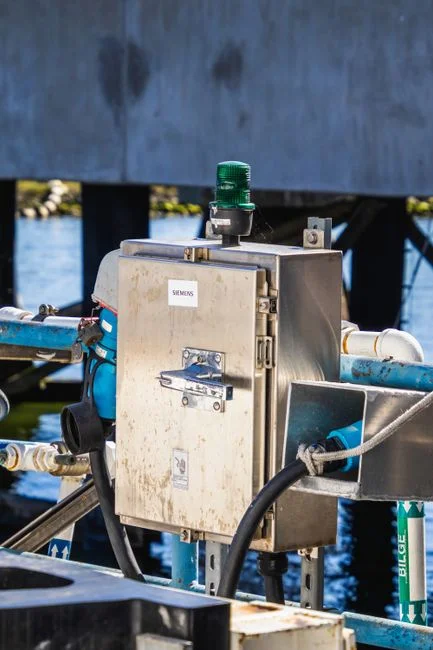
Every treatment stage should remove a defined pollutant class and generate an acceptance record. A defensible sequence is equalization → pH correction and precipitation → coagulation or flocculation → DAF or lamella clarification → filtration or biological polishing → optional UF or RO → controlled monitoring and discharge. The sequence should be shortened where the permit and representative wastewater do not require a barrier.
Hydroxide precipitation is usually the primary metals-removal step. The supplied research states that copper begins precipitating near pH 6.5 and is fully removed by pH 8.5; operation at pH 9.0–10.0 can capture Cu, Zn, Ni, and most divalent metals (HydropureWater, 2026). That broad range is not appropriate for every wastewater: amphoteric metals such as Cr(III) and Al can resolubilize above approximately pH 10.5. A PLC-controlled chemical dosing system therefore needs staged pH control, calibrated probes, and dosing records rather than a single unrestricted setpoint.
Sulfide precipitation is a possible polishing step where hydroxide cannot reliably meet a very low Pb, Hg, or Cd limit. The supplied research reports achievable sulfide residuals of 0.01–0.05 mg/L, while also identifying H2S generation when pH falls (HydropureWater, 2026). Sealed equipment, gas-risk controls, and an operating procedure are prerequisites. Biological polishing, disinfection, and UF should be included only when wastewater characteristics, permit conditions, or reuse objectives require them.
| Process stage | Measurable purpose | Evidence to request |
|---|---|---|
| Equalization | Buffer peak hydraulic and chemical variation | Level records, flow trends, mixing evidence, modeled residence time |
| pH correction and precipitation | Remove dissolved metals as separable solids | Calibrated pH history, dose-to-load calculation, jar or pilot results |
| Coagulation and flocculation | Aggregate fine particles and improve separation | Mixer operation, dose trends, settled or floated solids characterization |
| DAF or lamella clarification | Remove precipitated solids and floatable material | TSS removal, float or underflow performance, sludge-generation rate |
| Filtration or biological polishing | Remove residual solids and colloids or address biodegradable contaminants | Turbidity, SDI, run time, differential pressure, or specified biological performance |
| UF or RO, if required | Protect downstream reuse or remove remaining dissolved constituents | Validated permeate quality, recovery curve, differential or transmembrane pressure |
| Final monitoring | Demonstrate compliance with each applicable permit condition | Calibrated instruments, chain-of-custody samples, PLC/HMI records |
DAF is suitable for floatable material, oil and grease, buoyant floc, and suitable colloidal solids. A DAF system for mining wastewater solids separation should therefore be evaluated against floatable contaminants and measured flotation performance. Lamella clarification is more appropriate where compact separation of precipitated solids is the priority.
Multi-media filtration, UF, and RO are successive barriers rather than interchangeable products. The supplied catalog specifies UF membranes of 0.03 micron, feed turbidity up to 300 ppm, automatic backwash, and air scour (HydropureWater product catalog). RO addresses remaining dissolved metals and salts; it also creates concentrate that must be managed. Ion exchange belongs downstream because the supplied research warns that hardness and oil and grease can rapidly foul it.
Size for the Controlling Load, Not the Average
Treatment capacity is controlled by the most demanding combination of hydraulic flow and contaminant mass load, not by average daily flow or a single concentration result. The quotation should state peak and average flow in m³/h, representative influent pH and metals results, POTW limits for metals, pH, and TSS, and the desired recovery percentage where reuse is in scope (HydropureWater, 2026).
Calculate maximum pollutant mass load from concentration and concurrent flow. A low concentration at exceptionally high flow can produce a greater metal, acid, or reagent load than a more concentrated sample at average flow. Equalization, transfer pumps, chemical storage, reaction capacity, solids separation, filtration, and final polishing must all be checked against the controlling event.
The supplied research describes a design margin of 20%–30% above the permit limit as standard practice while emphasizing that actual performance depends on the influent matrix and chemical control (HydropureWater, 2026). This should be expressed as a design allowance around a verified permit target—not as permission to assume that treatment will automatically compensate for poor controls.
Request a mass balance covering water, each chemical constituent, chemical consumption, sludge generation, membrane recovery, concentrate, and retained inventory. Include startup, shutdown, storm inflow, high-production operation, bypass isolation, and permitted storage. A supplier quoting only nameplate capacity has not demonstrated performance during the controlling event. Use the mining wastewater equipment-sizing comparison to identify where missing hydraulic or loading assumptions leave equipment unverified.
Choose Equipment by the Wastewater Problem
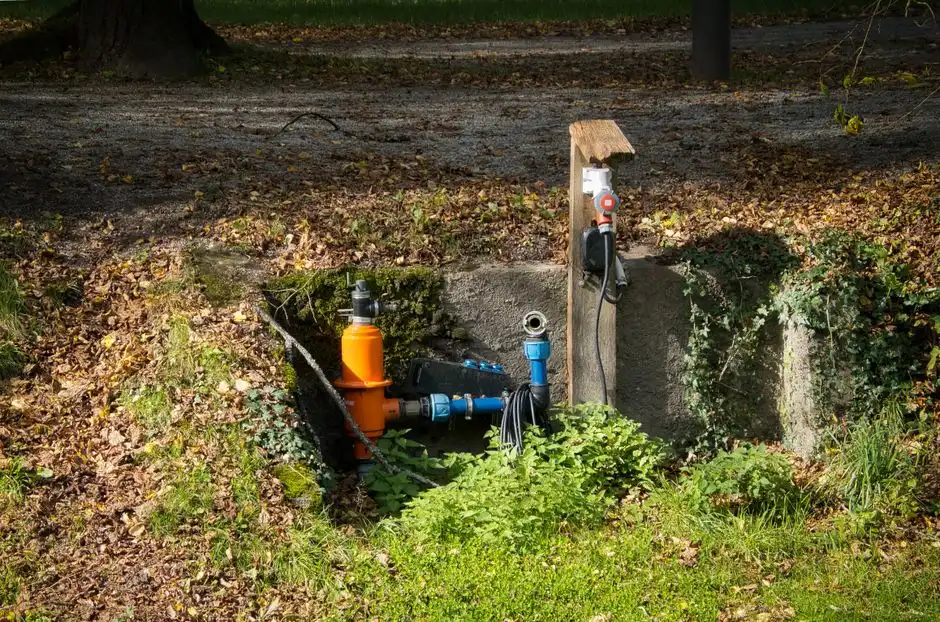
DAF, lamella clarification, UF, and RO serve different purposes, so selection should follow the contaminant and separation duty. The supplied 2026 catalog describes DAF capacity from 4–300 m³/h for suspended solids, FOG, oil and grease, and suitable colloidal matter. It gives lamella clarifier surface-loading rates of 20–40 m/h and states that chemical consumption can be reduced by up to 30% under the stated design basis (HydropureWater product catalog).
| Selection | Use it when | Buyer checks |
|---|---|---|
| DAF | Floatable contaminants, oil and grease, buoyant floc, or suitable solids are present | Peak flow, solids loading, flotation performance, recycle requirements, and float-sludge handling |
| Lamella clarifier | Precipitated solids require separation in a compact installation | Surface loading, underflow capacity, sludge volume, solids settleability, and chemical demand |
| Multi-media filter | Residual solids and colloids must be removed before discharge or membranes | Turbidity, SDI, run time, backwash demand, and downstream compatibility |
| UF | A fine-colloid barrier or membrane pretreatment is required | Feed turbidity, 0.03-micron barrier specification, backwash, air scour, and recovery |
| RO | Dissolved metals or salts exceed the sewer requirement or a defined reuse target | Permeate quality, recovery, concentrate volume, pretreatment, energy, and disposal route |
These are equipment-selection values, not guaranteed effluent performance. Confirm them against representative wastewater, pilot or jar results, and measured sludge characteristics. The DAF-versus-clarifier comparison and US mining wastewater DAF-versus-clarifier guide provide the appropriate technical distinctions for the RFQ.
Turn Equipment Performance into Permit Evidence
Compliance evidence must connect the permit condition to a measured operating record. Define sampling points for untreated streams, equalization, chemical treatment, clarification, filtrate, and final discharge. This arrangement identifies whether an upset originated in source chemistry, chemical dosing, solids separation, filtration, or membrane treatment.
Continuous pH, flow, and conductivity monitoring should feed PLC or HMI records. Verify pH setpoints, chemical-use trends, solids-removal performance, filter or membrane differential pressure, RO recovery, and sludge generation. The supplied research specifically identifies these controls as evidence supporting POTW self-monitoring (HydropureWater, 2026-02).
Written procedures must cover alarms, bypasses, upsets, and high flow. Each procedure should identify isolation points, available permitted storage, sampling requirements, notification responsibilities, equipment-recovery steps, and restart criteria. Monitoring frequencies and numerical compliance triggers must come from the current permit and POTW requirements; they cannot be selected from a generic equipment specification.
For chemical-feed selection, use the supplied 2026 chemical dosing equipment guide to assess control architecture, probe integration, storage, and dosing records. The operational evidence must demonstrate that the equipment maintained the specified condition—not merely that it was installed.
Plan for Sludge Disposal Before Purchasing the Treatment Train
Hydroxide and sulfide precipitation create metals-bearing sludge, and the supplied 2026 compliance research identifies disposal of that cake—rather than precipitation chemicals alone—as the dominant long-term operating-cost issue (HydropureWater, 2026). A treatment train without an accepted solids route is incomplete.
The typical sequence is thickening, PAM conditioning, and plate-and-frame filtration, with filtrate returned to the head of the train for retreatment. The supplied research gives 30%–45% dry-solids cake as a design benchmark rather than an unconditional guarantee (HydropureWater, 2026). Bidder performance tests should use site sludge and demonstrate cake dryness, filtration cycle time, filtrate quality, polymer consumption, and wash-water demand.
Before finalizing the scope, obtain receiving-site acceptance criteria, including TCLP characterization and landfill paint-filter requirements where applicable. The supplied plate-and-frame filter press catalog covers filtration areas from 1 m² to 500 m² and manual, hydraulic, and fully automatic PLC-controlled configurations. Select the configuration from measured feed solids, cake volume, cycle time, operator capability, and disposal logistics—not filter area alone.
Decide Between Sewer Discharge and Water Reuse
Sewer pretreatment, partial reuse, and zero liquid discharge should be compared using confirmed site economics and permit exposure. The required inputs are POTW fees, incoming-water cost, expected changes in local limits, energy demand, chemical use, concentrate management, residual disposal, and the recovery objective.
| Decision | Indicative use case | Key qualification |
|---|---|---|
| Pretreatment to sewer | Permitted physical-chemical treatment can meet current local limits | Maintain compliance as POTW conditions and sludge-acceptance rules evolve |
| Partial reuse with membrane polishing | A defined internal reuse target justifies additional treatment | Validate recovery with a site-specific water and contaminant mass balance |
| Full zero liquid discharge | Severe scarcity, high water cost, community pressure, or zero-discharge objectives support the investment | Account for evaporation or crystallization, utilities, maintenance, and waste routes |
The supplied 2026 compliance research states that when long-run POTW fees, incoming-water cost, and expected tightening exceed the operating cost of reuse or ZLD, the higher-recovery case becomes economically stronger (HydropureWater, 2026). AMPAC USA reports a 40%–60% reduction in freshwater intake for RO-enabled internal reuse compared with once-through operation, but requires a site-specific mass balance (AMPAC USA, 2025-09).
Neither reuse nor ZLD is mandatory for a Thomas facility merely because advanced equipment exists. Require a confirmed POTW limit, reuse objective, recovered-water quality specification, and concentrate route before choosing advanced membranes. An RO water purification system should therefore be evaluated only against a defined dissolved-constituent or reuse duty.
Issue a Complete Request for Quotation
A technically complete RFQ should force bidders to expose their assumptions and offer evidence of compliance. Require a process flow diagram, water and contaminant mass balance, guaranteed effluent criteria, equipment-by-equipment basis of design, control philosophy, sampling plan, and performance-acceptance method.
Request average and peak flow in m³/h, representative water analyses, confirmed POTW limits, chemical consumption, electrical load, footprint, sludge-generation rate, membrane recovery, concentrate route, redundancy, chemical storage, residual destination, bypass provisions, and stream segregation. A quotation that provides equipment nameplate data without tying it to the controlling wastewater event has not demonstrated capacity.
The supplied 2026 mining pretreatment market reference places industrial-scale systems broadly between $250,000 and more than $2 million, with final cost dependent on flow, chemistry, and permit limits (HydropureWater, 2026). Use that only as an early screening reference. The same source states that operating costs commonly add 15%–25% of initial capital expenditure annually, so evaluate chemical use, sludge disposal, maintenance, monitoring, membrane replacement, and energy separately.
Before award, verify that every bidder used the same wastewater data, permit targets, stream boundaries, recovery scenario, and performance definition. That common basis prevents an equipment-rich quotation from appearing compliant while excluding the site’s actual controlling load or sludge obligation.
Frequently Asked Questions
Do mining plants near Thomas need reverse osmosis to meet sewer limits?
Not for basic physical-chemical compliance. RO is normally considered when conductivity, sulfate, TDS, or dissolved metals remain above confirmed sewer requirements, or when a defined reuse target requires additional separation. The buyer must also evaluate recovery, energy, pretreatment, concentrate volume, and the concentrate-disposal route. A confirmed POTW limit and representative wastewater analysis—not proximity to Thomas—should trigger that decision.
What should a mining wastewater pretreatment supplier include in the quotation?
Require peak and average flow, representative analyses, confirmed permit targets, process flow diagram, mass balance, chemical consumption, electrical load, footprint, sludge route, redundancy, sampling locations, controls, and acceptance criteria. Also state whether the price includes chemical storage, bypass provisions, membrane cleaning, commissioning, monitoring, and performance testing. This is the practical check that separates a complete offer from a price-only equipment list.
How should a treatment train be sized for peak mining wastewater flow?
Size equalization and treatment around the highest anticipated discharge and the maximum concurrent contaminant mass load. The supplied engineering guidance gives 1.5–2.0 as a hydraulic peaking-factor screening range (HydropureWater, 2026), not as a Thomas rule. Replace that screening input with measured production, storm, startup, and shutdown records, then confirm storage, pumping, chemical-feed, and solids-handling capacity.
Which is better for mining wastewater, DAF or a lamella clarifier?
DAF is the stronger application choice for oil and grease, floatable fines, buoyant floc, and suitable solids. Lamella clarification is generally more appropriate for compact separation of precipitated solids. Jar testing or pilot work should compare flotation and settling with the actual wastewater, including chemical demand, separated-solids volume, sludge characteristics, and downstream filtration demand.
Can a plant rely on federal categorical limits near Thomas?
No. The facility must reconcile its applicable categorical rule with the current POTW local limits, industrial-user permit, prohibited discharges, monitoring conditions, state requirements, and any reuse rights. The local documents are unavailable in the supplied research, so no Thomas numerical limit should appear in the design basis until the receiving authority confirms it in writing.
Related Equipment
- DAF system for mining wastewater solids separation — specifications, capacity range, and technical data