
What a Water Treatment Plant Dosing System Actually Does
Chemical dosing in a water treatment plant (WWTP) is fundamentally a distribution problem, not a chemistry problem. Per Hahn (1992, Springer Berlin Heidelberg, Chemical Water and Wastewater Treatment II), the rate and completeness of coagulation and precipitation reactions depend on homogeneous distribution of the reaction partner in time and space. If the metal salt coagulant reaches the colloid in a non-uniform slug, the destabilization step proceeds only where local concentration is sufficient, and overall reaction efficiency drops even when the average dose is correct (doi:10.1007/978-3-642-77827-8_10). This is the boundary condition that the rest of the article addresses.
Every dosing skid is built from four canonical subsystems: chemical storage (PE or FRP tanks with level indication), preparation (for dry or liquid-concentrate chemicals such as polyacrylamide), a positive-displacement metering pump, and a control/instrumentation layer (S4). The standard dosed-chemical set across municipal and industrial WWTPs in 2026 includes PAC (polyaluminium chloride), PAM (polyacrylamide), sodium hypochlorite, ferric chloride, sulfuric acid, and sodium hydroxide (S4).
The choice between metal coagulants and polymer flocculants is an OPEX tradeoff. Metal coagulants lower pH and increase sludge volume, which shifts the operating cost optimization from chemical purchase to downstream sludge handling cost optimization (S2). Closed chemical handling—sealed storage, transfer, and injection—reduces operator exposure to corrosive and oxidizing chemicals, a practice reinforced by tightening 2026 discharge permit conditions across most U.S. states. A skid-mounted HydropureWater PLC-controlled automatic chemical dosing system integrates these four subsystems into one factory-tested package.
Comparing Dosing Pump Technologies for WWTPs
All four common pump technologies for WWTP service are positive-displacement designs where output is set by stroke or revolution rather than system pressure (S5). Selecting the correct pump requires matching specific wetted materials, discharge pressure, turndown, and maintenance requirements to the application.
Diaphragm metering pumps are the default for coagulant and pH-adjustment duty. Output is independent of system pressure (S5), turndown of 100:1 to 1000:1 is reachable by combining stroke-length adjustment with stroke-frequency control, and PTFE or PVDF liquid ends cover most of the standard WWTP chemical list. Designers should specify a double-diaphragm design with leak detection to prevent chemical loss during a diaphragm rupture.
Peristaltic pumps use a hose as the only wetted part, making them the natural choice for polymer, lime slurry, and other abrasive or shear-sensitive media. Turndown is more limited than diaphragm (typically 10:1 to 100:1), but maintenance is reduced to scheduled hose replacement rather than valve-seat refurbishment.
Plunger and solenoid pumps deliver high discharge pressures—plunger pumps routinely exceed 100 bar—and are specified for high-pressure boiler feed, RO antiscalant injection, and pipeline corrosion-inhibitor service. They are common in industrial pretreatment upstream of an RO train but are less common in the main reactor area.
Selecting a pump that operates below 10% of its capacity is the most common sizing error. At very low output, stroke-to-stroke repeatability degrades and accuracy suffers; the pump should run near the middle of its range (S4). A spec that captures capacity (L/h), maximum pressure (bar), turndown ratio, materials of construction, chemical compatibility, and suction lift (S5) covers the failure modes by design rather than by retrofit.
| Parameter | Diaphragm (PTFE/PVDF) | Peristaltic | Plunger / Solenoid |
|---|---|---|---|
| Typical turndown ratio | 100:1 – 1000:1 | 10:1 – 100:1 | 100:1 – 500:1 |
| Max discharge pressure | 10 – 25 bar | 8 – 16 bar | 100+ bar (plunger); 10 – 16 bar (solenoid) |
| Wetted material options | PTFE, PVDF, PP, SS316 | Natural rubber, EPDM, Norprene, PTFE hose | SS316, Hastelloy, ceramic |
| Best-fit WWTP duty | PAC, NaClO, ferric chloride, H2SO4, NaOH | PAM emulsion, lime slurry, abrasive media | RO antiscalant, boiler chemicals, high-pressure inhibitor injection |
| Primary failure mode | Diaphragm rupture (use double-diaphragm + leak detect) | Hose fatigue / burnout | Valve-seat fouling, packing wear |
| Maintenance variable | Diaphragm (2–4 yr life typical) | Hose (scheduled replacement) | Packing, valves, plunger seal |
Polymer Preparation: The Subsystem Competitors Underestimate
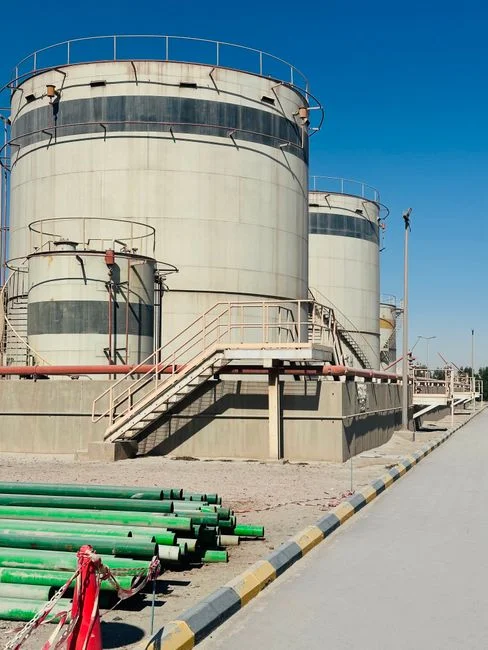
Powdered polyacrylamide (PAM) and emulsion-concentrate flocculants require wetting, dispersing, mixing at controlled shear, and aging before use to avoid fish-eye slurry that flows through the system without activating (S4). Inconsistent polymer maturation is the primary cause of failed jar tests, which lead to opportunistic, non-reproducible dose changes (S2).
A properly specified polymer prep skid includes a dry-polymer feeder (loss-in-weight or volumetric), a wetting chamber with non-clog mixing, a maturation tank with low-shear agitator, level control, and conductivity- or flow-based dilution water control. Working concentration for wastewater flocculation typically sits in the 0.05% – 0.3% range, and the standard maturation time is 30 – 60 minutes depending on molecular weight and solution strength. The minimum residence time is set by the polymer grade, not by tank size preference.
Under-activated polymer degrades downstream solids removal. A lamella clarifier or dissolved air flotation unit receiving un-aged flocculant sees a decrease in TSS removal, which propagates as elevated polymer demand downstream and higher cake solids loss at the dewatering stage. Integrating the prep unit with the metering pump eliminates common integration failures. For broader OPEX impact, see wider wastewater plant OPEX optimization data.
Control Architecture: From Flow-Paced to Closed-Loop MPC
Dosing control follows a four-step hierarchy (S2): (1) flow-paced feed-forward, where dose is set by influent flow and a manual ppm setpoint; (2) PID feedback on a single process parameter such as pH; (3) PID with redundant sensors; (4) model predictive control (MPC), where the controller anticipates downstream response. Each step increases CAPEX and introduces specific failure modes.
The recommended sensor stack for a full-coverage dosing skid includes: influent flow meter (feed-forward), pH/ORP probe, conductivity probe, streaming-current or turbidity meter for coagulant control, and an optional chlorine residual probe for disinfection (S2, S3). For polymer, streaming current is the most useful feedback signal because it tracks flocculant demand directly; for pH, a dual-probe installation with automatic transfer is standard practice.
Never run a closed-loop dosing strategy from a single uncompensated sensor, as the controller may amplify noise and increase chemical use (S2). Every sensor tag must carry health diagnostics, and the PLC must trip to a defined safe mode (typically fixed-per-flow dosing) on diagnostic error. Mismatched PLC scan rates between sensor and pump command are a common commissioning failure that can be mitigated by writing these requirements into the FAT scope.
Advanced MPC reduces dose oscillation and can provide 5% – 15% additional chemical savings beyond well-tuned PID, but it introduces failure modes related to sensor faults, network latency, and PLC/SCADA version mismatches. Logic must be hardened before plant-wide rollout, and operators must be able to return the controller to PID via a single HMI action.
| Control level | Minimum sensor stack | Typical payback vs. manual | Failure mode to design against |
|---|---|---|---|
| Flow-paced feed-forward | Flow meter | 5% – 15% chemical reduction | Influent composition change (no feedback) |
| Single-parameter PID | Flow + pH or streaming current | 10% – 25% | Sensor noise amplified by controller |
| Redundant-sensor PID | Flow + dual pH or dual SCD + conductivity | 15% – 30% | Sensor failover not wired to PLC |
| MPC (model predictive) | Flow + pH + SCD + turbidity + chlorine residual | 20% – 40% | Network latency, version mismatch, model drift |
2026 Procurement Checklist for Dosing Equipment
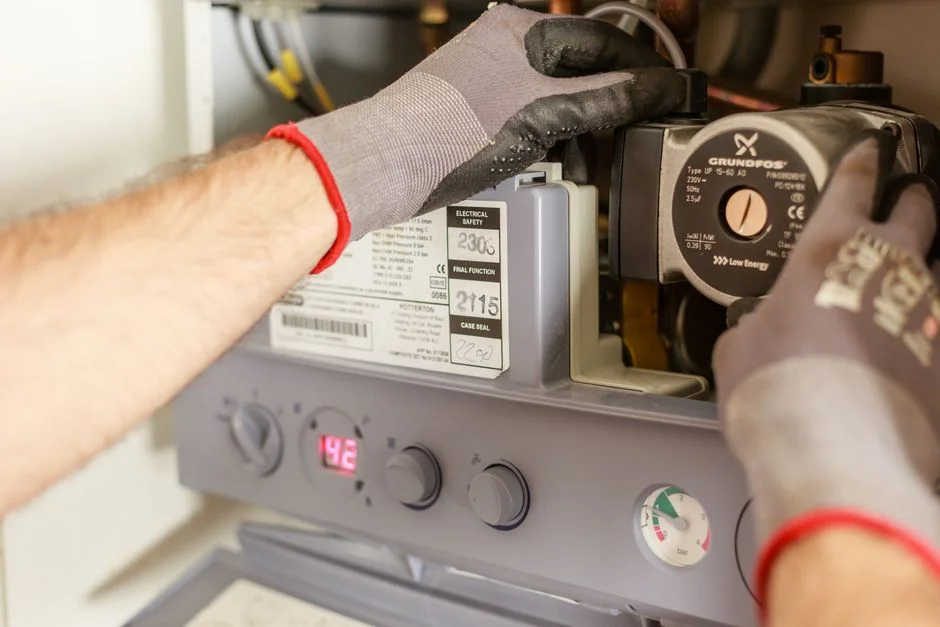
The items below belong in the RFQ. Vendors unable to provide this data are not qualified for a 2026 municipal or industrial spec.
- Chemical list per dosing point: name, concentration (%), specific gravity, corrosivity class, and required dose range (L/h) at min, average, and peak plant flow.
- Turndown ratio per pump: 100:1 minimum for variable-flow plants; 1000:1 for plants with a defined diurnal swing of 5x or more.
- Materials of construction per chemical: PP, PE, PVC, PVDF, PTFE, SS316 — chosen from chemical compatibility data.
- Redundancy requirements: dual pH probes, dual flow meters, automatic transfer to backup on diagnostic failure; safe-mode (fixed-per-flow) action defined for every sensor tag.
- Integration scope: PLC tag list, scan rate (typical 250 ms – 1000 ms for analog sensor loops), network protocol (Ethernet/IP, Profinet, or Modbus TCP), and named HMI/SCADA integration points.
- FAT scope: calibrated flow verification at three points across the turndown range (10%, 50%, 100%); simulation of sensor failover with PLC response observed; simulation of chemical-out condition; documented witness-test signoff.
| Spec line item | Acceptable value (2026) | Reject if… |
|---|---|---|
| Pump turndown | ≥ 100:1 | Single-speed pump specified for variable-flow plant |
| Sensor redundancy | Dual pH, dual flow; PLC failover defined | Single sensor on closed loop |
| PLC scan rate | 250 ms – 1000 ms analog loops | Default scan, undefined in FAT |
| FAT witness | Three-point flow verification + failover test | Vendor-only test, no customer witness |
| Materials for NaClO / ferric | PVDF or PTFE liquid end | PP or PVC on oxidizing acid |
Skid-mounted, pre-wired, factory-tested automatic chemical dosing systems allow the buyer to fold this checklist directly into the factory acceptance test rather than discovering gaps at site commissioning (HydropureWater verified product data, 2026).
Frequently Asked Questions
What are the four main subsystems of a chemical dosing skid?
A dosing skid consists of chemical storage (PE or FRP tank with level control), preparation (for dry or liquid-concentrate chemicals), a positive-displacement metering pump, and a control/instrumentation layer (PLC plus online sensors). All four subsystems must be specified together to ensure system reliability.
What is the typical turndown ratio for a diaphragm metering pump?
Standard diaphragm metering pumps reach 100:1 to 1000:1 by combining stroke-length adjustment with stroke-frequency control. Specifying below 100:1 for a variable-flow plant causes inaccuracy because the pump operates at the bottom of its range, where stroke-to-stroke repeatability degrades.
How long does polyacrylamide (PAM) need to mature before dosing?
PAM working solutions at 0.05% – 0.3% concentration require 30 – 60 minutes of maturation time depending on molecular weight and solution strength. Under