What mining and metals wastewater changes about the choice
For a mining or metals factory in Eutaw, choose a clarifier when the stream mainly contains dense, readily settleable mineral fines, tailings, or metallurgical sludge; choose DAF when the target contaminants are oils, flotation reagents, conditioned colloids, or low-density metal-bearing precipitates that can attach to micro-bubbles. Mixed streams often require clarification first and DAF polishing, but that sequence must be justified by wastewater testing rather than assumed. Neither device alone establishes compliance, so a 2026 selection should be based on Eutaw permit conditions, representative wastewater, peak flow, chemical conditioning, and the downstream sludge and reuse route.
Average total suspended solids cannot characterize a mixed industrial stream. First divide the wastewater into dense mineral fines, colloidal clays, oils and greases, residual flotation reagents, dissolved metals, and metals attached to settleable or floatable solids. Then determine each fraction’s density, particle-size distribution, settleability, floatability, and treatment response.
Metals do not, by themselves, identify the correct separator. DAF can remove metal-bearing material only after that material has been conditioned into particles that can attach to bubbles; truly dissolved metal cannot be physically skimmed. The 2026 factory guide on DAF and clarifier selection for mining wastewater makes the same distinction between dissolved metals and metals attached to settleable or floatable solids.
Sample by source rather than relying on one plant-wide average. Separate mill discharge, thickener overflow, contact water, washdown, batch discharges, and stormwater, and record their flow profiles. Peaks and batch releases affect equalization, pretreatment, chemical inventory, separator duty, and sludge handling. This source-by-source map is more useful for choosing DAF or a clarifier for mining and metals wastewater in Eutaw than any generic capacity chart.
How DAF and gravity clarification separate solids
DAF removes particles by buoyant flotation, while a clarifier removes them by gravitational sedimentation; a product labeled “flotation clarifier” may therefore use the DAF principle rather than gravity settling.
In DAF, recirculated water is pressurized and saturated with air. On release into the flotation tank, micro-bubbles attach to conditioned particles, which rise and are removed by a skimmer. Aries identifies approximately 100 psi recirculation pressure and approximately 30 µm bubbles. Clearwater’s April 27, 2026 publication gives a 30–50 µm bubble range. Neither figure establishes site performance without representative wastewater testing.
A conventional clarifier withdraws settled solids from the bottom and collects clarified water through an overflow system. A lamella clarifier adds inclined plates to increase effective settling area within a smaller footprint, but it retains the same gravity mechanism. The comparison is between an industrial DAF system and a lamella clarifier, not between two interchangeable uses of the word “clarifier.”
| Feature | Dissolved air flotation | Conventional or lamella clarification |
|---|---|---|
| Primary mechanism | Buoyant flotation after particle conditioning | Gravity sedimentation |
| Bubble or settling feature | Micro-bubbles reported as approximately 30 µm by Aries and 30–50 µm by Clearwater on April 27, 2026 | Lamella plates increase effective settling area; conventional units use tank geometry and overflow rate |
| Principal removed fraction | Conditioned colloids, oils, flotation reagents, biological flocs, and floatable precipitates | Dense mineral fines, tailings, grit, and metallurgical solids that settle |
| Solids withdrawal | Float is skimmed; heavier material may also collect at the bottom | Settled solids are withdrawn from the bottom |
| Key dependency | Coagulation and flocculation, bubble contact, recycle performance, and skimming | Settleability, effective area, hydraulic distribution, and sludge withdrawal |
DAF can also produce a bottom-solids stream, but that feature does not make it a gravity clarifier. Procurement documents should state the separation principle, duty basis, target contaminant fraction, recycle arrangement, and sludge-handling route.
Match each contaminant fraction to the right unit
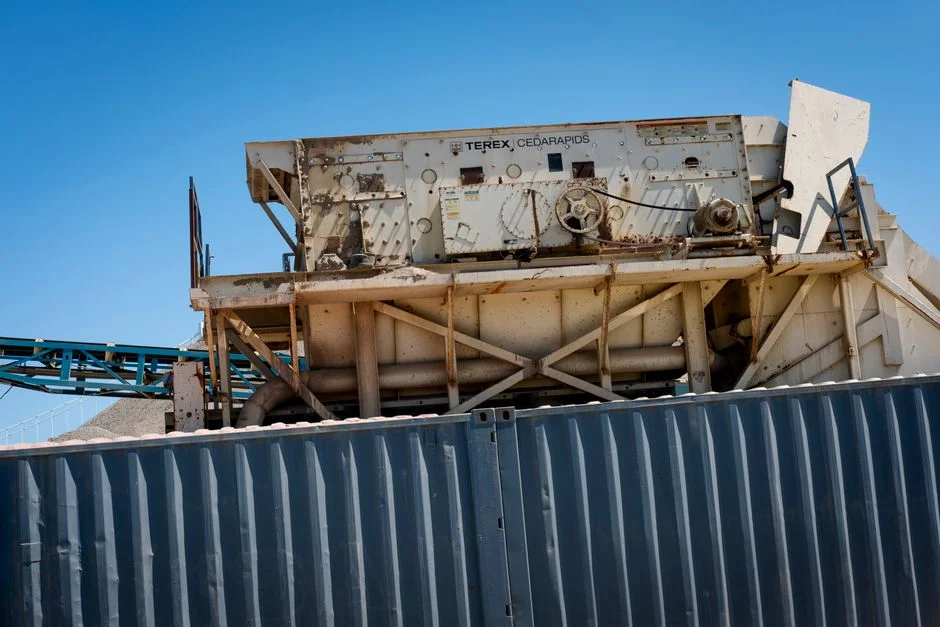
Dense solids that settle readily belong in conventional or lamella clarification; oils, conditioned colloids, and floatable metal-bearing solids belong in DAF.
Use conventional or lamella clarification for sand, grit, dense tailings, mineral fines, and metallurgical sludge with a specific gravity greater than water. Its advantage is gravity separation of the bulk settleable load, although colloidal and buoyant fractions may remain in the clarified water.
DAF is better suited to oils and greases, residual flotation reagents, conditioned clays, biological flocs, fine metal-bearing precipitates, and low-density solids that do not settle readily. The mechanism still depends on successful coagulation and flocculation. Without appropriate conditioning, the contaminant may not attach to the bubbles.
High silt and clay loading is a DAF boundary condition. Fluence, as summarized in the 2026 mining wastewater equipment selection framework, states that DAF is not well suited to heavier particles that do not float, including silt and clay. For a combined heavy-solids and buoyant stream, evaluate clarification first and DAF polishing only after application-specific testing establishes that the sequence improves the final effluent and overall footprint.
Gross grit or sand may require pretreatment before either separator. Options include screening, hydrocyclone separation, or other solids removal; a continuous-duty rotary bar screen can be evaluated where gross solids would overload downstream equipment. A downstream barrier is also not automatic. The 2026 research states that DAF effluent still typically requires filtration or membrane treatment before reuse or discharge when the final specification requires further solids removal; a multi-media filtration system is one option for evaluation against the required reuse quality.
| Dominant stream fraction | Primary technology | Required engineering checks |
|---|---|---|
| Dense tailings, sand, grit, mineral fines | Conventional or lamella clarification | Settleability, effective settling area, peak mass loading, and sludge withdrawal |
| Oils, greases, residual flotation reagents | DAF | Emulsion characteristics, floatability, conditioning, skimming, and recycle system |
| Colloidal clays and conditioned metal-bearing precipitates | DAF | Particle-size distribution, pH, coagulant and flocculant dose, and downstream solids barrier |
| Dissolved metals | Chemical precipitation followed by solids separation | Metal speciation, pH control, residual dissolved-metal limit, and sludge route |
| Heavy solids plus buoyant or flocculable load | Pretreatment and/or clarification followed by DAF | Fraction-specific removal, hydraulic profile, chemical compatibility, and complete-train footprint |
Size the process from tests, not a generic capacity chart
Equipment duty must be derived from measured peak flow and mass loading, not selected from average flow.
Provide vendors with flow records by source, peak and batch-discharge profiles, stormwater contribution, equalization data, TSS, particle-size distribution, settleability, oils and greases, pH, temperature, and total and dissolved metals. The bid basis should also define the target effluent, sampling methods, downstream reuse or disposal route, and expected sludge generation.
Jar testing establishes the chemical program and floatability of the actual wastewater. Pilot testing is appropriate when solids behavior, sludge formation, or transient loading cannot be represented in bench tests. Clearwater identifies a 15–45 second flash-mix contact-time range for chemical conditioning, but that is a design input to be validated rather than a universal setting.
The 30 mg/L aluminum sulfate optimum reported by Elder in a 2011 Utah State University study on algae and phosphorus removal from a Logan, Utah lagoon effluent is not a mining dose. Its relevance is methodological: the optimum chemical dose was determined empirically for a particular wastewater and cannot be transferred to Eutaw without jar testing.
Size for peak hydraulic and mass loading, including batch discharges. Ask each bidder to state the proposed separation mechanism, flotation or effective settling area, recycle arrangement, solids-handling rate, chemical program, and duty against the measured design basis. A PLC-controlled coagulant and flocculant dosing system should be integrated with flow, pH, level, and equipment controls rather than treated as an accessory.
| Design-basis item | Information required before selection |
|---|---|
| Hydraulics | Source-by-source flow, peak flow, batch profile, stormwater contribution, and equalization behavior |
| Solids | TSS, particle-size distribution, settleability, floatability, density where available, and peak mass loading |
| Chemistry | pH range, alkalinity, temperature, oils and greases, total and dissolved metals |
| Conditioning | Jar-test chemical identities and doses, mixing requirements, and site trial results |
| Vendor duty | Separation mechanism, applicable area, recycle configuration, hydraulic and solids limits, and sludge capacity |
| Acceptance | Specified wastewater, flow, temperature, analytical method, sampling point, and performance criterion |
Compare footprint, operating burden, and sludge handling
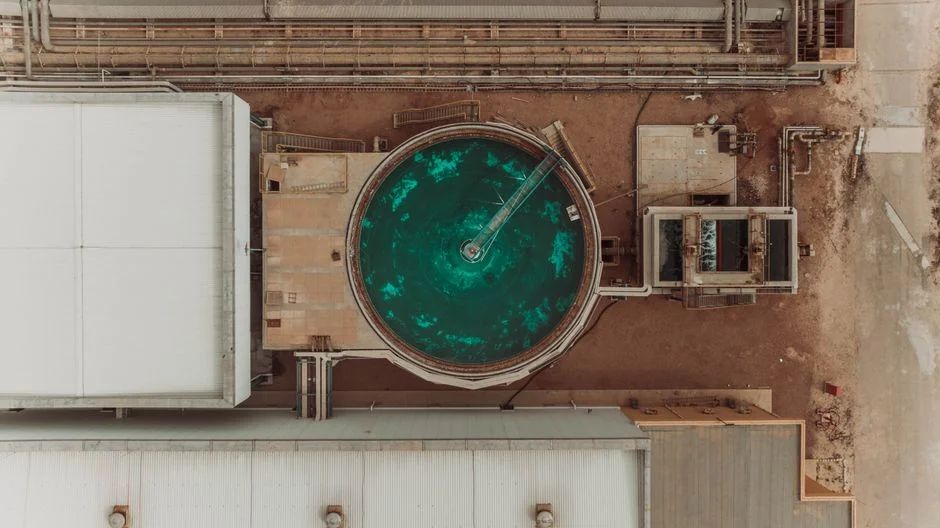
The economically relevant comparison is the complete treatment train, not the separator tank price.
Conventional clarification generally requires more civil footprint. Lamella clarification compresses gravity-settling area, and HydropureWater product literature lists a surface-loading rate of 20–40 m/h. That specification must be evaluated against measured settleability and peak solids loading; it does not replace site testing.
DAF adds a recycle and air-saturation system and usually depends on chemical conditioning. Compare operating burden using each bidder’s assumptions for recycle pumps, compressor, chemicals, labor, maintenance, and energy. Gravity clarification has a different utility and maintenance profile, but its performance must still satisfy the measured hydraulic and mass duty.
DAF float is skimmed into a sludge route, whereas a lamella clarifier uses sludge recirculation and bottom solids withdrawal. Compare storage, moisture content, collection equipment, dewatering, and disposal using the same waste profile. Clearwater reports that a well-conditioned DAF can produce sludge thick enough to need little or no further dewatering, making downstream handling a meaningful cost lever. A plate-and-frame sludge filter press should nevertheless be evaluated against the actual solids rather than assumed necessary or unnecessary.
| Cost or burden item | DAF proposal | Clarifier proposal |
|---|---|---|
| Civil footprint | Evaluate tank, recycle, air-saturation, equalization, and access space | Evaluate settling area, sludge collection, peripheral access, and equalization space |
| Chemical use | Require pH control, coagulant, flocculant, and tested dose assumptions | State whether flocculation assists settling and identify its tested dose |
| Utilities and maintenance | Price recycle pump, compressor, mixer, skimmer, controls, and maintenance | Price drives, sludge collection, lubrication, controls, and maintenance |
| Sludge route | Include float collection, storage, moisture content, and dewatering | Include underflow withdrawal, recirculation, storage, moisture content, and dewatering |
| Reuse or discharge | Price any downstream filtration or membrane barrier required by the specification | Price the same required barrier if residual solids exceed the target |
The supplied research provides no reliable 2026 Eutaw unit price for either option. Request budgetary quotations tied to flow, TSS, contaminant fractions, materials, controls, pretreatment, installation, utilities, and dewatering. Any unsupported price range would be weaker than a quotation built on a common design basis.
Build a 2026 Eutaw RFQ that produces comparable proposals
A defensible RFQ must make every bidder answer the same wastewater and performance questions.
Issue one common design basis covering representative wastewater, seasonal variation, peak flow, batch discharges, chemical assumptions, target effluent, reuse or discharge route, utilities, site constraints, and acceptance criteria. State the separation principle in the scope: “DAF,” “dissolved air flotation clarifier,” and “gravity sedimentation clarifier” are not interchangeable descriptions.
- Require each proposal to state the proposed mechanism, duty basis, contaminant fraction, reactor area, recycle or sludge-collection arrangement, and peak-flow and mass-loading limits.
- Require performance commitments to identify the wastewater, chemical doses, flow, temperature, analytical method, sampling point, and acceptance criterion.
- Price equalization, pretreatment, pH control, chemical feed, controls, recycle, sludge removal, dewatering, utilities, installation, commissioning, training, and service as separate scope items.
- Request comparable wastewater references or site-specific pilot results, material-selection rationale, corrosion assessment, controls and instrumentation schedules, utilities, maintenance tasks, spare parts, and after-sales support.
- Require the sludge route and downstream reuse or discharge barrier to remain inside the quoted performance boundary.
Require bidders to document whether DAF and gravity clarification were screened against the same wastewater, conditioning assumptions, hydraulic profile, and criteria. If only one process was considered, ask for the technical screening rationale rather than accepting a product preference.
For Eutaw, obtain the current discharge permit, sewer-use or pretreatment requirements, and site utility constraints before finalizing the comparison. The supplied research establishes no Eutaw-specific regulatory limits, so an invented limit would not be a valid acceptance criterion. The broader mining and metals wastewater compliance guide is useful for structuring that permit review, but local agency documents must supply the applicable requirements.
Recommended selection paths for common plant streams
Choose the process from the dominant contaminant fraction, then validate the complete train against measured plant conditions.
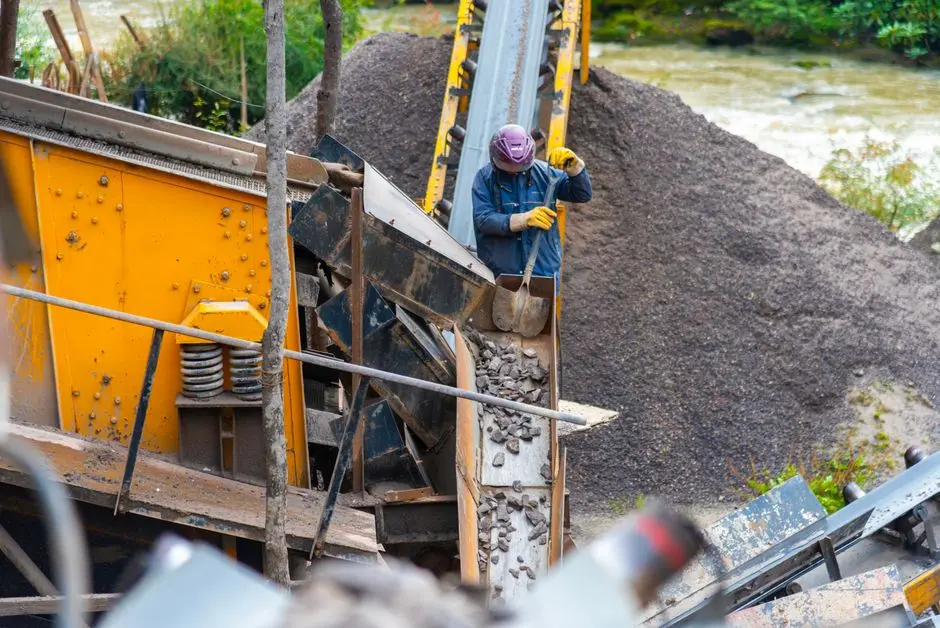
- Dense tailings or mineral-fines dominant stream: screen or hydrocyclone pretreatment when needed, followed by conventional or lamella clarification and sludge dewatering.
- Low-density oils, reagents, or conditioned metal precipitates dominant stream: use pH adjustment and coagulation or flocculation, followed by DAF.
- Combined heavy-solids and buoyant-load stream: evaluate clarification first and DAF polishing; require testing to validate the sequence, chemical compatibility, and footprint.
- Strict reuse or discharge target: add the required downstream filtration or membrane barrier rather than assuming either separator alone produces final compliance.
- Variable-flow plant: include equalization and size the separator, chemical skid, and sludge route against measured peak and batch conditions.
| Plant condition | Indicative process path | Decision gate |
|---|---|---|
| Dense fines or tailings dominate | Screening or hydrocyclones as needed → conventional or lamella clarification → sludge dewatering | Verify settleability, peak mass loading, and underflow capacity |
| Oils or residual flotation reagents dominate | Equalization and pH control → coagulation/flocculation → DAF → required downstream polish | Verify floatability, skimming, and reuse specification |
| Heavy solids and floatable load coexist | Pretreatment → clarification → DAF polishing → sludge handling | Confirm each stage removes a defined fraction and improves the final result |
| Metal-bearing precipitate dominates | pH-controlled precipitation → DAF or gravity separation → polishing as required | Separate dissolved metals from particle-bound metals in the acceptance test |
| Batch and stormwater flows are material | Equalization → selected separator → controlled chemical feed → sludge route | Size all stages for measured peak and mass duty |
The practical decision rule is straightforward: favor DAF for floatable or flocculable loads, favor gravity clarification for heavy settleable solids, and consider a combined train only when application-specific testing supports it. Neither technology should be credited with final compliance until the complete train meets the Eutaw permit or reuse specification.
Frequently Asked Questions
What is the main difference between a DAF and a clarifier for mining wastewater?
DAF separates conditioned particles through buoyant micro-bubble flotation and skimming, while a conventional or lamella clarifier separates settleable solids through gravity. DAF therefore suits oils, reagents, conditioned colloids, and floatable precipitates; clarification suits dense mineral fines, tailings, and metallurgical sludge.
When should an Eutaw mining plant use DAF after a clarifier?
Consider DAF after clarification when the clarifier can remove the dominant heavy-solids fraction but residual oils, conditioned colloids, flotation reagents, or low-density metal-bearing solids remain important to the effluent target. Validate the sequence with representative wastewater and pilot data, and include any required downstream filtration or membrane barrier.
How much does a DAF or clarifier cost for a mining wastewater project in 2026?
The supplied research provides no reliable 2026 Eutaw unit price for either option. Request budgetary quotations using the same inputs: measured peak flow, TSS and particle-size distribution, contaminant fractions, chemical assumptions, materials, controls, pretreatment, utilities, sludge dewatering, installation, commissioning, and service. Compare complete-train assumptions rather than tank prices.
What should a buyer request from a wastewater equipment supplier before selecting a unit?
Request the separation principle, duty calculation, representative wastewater references or pilot results, material-selection rationale, controls schedule, utilities, maintenance tasks, sludge route, and a performance commitment tied to defined wastewater, flow, temperature, chemical doses, analytical method, sampling point, and acceptance criterion.
Can DAF alone guarantee compliance with strict discharge or reuse limits?
No. DAF removes suspended, conditioned, and floatable material, but it cannot physically remove truly dissolved metals. The supplied research also states that DAF effluent typically requires downstream solids removal before reuse or discharge when the final specification requires it; the applicable Eutaw permit and reuse criteria must define the final barrier.