
Separate Sewer Pretreatment From NPDES Permitting
Mining and metals plants near Pevely meet sewer pretreatment limits by characterizing the wastewater, identifying the receiving publicly owned treatment works (POTW), and complying with its industrial user permit, sewer-use ordinance, local limits, monitoring, and control requirements. Federal categorical standards under 40 CFR Part 403 may also apply, but the POTW’s requirements are site-specific and must be verified. A defensible treatment train commonly starts with equalization, then uses pH adjustment and coagulation or flocculation, followed by DAF or lamella clarification, filtration, and controlled sludge dewatering. No verified Pevely-specific numerical limit appears in the supplied research, so final equipment sizing must follow the current permit, representative influent testing, and receiving-authority approval.
A sewer connection creates an indirect-discharge obligation under Clean Water Act Section 307(b) and 40 CFR Part 403. The receiving POTW administers the industrial user permit or equivalent control mechanism; prohibited discharges, categorical standards, and local limits remain distinct requirements. A regional guide to meeting mining-plant sewer limits explains the same permit-first approach.
This is not the same authorization as a direct discharge to surface water. EPA’s Industrial Wastewater page states that all point-source discharges from mining operations, including associated impoundment discharges, must be NPDES-authorized. A facility may therefore need an NPDES permit for a direct outfall and a POTW industrial user permit for its sewer connection. Metal-mining requirements appear in 40 CFR Part 440, but the applicable subcategory must be confirmed from actual mining and processing activities rather than inferred from the Pevely location.
| Discharge path | Controlling framework | What the buyer must obtain |
|---|---|---|
| Wastewater sent to a POTW sewer | Clean Water Act Section 307(b), 40 CFR Part 403, applicable categorical standards, POTW permit, sewer-use ordinance, and adopted local limits | Receiving POTW identity, current permit, local limits, monitoring and monitoring frequencies, mass-loading limits, slug controls, and discharge authorization |
| Direct discharge to surface water or an associated impoundment outfall | NPDES permitting under Clean Water Act Section 402 | Current NPDES permit and applicable outfall conditions |
| Both paths at one facility | Separate obligations for each outfall and sewer connection | A site-by-site outfall and discharge map, with the permit basis for each receiving point |
Do not use a generic “Pevely limit,” assumed penalty figure, or unverified permit number in the equipment specification. The DAF-versus-clarifier guide for mining wastewater provides equipment-selection context, but the receiving authority must establish the actual discharge envelope.
Build the Compliance File Before Ordering Equipment
The controlling permit and adopted local limits define the equipment basis of design; a generic treatment description does not. EPA’s Local Limits Development Guidance, published in 2021, identifies prohibited discharges, categorical standards, and local limits as separate pretreatment requirements and states that an indirect discharger’s obligations are determined by its POTW permit or equivalent control mechanism or by regulatory requirements.
Request the following file before issuing a vendor specification: the current POTW industrial user permit or equivalent mechanism; sewer-use ordinance; adopted local limits; monitoring requirements; and any flow, mass-loading, slug-control, equalization, sampling, or reporting conditions. Also obtain the applicable categorical subcategory based on the facility’s actual mining, processing, plating, pickling, or finishing operations. The same EPA guidance discusses these layers separately rather than treating a categorical standard as a complete site permit.
Then develop a representative wastewater dataset covering pH, suspended solids, total and dissolved metals, and every pollutant named by the POTW. The sampling period must represent normal production, batch releases, clean-outs, and other conditions that could control the permit average or instantaneous loading. Without those records, neither reactor volume nor polishing capacity can be sized defensibly.
EPA’s five-step maximum allowable headworks loading sequence gives the POTW a defensible method for developing local limits: determine pollutants of concern, collect and analyze data, calculate MAHLs, designate and implement local limits, and address collection-system concerns. This sequence is not a substitute for an adopted limit; the buyer should ask the POTW which MAHLs and calculations support its current ordinance.
| Compliance document | Design question answered | Owner |
|---|---|---|
| POTW permit or equivalent control mechanism | What pollutants, concentrations, mass loadings, monitoring conditions, and operational restrictions control discharge? | Plant and receiving POTW |
| Sewer-use ordinance and adopted local limits | Which local requirements are more restrictive than the federal categorical standards? | Plant and receiving POTW |
| Applicable categorical subcategory | Which federal production-based or categorical requirements apply to the actual operation? | Plant environmental counsel or compliance lead |
| Representative influent characterization | What flow, pH, solids, metal, and batch-release envelope drives the design? | Plant process engineers and laboratory |
| POTW-approved sampling and monitoring plan | Where, when, and how will compliance be demonstrated? | Plant and receiving POTW |
The EPA guidance is 134 pages and expressly nonbinding. If its discussion conflicts with the permit or a regulation, the permit or regulation controls. This distinction is important when a vendor or consultant presents guidance language as a current Pevely requirement.
Characterize the Waste and Select the Right Unit Operations

Equipment selection should follow the wastewater’s flow pattern and chemistry, not a fixed mining template. Required inputs include flow duration, average and peak flow, batch clean-outs, pH, suspended solids, total and dissolved metals, and any contaminants that control reactor chemistry or sludge handling. No supplied source establishes Pevely influent values, so those inputs must be measured.
A defensible sequence starts with headworks protection, equalization and slug control, controlled pH adjustment, coagulation or flocculation, clarification, filtration, and monitored sewer discharge. Chemical precipitation converts dissolved metals into metal-hydroxide solids that must then be captured. A rotary mechanical bar screen can protect downstream equipment, while a PLC-controlled automatic chemical dosing skid can apply pH and coagulant consistently.
Equalization attenuates batch spikes and provides a more stable feed to chemical dosing and clarification. HydropureWater’s 2026 Ashcamp article recommends 8–24 hours of average daily flow as commercial design guidance, not an EPA requirement. The correct detention and usable volume depend on the plant’s batch-release profile and the POTW’s slug-control conditions. The same article illustrates how 4-hour and 24-hour equalization can materially change the effect of a clean-out spike on a daily composite; those figures are illustrative and must not be used as Pevely inputs.
Correct pH before precipitation and flocculation. Metal hydroxide precipitation requires a controlled chemical condition, and unstable pH can increase reagent demand or leave poorly conditioned solids entering clarification. The treatment sequence should then pass segregated or combined influent through headworks protection, equalization, pH and coagulant dosing, DAF or lamella clarification, media filtration, monitoring, and sewer discharge.
| Process step | Primary function | Design inputs to verify |
|---|---|---|
| Headworks protection | Remove rags and coarse debris before pumps and treatment vessels | Debris type, peak flow, and screening arrangement |
| Equalization | Attenuate batch releases and support stable chemical feed | Flow duration, batch volume, clean-out frequency, and slug restrictions |
| pH adjustment | Establish the condition needed for metal hydroxide precipitation | Raw pH range, alkalinity, target pH, and acid or alkali demand |
| Coagulation and flocculation | Aggregate suspended solids and precipitated metals into capturable floc | TSS, dissolved metals, mixing, pH, and reagent jar tests |
| DAF or lamella clarification | Separate conditioned metal-bearing floc from treated water | Peak flow, floc characteristics, hydraulic loading, and sludge handling |
| Filtration | Remove residual solids and colloids | Clarified TSS, turbidity, media type, and backwash waste |
| Sludge dewatering | Reduce precipitation and flocculation solids to a manageable residual | Solids production, batch frequency, target cake condition, and disposal route |
Chemical precipitation increases the solids burden. Clarifier withdrawal, sludge storage, dewatering, and final disposition therefore belong in the same design package as the water-treatment train. A comparison guide for DAF and clarifiers in mining wastewater treatment is useful when developing the vendor’s process narrative, but it does not replace treatability testing.
Compare DAF and Lamella Clarification for Pevely-Area Projects
The clarification choice should be driven by floc behavior, hydraulic loading, flow variability, footprint, maintenance, and downstream polishing—not by a universal winner. Both DAF and lamella systems can capture metal-hydroxide floc, but their performance and sludge characteristics differ under site-specific conditions.
HydropureWater’s 2026 catalog describes DAF units in 4–300 m³/h capacity across 13 models, with micro-bubble flotation, automatic skimming, and removal of suspended solids, FOG, oil and grease, and colloidal matter. The same catalog describes lamella units with integrated sludge recirculation, flocculation, and inclined-plate separation, stated surface loading rates of 20–40 m/h, and chemical consumption up to 30% below the referenced comparison. These are commercial equipment claims, not Pevely performance guarantees.
DAF is generally the stronger candidate where low-density floc, oil and grease, or readily floatable contaminants are important. Lamella is attractive where compact high-solids clarification is valuable and available footprint is constrained, but the final choice must pass treatability and vendor design checks. An industrial DAF system for metal-bearing mine wastewater and a high-efficiency lamella sedimentation unit should therefore be compared using the same verified flow and chemistry data.
| Decision factor | DAF | Lamella clarification | Evidence to request before selection |
|---|---|---|---|
| Suitable floc behavior | Strong candidate for low-density floc and floatable material | Strong candidate for denser settleable precipitates and suspended solids | Jar-test settling, flotation, and recovered-solids results |
| Commercial catalog specification | 4–300 m³/h across 13 models; micro-bubble flotation and automatic skimming | Integrated recirculation, flocculation, and inclined-plate separation; 20–40 m/h stated surface loading | HydropureWater 2026 catalog, with all guarantees tied to a specific duty |
| Footprint | Requires consideration of flotation equipment, recycle saturation, and skimming | Compact inclined-plate format is its principal commercial advantage | Dimensioned vendor layout and installed-area comparison |
| Chemical use | Depends on wastewater, floc condition, and recycle performance | Catalog states up to 30% lower chemical consumption than its comparison basis | Reagent consumption calculated from jar or pilot testing |
| Sludge handling | Requires assessment of float characteristics, skimming, and thickening | Requires assessment of sludge recirculation and inclined-plate withdrawal | Solids production, settleability, and dewatering trial |
The Ashcamp article’s 4-hour versus 24-hour equalization example demonstrates why hydraulic and mass-loading checks cannot be separated. Apply the same lesson at Pevely: size the complete train from peak flow and the verified discharge envelope, and confirm how batch releases affect composite loading. Pilot testing or jar testing, sludge settleability work, and vendor process calculations should precede selection.
Polish the Clarified Water and Prove Compliance
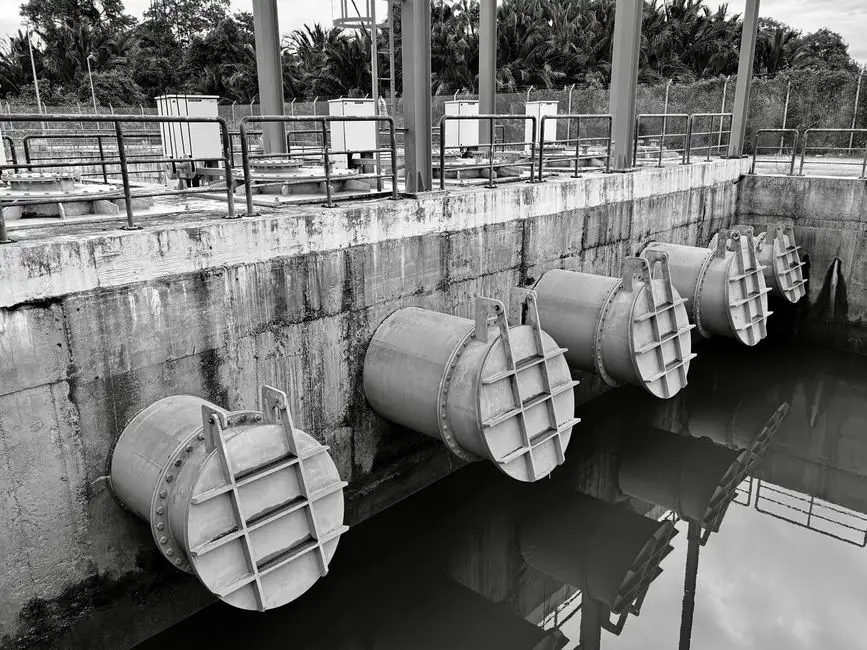
Filtration should remove residual suspended solids and colloids that escape clarification, but the required degree of polishing depends on the verified permit envelope and downstream water use. A multi-media filtration system can provide that polishing; its product capability is not evidence that a proposed train will comply with the POTW permit.
For reuse or reverse osmosis, ultrafiltration may be appropriate as an additional barrier. HydropureWater’s 2026 catalog lists hollow-fiber PVDF UF at 0.03 micron, 2,000–40,000 L/h, with automatic backwash and air scour and influent turbidity up to 300 ppm. Those values are catalog parameters, not a Pevely sizing basis. Membrane filtration is not automatically required for sewer discharge; it becomes more relevant when the POTW requires additional solids control, water will be reused, or downstream RO needs protection.
Commissioning should use representative influent and report pH, flow, TSS, and each permit-listed metal against the applicable daily, monthly, or instantaneous condition in the controlling permit. “Clear water” is not an acceptable demonstration because metals can remain dissolved or particulate-bound below visual detection.
The operating plan should cover chemical inventory and storage, pump and instrument calibration, flow-paced and feedback dosing control, sludge removal, media backwash, sampling, excursion response, and record retention. Each control should have an owner, trigger, and response. Coordinate this plan with the POTW’s monitoring requirements before startup rather than adding compliance sampling after installation.
Manage the Metal-Bearing Sludge Before the Wastewater Is Compliant
Metal-bearing sludge remains a regulated residual after pH adjustment and precipitation create insoluble metal hydroxides. The process chain runs from clarifier withdrawal through storage, dewatering, and final determination; clearer sewer water does not discharge that residual-management obligation.
HydropureWater’s 2026 catalog describes plate-and-frame presses with filtration areas from 1 m² to 500 m² and manual, hydraulic, or fully automatic PLC-controlled configurations. These are product options, not a site recommendation. A plate-and-frame filter press for metal sludge should be sized from representative solids production, batch frequency, target cake condition, filtrate-return strategy, and available handling time—not wastewater flow alone.
| Sludge decision | Information the supplier must use | Buyer check |
|---|---|---|
| Press configuration | Measured solids production, batch frequency, and target cake condition | Does the proposal show a solids mass balance rather than only wastewater flow? |
| Operating mode | Campaign schedule, available handling time, labor conditions, and controls requirements | Are manual, hydraulic, and automatic options compared by lifecycle need? |
| Filtrate return | Filtrate chemistry and headworks impact | Could dissolved metals recirculate or disturb pH and dosing? |
| Final disposition | Contractor and authority acceptance criteria, sampling, manifesting, and route restrictions | Is the selected route accepted before the press is purchased? |
Ask the waste contractor and receiving authority for acceptance criteria, sampling and manifesting requirements, and any restrictions affecting the selected disposal route. Include filtrate return in the plant mass balance. If filtrate returns to the headworks, demonstrate that it will not cause dissolved-metal recirculation, upset the treatment chemistry, or make the compliance sample unrepresentative.
Use a Six-Gate Procurement Checklist
A bid should pass six gates before a purchase order is issued. Each gate closes a specific gap between a regulatory claim and equipment capable of demonstrating compliance at the actual site.
- Authority: Identify the receiving POTW, current permit or equivalent control mechanism, sewer-use ordinance, and adopted local limits.
- Applicability: Confirm the categorical subcategory from actual activities and identify any separate direct-discharge authorization.
- Waste: Approve representative influent data covering normal flow, batch releases, pH, solids, metals, and other permit-listed pollutants.
- Process: Require a treatment train, control narrative, mass balance, chemical calculations, sludge plan, and equipment sizing basis.
- Verification: Require factory acceptance testing, site commissioning, representative-influent testing, permit-limit verification, operator training, and steady-state documentation.
- Operations: Price consumables, media, sludge disposal, maintenance, instrumentation, controls, and technical support into the lifecycle evaluation.
| Gate | Minimum deliverable | Reason to hold the gate closed |
|---|---|---|
| 1. Authority | Permit, ordinance, local limits, and POTW contact record | No verified Pevely limit or receiving POTW appears in the supplied research |
| 2. Applicability | Activity-based categorical determination and discharge-path map | Prevents application of the wrong mining, processing, or finishing standard |
| 3. Waste | Representative flow and analytical dataset | Prevents a generic train from becoming an undersized site installation |
| 4. Process | Calculated treatment train, controls, mass balance, and residual plan | Makes performance and operating demands auditable |
| 5. Verification | FAT, commissioning, performance test, and training records | Separates delivered equipment from demonstrated performance |
| 6. Operations | Lifecycle cost and operating support schedule | Excludes chemical, sludge, maintenance, and compliance risk from the comparison |
Use the comparison guide for DAF and clarifiers in mining wastewater treatment to structure technical questions, not to substitute a generic specification. A complete bid should state which permit condition each major component addresses and identify any assumption that still requires POTW confirmation.
Frequently Asked Questions
What Pevely sewer limits should a mining plant design to before ordering equipment?
No verified Pevely-specific numerical limit or receiving POTW appears in the supplied research. Obtain the current industrial user permit or equivalent control mechanism, sewer-use ordinance, adopted local limits, and monitoring schedule from the receiving authority. Size equipment against that verified envelope and representative influent testing, not a generic or assumed local limit.
Is DAF or lamella the better choice for acidic, metal-bearing wastewater?
Neither is universally better. DOF is a strong candidate where low-density floc or oil and grease matters; lamella is attractive for compact clarification of suitable solids. Compare settleability, floatability, hydraulic loading, sludge withdrawal, footprint, chemical use, and downstream polishing through jar or pilot testing. Use the regional mining-plant sewer-limit guide to frame the compliance questions that must accompany the equipment comparison.
What should a wastewater supplier provide so the buyer can compare bids?
Require a site-specific basis of design, process calculations, flow and mass balance, controls narrative, chemical estimates, sludge plan, FAT plan, commissioning protocol, and performance evidence against the verified permit envelope. Also request installation, operator-training, spare-parts, controls-support, and maintenance terms. Catalog capacity alone does not establish suitability.
How should a buyer evaluate treatment cost and residual-compliance risk?
Request a lifecycle comparison that includes chemical consumption, sludge dewatering and disposal, media or membrane maintenance, instrumentation, controls, operator labor, energy, and the consequence of permit excursions. No supported Pevely quotation or penalty amount is available, so the supplier should state pricing assumptions and exclusions rather than present an unsupported total or guaranteed compliance claim. A residual-risk review should also identify how sludge returns, batch releases, and sampling errors could affect the compliance demonstration.
Should the receiving POTW review the equipment train before startup?
Yes. Submit the proposed process train, control narrative, representative-influent basis, sampling plan, monitoring method, and excursion-response procedure for POTW review. The mining-wastewater equipment guide can support the technical submission, but the POTW’s current permit and equivalent control mechanism determine what the plant must demonstrate before discharge.