
What Does “DAF or Clarifier” Mean for a Mining Factory?
A mining or metals factory should choose DAF when the wastewater contains suspended solids, FOG, oils, or flocculable material that can be floated; it should favor conventional or lamella clarification when the primary objective is settling heavier solids with less reliance on flotation. A DAF unit may also be called a flotation clarifier, but that label does not make it equivalent to a gravity settling clarifier. DAF separates by attaching microbubbles to conditioned solids and skimming them from the surface, whereas clarification separates by gravity, with lamella plates improving settling inside a compact tank.
Clearwater uses the term “dissolved air flotation clarifiers” for its DAF systems, so procurement documents should state the separation principle rather than compare product names alone. By contrast, a high-efficiency lamella clarifier combines sludge recirculation, flocculation, and inclined-plate separation.
The 2026 selection is a process decision: identify the contaminants that must be removed, the required effluent quality, the hydraulic profile, the available chemical treatment, and the downstream sludge route. A DAF may be better for a floatable or flocculable load, while a conventional or lamella clarifier may be more appropriate for heavy, readily settleable solids. Mixed streams may justify either a combined arrangement or a sequence of units, which requires wastewater-specific testing.
Characterize the Wastewater Before Selecting Equipment
A representative characterization program—not a single averaged sample—is the minimum basis for equipment selection. It should cover flow, suspended solids, oils and greases, pH, metals, and variability across process, contact, and stormwater inflows. Document peak flow, batch discharges, washdown events, and the proportion contributed by each source. Those facts drive hydraulic loading, equalization, pretreatment, chemical demand, and whether the proposed separator can handle transient loads.
Separability matters as much as concentration. Heavy material such as sand and gravel may be removed before clarification or flotation. Kemco identifies hydrocyclones as a pretreatment option for high-density solids and shaker screens as multi-stage filtration that can accommodate varying flow rates. A continuous-duty mechanical bar screen can be evaluated when gross solids require protection from downstream equipment.
Metals do not, by themselves, determine the separator. Kemco states that DAF can remove metals, but reliable capture depends on conditioning the metal-bearing solids and separating the resulting floc. The request should therefore distinguish dissolved metal from metals attached to settleable or floatable solids, and should identify the analytical methods and sample locations to be used.
| Characterization input | Decision question | Evidence to request |
|---|---|---|
| Hydraulics | Can the system handle peak and batch events? | Flow record by source, peak flow, batch-discharge profile, stormwater contribution, and equalization data |
| Solids | Are the particles heavy, colloidal, or flocculable? | TSS, particle-size distribution, settleability, solids density where available, and grab-sample results |
| FOG and oils | Is flotation the preferred separation mechanism? | Oils-and-greases analysis, temperature, free oil observations, and emulsion characteristics |
| Metals and pH | What conditioning and materials are required? | Total and dissolved metals, pH range, alkalinity, and chemistry variability |
| Downstream route | What solids volume and moisture content must be handled? | Expected sludge generation, storage time, dewatering method, and disposal route |
Kemco recommends on-site visits, testing, and pilot studies to determine the plant’s requirements and design around them. A generic capacity table cannot resolve unknown floatability, chemistry, peak flow, or sludge behavior.
How DAF and Clarification Remove Contaminants
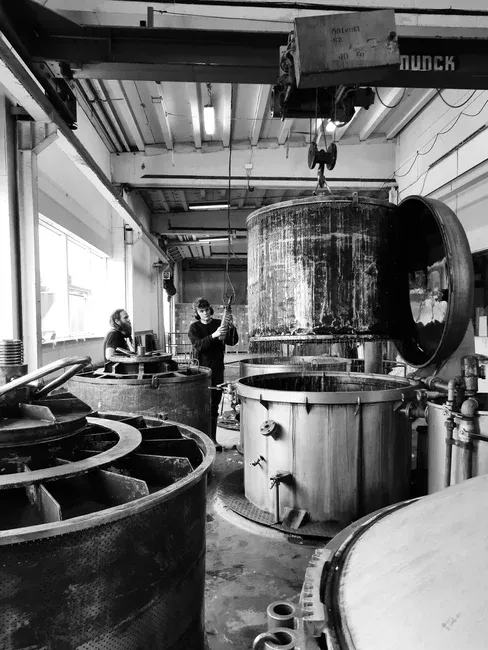
DAF separates material by flotation, using air dissolved under pressure and released into the wastewater as microbubbles. The bubbles attach to suspended or conditioned particles, which rise and are removed by a skimmer. Heavier material settles into the bottom collection zone and is withdrawn separately. Clearwater specifies microbubbles of 30–50 microns for its DAF systems in an April 27, 2026 publication.
Coagulation and flocculation determine how well this mechanism works. Clearwater states that chemical conditioning increases particle size and the solids’ ability to contact microbubbles. An PLC-controlled coagulant and flocculant dosing system belongs in the process review rather than being treated as an accessory.
A conventional clarifier relies on gravity, where settleable solids move to a collection zone and are removed from the bottom. A lamella clarifier adds inclined plates to improve separation within a more compact structure. HydropureWater describes lamella clarification as combining sludge recirculation, flocculation, and inclined-plate separation. The practical distinction is the target: DAF is aligned with floatable or flocculated material, while gravity and lamella clarification favor heavier material that settles.
A complete treatment train should be drawn as a process flow:
- Equalization and coarse screening where required.
- pH adjustment and chemical conditioning.
- DAF or clarification.
- Skimmed-float or settled-sludge withdrawal.
- Sludge storage and dewatering.
The industrial DAF system for suspended solids, FOG, and colloidal matter occupies one position in that train. A factory should evaluate whether the selected separation process, pretreatment, controls, and sludge route operate as one system.
DAF vs Clarifier: Head-to-Head Selection
Favor flotation when the contaminant load is floatable or can be made flocculable; favor gravity clarification when heavy solids settle readily. The decisive distinction is contaminant behavior under the proposed chemistry and hydraulic profile, not the separator’s equipment category.
| Decision factor | DAF | Conventional or lamella clarification | Procurement implication |
|---|---|---|---|
| Primary mechanism | Microbubbles attach to conditioned material, which is floated and skimmed | Gravity settling, enhanced by inclined plates in a lamella unit | Ask vendors to identify the intended contaminant fraction |
| Best-aligned loads | Suspended solids, FOG, oils, colloidal matter, and conditioned metal-bearing solids | Readily settleable solids, particularly heavier fractions | Use particle behavior and pilot results, not total mass alone |
| Chemistry | Depends strongly on effective coagulation and flocculation for bubble attachment | Flocculation may assist settling, but its dosing objective differs from flotation conditioning | Compare the same wastewater and conditioning assumptions |
| Configuration | Model selection must match flow and solids loading | Configuration depends on settling area, sludge collection, and flow distribution | Require the design basis and duty, not only a model name |
| Sludge route | Kemco states that DAF sludge is skimmed and moved to dewatering | Lamella clarification uses sludge recirculation | Check collection, storage, dewatering, and disposal compatibility |
Clearwater’s product configurations show why one DAF model cannot be assumed to fit every site. Its April 27, 2026 publication describes the FPAC as a small-to-medium-flow, high-solids design; the FPBC as a high-profile separator for low-to-medium solids loads, including low-buoyancy particles; and the FPHF as a high-flow system for low-to-large solids loads. These are configuration distinctions, not a site-sizing guarantee.
Downstream handling can change the economic result. Kemco states that DAF sludge is skimmed and sent to dewatering, while a lamella clarifier uses sludge recirculation. The selected system must be reviewed with the available plate-and-frame sludge filter press or other selected dewatering route, including storage, moisture-content expectations, and disposal frequency.
Use this rule: favor DAF for floatable or flocculable loads, favor clarification for heavy settleable solids, and consider both for mixed streams after application-specific testing. If the stream contains both substantial sand and significant FOG, a pretreatment step may be more informative than forcing all separation into one unit.
Build the Factory’s Process Decision Framework
A repeatable bid review should connect each equipment promise to a measured plant condition. The order below keeps compliance objectives, wastewater facts, treatment performance, and commercial scope linked.
- Define the objective. State whether the project is intended to support sewer discharge, process-water reuse, water recovery, improved sludge handling, or several outcomes. Identify the written discharge or reuse requirements that apply to the factory.
- Characterize each source stream. Compile average, peak, and batch flows, together with contaminant and chemistry data. Do not size from a single averaged flow value.
- Map contaminants to separation behavior. Separate floatable oils and FOG, flocculable suspended solids, and heavy settleable material. Record whether each is expected to remain discrete, emulsified, colloidal, or dissolved.
- Check pretreatment and chemistry. Evaluate screening, hydrocyclone separation where heavy solids are present, pH adjustment, and automatic chemical dosing against the actual water chemistry and control requirements.
- Evaluate the sludge train. Confirm collection, storage, dewatering, and disposal capacity. HydropureWater lists plate-and-frame filter press options from 1–500 m² of filtration area, with manual, hydraulic, and fully automatic PLC-controlled configurations.
- Validate performance. Require on-site testing or a pilot study, then base guarantees on measured wastewater and written discharge requirements rather than generic performance claims.
- Compare life-cycle ownership. Review operator attention, chemical use, energy, maintenance, controls, space, and sludge-disposal frequency. Require the basis of every cost and performance guarantee.
| Bid package | Required basis | Do not accept |
|---|---|---|
| Equipment sizing | Stream-by-stream flow and wastewater characterization | A model selected from average flow alone |
| Performance | Defined test method, influent condition, sampling plan, and target | Generic removal percentages without test conditions |
| Operating cost | Chemical, sludge, utility, labor, and maintenance assumptions | Purchase price presented as total cost |
| Compliance | Applicable site requirements and acceptance criteria | Unverified claims that the equipment “meets all limits” |
For chemical feed, require the proposed PLC-controlled coagulant and flocculant dosing system to be integrated with pH, flow, level, and equipment controls. For solids, include the plate-and-frame sludge filter press in the process and ownership comparison rather than treating dewatering as an undefined consequence.
What to Require from DAF and Clarifier Suppliers
Require each proposal to identify the proposed tank, surface area, solids-handling arrangement, recycle system, and material selection against the factory’s characterization and peak-flow basis. A supplier should state which separation mechanism is being offered; the word “clarifier” is not a sufficient scope description.
Ask whether DAF and gravity clarification were evaluated using the same wastewater, chemical-conditioning assumptions, hydraulic profile, and performance criteria. If only one process was considered, require the supplier to explain the screening logic and provide evidence that the other candidate was technically screened rather than excluded by product preference.
Request material options and the corrosion rationale. Clearwater states that its standard DAF clarifiers use 304SS, with 316SS, polypropylene, and other materials available on request (April 27, 2026). A Pennsauken plant should select materials against its actual chemistry and temperature conditions, not accept a material list without the design basis.
Obtain a controls and instrumentation schedule covering chemical dosing, pH instrumentation, level control, skimmer or sludge withdrawal, monitoring, alarms, and data logging. Also require the pretreatment, sludge-removal, and dewatering boundary to be explicit. The proposal should list utilities, maintenance tasks, spare parts, installation inputs, and the manufacturer’s service scope.
Finally, request site-specific test plans or references that demonstrate performance under comparable wastewater and operating conditions. Case studies provide useful evidence, but they are not guarantees for the Pennsauken factory. Any performance commitment should identify the wastewater, chemical doses, flow, temperature, test method, sampling point, and acceptance criterion on which it depends.
Frequently Asked Questions
How should a mining factory compare the cost of DAF and a clarifier?
Compare the complete cost of ownership, not the equipment quotation alone. Require separate pricing or stated assumptions for the separator, pretreatment, pH control, chemical dosing, controls,
Frequently Asked Questions
What does a DAF and clarifier system cost for mining wastewater?
Capital costs for Dissolved Air Flotation (DAF) units typically range from $80,000 to $350,000 depending on throughput capacity and materials of construction, such as 316L stainless steel for corrosive mineral environments. Conventional circular clarifiers generally carry lower upfront equipment costs, often ranging from $50,000 to $200,000, but require significantly larger civil engineering footprints and concrete basin construction, which can increase total project costs by 30% to 50% compared to modular DAF systems.
Operational expenditures differ based on energy and chemical consumption. DAF systems require ongoing costs for air compressors and high-pressure recycle pumps, typically consuming 0.5 to 1.5 kWh/m³ of treated water. Clarifiers involve lower power draw for rake mechanisms but often require higher chemical dosages of coagulants and flocculants to achieve equivalent solids separation efficiency in high-density mineral slurry applications.
How do I choose a DAF or clarifier supplier for a metals plant in Pennsauken?
When selecting a supplier for a Pennsauken-based facility, prioritize vendors with demonstrated experience in meeting New Jersey Department of Environmental Protection (NJDEP) discharge standards and local sewer use ordinances. Verify that the supplier can provide equipment compliant with ASTM A240 standards for corrosion resistance, essential for handling the acidic or metal-laden process water common in regional metal finishing and mining operations.
Technical support proximity is critical for minimizing downtime. Select a supplier that maintains regional service hubs within the Mid-Atlantic corridor to ensure rapid response times for spare parts, such as DAF saturation nozzles or clarifier drive motors. Request references specifically from industrial sites handling similar heavy metal influent concentrations to ensure the equipment meets your specific TSS (Total Suspended Solids) removal requirements.
How do you size a DAF system for variable mine wastewater flow?
Sizing a DAF for variable flow requires calculating the hydraulic loading rate, typically ranging from 2 to 6 gallons per minute per square foot (gpm/ft²) of surface area. To manage fluctuations, engineers utilize equalization tanks upstream of the DAF to dampen flow surges, ensuring the influent rate remains within the unit's design parameters, typically 80% to 110% of the nominal design flow.
Variable Frequency Drives (VFDs) must be integrated into the recycle pump and influent feed pumps to adjust energy input based on real-time flow sensors. For mining applications with highly variable solids loading, sizing should be based on the peak mass loading rate (lb/hr of solids) rather than hydraulic flow alone, ensuring the surface skimmer mechanism can handle maximum sludge production without carryover.
Can a DAF system meet sewer discharge limits for a mining plant?
DAF systems are highly effective at meeting stringent sewer discharge limits, often achieving 90% to 99% removal of suspended solids and oil/grease. When paired with proper chemical pretreatment—such as pH adjustment for metal precipitation and the addition of polymers—DAF units can consistently reduce heavy metal concentrations to meet local pretreatment standards for discharge to publicly owned treatment works (POTWs).
Performance depends on the air-to-solids (A/S) ratio, which should be maintained between 0.01 and 0.05 ml of air per mg of solids to ensure adequate buoyancy for mineral particles. Provided the influent characteristics remain within the design window for particle size and density, a well-optimized DAF system is fully capable of compliance with EPA categorical pretreatment standards for mining and metal-bearing waste streams.
Should mining wastewater use DAF followed by a clarifier?
Using a DAF system followed by a clarifier is rarely necessary and generally discouraged due to redundant footprints and unnecessary capital expenditure. This configuration is only recommended in specialized scenarios where the wastewater contains two distinct types of pollutants: light, floatable contaminants (such as oils or hydrophobic mineral fines) that require DAF, and heavy, settleable grit or precipitates that require conventional gravity clarification.
In most mining applications, a single-stage process is sufficient if the correct primary separation technology is selected based on the specific gravity of the target contaminants. If the flow is high in suspended solids, a clarifier or lamella settler is preferred; if the flow is high in emulsified oils or low-density mineral fines, a DAF is the superior choice. A serial configuration would only be justified if the facility requires ultra-polishing to meet extreme water recycling or discharge quality requirements.