
What makes an Arifwala data center treatment case different?
An Arifwala data center should not be designed around one blended wastewater plant. Sanitary wastewater, humidification or process drainage, and cooling-tower blowdown (CTBD) have different contaminants, reuse options and discharge constraints. A 100 MW data center can require up to 2 million litres of water per day, according to IDE (2026), but that is an industry-scale reference—not an Arifwala demand estimate. The site design must instead use IT load, cooling configuration, seasonal conditions, measured drain flows, source-water chemistry, available outlets and staffing capability. The project team must confirm the local public authority, receiving-water context, groundwater or sewer route, applicable Punjab environmental requirements and any municipal trade-sewer conditions during feasibility; Islamabad permits cannot be transferred to Arifwala. The appropriate starting point is a measured site water balance.
| Design input | What must be verified for Arifwala | Why it changes treatment selection |
|---|---|---|
| IT and cooling load | Installed IT load, cooling technology, operating scenarios and expected utilization | Determines evaporation, blowdown and demand for reuse water |
| Water balance | Make-up, evaporation, blowdown, humidification/process drainage, sanitary flow, reuse and discharge | Provides the hydraulic design basis for each train |
| Source-water chemistry | Make-up and CTBD analyses, including seasonal variation | Controls membrane recovery, scaling and chemical demand |
| Discharge and reuse routes | Groundwater or sewer access, receiving-water context, applicable Punjab requirements | Determines permitted endpoint and monitoring requirements |
| Operations | Staffing, maintenance capability, remote monitoring and emergency arrangements | Distinguishes a robust plant from equipment that cannot be sustained |
This framework is consistent with a data-center wastewater and cooling-blowdown treatment guide: local water facts and proposed assumptions should remain visibly separate until confirmed by the relevant authority and site testing.
Separate the streams before selecting treatment equipment
The first engineering decision is stream segregation, because blending incompatible wastewater can increase treatment cost and reduce the amount of water that can be recovered. Sanitary wastewater and cafeteria flows should be routed to a dedicated biological package plant. HydropureWater’s 2026 Islamabad reference places sanitary and cafeteria flows outside the industrial data-hall treatment train, sizing the sanitary package by headcount rather than IT load.
Humidification and process drainage require separate assessment because suspended solids, corrosion products and biofilm carryover can overload downstream membranes. The same 2026 Islamabad reference characterizes that stream as silica 5–30 mg/L and suspended solids 10–50 mg/L. Those values are reference conditions for the cited stream, not measured Arifwala water quality. CTBD must also remain separate: evaporation concentrates silica, calcium carbonate, calcium sulfate, treatment chemicals and other dissolved constituents in the residual cooling water.
- Segregate and meter each source.
- Equalize only where flow or chemistry requires it.
- Apply stream-specific biological, membrane or polishing treatment.
- Send the treated stream to a defined reuse application or permitted discharge route.
- Monitor flow, chemistry and operating conditions continuously.
| Stream | Primary contaminants | Treatment concept | Endpoint to confirm |
|---|---|---|---|
| Sanitary and cafeteria wastewater | Organic matter, nutrients and pathogens | Anoxic/aerobic biological package, sedimentation and disinfection | Arifwala permit, sewer acceptance or reuse rules |
| Humidification/process drainage | Suspended solids, biofilm or corrosion products; potentially silica | DAF, MBR, multimedia filtration and optional RO | Cooling make-up, process reuse or permitted discharge |
| Cooling-tower blowdown | Concentrated salts, scaling species, residual chemicals and possible solids | Filtration and controlled treatment; RO or precipitation where justified | Cooling make-up, controlled discharge or solids-disposal route |
The broader 2026 data-center wastewater treatment planning guide and the cooling-blowdown recovery and reuse treatment options support parallel treatment-train design rather than an all-purpose treatment line.
Treat sanitary wastewater with a compact biological package
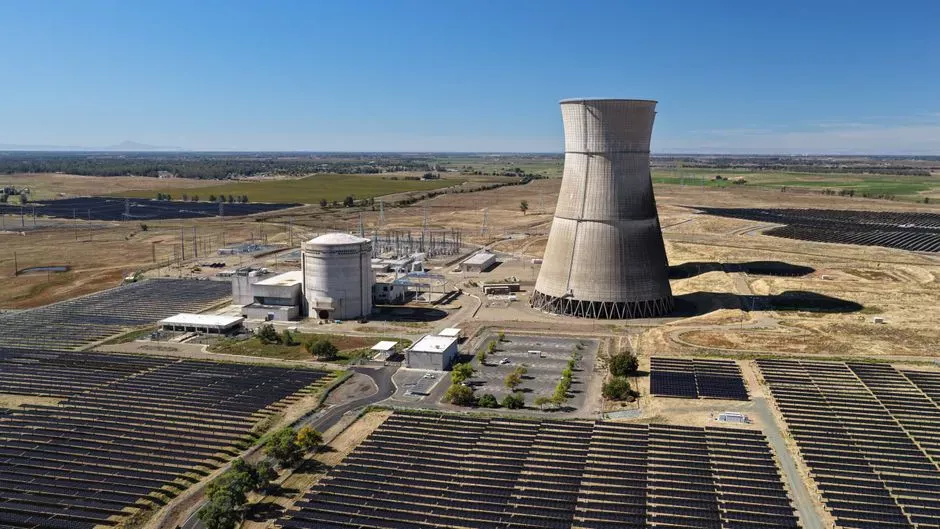
Sanitary wastewater should be sized from sanitary flow and occupied headcount, not IT load, and treated through a dedicated anoxic/aerobic biological package. The HydropureWater WSZ series combines anoxic/aerobic biological contact oxidation, sedimentation and disinfection in a buried package unit, with available flows from 1–80 m³/h. It can be installed below grade to preserve landscaped area or mounted on a trailer for mobile deployment.
This package defines the normal biological treatment boundary for sanitary flows; it does not remove the need to characterize industrial drainage or CTBD. During procurement, require the supplier to state the design flow, process stages, diffuser and blower arrangement, disinfection method, sludge withdrawal frequency and expected effluent parameters. Final effluent quality, solids handling and the discharge route must be checked against the confirmed Arifwala requirement rather than a generic sewage-treatment description. A manufacturer’s reuse claim is not a substitute for local acceptance criteria.
The underground integrated sewage-treatment package can be assessed against the site’s sanitary flow, available footprint, below-grade conditions, access requirements and local installation constraints. Those site inputs remain to be confirmed for Arifwala.
Polish data-hall drainage when reuse or tight discharge limits justify it
Data-hall drainage is a candidate for advanced treatment only when a defined reuse destination or demanding discharge condition justifies it. Dissolved air flotation is the logical pretreatment for suspended solids and colloidal or oily contamination that could burden a downstream biological membrane. The dissolved air flotation pretreatment for industrial wastewater should then feed an MBR membrane bioreactor for data-center wastewater reuse where near-reuse quality and a compact installation justify the added operating complexity.
HydropureWater’s 2026 Islamabad reference gives MBR reference performance of BOD below 10 mg/L, COD below 60 mg/L and TSS below 5 mg/L. It specifies multimedia filtration to hold SDI below 5 and protect the downstream RO from biocide and corrosion-inhibitor carryover. The relevant multimedia filtration equipment is therefore not optional polish: it is a membrane-protection step whose performance must be verified from actual drain chemistry.
Industrial RO is justified where the permeate has a defined cooling-tower or process-reuse application. The same Islamabad reference specifies 65–75% recovery, while the industrial reverse osmosis for cooling-tower make-up reuse is available up to 95%. The attainable rate depends on feed chemistry and cannot be selected from the equipment nameplate.
| Train stage | Function | Evidence and design boundary |
|---|---|---|
| DAF | Remove suspended solids and colloidal material | Protects the MBR and buffers drainage variability |
| MBR | Biological treatment and solids separation | 2026 Islamabad reference: BOD <10 mg/L, COD <60 mg/L, TSS <5 mg/L |
| Multimedia filtration | Reduce residual solids before RO | 2026 Islamabad reference: SDI below 5 |
| RO | Produce polished reuse water | 65–75% recovery in the 2026 Islamabad reference; supplier capability is not a site guarantee |
| Disinfection | Control microbiological risk at the reuse or discharge point | Method and final criterion must follow the confirmed endpoint |
Hot-season biological design must be recalculated for Arifwala. The Islamabad reference uses MLSS 8,000–12,000 mg/L, HRT 8–14 h and 12–18% aeration oversizing for 38–44°C ambient conditions. These are Islamabad design references, not local climate requirements. The buyer should require temperature-corrected aeration and membrane-performance calculations using verified Arifwala seasonal data.
Control scaling before raising cooling-tower cycles of concentration
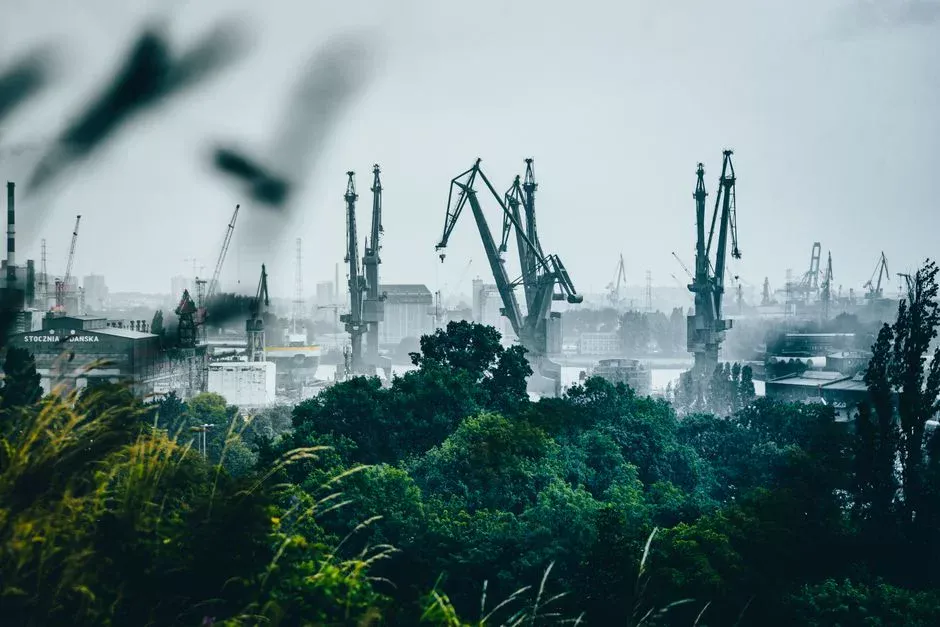
CTBD is the concentrated residual from an evaporative cooling system. It contains accumulated dissolved salts, residual chemicals and potentially suspended contaminants, so its recovery limit is governed by chemistry rather than membrane capacity alone. IDE (2026) reports that conventional brackish RO commonly reaches 75–80% recovery before scaling becomes unmanageable. That is a screening reference, not a guaranteed recovery rate for an Arifwala site.
The cycles-of-concentration calculation is frequently misstated. At 4 CoC, blowdown equals 25% of make-up volume; at 6 CoC, it equals 20%. Moving from 4 to 6 CoC therefore reduces blowdown by 20%, not 50%, as Genesis Water Technologies (2026) explains. This distinction matters because higher CoC also increases scaling and biological-control risk.
Where higher recovery is required, evaluate controlled precipitation or crystallization for silica, calcium carbonate and calcium sulfate rather than assuming another RO stage will solve the problem. IDE’s industrial result—around 95% recovery and approximately 1 mg/L silica in permeate—is a case-specific benchmark, not an Arifwala guarantee. It demonstrates why feed analysis and pilot work are necessary before committing to high recovery.
| Decision condition | Technical response | Required proof |
|---|---|---|
| Conventional CTBD recovery is sufficient | Filtration followed by brackish RO | Feed analysis and site-specific recovery calculation |
| Make-up reduction is limited at the selected CoC | Review cooling optimization and controlled cycles of concentration | Measured water balance and operating trials |
| Higher recovery is required | Evaluate controlled precipitation or crystallization with RO | Chemistry model, pilot data and solid-waste route |
| Concentrate contains recoverable precipitate | Use appropriate solids separation | Evaluate a plate-and-frame filter press against the expected solids |
Before finalizing recovery, require analysis of conductivity, silica, calcium, alkalinity, sulfate, hardness, chloride, pH, suspended solids and residual treatment chemicals. If this data is unavailable, the recovery target remains unverified.
Choose the discharge and reuse endpoint from whole-life costs
The preferred endpoint is the one that satisfies the confirmed reuse requirement or discharge route at the lowest credible whole-life cost; reverse osmosis is not automatically the best answer. HydropureWater’s 2026 Islamabad guide gives a directional benchmark for a 50,000 GPD RO-polishing CTBD system of $250,000–$500,000 installed CAPEX and $1.50–$3.00/kgal OPEX. This is a non-Arifwala reference and must be excluded from the project budget until local scope, freight, taxes, civil works, utilities, installation and commissioning are priced.
Energy is another screening comparison. HydropureWater (2026) reports 0.8–1.6 kWh/m³ for an MBR-equipped plant and 0.4–0.9 kWh/m³ for a DAF-only scope. These figures support option screening, not a final estimate; request actual blower, pump, membrane and heating loads using the selected equipment and local power tariff.
Open Engineering Inc’s 2026 study found that the wastewater-reuse scenario had roughly twice the global-warming potential of the freshwater case, with treatment energy representing about 80% of the difference. The study also found that an UF-plus-RO scenario used more than five times the energy of the freshwater case, although improved cycles of concentration reduced blowdown and chemical consumption. For Arifwala, the comparison should therefore include freshwater cost, discharge fees, chemical use, membrane replacement, energy, carbon, operator labor and brine or precipitate disposal.
| Cost or risk input | Data needed from the bidder | Arifwala status |
|---|---|---|
| Freshwater avoided | Make-up demand, tariff and measured replacement rate | To be confirmed |
| Discharge avoided | Permit route, fee and treatment requirements | To be confirmed with the relevant authority |
| Operating resources | Energy, chemicals, membranes, labor and waste handling | To be calculated by supplier |
| Environmental burden | Electricity carbon factor, chemical footprint and concentrate fate | Local data required |
| Reuse threshold | Site flow, operator availability and reuse value | Replace the 200 m³/day directional rule with a site calculation |
The 2026 operating-cost and return-on-investment analysis can structure the comparison, but its assumptions must be replaced with Arifwala inputs. The 200 m³/day reuse threshold in the 2026 Islamabad guide is directional and should not be adopted automatically.
Build an Arifwala procurement and commissioning checklist
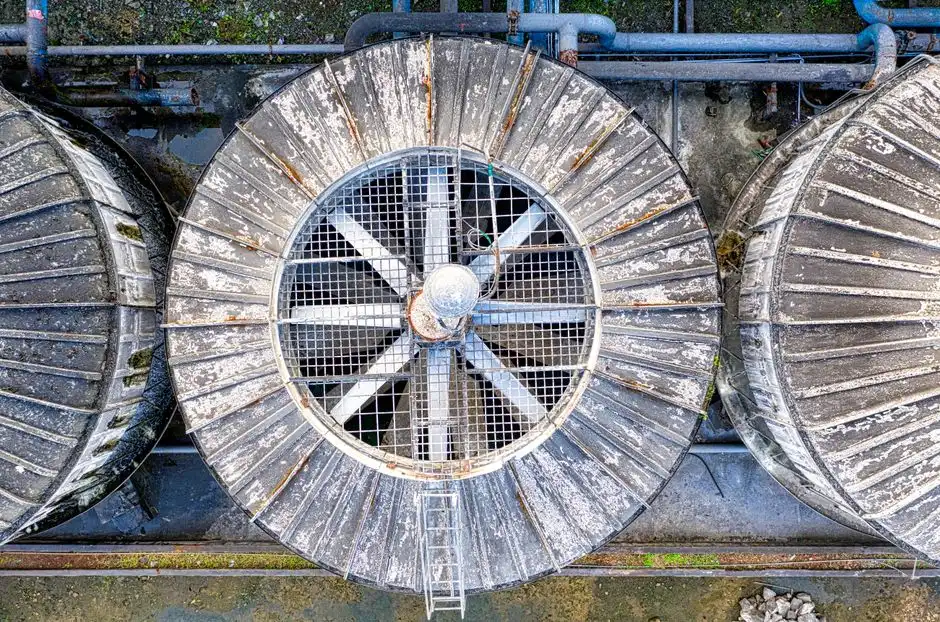
A procurement package should begin with measured facts rather than a preselected treatment concept. Request 12 months of source-water and wastewater data where available, seasonal flow analysis, IT-load cooling scenarios and a measured site water balance. If historical data is unavailable, require a temporary sampling campaign covering the proposed operating modes.
Each bidder should identify stream segregation, treatment objectives, design flow, recovery target, permeate quality, concentrate destination, solid-waste route, utility demand, redundancy and operator requirements. The technical schedule should require temperature-corrected membrane and aeration performance, automatic controls, online conductivity and pH monitoring, sampling provisions, alarms and local PLC/SCADA integration. Treatment parts, valves and filter media should be clearly specified for maintainability, as discussed in the water-treatment spares and instrumentation reference.
Request FAT and SAT criteria tied to guaranteed flow, recovery, permeate chemistry, energy use and the verified Arifwala discharge or reuse endpoint. Confirm local import, transport, installation and commissioning constraints separately; none can be inferred from the supplied research. A complete bid should also state assumptions, exclusions, test methods, warranty boundaries and the evidence supporting each guaranteed value.
Frequently Asked Questions
What will CTBD treatment cost for an Arifwala data center?
The only suitable initial benchmark in the supplied research is HydropureWater’s 2026 non-Arifwala reference for a 50,000 GPD RO-polishing CTBD system: $250,000–$500,000 installed CAPEX and $1.50–$3.00/kgal OPEX. Do not use it as a Arifwala quotation. Ask bidders to price the measured flow, recovery, pretreatment, controls, local civil works, transport, import, installation, commissioning, energy, chemicals, membrane replacement and concentrate or precipitate disposal, with every exclusion identified.
What should a supplier return for a technically comparable bid?
Require each bidder to return a measured-basis flow diagram, design flows, feed and permeate quality, recovery calculation, unit-by-unit equipment list, utility consumption, chemicals, solids and concentrate destinations, controls, monitoring, redundancy, operator workload, FAT/SAT criteria and exclusions. Also request installed and operating costs with the pricing basis stated. This makes recovery claims, compliance assumptions and lifecycle costs auditable rather than comparable only by headline price.
How should sanitary, data-hall and CTBD capacity be sized?
Size sanitary treatment from sanitary flow and headcount, data-hall treatment from separately metered humidification and process drainage, and CTBD treatment from the cooling water balance, selected cycles of concentration and required recovery. IT load may influence the overall balance, but it is not a substitute for measured streams. Each bid should reconcile equipment capacity with make-up, evaporation, blowdown, drainage, reuse and discharge volumes.
Which Arifwala and Punjab discharge requirements apply?
The applicable route must be confirmed with the relevant Punjab authority and the receiving public authority during feasibility. The supplied research supports an Islamabad framework and a separate industrial CTBD case; neither establishes an Arifwala permit. Ask the bidder to identify the proposed outlet, applicable consent, sampling method, discharge-quality basis and monitoring plan. Obtain written confirmation of the governing requirements before selecting equipment or guaranteeing reuse water quality.