What Wastewater Streams Does a Malang Data Center Have to Treat?
A data center in Malang needs two separately engineered wastewater streams: continuous cooling-tower blowdown and intermittent construction fill-and-flush water. The treatment train depends on the reuse objective, feed chemistry and receiving-WWTP limits. The sequence starts with metering and water-quality monitoring, followed by side-stream filtration for suspended solids. If blowdown is reused as cooling makeup, ultrafiltration can remove bacteria and colloids before brackish-water RO; nanofiltration may suit hardness- and sulfate-dominated feeds, while RO is safer where silica or total dissolved solids dominate. High silica, calcium carbonate and calcium sulfate can limit conventional RO recovery. The final design must use Malang source-water analysis, verified discharge consent and a modular train sized to the facility.
Cooling-tower blowdown is the principal continuous operating stream. Evaporation removes water while concentrating dissolved minerals, residual chemicals and treatment products in the circulating loop; periodic purge controls that accumulation. HydropureWater’s 2026 characterization places this stream at 1,200–6,000 mg/L TDS, or 4–8 times makeup-water concentration, with 10–50 mg/L suspended solids and accumulated biocides, scale inhibitors and corrosion inhibitors.
Construction fill-and-flush wastewater must remain a separate sampling and treatment stream. Its chemistry depends on the cleaning agents, corrosion inhibitors and biological residues used while commissioning closed-loop pipework, so a result from operating blowdown cannot characterize it. Domestic sewage, generator exhaust washwater and other utility wastewater may also be present, but the supplied research gives no Malang-specific generation rates or discharge limits. Record each source separately in the site water balance.
| Stream | Operating character | Key contaminants or constraints | Pre-design action |
|---|---|---|---|
| Cooling-tower blowdown | Continuous; purge varies with cooling operation and cycles of concentration | TDS, hardness, silica, suspended solids, biocide, scale and corrosion-inhibitor residuals | Sample separately across operating conditions |
| Construction fill-and-flush | Intermittent; tied to commissioning milestones | Cleaning chemicals, corrosion inhibitors, biological residue and possible metals | Characterize each discharge batch or provide temporary pretreatment and haul-off |
| Domestic and utility wastewater | Separate streams with their own operating schedules | No Malang-specific rates or limits supplied in the research | Include flow, chemistry, destination and responsible operator in the water balance |
The broader data center wastewater and cooling blowdown planning guide provides useful stream-separation principles, but its geographic assumptions should not be transferred to Malang.
Build the Malang Water Balance Before Choosing Equipment
Measured flows, not facility nameplate capacity, must establish the treatment boundary. Install separate metering for makeup water, cooling-tower blowdown, evaporation, process drainage and reuse flow. Report consumed water separately from water returned to a source: evaporation and incorporation into products are consumption, while discharge or reuse remains part of site water usage.
Water Usage Effectiveness, or WUE, is defined as annual site water usage divided by IT equipment energy. Genesis Water Technologies, 2026 cites 0.47–0.65 Gal/kWh (1.8–2.5 L/kWh), while warning that WUE does not identify discharge quality or reuse potential. Its operational finding is also important for equipment sizing: actual blowdown commonly exceeds theoretical blowdown by 15–30% because of unmeasured losses and emergency dumps.
The baseline monitoring program should include pH, conductivity, TDS, total and calcium hardness, silica, sulfate, chloride, suspended solids, temperature, and residual biocide or corrosion inhibitor. Take samples across normal operation, high-load periods, chemical changes and storm or source-water variations. The acquisition and wastewater-requirements planning reference illustrates why the acquisition baseline should include operating data rather than rely on generic assumptions.
| Required record | Engineering purpose | Acceptance evidence |
|---|---|---|
| Makeup, blowdown, evaporation, drainage and reuse flows | Separate consumption from discharge and calculate the actual treatment duty | Calibrated meter register with normal and peak operating periods |
| Cooling-water chemistry | Identify scaling, fouling and membrane-feed constraints | Repeat laboratory and field measurements with operating conditions |
| Source-water and discharge consent | Define actual makeup quality and the legal destination for treated water | Supplier analysis, seasonal records, tariff and written consent |
| Operational variability | Expose emergency dumps and operating losses omitted from theory | Trend comparison between calculated and metered blowdown |
Do not import Surabaya values into the Malang baseline. HydropureWater’s 2026 Surabaya guide reports 1,500–3,000 mg/L TDS and 50–150 mg/L silica for that city’s 4–6 CoC blowdown, but those figures describe Surabaya. Before final sizing, request Malang’s public-water or private-source analysis, seasonal variability, utility tariff, sewer discharge consent and confirmation of receiving-WWTP capacity.
Reduce Blowdown Before Building a Large Reuse Plant
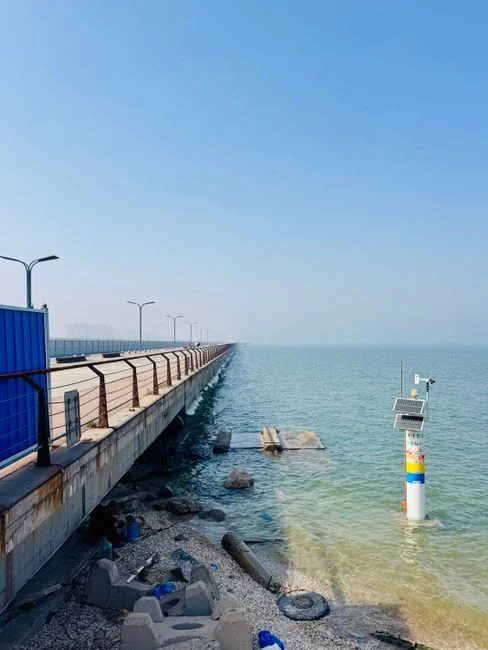
Cooling-loop optimization can reduce the flow that must be treated, but the water-saving calculation must use the correct blowdown relationship. Genesis Water Technologies, 2026 gives theoretical blowdown of 25% of makeup water at 4 cycles of concentration and 20% at 6 CoC. Moving from 4 to 6 CoC therefore reduces blowdown by 5 percentage points, or 20% of the original blowdown volume—not 50%.
Before purchasing a large reuse train, repair leaks, eliminate once-through cooling, optimize cooling controls and improve self-cleaning filtration. These measures can prevent emergency purges caused by poor clarity or uncontrolled basin levels. Compare operating scenarios using metered makeup and blowdown, because the Genesis Water Technologies, 2026 finding that actual blowdown commonly exceeds theory by 15–30% means a theoretical reduction may not translate directly into utility savings.
Review the cooling-water chemical program at the same time. Aggressive dosing can increase dissolved-solids loading and downstream treatment complexity. Any chemical change should be checked for compatibility with the selected membranes, antiscalant strategy and reuse target; membrane warranties should not depend on an unverified chemistry assumption.
Higher cycles of concentration remain an operating-risk decision. Genesis Water Technologies, 2026 states that biological and scaling risks increase rapidly above 5–6 CoC without advanced treatment. The automatic chemical dosing system should therefore be evaluated against measured chemistry and a defined concentration-control strategy, not treated as the primary water-saving measure.
Choose the Treatment Train by Reuse and Discharge Objective
The minimum viable treatment train follows a fixed sequence: eliminate unnecessary discharge, characterize the feed, establish the receiving-water or reuse specification, select the least complex process that meets it, and verify recovery and concentrate handling. This order prevents a vendor from selecting RO, NF or evaporation before the discharge objective and water chemistry are known.
Physical pretreatment protects both the cooling loop and downstream membranes. HydropureWater, 2026 describes side-stream filtration at 1–5% of circulation flow and 10–25 micron. If reuse is required, a hollow-fiber ultrafiltration system for blowdown pretreatment can remove bacteria and colloids before desalination.
| Objective | Process route | Reference parameters and limits | Decision condition |
|---|---|---|---|
| Discharge only | Characterization, side-stream filtration and discharge pretreatment | HydropureWater, 2026: side-stream filtration at 1–5% of circulation flow and 10–25 micron | Use when receiving-WWTP consent permits the resulting stream and capacity is confirmed |
| Partial reuse | Filtration, UF and brackish-water RO | HydropureWater, 2026: UF at 0.01–0.1 micron, 10–30 psi and 90–95% recovery; BWRO at 150–400 psi, 50–85% recovery and 10–50 mg/L permeate TDS | Use when the cooling makeup specification and concentrate route are established |
| Lower-pressure partial desalination | Filtration and nanofiltration | HydropureWater, 2026: 75–150 psi, 70–85% recovery and permeate at 30–50% of feed TDS | Favor when hardness and sulfate dominate, but do not treat NF as universal silica removal |
| High recovery | RO with controlled precipitation and managed solids | IDE Tech, 2026: an industrial application operated at approximately 95% recovery with about 1 mg/L permeate silica | Advance only after scaling calculations and solid-disposal ownership are resolved |
| Concentrate volume reduction | MVC evaporation | HydropureWater, 2026: 95–98% distillate recovery, distillate TDS below 10 mg/L and 15–25 kWh per 1,000 gallons | Use only where local power cost, freshwater value and discharge constraints support it |
RO is generally the safer screening choice when silica or total dissolved solids dominate. IDE Tech, 2026 reports that conventional brackish-water RO often plateaus at 75–80% recovery because silica, calcium carbonate and calcium sulfate constrain stable operation. A site-specific scaling calculation must therefore set the recovery limit. An industrial RO system for cooling-tower makeup reuse should be quoted against measured feed chemistry, not a generic tropical-water envelope.
Full zero-liquid-discharge treatment should not be the default. HydropureWater’s 2026 U.S. benchmark is $3–$8 million CAPEX and $5–$15 per 1,000 gallons OPEX. Those are comparison references, not Malang estimates. Receiving capacity, the owner’s corporate target and local operating economics must justify the additional complexity.
Resolve Malang Compliance and Concentrate Management Before the P&ID Is Frozen
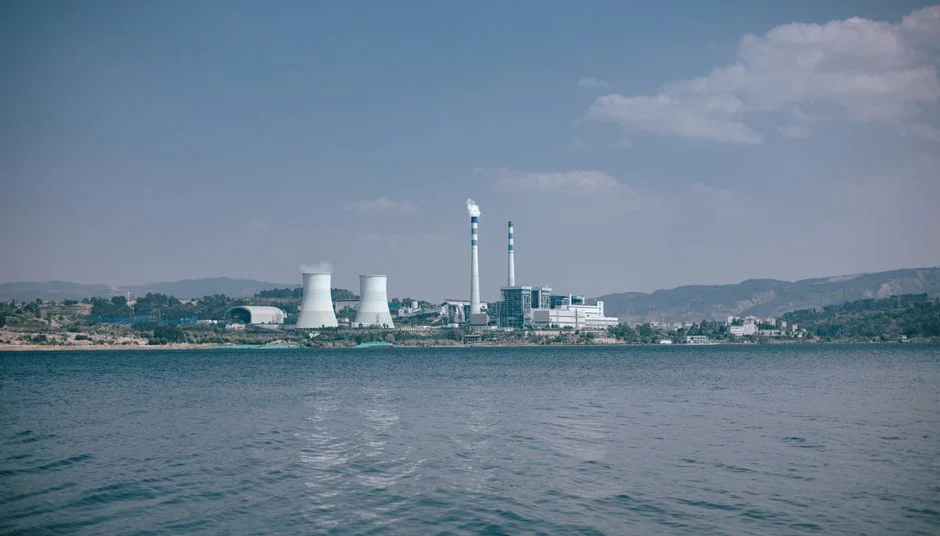
The supplied research contains no verified Malang-specific effluent limits. Obtain the current discharge consent from the receiving WWTP and relevant Indonesian authority, with written limits for TDS, hardness, silica, residual biocide or chlorine, pH, temperature and suspended solids. Equipment selection should not proceed on the assumption that a generic Indonesian or Surabaya limit applies.
The Surabaya guide is useful only as a diligence checklist. HydropureWater’s 2026 Surabaya guide cites Permen LHK No. 5/2014, pH 6–9 and TSS ≤200 mg/L for the stated surface-water route. Those values must not be asserted as Malang requirements. Confirm the receiving route and applicable national, regional and local conditions in Malang.
PROPER is the Indonesian Ministry of Environment and Forestry compliance-rating programme. Its trajectory should appear in the owner’s permitting and community-relations plan, rather than being left for post-commissioning compliance work. The lower-water data center development in India provides a separate regional reference for reviewing how water and community assumptions shape project development; it is not evidence of Malang requirements.
| Compliance or waste item | Evidence required before P&ID freeze | Design consequence |
|---|---|---|
| Receiving-WWTP discharge | Current written consent and parameter limits | Sets final polishing and discharge controls |
| Indonesian environmental compliance | Applicable authority requirements and PROPER pathway | Defines monitoring, reporting and operating responsibilities |
| RO or NF concentrate | Authorized discharge route, precipitation option or evaporation basis | Determines recycle, storage and residual treatment |
| Precipitation solids | Characterization, authorized handler and disposal site | Defines solids collection and ownership |
| Construction fill-and-flush | Temporary characterization and pretreatment or documented haul-off | Prevents commissioning wastewater entering an unsuitable pipe or sewer route |
Define who owns the concentrate and any precipitated solids before construction. A controlled discharge route, precipitation with managed solid disposal, or evaporation should be selected early because each creates different metering, storage, power and residual-disposal requirements. For fill-and-flush water, require temporary on-site characterization and pretreatment or a documented haul-off option before closed-loop pipework commissioning.
Acceptance criteria should include monitoring, sampling, alarms and operator training. Conductivity and flow interlocks should protect membrane operation and cooling-tower control. Written consent, named residual handlers and tested operating procedures are more defensible than a general compliance statement.
Turn the Engineering Decision into a Vendor RFQ
A comparable RFQ starts with the same site data for every bidder: the water balance, 12 months of seasonal makeup and blowdown data, analytical results, cooling configuration, required reuse flow, operating hours and receiving-WWTP limits. Where operating history is unavailable, label each gap and require the bidder to state its design assumption. Do not let one supplier price around an assumed blowdown flow while another prices the measured duty.
Require a process flow diagram, P&ID, equipment list, membrane datasheets, duty points, chemical consumption, CIP plan, redundancy philosophy, utility demand and complete-cycle operating-cost estimate. Each bidder should also state treated-water quality, expected recovery, concentrate volume and quality, sludge generation, membrane cleaning frequency, replacement strategy and local commissioning support. Reference membrane availability through the RO and UF membrane replacement-element options, including lead time and local service coverage.
| RFQ package | Required response | Why it matters |
|---|---|---|
| Common site data | Water balance, seasonal flow and analytical dataset, cooling configuration and written discharge limits | Prevents non-comparable bids based on different assumptions |
| Technical submission | Flow diagram, P&ID, equipment and membrane datasheets, duty points, CIP plan and utilities | Makes the proposed process auditable |
| Performance commitment | Guarantees for throughput, permeate quality, availability, recovery and concentrate disposal | Separates usable capacity from equipment nameplate capacity |
| Commercial submission | Site-specific price and complete-cycle operating cost with exclusions identified | Allows comparison against Indonesian site conditions |
HydropureWater’s 2026 U.S. benchmark ranges are comparison references only: side-stream filtration at $50,000–$200,000 CAPEX and a 50,000 GPD UF/BWRO installation at $250,000–$500,000 CAPEX, with $1.50–$3.00 per 1,000 gallons OPEX. They are not quotations for Malang and must not be inserted into an approved budget without site-specific pricing.
Request a quotation covering Indonesian freight, electrical interfaces, membranes, commissioning, chemicals, sludge disposal, operator training and local service support. The guarantee schedule should be performance-based: name the test conditions, sampling point, acceptance threshold, correction mechanism and remedy for failure. Equipment capacity alone does not protect the owner from underperforming treatment.
Frequently Asked Questions
How much will wastewater and cooling-tower blowdown treatment cost for a data center in Malang?
The available 2026 figures are U.S. benchmarks, not Malang quotations. HydropureWater, 2026 places side-stream filtration at $50,000–$200,000 CAPEX and a 50,000 GPD UF/BWRO installation at $250,000–$500,000 CAPEX, with $1.50–$3.00 per 1,000 gallons OPEX. Request a site-specific price listing Indonesian freight, electrical interfaces, membranes, labor, commissioning, chemicals, waste transport, sludge disposal and local service. Include power and disposal assumptions in the complete-cycle cost so bidders price the same operating case.
What determines the required treatment capacity for a Malang data center?
Base sizing on measured blowdown, required reuse flow, feed-water analysis, operating hours and redundancy—not on data-center MW alone. The measured stream must include the 15–30% gap between theoretical and actual blowdown that Genesis Water Technologies, 2026 reports as common. State whether the treatment train must accept peak flow, average flow or a defined operating envelope, and confirm whether construction fill-and-flush water is temporary or part of the permanent design.
How should an engineer select a wastewater-treatment supplier?
Require a complete P&ID, membrane operating envelope, site-specific duty points, performance guarantee, CIP plan and local service arrangement. Verify that the supplier has experience with comparable water chemistry and ask for the operating basis behind each performance claim. A supplier should also state concentrate volume and quality, membrane replacement strategy, commissioning support and all exclusions in a consistent commercial format.
What compliance information is needed before selecting the final equipment package?
Obtain written receiving-WWTP consent and verified Malang requirements before freezing the equipment selection. The consent should define applicable limits for parameters such as TDS, hardness, silica, residual biocide or chlorine, pH, temperature and suspended solids. Confirm the responsible authority, concentrate route, solid-disposal handler and PROPER reporting responsibility. Do not substitute the Surabaya reference values for Malang consent.